

Print Media — Building the Narrative
Long before South Asian voices filled the airwaves or streamed online, they found expression in print. In the 1970s and 1980s, community newspapers and magazines became the first platforms where immigrants shared their stories, advertised small businesses, and built cultural bridges across Silicon Valley. Publications like India West, India Currents, and Siliconeer documented everything from political milestones to temple openings, music performances, and everyday life.
These publications were more than news outlets, they were networks of belonging. They connected families, preserved cultural identity, and amplified voices often missing in mainstream media. As print evolved into digital storytelling, these early publications laid the foundation for a thriving ecosystem of South Asian journalism that continues to inform and inspire today.
Print Media — Community Journalism
India Currents: A Magazine That Became a Meeting Place
From living-room press to regional institution, India Currents chronicled where to gather, what to celebrate, and how to belong.
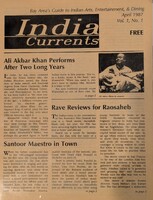
India Currents Magazine – First Issue (April 1987, Vol. 1, No. 1)
The first issue of India Currents (April 1987), launching one of the Bay Area’s longest-running South Asian cultural magazines.
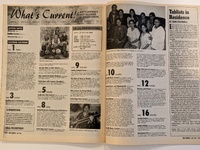
India Currents – “What’s Current!” Cultural Calendar and Feature (May 1998, Vol. 12, No. 2)
“What’s Current!” listings from India Currents (May 1998), showcasing vibrant South Asian arts, music, dance, and community events throughout the Bay Area.
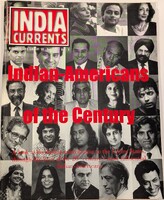
India Currents – “Indian-Americans of the Century” (December 1999–January 2000)
Landmark 1999–2000 India Currents issue celebrating the most influential Indian Americans of the 20th century.
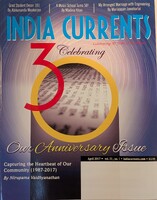
India Currents – 30th Anniversary Issue (April 2017, Vol. 31, No. 1)
India Currents’ 30th Anniversary Issue (April 2017), celebrating three decades of South Asian storytelling and community journalism in the Bay Area.
Founded in 1987 from Vandana Kumar’s living room, India Currents became a cultural lifeline for the Bay Area’s growing South Asian community. For decades, its pages mapped local life, from music and dance classes to political debates, immigration stories, and cultural celebrations. More than a magazine, it served as a gathering place where readers found connection, identity, and a sense of belonging. Today, India Currents continues its mission as a fully digital publication, chronicling the evolving experiences of South Asians across the region.
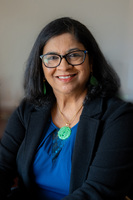
Starting India Currents was about finding others like us … it built a community.
Print Media — Community Journalism
Siliconeer
From Y2K to Today: Documenting a Changing Diaspora



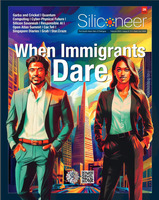

"Every article you see will be so unique that you won’t be able to read that kind of content anywhere else."
Siliconeer continues to tell the story of the South Asian community through innovation and evolving perspectives, honoring its roots while documenting the future.
Print Media — Community Journalism
India West
Chronicle of a Community in Transition
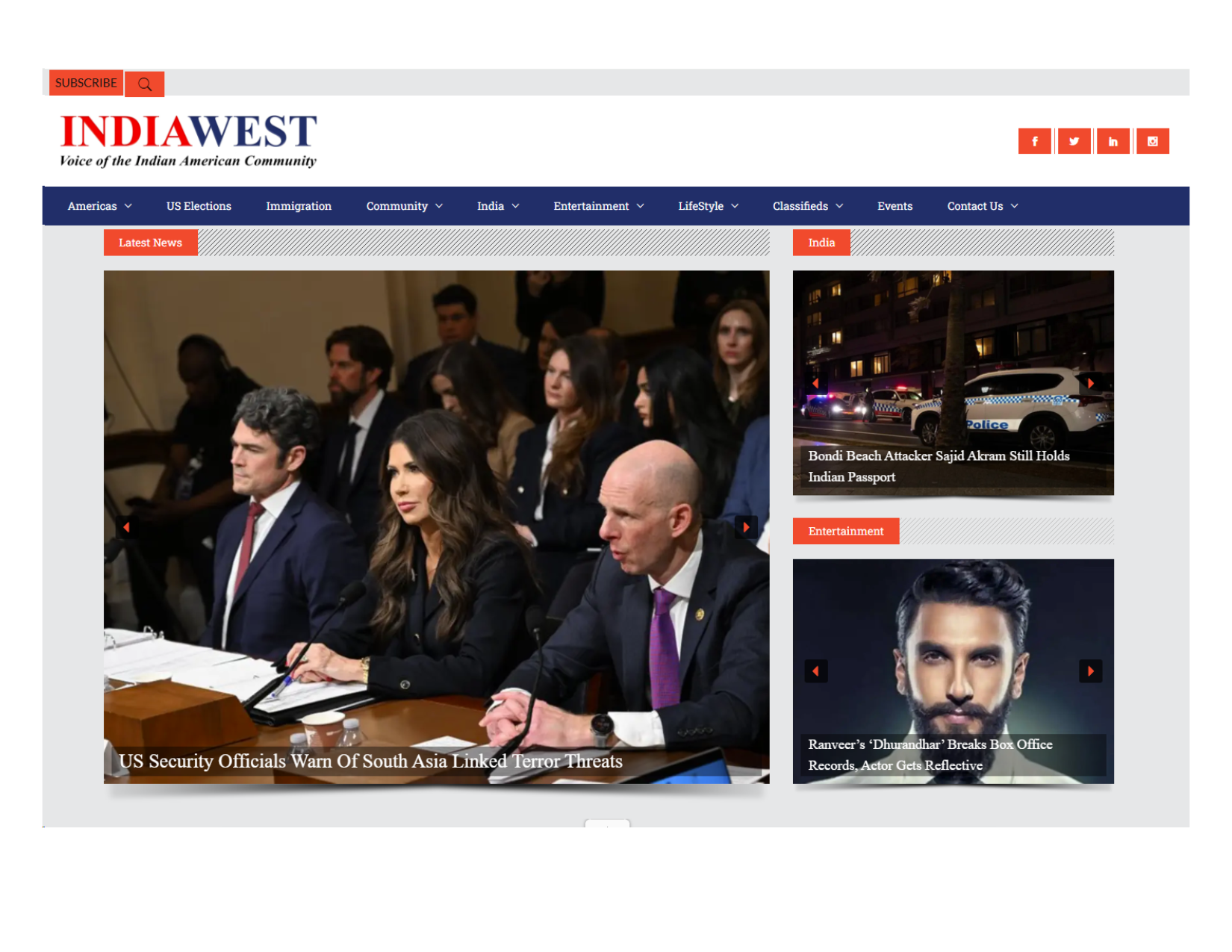
India West is a long-running Indian American news publication founded in 1975 that has served as a key voice for South Asian communities on the U.S. West Coast. Based in Northern California, it began as a print monthly and became a weekly in 1978, covering news, politics, culture, business, and community life with a particular emphasis on Indian Americans in California. Today, India-West continues in digital form, documenting diaspora stories, debates, and achievements for readers across the United States and beyond.
Print & Community Journalism
Sunita Sohrabji – Community Journalism as Advocacy
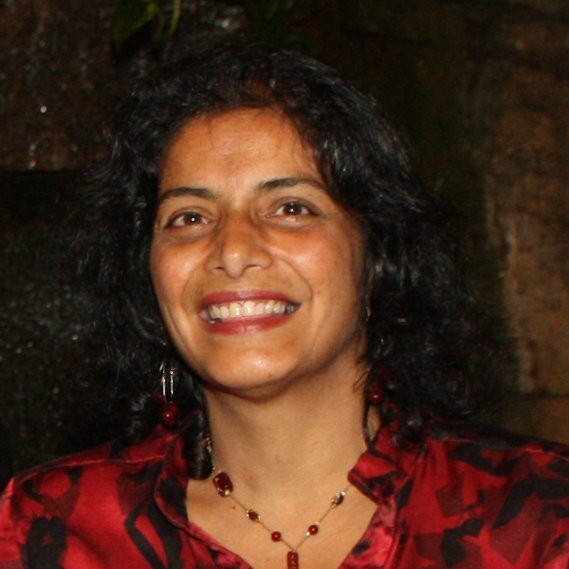
We are advocates for our communities.
A longtime reporter for India-West and later Health Editor at American Community Media, Sunita Sohrabji has built a career around community-centered journalism. Her reporting has explored hate violence, immigrant labor, mental health, public health, and environmental justice, bringing visibility to stories often overlooked by mainstream newsrooms.
Through stories on Navroze Mody, postpartum depression, “Nani” caregivers, and electronic waste in India, Sohrabji’s work shows how community media can document history while also serving as advocacy.
Healthcare Journalism
Arundhati Parmar — Leading with Truth in Digital Journalism
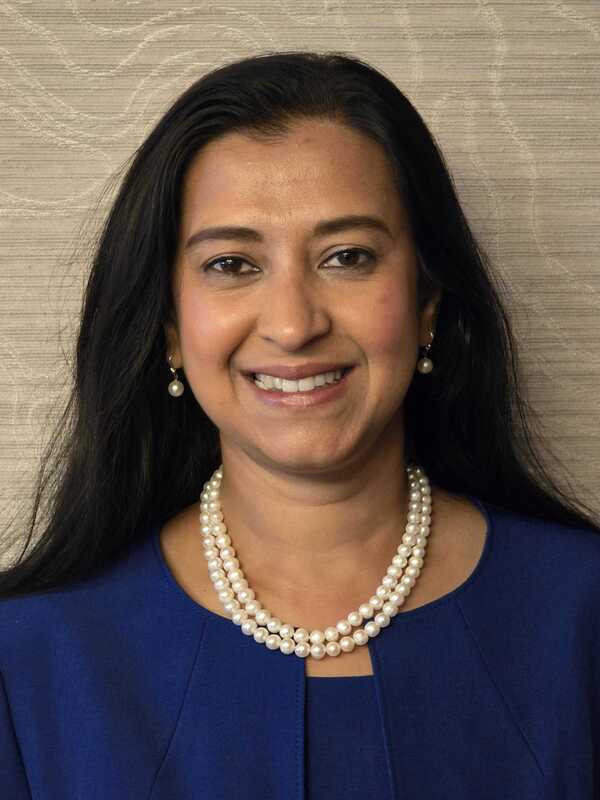
Strive for the truth relentlessly so that the Sanskrit phrase ‘Satyameva Jayate’ — Truth Alone Triumphs — doesn’t become a casualty to deepfake videos and disinformation.
Born in Kolkata and now leading MedCity News, Arundhati Parmar has built her career at the intersection of healthcare, technology, and investigative reporting. As Editor-in-Chief, she pushes for depth and accountability in an era of speed and speculation, urging her reporters to “go beyond the headline.” While she identifies first and foremost as a journalist rather than a South Asian journalist, her work and leadership reflect a commitment to representation, accuracy, and integrity in mainstream media.
Freelance Journalism
Anahita Mukherji - Writing Between Worlds
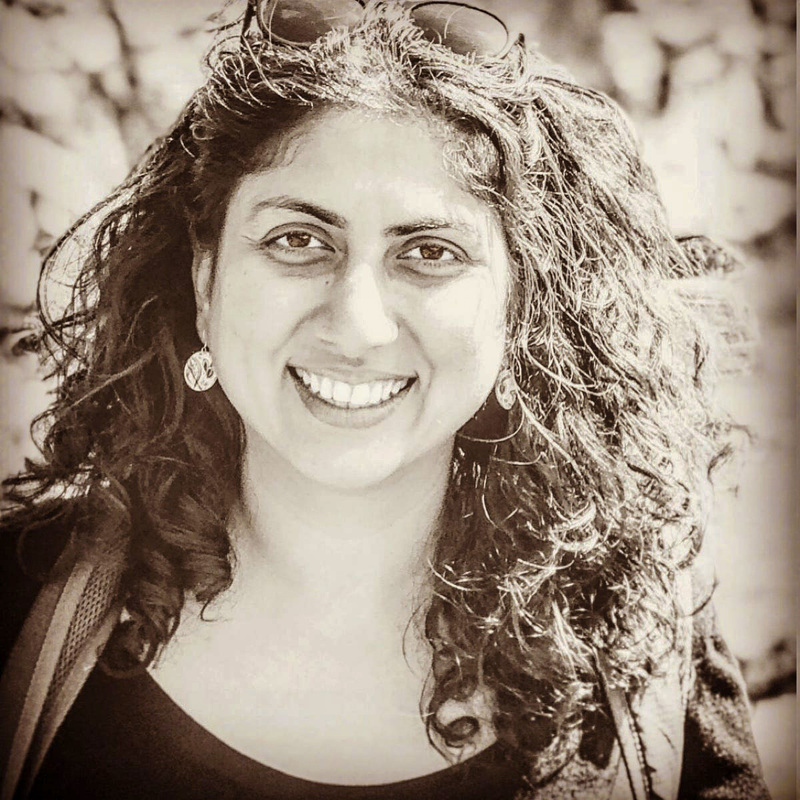
“At the heart of the differences between India and the West lie the stereotypical difference between a culture that is collective and one that is individualistic. Toggling between the two can feel a lot like speaking two different languages that are impossible to translate.”
A longtime investigative journalist with The Times of India, Anahita Mukherji moved to the Bay Area and began writing vivid, deeply reported pieces about the immigrant experience, cultural identity, parenting across borders, and the evolving South Asian community in Silicon Valley.
Her work for Scroll.in, Quartz, Spaceship Media, and The Morning Context blends reportage with personal insight, revealing what it means to live between cultures while navigating new norms, technologies, and diaspora expectations.
Hassina Leelarathna (1951–2023) — A Pioneer of South Asian Ethnic Media
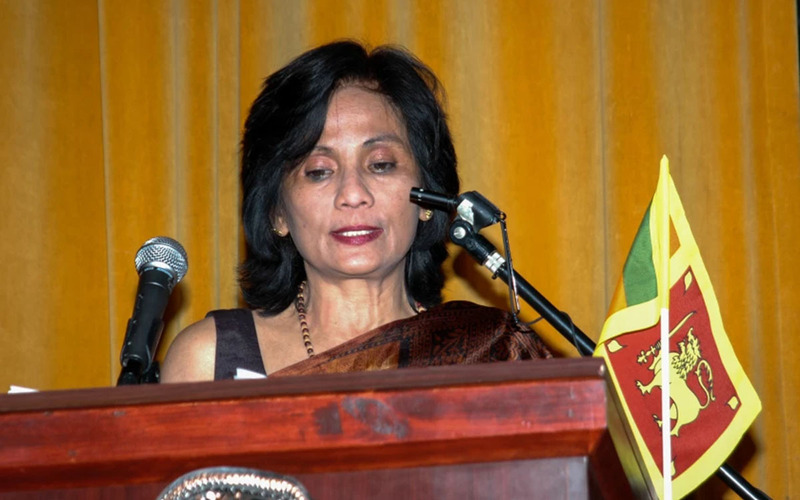
Ethnic media exists because our stories were not being told — and because they will not survive unless we tell them ourselves.
As co-founder and longtime editor of The Independent and later Sri Lanka Express, Hassina Leelarathna shaped one of the earliest South Asian news platforms in California. Her reporting illuminated stories of migration, identity, and justice at a time when mainstream outlets rarely covered the South Asian diaspora. Her work set the foundation for a new generation of ethnic media in the Bay Area, demonstrating the power of community storytelling to preserve history and voice.