

Anahita Mukherji
Reporting from a transnational perspective

A longtime journalist and former Assistant Editor at The Times of India, Anahita Mukherji brings a transnational perspective to her reporting from the Bay Area. Her work explores identity, gender, migration, and the cultural negotiations of life between India and the United States. She writes for Scroll.in, Quartz, Spaceship Media, and The Morning Context, blending investigative depth with personal insight.
A Journalist of the Transnational Moment
Anahita’s journalism bridges India, the Bay Area, and the cultural spaces in between. Trained in Mumbai and inspired by a family steeped in public life and publishing, she spent a decade reporting on social inequality, caste, domestic violence, and urban life before moving to the United States.
While in Silicon Valley, her writing turned toward the complexities of motherhood, identity, memory, and migration, themes that shape the experiences of many South Asian families. Her reporting combines analysis with empathy, revealing how technology, distance, and cultural expectations shape what it means to belong in more than one place at once.
I do not believe that covering South Asians should be the job of South Asian-focussed media alone, given the explosion of desis in Silicon Valley. I believe the mainstream media has not done enough to represent the community. I believe there should be beat reporters/community reporters dedicated to covering the unique experiences of being South Asian in the Bay Area.
Reporting Reflections on the Bay Area
Cultural Negotiation
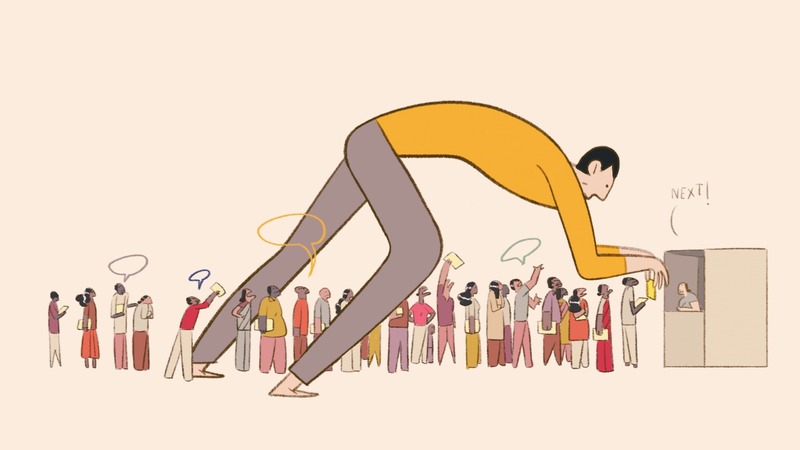
At the heart of the differences between India and the West lie the stereotypical difference between a culture that is collective and one that is individualistic. Toggling between the two can feel a lot like speaking two different languages that are impossible to translate.
When I first moved countries, I thought the ideal society was one that was mid-way between India and America – one with a strong sense of community that did not consume the individual. But over time, as I myself slide from one end of the scale to the other, and back again, I’ve figured that the sweet spot between two cultures can be hard to locate.
Disapora & Memory
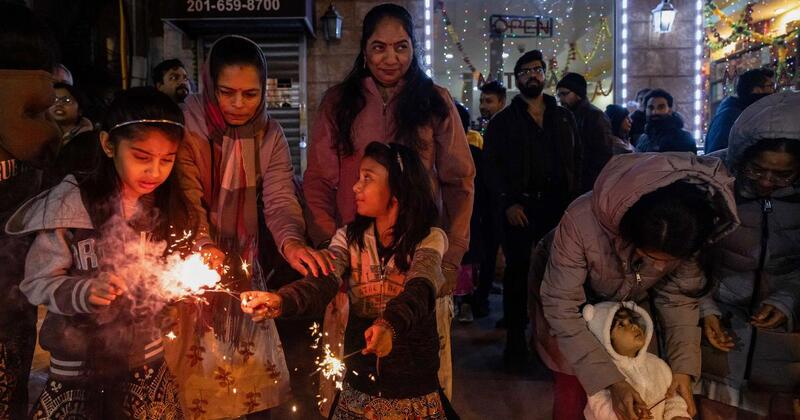
"Transnational migration can make it particularly hard to pin-point the exact geographical location of a particular culture or way of being. The countless dosa shops, Indian grocery stores selling Wagh Bakri chai and Parachute coconut hair oil, and Punjabi aunties rolling out freshly minted parathas in the Bay Area add to the sense of home away from home."
Technology & Immigrant Life
I was soon to realise advancements in technology added an extra dimension to my own immigrant experience, explaining the ease with which I could straddle two countries at opposite ends of the globe. Unlike the pathos-laden Indian immigrant literature I grew up reading, where migrants yearned for their homeland, my mother and mother-in-law in India can, over video calls, see my children’s milkshake-stained faces before they set out for school, and have occasionally reminded me to zip up their jackets as they peer into my home. This is a far cry from the experiences of an earlier generation of immigrants who had to make do with hurried conversations over expensive phone calls to India – a generation that often clung to the culture they left behind with great fervor.
Gender & Law
What I also envied most about mothers in America was that they were allowed to know their child’s gender while pregnant, a luxury denied to Indian women. Sickeningly high rates of sex-selective abortion in India gave birth to a law preventing prenatal sex determination. The sonography clinic I’d visit in Mumbai while pregnant had signs warning of how sex-determination was illegal. Every time a pregnant mother in America tells me the gender of her baby, an alarm bell still goes off in my head.
Domestic Violence Reporting
There is a great deal of shame associated with talking of domestic violence in a culture that largely blames the woman for the abuse she suffers. Sometimes, when the police turn up in response to a 911 call, the woman says she dialed the number by mistake. She may have called the police in a moment of anguish while being abused, out of fear for her life, but may not want to carry through with the complaint later on. After all, a lot of women still love their partners, despite the abuse.
Quote from Scroll.in story


Read More of Anahita Mukherji's journalism work:
The Wire Articles
Scroll.in Articles
Times of India Articles
Muck Rack Profile
Advice to Aspiring Journalists
Own your identity. Be authentic to who you are. When you’re authentic you create a bond with the people you’re reporting on. I owned my identity as an Indian in America and that helped me empathize with the people whose stories I was telling. In a piece on Telugu culture in Silicon Valley, I was able to capture the experience of a woman who grew up in a conservative South Indian family in the middle of a Jewish neighbourhood in Pennsylvania, and the uniqueness of her interactions with fresh-off-the-boat immigrants in the Bay Area. This is very different from my own experience as an Indian moving to America with a baby. It’s important to acknowledge and understand one’s own position in the diaspora while reporting on people whose experiences differ from your own. When it comes to telling authentic stories, I don’t think it matters whether they’re from within the community or from another community. Authenticity often simply means doing a good job as a journalist, taking copious notes, fact checking and representing people as best you can.
Content courtesy of Anahita Mukherji. Used for educational, non-commercial purposes.