Ankita Mukhopadhyay Kumar is an award-winning Indian journalist and documentary filmmaker based in the United States. Her directorial debut, Far from Home, is the first documentary on Afghan refugees in India and was selected to more than eight international film festivals, including the Academy Award–qualifying Tasveer Film Festival and the American Documentary and Animation Film Festival. The film was funded by the Pulitzer Center on Crisis Reporting and the American Institute of Afghanistan Studies, was a finalist for NHK’s Japan Prize, and runner-up for Best Short Documentary at the Chicago South Asian Film Festival.
As a journalist, Kumar has received the Professional Excellence Award from the Association of Foreign Press Correspondents in the United States and the Presidents Award from the Society of Professional Journalists. She has held reporting fellowships from National Geographic and the Pulitzer Center and has published internationally, including work with Deutsche Welle and The Economist Group. She currently serves as a regional director at the Society of Professional Journalists.
Kumar holds a Master’s degree in Journalism from Northwestern University’s Medill School and a Master’s degree in History and International Relations from the London School of Economics, where her dissertation received distinction. Her reporting and filmmaking center on refugees, displacement, labor, and marginalized communities.
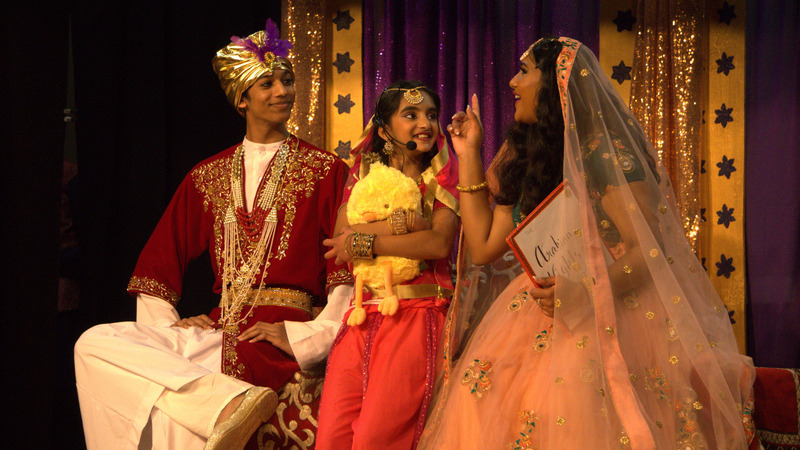
Katha Munch adapts The Arabian Nights, a collection of Middle Eastern and South Asian folk tales woven together through the framing story of Queen Shahrazad.
Katha Munch adapts The Arabian Nights, a collection of Middle Eastern and South Asian folk tales woven together through the framing story of Queen Shahrazad.
Arundhati Parmar is the Vice President and Editor-in-Chief of MedCity News and co-host of the podcast Debunked: Slaughtering Myths, Bad Practices and Sacred Cows in Healthcare. Based in Saratoga, California, she has built a career in healthcare and technology journalism that spans local newspapers and national business media.
Originally from Kolkata, India, Parmar credits her early exposure to journalists and her grandmother’s work as a publisher for inspiring her path. After reporting for local papers in Indiana and Chicago, she specialized in medical technology coverage, eventually leading MedCity News. She emphasizes thoughtful analysis beyond headlines, ethical reporting, and elevating underrepresented perspectives in healthcare media.
In her reflections for the South Asians in Silicon Valley exhibit, Parmar shared that she sees herself first and foremost as a journalist rather than a “South Asian journalist,” and believes that true inclusion in media means equal capitalization of all racial identifiers. Her advice to young reporters: remain aware of bias and uphold the Sanskrit ideal “Satyameva Jayate — Truth Alone Triumphs.”
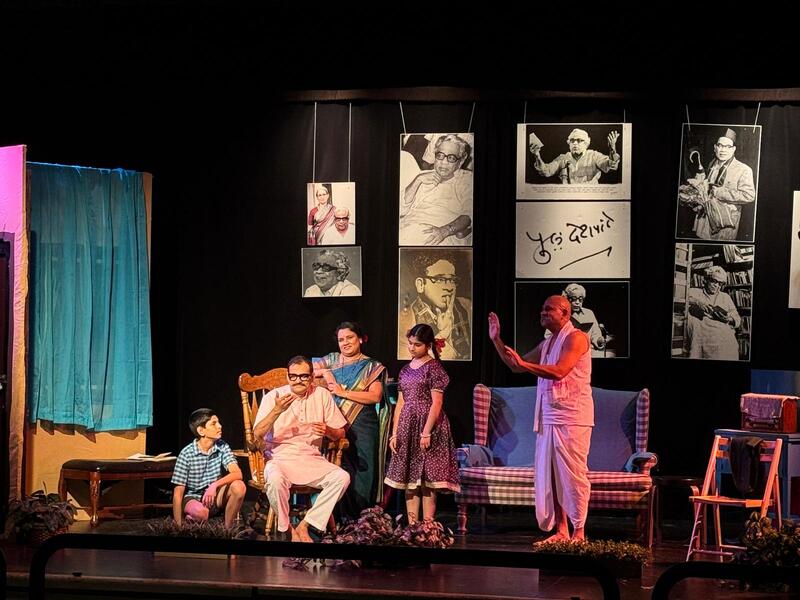
Asaa Mee Asaamee revisited one of Pu. La. Deshpande’s most beloved social comedies. The play follows a lower middle-class man deeply rooted in tradition as he navigates personal ambition, economic aspiration, and shifting social hierarchies. As his professional environment transitions from colonial British influence to Marwari business leadership, the protagonist confronts questions of identity, class mobility, and cultural continuity. Balancing satire with empathy, the work captures the anxieties and aspirations of upward mobility within a changing social order. Ratnakar Matkari’s adaptation preserves Deshpande’s humor while sharpening the narrative for contemporary performance.
Bay Area Amateur Thespians (BAAT) is a nonprofit theater organization dedicated to producing high-quality South Asian drama in the Bay Area. Founded in 2018, BAAT is a collaborative platform for performers, directors, designers, and technicians committed to multilingual, culturally rooted storytelling. The company stages works in Bengali, Hindi, and English, ranging from contemporary thrillers and comedies to adaptations of significant South Asian literary texts. BAAT frequently incorporates English supertitles to broaden accessibility and engage intergenerational and cross-cultural audiences.Positioned within Silicon Valley’s vibrant South Asian diaspora, BAAT bridges classical and modern narratives, cultivating community through disciplined ensemble work and fully realized theatrical production.
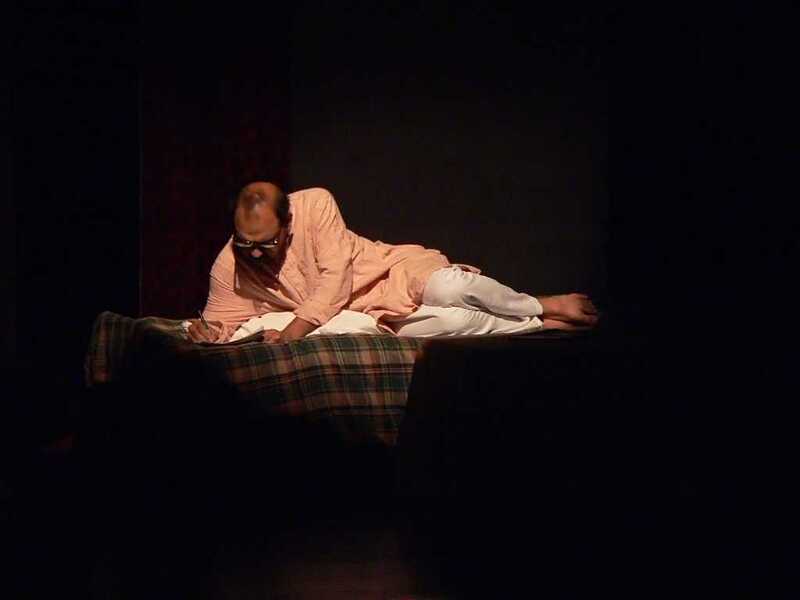
Written in 1965 by Badal Sircar, the play focuses on the internal turmoil of a conscientous, thinking man as he watches helplessly the status of a war-torn world. Staged in 2005, ENAD staged this play as the ongoing global conflicts made Sircar's play very relevant.
The Bansuri is a traditional flute found in art and texts from ancient India. It features six holes, is side-blown, and is made from dried and treated bamboo.
Poster for the company’s production of Mahasweta Devi’s Mother of 1084, directed by Ranjita Chakravarty. The play traces a mother’s search for truth after her son is killed in political violence, transforming private grief into a broader indictment of state power and social silence.