

Srishti Prabha
Bay Area journalism rooted in identity, community reporting, and public media audio storytelling
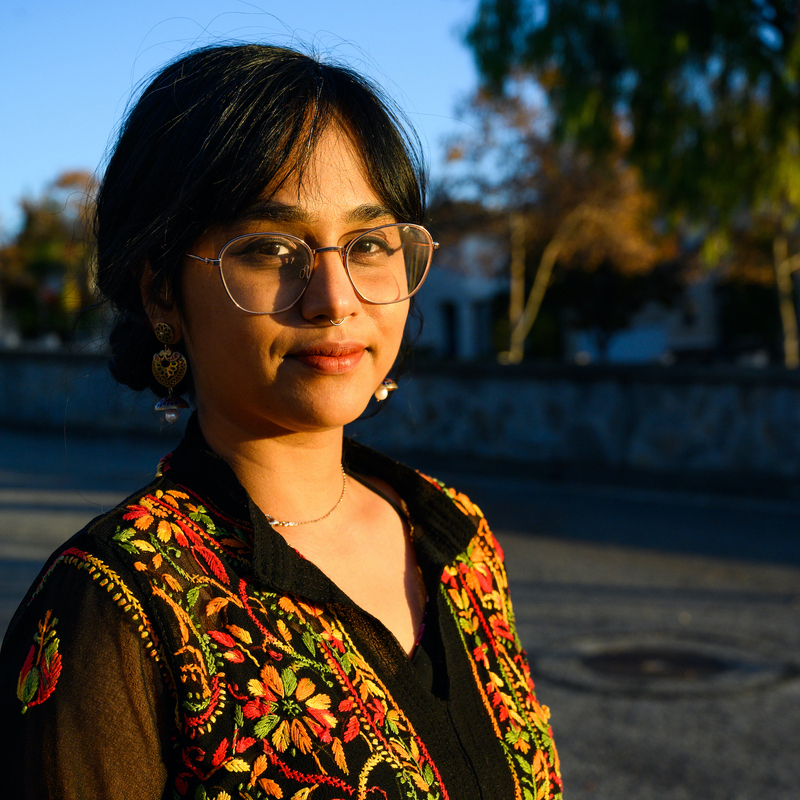
Photo Credit: Sree Sripathy
Srishti Prabha is a freelance writer and editor with bylines in NPR, KQED, CapRadio, The Sacramento Observer, East Palo Alto Today, and more. They currently help produce long-form audio and digital stories with The California Report Magazine at KQED, reporting human-centered narratives that examine identity and history in California. A queer, first-generation South Asian raised in the region, they focus on stories of belonging, displacement, and civic life, with particular attention to communities often missing from mainstream coverage.
From science to anthropology to journalism
Prabha’s path to journalism was non-linear. They began with undergraduate study in biology and environmental science, then moved into anthropology to examine education bias and how early narratives shape the way people understand the world. Journalism became a natural extension of that work: research and observation in service of public understanding, accountability, and change.
Community reporting as public service
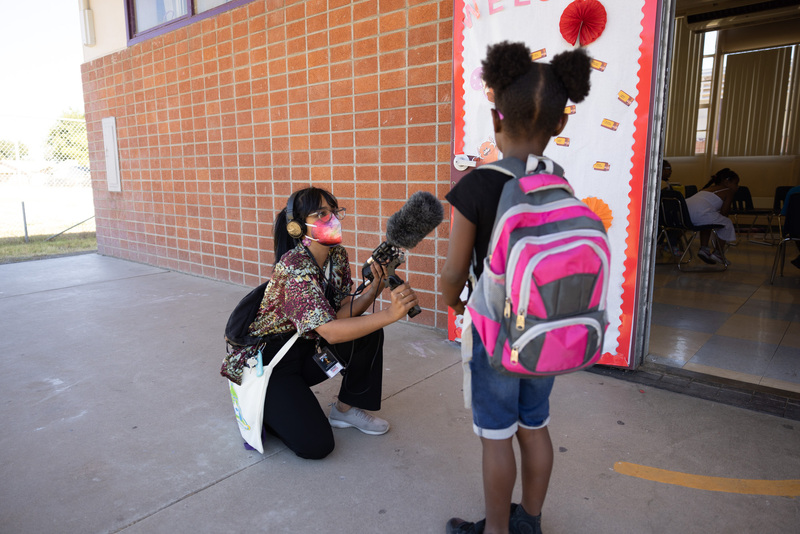
Early reporting work at East Palo Alto Today, a grassroots nonprofit newsroom, shaped Prabha’s focus on communities facing displacement and gentrification tied to nearby tech growth. In that setting, journalism documented what residents were living through and how local networks organized to stay rooted.
Why ethnic media matters
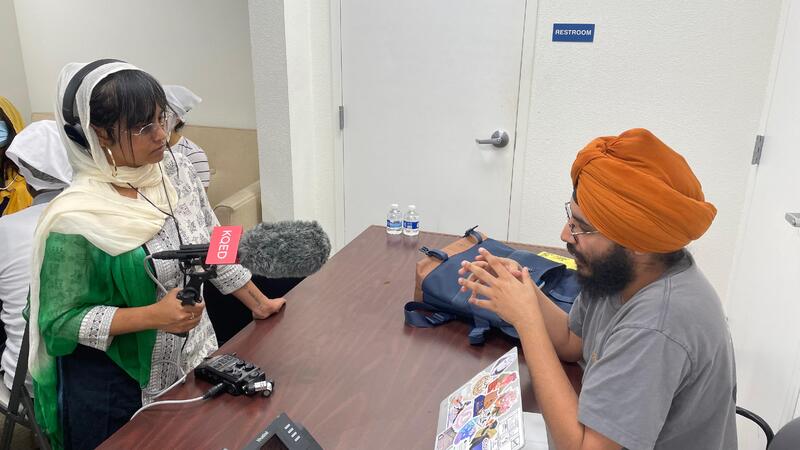
Prabha describes ethnic media as essential for telling identity-driven stories that mainstream outlets may overlook, including the experiences of undocumented South Asians and the everyday spaces where community forms. They also note that ethnic media often depends on community contributors whose grassroots perspectives are powerful, even when the newsroom must provide substantial editorial support behind the scenes.

Public media and the power of audio
In public media, Prabha sees an opportunity to bring community stories to wider audiences, even when highly specific reflective stories can be harder to pitch. Audio journalism is especially powerful because emotion and voice create intimacy, allowing listeners to imagine the story through the subject’s perspective without centering the journalist.
Audio is powerful because it lets listeners imagine the story through emotion and voice, elevating the people being heard rather than the journalist.
Featured Work
Across audio, digital, and community media, Srishti Prabha’s reporting centers everyday spaces where culture, care, and connection are built. Their work highlights how identity, migration, and belonging show up in places that are often overlooked, from neighborhood shops to classrooms and community institutions.
Public media reporting (KQED, CapRadio, NPR)
- Need a Gorgeous Diwali Outfit? Nimisha Aunty Will Take Care of You
KQED — A story about community care, small businesses, and cultural continuity through a Bay Area Diwali tradition. - Sacramento South Asian Temples and Markets Foster Cultural Connections During Diwali
CapRadio — Reporting on how religious and commercial spaces help sustain cultural connection across generations. - Schools Aim to Enrich Students by Expanding Culturally Responsive Arts Education
NPR — An exploration of education, representation, and how culturally responsive arts programs shape belonging.
Community journalism series (India Currents)
While at India Currents, Prabha reported a series examining South Asian grocery stores as sites of memory, labor, and community infrastructure.
- Chasing Memories Inside of Santa Clara County’s Desi Grocery Stores
A look at grocery stores as emotional and cultural anchors for South Asian families. - Three Cultures, Two Shopping Carts, One Desi Grocery Store
Reporting on generational identity and how shared spaces hold multiple cultural realities at once. - Endurance Test: Underserved Desi Grocery Workers Go to the Front Lines
An examination of labor, risk, and invisibility among essential workers during the pandemic.
What feels most urgent to cover
- Undocumented South Asians: under-covered and often kept silent by stigma and the “model minority” narrative
- Detention centers: Punjabi and Hindi speakers in detention across California need sustained reporting
- Generational shifts: Millennial and Gen Z identity, politics, and community expectations differ from earlier waves
- Casteism and colonial legacies: complex narratives that require careful, rigorous journalism
A new generation of storytelling
Prabha sees younger journalists pushing toward more progressive and inclusive storytelling, especially in ethnic media spaces that have historically catered to older or more conservative audiences. They describe a shift in how objectivity is understood: lived experience and identity can be a source of insight, connection, and accountability rather than something to hide.
Advice for aspiring journalists
Don’t forget your identity when you enter a room, because the power that you hold is in your own voice and your lived experience.
Srishti encourages journalists to:
- Value your identity: your lived experience is a unique power you carry into the work
- Challenge dismissal: if someone questions why your perspective matters, ask why it would not
- Navigate constraints: understand institutional rules, but keep community voices centered
- Stay grounded: journalism can be difficult, but do not lose your sense of self