
Kossuth
Land of the Magyars! thou who rose
Complete in awful arms, to cope
With banded nations for thy foes—
A new Minerva!—with what hope
We saw thy dauntless sons pour out
Their blood at Freedom’s charging shout,
And heard thy Warrior-Prophet peal
His war-cry potent as their steel,
With words that roused our souls afar
To wage with him that desperate war,
Till we could almost trust the tale
Of promise that thou shouldst prevail.
We saw the grim and frozen North
Pouring its stolid thousands forth,
Who came like locust-clouds that brown
Wide realms of greenness in their path,
And sunk like autumn leaves sucked down
The roaring whirlpool of thy wrath.
But treason, still the deadliest foe
Laid all thy budding promise low.
It came! the fall that could but come,
Came to repeat the eternal law
That swords shall bite the hands that draw
And slaughter seal the slayer’s doom.
Yet brave Hungaria, not the less
In more than battle’s poor success
We hail thee victor, hail and bless,
Thy fiery trials have annealed
High souls that will not shrink or yield;
Thy Warrior Bard whose awful words
Are rhythmed to the clash of swords,
Sublime Kossuth, himself, shall be
Thy Land’s eternal Victory.
- Title
- Kossuth
- Alternative Title
- Land of the Magyars! Thou who rose
- Creator
-
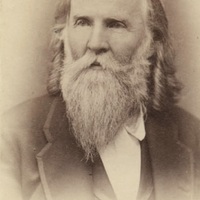
George Shepard Burleigh
- Bibliographic Citation
- George S. Burleigh Papers, 1825-1902. John Hay Library, Brown University. Small Scrapbook 126
- Date
- Date tbd
- Subject
- Historical Figure
- Kossuth
- War
- Non-Violence
- note
- Intriguing poem thematically. Contains that tension between cheering for the freedom struggle, yet still holding aloof from violence.
- Kossuth was in New England for fund-raising and to publicize the plight of Hungary, in the early 1850s. See article from the Massachusetts Historical Society below. This makes the early 1850s a likely time for this poem's composition.
- Massachusetts Historical Society re. Kossuth in New England
- Media
-

Kossuth