I.
The Oaks are green and untouched, and the wide hill waves
With a glory of unassailed verdure,
Save where the daggers of Frost
Have dyed the Maple with crimson signs of death;
O sadder there, mid the green pride of its peers
It seems, than overwhelmed with the whole
In fellowship of ruin.
We mourn not so keenly at herded misery
As at the one wretch in the joyous crowd alone;
Many deaths in the day of pestilence move us not
As the passing away of an old Man from our midst,
When death smites not another;
One pang can pierce our hearts, but the flooded and fast-coming ills
Defeat the sense, and we lose us in vague wonder.
II.
Now a deeper tinge has dyed the Autumn woods
With yellow, and purple, and red, on the field of native green,
Crost, and parted, and blended again,
Like the mingled tones in the audible splendor of song,
Or the hues of Thought these changing hues inspire
O ineffable glory awaits round the dying year,
Like a band of angels round a Good Man’s bed,
When his soul is shedding its robe, like a leaf of the forest—
More beautiful now in its Exodus
Than in its summer prime.—
The life of man, like the life of the year, gathers all its wealth together,
To wait, like attending spirits, on its departure
And repay the sorrow that comes of its passing away
With the hoarded beauty of all its pilgrimage,
In the death of the Wise, though we weep, we are richer than in their prime.
III.
They love not the Autumn less than Summer, who wed
Each day to the last by the ripening of some seed,
Spring-sown and nursed with the growing time,
To bear sweet fruits of blessed works:
Who see in To-day the greenness of Yesterday,
Made golden in ripened harvests of good deeds,
Thought-planted in the Past.
Only the sluggard, the fruit of whose vintage are thorns,
The night-shade and berries of death,
Wind-scattered and cherished in sloth,
Will find decay in the bream breath of the Fall.
The Bee, by his daily forethought,
Links the Summer to Winter, and sweetens the keen with the soft.
The idle Fly—thoughtless in sunshine—when the cold comes,
Wastes half the year in the grave,
Waiting to live, while the time for life goes by.
IV.
Very winter is not of despair to the wise.
Think ye the winds wail a dirge for the dead? ah, never!
They pipe a retreat to the victor months
That throng the gates of the Year, replete with booty
Wrung by stroke upon stroke from the hungry Elements;
Piled in the garners, piled in the cells,
Piled in the groaning pantries, crowd on crowd
The wealth of the season pours—as the strength and pride
Of the coming year retreat to the tree-trunks and roots of herbage—
The joy of the seasons, with all its pure delight,
This too has its garner, beside the blazing fire,
Where the old Man sits with clasped palms,
Feeding the flame of his quiet thought with the scenes of the past,
As the youths feed the hearth-fire there with the growth of the foregone summers;
There the grand-dame bends her wrinkled brow
Over dreams as sweet as childhood’s self—
And the stately wife is there—the mother of brave young boys and gentle girls—
With the Father and busy flock, all plying their tasks
At books or needle, or younglet’s mimicry—
While the fire sings warmly to the wind that whistles coldly back.
Was never a gladder time than this
When the cold has gathered the waste joys of summer like dew,
And rained them down in one fountain of delight.
So Death garners ripened life
Into one full heaven of bliss forevermore.
V.
More pure and bright, while the frost-air grows more keen,
Shines the golden brotherhood if Suns,
Orion and Mazzaroth, flankt with their fiery peers.
More holy and clear in the night of withering scorn
Beam forth the Truths that glow in a heart sky-like
High, pure, and world-embracing, and lit with these as the heaven with stars;
And, as n the firmament round each visible orb
Are unseen Planets, a pearl-white Sisterhood.
Veiled in their heaven-highness of purity from the low gaze of earth—
So around each fire-eyed Truth,
Is a Sister-band of joys unseen of the world,
Knitting their delicate dance for the love of the high-hearted.
Brave Love of Truth, front the wintery scorn of men,
Be strong in thy faith, and she gives thee bright worlds for thy marriage dower.

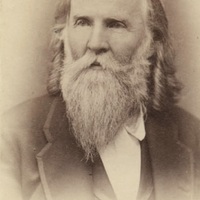 George Shepard Burleigh
 Silences II