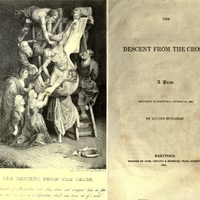
Descent from the Cross, The
Sunset o'er wide Judea. Broad and red,
Rolled down the affrighted orb, and scarce one ray
Gave back to gild rock, spire, or temple dome.
One lurid glare was burning on the brow
Of the astonished heaven — the mantling blush
Of conscious Nature, at the deep and black
Ingratitude of man. The fire-eyed sun
Had never seen, along his radiant way,
So foul a deed and wild, as darkened then
The golden lustre of his fading beams ;
Since o'er the kindling of creation's dawn,
The hand of God marked out his burning path
Through the void firmament; not even when
His fiery beams drank up the martyr-blood
Of murdered Abel, as he bowed in death;
And gave his soul an offering to God,
At his own altar.
The departing day
Had veiled its glances, that they might not gild
The victor car of man's Arch-enemy,
In his most fatal triumph, — conquest won,
That, suicidal, smote his own proud crest, —
'T was done! For earth, the anointed Lamb was slain;
Slain for our sins, and the revolted world,
That we through Him, might have eternal life. —
The maddened multitude, swayed to and fro,
Like the wild ocean, when its storm lashed waves
Burst terrible o'er their flinty bounds, had rolled
Forth, from the gates of walled Jerusalem;
And, like the returning ebb of that wild sea,
Rolled back again, while on Golgotha's brow,
Earth's crowning sacrifice, God’s well-beloved,
Hung stricken with intensest agony,
Than which, save His, nor fiercer pang could bear
Nor deeper sting, one soul, or free or swathed
In the weak foldings of mortality. —
The impious scoff, and the derisive jeer,
Of priest, and populace uprose to heaven,
Blackening the cloud of vengeance, that hung dark
O'er Salem's doomed and long-devoted walls.
Fierce Hell had heard the shout of “Crucify,"
Rung by the infuriate multitude; and seen
The horrid triumph of incarnate fiends;
And Hell was stirred through its profoundest deep.
Her swarming legions, pouring from their caves,
As pours the simoon on its deadly march,
Winnowed the desert waste, and mountain cliff,
With the swift beat of foul and obscene wings;
And hovering demons on the burning air,
Darkened the sun at noonday. Rayless, rolled
The unblazing orb along the hueless heaven,
Shedding thick gloom, and deeper night, upon
The all prevailing darkness. Rocks were rent;
Earth's granite heart was broken, at the deed
Of unrelenting man; and the dark grave,
Shook from the slumber of revolving years,
Yawned heavily. The sheeted dead leap'd forth
From the dark sepulchre, a spectral host,
And dimly strode along the dismal gloom.
The wild rout of the maddened populace,
With sceptered king, and chief, and jeering priest,
Had passed away, when from his home, abashed,
The affrighted Sun looked out. The Crucified
Mocked in His wasting torture, rolled His eye
Upward in agony and cried aloud,
" Eloi! Eloi! lama sabacthani?"
And the great Spirit of incarnate God
Clove the sick air and darted into heaven. —
Night came, and turned the heartless deicide
To lift, in impious mockery, the hand,
Red with the blood of slaughtered Innocence,
And call to heaven for blessings on the deed.
Beneath the shade of twilight's dusky wing,
A chosen band approached the accursed cross
With solemn tread along their voiceless way, —
Voiceless, save ever and anon a moan,
From the deep-heaving-breast of one, that broke, —
The Virgin mother mourning for her Son.
Joseph the just, and John the well beloved,
On whose strong arm the weeping mother leaned.
And Nicodemus in whose heart the fear
Of popular scorn, and the unyielding hate
Of a proud world, his love could quench not, came ;
And with them, Mary, from whose tortured breast
Startled at Christ's omnific word, in dread,
The seven foul spirits to their burning home
Fled howling fierce, and left her bosom pure;
And the tried souls that terror could not awe,
Of death and fell derision. On they moved
To bear the Saviour's cold, insulted form
To its chill mansion in the dreary tomb,
Corruption's rock-hewn temple, where the worm
Is mightier than the conquerer, whose tread
Hath crushed the nations down, and shook the world.
Heaven's arch was dark and shadow veiled, save where
The effulgent glory of the Father shone
On the slain Son. The dun clouds to and fro
Swayed heavily on the tired and sluggish wing
Of the inconstant wind ; and starless night
'Gan peer above the foldings of the mist.
Silent they gathered round the accursed tree,
A stricken bandI The memories of the past,
Like armed spectres by the potent wand
Of Chaldean sorcerer up-called to life,
Came crowding on each soul as sorrowing
The mourners bended to their holy task.
There stood the mother, and her heart was wrung
With all a mother's agony, for a Son
Murdered by ruthless hands, a Saviour slain
By an ungrateful world; her upturned eye
Mournfully glancing on the pulseless corse,
And the soul's sadness written in her gaze.
What burning thoughts were hers, as they unloosed
The cruel iron from His mangled palms,
And His pierced heart dropped gouts of clotted blood.
The gloomy memories of the buried past
Hung o'er the darkened present, and the thought
Of gladder moments like the sudden light
Poured on the midnight thunder cloud, revealed
The unbroken gloom that compassed it around :
Perchance the calmness, when the storm was o'er.
Left by the last kind touch of Death upon
His pure cold brow and His unmoving lip,
Sent back her agonizing thought, and told
How her young heart beat high with holy joy,
When o'er His cradle hung the morning star.
And the grey Magi came and bent to see
The heavenly quiet of His infant sleep.
Ss angel pinions fanned the unchanging brow
Of the young sleeper. Then, perchance, there came
The thought of trials past, when Bethlehem's star
Grew dim in heaven, and by the Spirit led,
For Egypt's plains, she took her sunless way,
With the young Child; still in her weary flight
Guarding His slumbers with a sleepless eye,
What time the wrath of sceptered Herod burned
In kingly fury o'er the bleeding land.,
Till one loud wail went surging up to heaven
From slaughtered infants mangled on the sword;
The voice of anguish came from Rama's vales —
The wail of Rachel for her children torn
And dashed in vengeance on the gory wall;
While mourning mothers poured their loud lament
From vallies green, and the uplifted hills,
And their deep sorrows melted into hers. —
Low at her feet and by the Saviour's Cross
Knelt Mary of Cleophas, she who sought
His steps in Galilee when the burning scorn
0f mocking multitudes was the price of love,
And there, undaunted by the scoffers' jeers,
Ministered to Him faithful to the last;
And by her side knelt Mary Magdalene,
Earnestly gazing on the pallid face
Of the descending corpse; her flowing locks
Wet with the dew of even, and her heart
Heavy with sorrows. Could she all forget
The power, that, templed in that lifeless form
Had poured upon her troubled soul the oil
Of consolation, making pure, and calm,
The rough surge, torn by passions curbless storm?
Could she forget the mournful thoughts that stirred
His quivering lip upon that fatal morn,
When the Cyrenean bore His cruel cross,
And, led by impious hands the Saviour trod
The solemn death-march of the Son of God,
Warning, prophetic, on His weary way
The mourning daughters of Jerusalem
Of coming doom? Ah! no; for woman's heart.
In the deep chambers of its secret thought
Will cherish memories of the eventful past,
And brood with holy fervency o'er words
That fall unheeded and unregistered
In man's insentient bosom; woman's soul
Will nerve her to new scenes untried before,
When the dun shades of woe and grim despair.
Are dark'ning to their midnight, and the strength
Of man's proud heart is trembling in its hold.
Fearless of hate, and daring to be just
Came Arimathean Joseph, old yet strong.
His grey beard floating on his muffled breast,
And his keen eye, with manhood's fiery flash,
Mocking the quenching breath of time. Around
His being's pathway Honor poured her gifts,
And golden Wealth: but he had spurned of Wealth
And Honor all the dazzling boon they gave ;
And for his heritage avowed the hated name
Of the Rejected, Spurned, and Crucified ;
And when the agony was past to Him
Who found in life not where to lay His head,
Gave his own sepulchre, for His triduan couch,
Him, in his mournful task, with burdened heart.
Joined Nicodemus, of Judea's sons
High honored, and exalted, even among
The grey-haired counsellors and lords of state.
Wise men and reverend rulers. He by night
In the deep silence of unnoted hours
Had sought alone the Holy One of God,
Who, crownless though a King, with word and work
Woke the wide world to wonder. There he bowed
To learn the wisdom of the pure in heart,
And hear what mortal lips before, though fired
With godlike eloquence, had never spoke, —
Words of salvation, and eternal life,
Wrote by the finger of the Omnipotent
In the great volume of His infinite thought,
And uttered forth by His anointed Son.
Long in sweet converse with that holy Man,
(For God was Man and Man w'as God in Him,)
Sat Nicodemus; to the hallowed words
Bending attentive, no unwilling ear;
Firing his spirit with the eternal truth,
That, burning like sweet incense in the soul
Of the pure Jesus, poured its light abroad
To make the nations glad; and on his heart
The word, like seed upon the fruitful earth,
Fell, not unblessed; but, springing into life,
Bore the increase of righteousness and joy.
His was the voice for Justice and the Right
Among the gathered rulers; mindless he
Of the rude taunt, and curling lip of scorn,
When back, confounded, the marauders came,
Commissioned by that proud and impious band
Of mocking magistrates, to seek and bind
The Galilean Prophet. — There repulsed
His spirit cherished in its secret cell,
The words of Him, the spotless Nazarine,
Who spoke as man had never; and his thoughts,
Like pilgrims lingering at the hallowed shrine
Where some fond presence broodeth, hung above
The receding past with a deep fervency,
While with the mourners at the blood-stained cross
He wrought, preparing for its cold retreat
The desolate dwelling of that perfect Soul
That warmed in life the great Messiah's clay.
Strong hands above let down the nerveless form
Of the slain Jesus, on the sinewy arms
Of John the well-beloved. Full firm he stood
Bending beneath the precious load. Nor less
Rested the weight of sorrow on his soul,
As memory flew along the stormy track
Of his existence, and its thousand scenes,
When of the twelve, he walked, the loved and tried
Disciple of his Master, o'er the world,
A weary wanderer with a chosen band
Of martyr-spirits. lie with them had seen
The living Spirit of God "made manifest"
Clothed in the mantling robe of mortal clay.
When the cold arms, now stretched by impious hands
Across the infernal tree, were lifted up
In blessing and in prayer; or to the heart,
Where ran for blood the God-defying spear,
Folded the smiling babes, of mother's brought
For His meek benison. He with them had seen
The dead, upstarting in their winding sheets,
Tread the firm earth; the bruised, the sick, the lame,
Leaping exultingly and praising God, —
The foul and unclean spirits, tear in wrath
Their tortured victims, when by Christ rebuked
They howled their terror, and forsook their prey.
He saw, beside the walls of Jericho,
The darkened eye-balls Timeus' son
Kindle like lightning, at the gentle voice
Of a benignant Saviour. He had heard
Words, burning with prophetic eloquence,
Of cheer, of warning, and of stern rebuke,
Leap from the lips, that, cold and pallid now
Were sealed in death; — and oft the kindly glance,
Now quenched by the King of Terrors, beamed
In holy love and meekness on him, when
He, in his fondness, on the bosom hung
Of his scorned Master, ever drinking in
The holy spirit, that, like an incense pure
On the heart's altar burned, of God's anointed;
Ad when Gennessaret, from his green repose
Lashed into fury by tumultuous winds,
Growled through his granite caves, and opened wide
His black and hungry jaws, to swallow up
The reeling barks, where rode the little band
Of faithful hearts, — the meek disciple saw
The howling storm-god from his dark career
Roll back the terrors of his ebon car,
And angry ocean droop his grisly mane,
Unlock the foldings of his strong embrace
From the wave girdled bark, and shrink away
Trembling with terror to his rock-bound lair,
At the dread fiat of the great Messiah.
And O ! with Him in his great agony,
He trod Gethsemane's garden of despair,
When to His God, and to their God, He poured
His anguished soul in bitter words of prayer,
Till the tired watchers slept, and drops of blood
Wrung from His tortured heart, and driven forth
In the strong conflict, gathered on His brow.
Woke from the heaviness of his sleep, he saw
The insidious Judas give the treacherous kiss
While all the fiend was lurking in his glance.
Then came the insults, and the scoffs and jeers
Of the deriding multitude, who hailed
With loud hosannahs His triumphal march
To the celestial city, strewing wide
His pathway with their garments, and with palms
Shouting, till all the slumbering air was stirred
With the untaught and rapturous acclaim
Of praise and power to David's royal Son;
Ah! soon the change! Grey rock and mountain cliff
The home of echo, by her thousand tongues
Made tremulous with the shout, had scarcely hushed
The deep vibrations of their answering tones,
Ere wild and startling through their hundred caves
And earthquake fissures, rang the dreadful shout
Of "Crucify" from that mad multitude,
And king and priest and sloled centurion,
Mocked the Redeemer. Him the Apostle saw,
Since on His bosom he had fondly hung.
Crowned with the thorns and led to sacrifice,
Still to the daughters of Jerusalem
Breathing prophetic warning; and he heard
The loud voice of His agony, when the sun
Reeled like a drunkard in his darkened course,
And the earth groan'd. Ah! then what wasting thought
Stirred in that breast, as, cold and lifeless, sank
The form of his lone Master on it. Then
What memories darted through his stricken soul,
To wake its broken, unmelodious chords
To the deep notes of anguish. Yet his grief
Was a most voiceless sorrow. Tears of wo,
The silent witnesses of a stricken heart.
Came gently down, and with the tears of those
Who with him bended o'er the frigid corse,
Fell to the sod. Earth cherished in her shrine
The holy drops, that, falling on her breast
Told of their sorrows and their deathless love,
While Hope sunk, fainting, yet full soon to rise
With new born vigor, in each troubled heart.
They wrapped the foldings of the spotless shroud
Around the Saviour's pallid form, and took
From Calvary's brow, and towards the silent tomb,
Their funeral march, with mournful step and slow.
Now from her ebon wing descending Night
Shook the bright dew-drops to the weeping earth,
Heaven's glittering gems to deck the solemn bier.
The dark clouds vanished, melting into air
Before the glances of an angel host,
God's flaming ministers: for lo! that hour
Heaven's sapphire walls were rolled in glory back,
And pouring numberless, and far along,
Bright ranks on ranks of shining seraphim,
And fair-haired cherubs, and the golden lyred
Archangels, stretched in glorious array;
As when Aurora from her northern caves
Leads her red armies o'er the cold blue sky,
Far, far away above the retreating clouds,
The glowing phalanx rolled in splendor on.
Eternal God, low bending from His throne,
From the right hand of His Omnipotence,
To the bright Angel of Salvation, gave
The Banner of the Cross. Unrolled, it blazed
Broad over heaven, with all its burnished folds;
High on the air upborne in majesty,
That farthest lands, and the remotest sons
Of earth, might see its brightness and be blessed.
Peerless it streamed o'er widowed Palestine.
Her mountain peaks, and silent vallies, saw
The advancing ensign, as it were the shroud
Of her departing glory hung from heaven.
The holy shepherds who had seen the star
Of Bethlehem blazing on the brow of even,
Watching by night their folded flocks, beheld
The streaming glory, and they knew the pledge
Of earth's redemption. There began the song
Of praise and triumph to the spotless Lamb,
Whose echo thrills through vast Eternity!
Phenician Sidon saw the fiery front
Of heaven illumined by the gorgeous folds
Of the unrolling banner; and old Tyre
From the dark ruins of her mouldering walls,
Cast one wild glance above her; she knew not
The victor ensign of the slaughtered God. —
In the bright radiance of the glowing beams
Glittered the dew-drops on grey Hermon's brow; —
The Great Sea kindled, and its crested waves
Caught the full glare, and mirrored in its deep
The rolling phalanx, that far down below
Seemed in bright ranks, another host, to sweep
Along a nether sky; and the dark flood
Whose turbid waters on Gomorrah sleep,
And buried Sodom with its blackened walls,
Was laid in light; and through its waves below
Glided the struggling rays amid the domes
And fallen palaces and temples, where
The great sea-monsters whelped and hid their young;
And terrible of old, in thunder poured,
The red fire fell, and hissing lightnings ran, —
Idumea's lions left their prey untorn,
And couching, fled the sudden burst of day :
Her hideous dragons bowed their horrid crests
And shrunk into their caves. The satyr cried
To his lone fellow, and the boding owl
Spoke from the palace wall, and closer coiled
The yellow scorpion on the shattered hearth ; —
Raven to raven lifted up her voice; —
And the shrill bittern wheeled her sudden flight
From the fallen temple, in whose desolate halls
The fierce wild beasts have made their horrid home,
Since the right hand of God, in terror reared,
Bathed his red sword in heaven, and turned its blade
To smite the nations. Broad and fiery red
The Arabian deserts, from their trackless wastes
Gave back the glow, as when, of old, along
Their burning sands, the blazing column moved
Before the march of Freedom and of God. —
Egypt beheld, but heeded not, the sign ; —
The desert pyramids, revealed in light.
Stood up, like giant sentinels, to guard
The eternal empire, and untrembling throne.
Of Desolation in his dreary reign.
The sage Chaldean, gazing into heaven
To read the mysteries that are written there
On the great scroll of infinite nature, saw,
And wondered at the vision; but his soul
Was veiled in darkness, and it caught no joy.
Seas rolled in splendor, and amid their waves
The islands brightened in the heavenly beam ;
Cyprus and Crete, and far Melita, Rhodes,
Patmos and Samos, with the hundred gems
On the fair bosom of the Egean sea, —
Were kindled in their deep, blue ocean-home,
That seemed a heaven with all its blazing stars ;
The Thracian woods and old Byzantium's towers,
Beotia's realm, and rich Achaia's fields.
Slumbered in beauty, as the refulgent host
Flung out the golden Banner of the Cross
On the bland air, that, redolent with the scent
Of blooming mountains, and the rosy vales.
Was stirred with angel wings. — The Ionian wave
Danced in new glory ; and imperial Rome
On her seven hills received the glowing beams.
And tower and temple, and the solemn arch
Of her eternal capitol, grew bright.
Broad continents, and the remotest isles that breast
The wrath of ocean, saw that Banner wave;
And conscious Nature, from her thousand hills,
Vallies, and rocks and brightening waters.
Owned the presence of her God; while doubt and fear
And haughty pride, shut out from human eye,
Save of the tried alone, the glorious sign
Of man's redemption, full, and perfect wrought.
The mourning band, saw in their solemn march,
The ensign wave above the angelic host ;
And as they gazed upon that bright array.
Fair, and the foremost of their glowing ranks,
Save the majestic Angel of the Cross,
Hope waved her mantle o'er them. Full above, —
Throned on a golden cloud sat Victory,
While white-robed Mercy from her azure eyes,
Beamed visible gladness on the paths of men,
Then as they laid their Jesus in the tomb,
Still gazing upward to the glorious sky,
Their tear-drops vanished, and their sorrow fled:
They saw the token, on the wall of heaven,
Of man's redemption, and they blessed the sign;
They knew that brighter and more glorious yet
That gorgeous Banner should unroll its folds,
Over earth's moral darkness, and around
Its outflung splendor, through the years of time.
Earth's noblest sons should gather, and the pure,
The meek, the holy and the righteous come,
Till man's last enemy had bit the dust,
And all the ransomed millions of the world
Bowed to the sceptre of Immanuel,
When angel hands should bear that ensign up
Before the Redeemed upon their heavenward march,
And blazing broad above them, plant it on
THE UPLIFTED BATTLEMENTS OF ETERNITY.
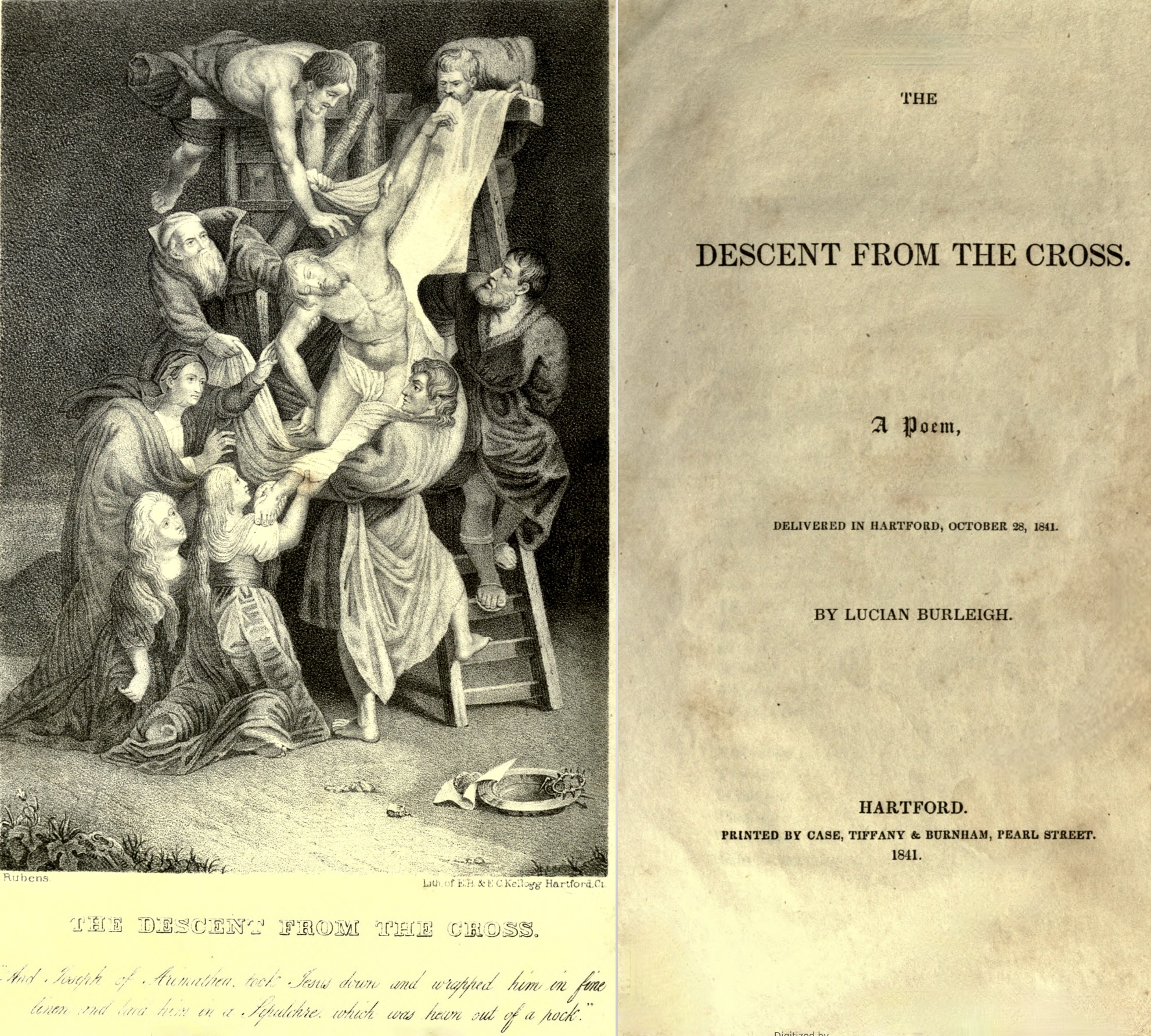
- Title
- Descent from the Cross, The
- Alternative Title
- Sunset o'er wide Judea. Broad and red
- Sunset along Judea — a fearful Eve
- Creator
-
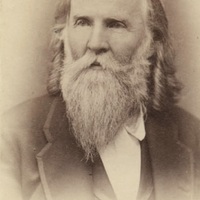 George Shepard Burleigh
- Date
- 1841
- Bibliographic Citation
- [Burleigh, George Shepard.] The Descent from the Cross: A Poem. Delivered in Hartford, October 28, 1841.Hartford: Case, Tiffany and Burnham.
- George S. Burleigh Papers, 1825-1902. John Hay Library, Brown University. Miscellaneous Manuscripts.
- Accessible online in full text version from HathiTrust
- The Descent from the Cross
- Subject
- Religion
- Christianity
- comment
- The poem was READ (i.e. "Delivered by") Lucian Burleigh. He did NOT write it. Evidence from letters and GSB's own papers (as well as the obvious poetic skills involved) mitigate against this being a first-time effort from Lucian.
-
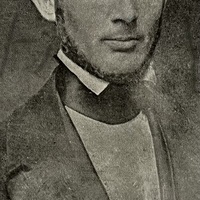 Lucian Rinaldo Burleigh
- note
- The poem was based on the famed painting by Peter Paul Rubens, "Descent from the Cross"
- Wikipedia article and photograph of Ruben's The Descent from the Cross
- Note - the full transcription included here has not been checked for punctuation or italicization. The goal is to have a word-searchable index of all of George Burleigh's poems, but further scholarly textual refinement is welcome
- The two "first lines" represent the printed version ("Sunset o'er wide Judea. Broad and red,") and the manuscript version.
- Numerous small hints exist in this long poem, that analogize the Abolitionist movement to the pivotal moment in Christian cosmology represented by the crucifixion. For instance, Mary Magdalene's sorrow is openly compared to a shared knowledge among women carried through the ages: "woman's heart/In the deep chambers of its secret thought/Will cherish memories of the eventful past,/And brood with holy fervency o'er words/That fall unheeded and unregistered/In man's insentient bosom; woman's soul/Will nerve her to new scenes untried before." Likewise, at the arrest of Jesus, he writes "then came the insults, and the scoffs and jeers/Of the deriding multitude" reflects a common experience of Abolitionist speakers. Finally, there is a grandiloquent moment near the end hailing "the march of Freedom and of God."
- The poem is remarkable for avoiding the often knee-jerk anti-Judaism of this narrative. Every mention of the executioners of Jesus includes both Roman and Jewish references, and the multitudes are never defined as Jewish. Rather than credit him with understanding the politics of this, I think that George S. Burleigh was most concerned here with indicting the government forces that maintained cruel structures, than with the full-out assault on religion that was also prevalent among Abolitionists. (Jennifer Rycenga)