

Sunita Sohrabji
Veteran Journalist, American Community Media and India-West
Community journalism as advocacy
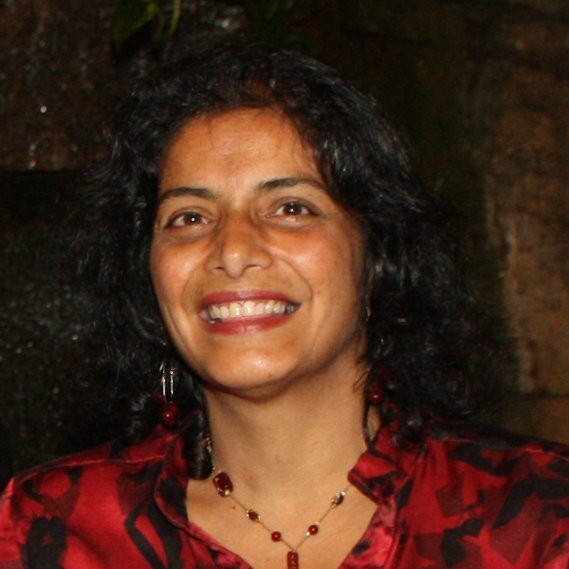
Sunita Sohrabji is a veteran journalist whose career reflects the power of community media to document, investigate, and advocate. A longtime reporter for India-West and later Health Editor at American Community Media, Sohrabji has covered crime, hate violence, immigrant labor, mental health, public health, and stories often overlooked by mainstream newsrooms.
Her work shows how South Asian community journalism has served not only as a record of community life, but as a form of public service. For Sohrabji, reporting is rooted in listening closely, following stories beyond the first headline, and making visible the experiences of people who might otherwise remain unheard.
We are advocates for our communities.
— Sunita Sohrabji
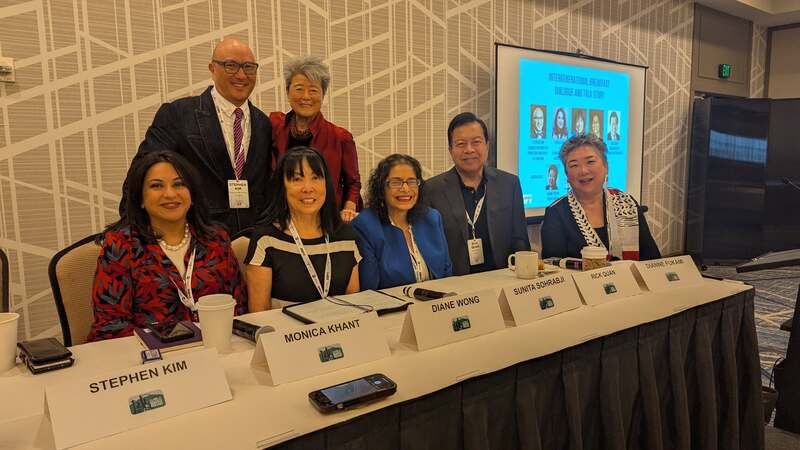
Sunita Sohrabji speaking at the Asian American Journalists’ Association conference, 2024. Courtesy of Sunita Sohrabji.
Finding journalism early
Sohrabji’s path into journalism began when she was a child in Burlingame, California. After her family immigrated to the United States in 1970, she grew up reading the newspapers she delivered on her paper route. At age ten, while putting together copies of the San Francisco Examiner, she began imagining herself in print.
A teacher at Roosevelt Elementary School encouraged that interest by creating a small student newspaper. Sohrabji’s first story investigated a “missing” violin in the school music library. The violin had not been stolen, only moved by the janitor, but seeing her name in print gave her the first spark of a journalism career. She later studied political science and journalism at Sacramento State and interned at The Daily Recorder, covering the California state legislature.
Joining India-West
Sohrabji joined India-West in 1987, when the South Asian community in the Bay Area was still relatively small and growing. At the time, she recalled, Berkeley was one of the community’s centers, University Avenue had sari shops, and there were only a few familiar places to find South Asian food and gathering spaces.
At India-West, she became part of a newsroom that documented the community as it expanded into Silicon Valley, politics, public life, and civic institutions. She described the paper as having “charted the birth” of Indian American engagement in many arenas where South Asians had not yet gained broad mainstream visibility.

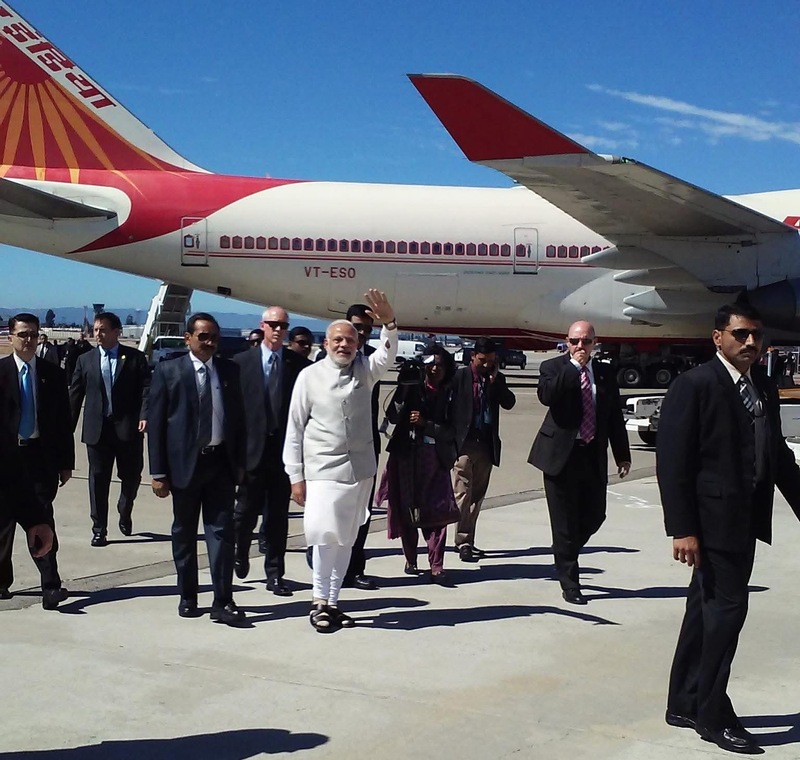
Sunita Sohrabji in the KQED newsroom for a 2015 discussion on Prime Minister Narendra Modi’s first visit to Silicon Valley. Courtesy of Sunita Sohrabji.
Covering the stories others missed
Sohrabji became especially known for crime reporting. But at India-West, crime reporting often meant more than covering an incident and moving on. She followed cases closely, spoke with families and victims, contacted police and district attorneys, and pushed for cases to be taken seriously.
She emphasized that mainstream outlets might cover an initial murder, verdict, or arrest, while India-West often stayed with the story. This gave the paper a different role: not just reporting on harm, but helping communities understand what had happened and how institutions responded.
A journalist in the field
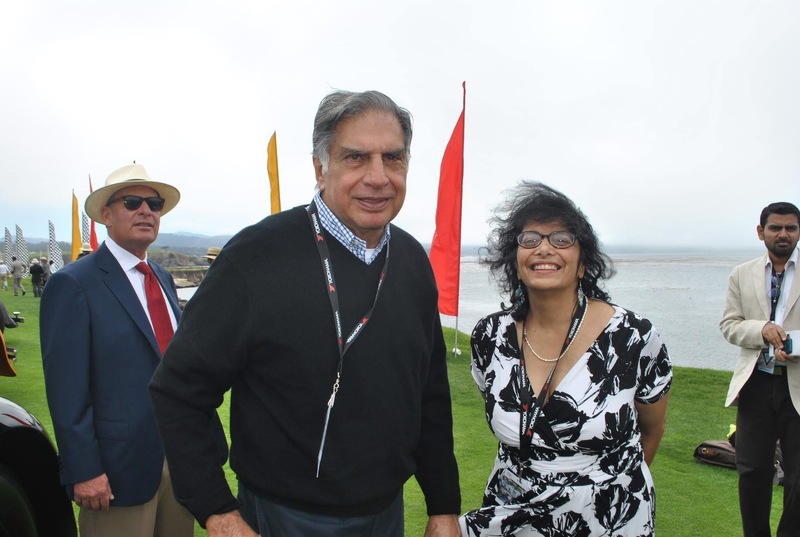
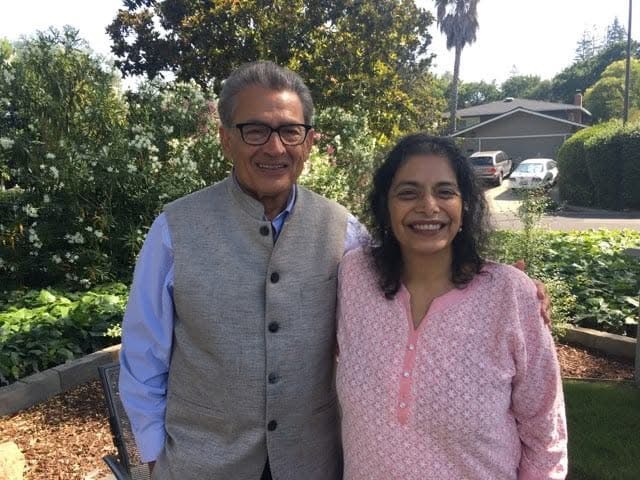
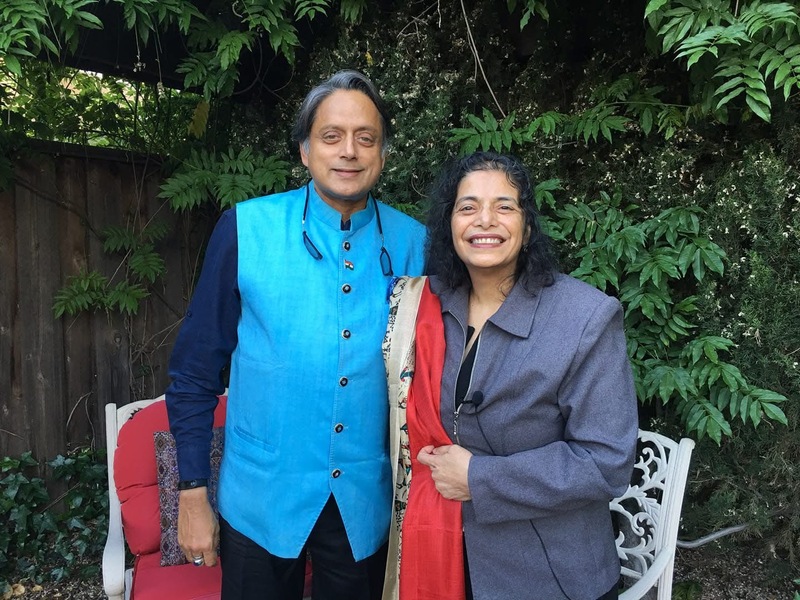
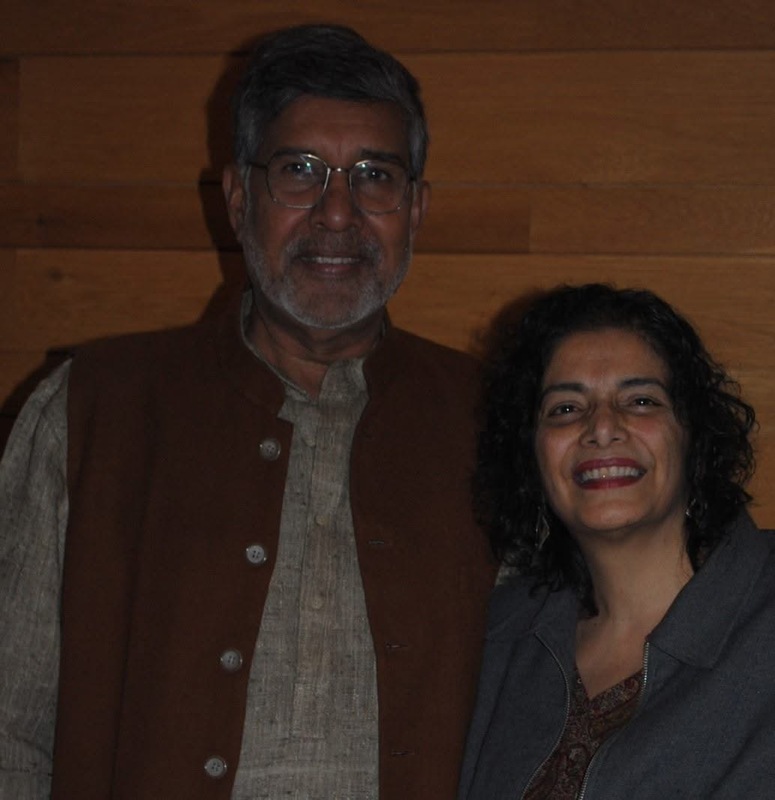
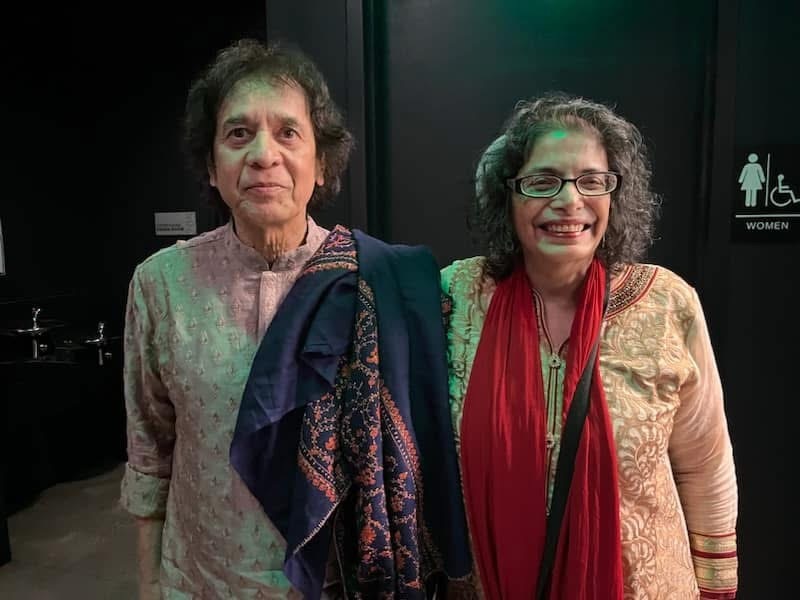
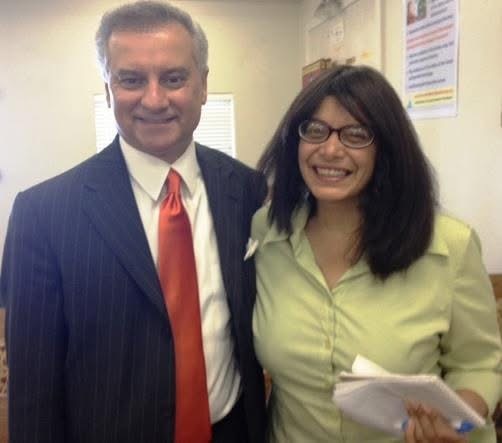
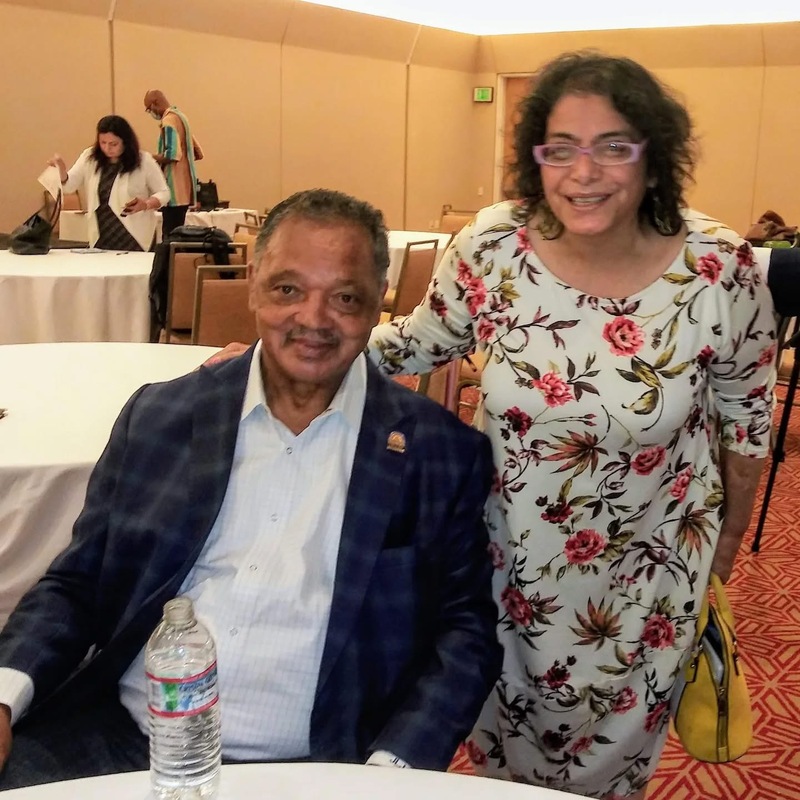
Across her career, Sohrabji interviewed political leaders, artists, business figures, activists, and community members, bringing South Asian and immigrant stories into public view through community-centered reporting.
Reporting hate violence
One of the stories Sohrabji remains most proud of is her coverage of the 1987 killing of Navroze Mody in Hoboken, New Jersey. Mody, a Parsi banker, was attacked during a period when young men calling themselves “Dotbusters” targeted Indian residents.
At the time, Sohrabji noted, the language and legal framework around hate crimes were not yet widely established. Her reporting helped galvanize public attention and encouraged the community to name and confront violence that had often gone unrecognized.
Our role as a publication was to galvanize and mobilize the public’s attention to the case.
— Sunita Sohrabji
Bringing private struggles into public conversation
Throughout her career, Sohrabji reported on issues that were often treated as “hush hush” in South Asian families. She wrote about postpartum depression among Indian American women at a time when many mothers felt pressure to appear joyful after childbirth. She also reported on youth mental health, interviewing young people who struggled to speak openly with their parents.
These stories helped open conversations around shame, silence, family expectation, and emotional wellbeing in Indian American communities. Sohrabji described both series as groundbreaking because they gave public language to experiences that many people were living privately.
The “Nani" diaries
Another major series focused on older Punjabi women working as domestic caregivers in Bay Area Indian American households. Sohrabji was first drawn into the story through a woman she saw regularly while taking the bus to work. Their conversations led her to a wider network of women working long hours, often for very low pay and without stable protections.
The reporting revealed difficult conditions inside the community itself: wage theft, isolation, health insecurity, and dependence on employers or family members. Sohrabji connected these local Bay Area stories to larger questions of domestic labor, immigration, and human trafficking.
Following e-waste from the U.S. to India
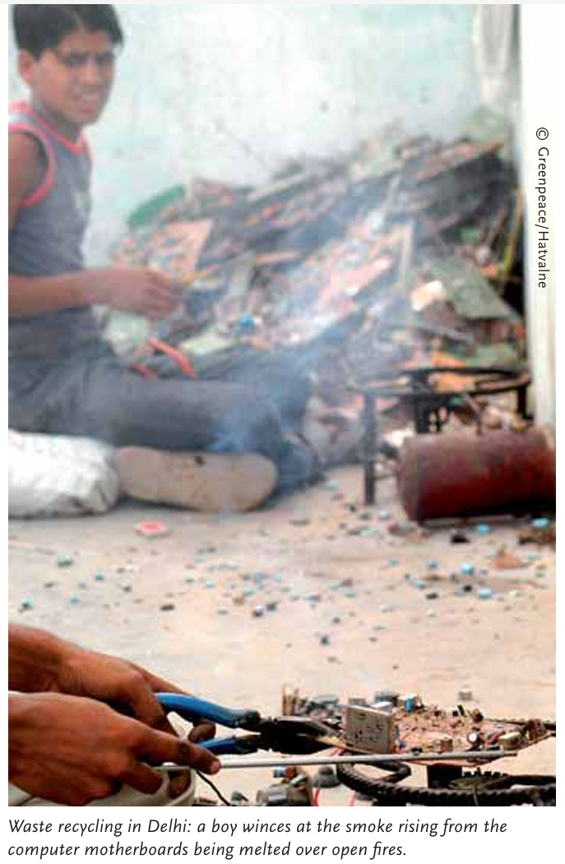
Sohrabji’s reporting also extended internationally. Through a fellowship from the International Center for Journalists, she traveled to India to investigate what happened to electronic waste from the United States. Her reporting followed discarded computers and electronics into informal work sites in places such as Dharavi in Mumbai and Mandoli near Delhi. There, workers dismantled toxic materials under unsafe conditions, often without masks or basic workplace protections. The series challenged the idea that recycling in the United States was always responsible or clean once materials left the country.
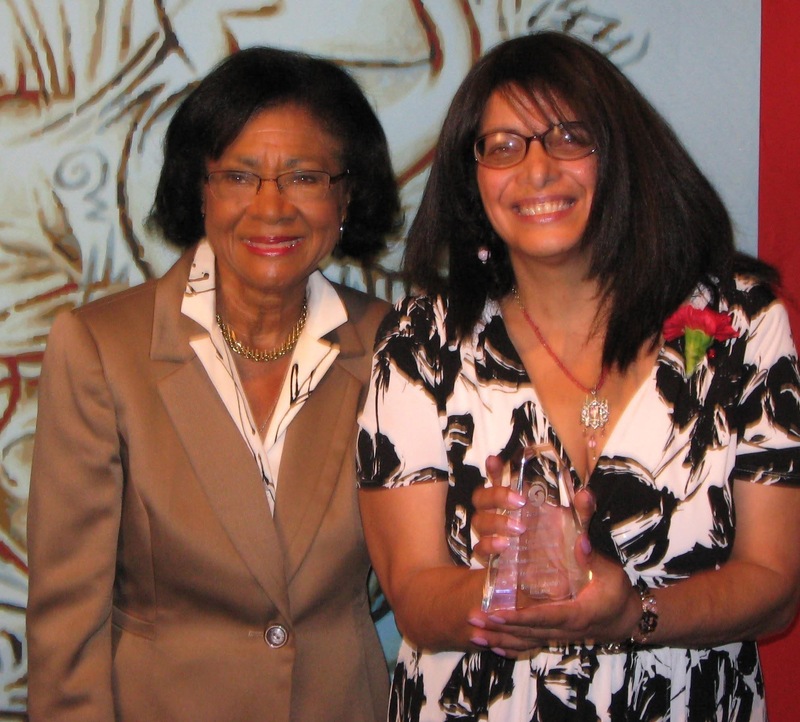
Sunita Sohrabji accepting a 2012 “Nammie” for her three-part series from India on electronic waste. The award was presented by pioneering broadcast journalist Belva Davis. Courtesy of Sunita Sohrabji.
From India-West to American Community Media
At American Community Media, Sohrabji continued her commitment to public-service journalism. During the COVID-19 pandemic, she helped organize weekly briefings that connected ethnic media reporters with public health experts. The goal was to address misinformation and give community reporters access to reliable sources they often could not reach on their own.
Those briefings were interpreted into multiple languages, including Spanish, Mandarin, and Korean. For Sohrabji, the success of this work was visible in the reporting that followed, especially in languages she herself did not speak.
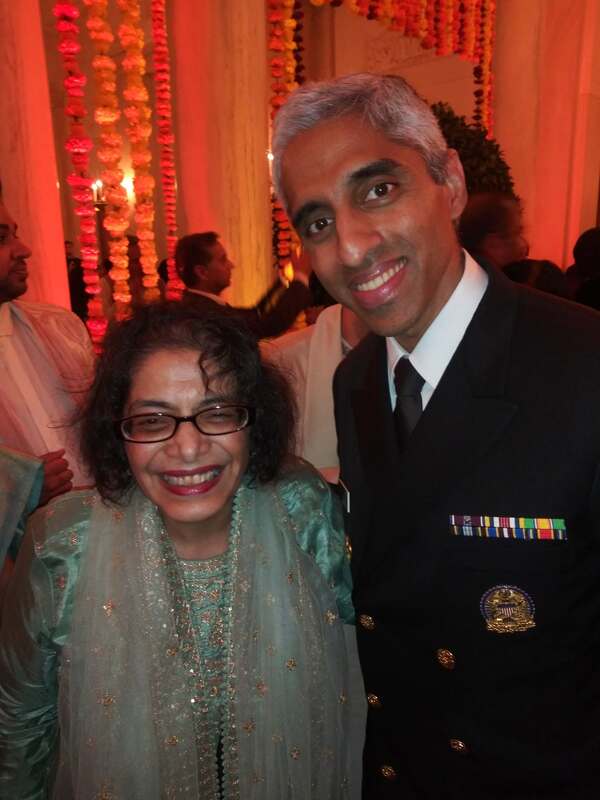
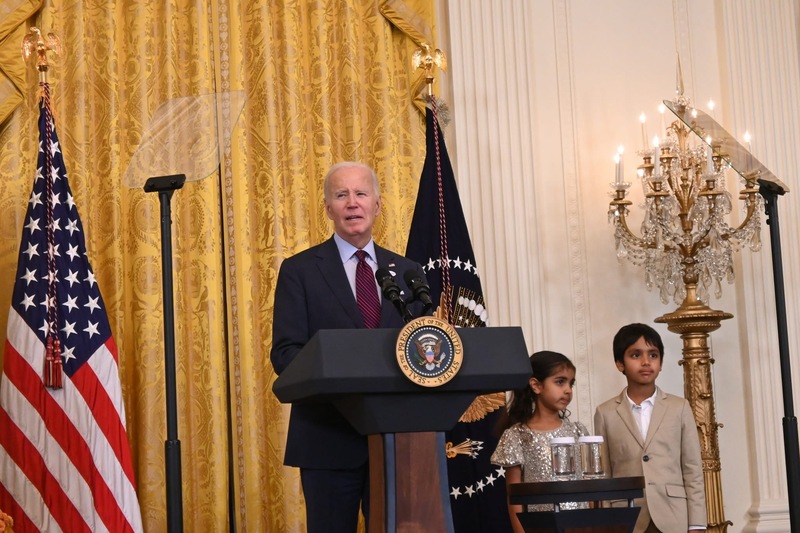
Sunita Sohrabji with former U.S. Surgeon General Vivek Murthy at the White House Diwali party, 2024. Photo taken by Dr. Murthy’s aide. Courtesy of Sunita Sohrabji.
Community media as public service
For Sohrabji, community media goes beyond simply publishing stories. It helps people advocate for themselves, connects victims and survivors to institutions, and gives communities information they can use. She described community journalists as sometimes becoming “the first line” for victims, especially in hate crime reporting. At American Community Media, she helped connect media with community-based organizations working directly with survivors of hate incidents and hate crimes.
We’ve informed people of so many of the issues that impact them, but that they really don’t have a voice in, and made them advocates for themselves.
— Sunita Sohrabji
Documenting political emergence
Sohrabji also sees India-West’s political coverage as one of its important legacies. The newspaper covered Indian American candidates long before they were widely recognized by mainstream media, including local and early-stage political campaigns.
She recalled that India-West covered candidates across the country, including smaller races that larger newsrooms might ignore. In doing so, the paper helped create visibility for a growing Indian American political presence.
Covering public life
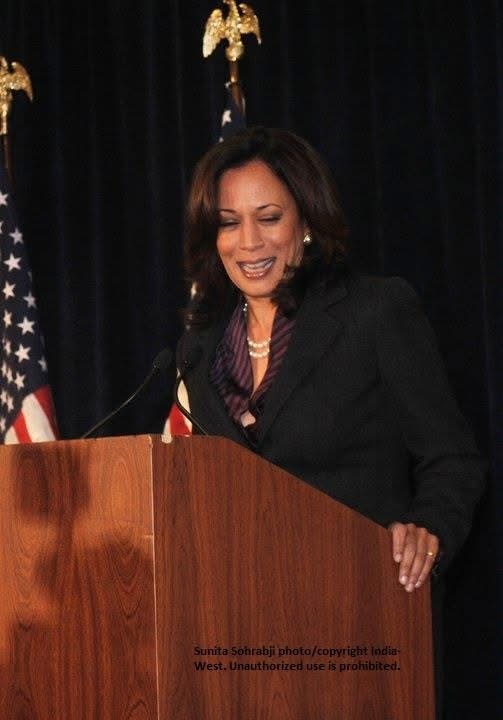
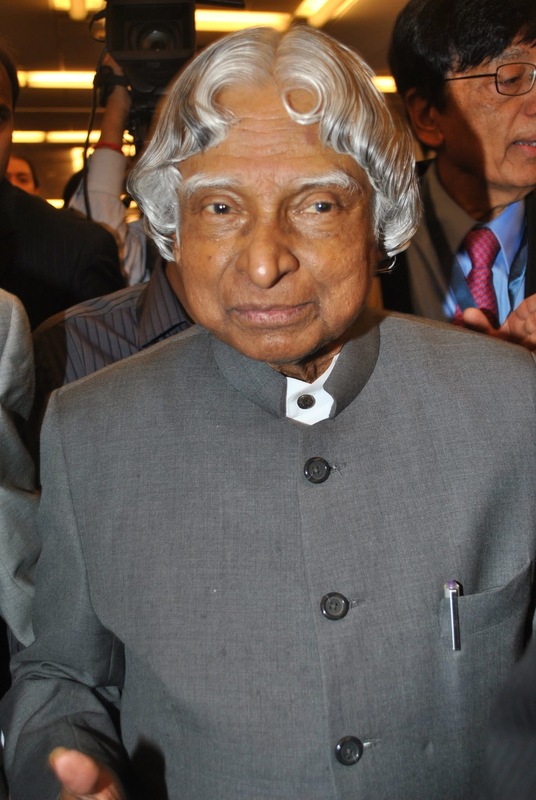
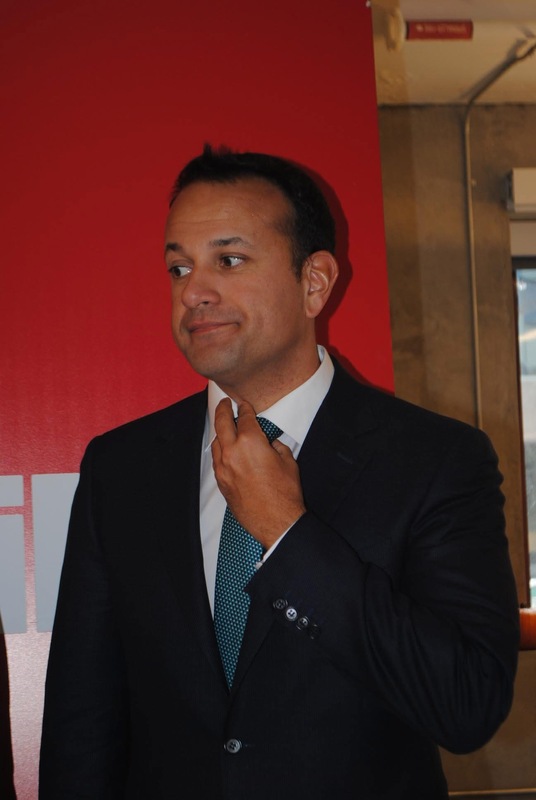
Sohrabji’s reporting also placed her at major political and cultural moments, from Silicon Valley visits by Indian leaders to national celebrations of South Asian visibility.

The future of community journalism
Sohrabji is concerned about the decline of community newspapers and the shift toward social media as a primary source of information. She noted that a social media post may be a starting point for a story, but it cannot replace verified, in-depth reporting.
Her reflections point to a larger challenge facing community media today: how to preserve rigorous reporting and community trust in a changing media landscape where resources are shrinking and attention spans are shorter.
Advice to the next generation
When asked what advice she would give to aspiring journalists, especially South Asian journalists, Sohrabji emphasized the importance of beginning in ethnic and community media. Smaller publications, she said, need reporters and can offer young journalists the chance to build a portfolio, develop reporting skills, and pursue stories that matter.
Her central advice is simple: listen. Stories can come from social events, grocery stores, Uber rides, or everyday conversations.
Everybody has a story. And you can be the person that tells that story.
— Sunita Sohrabji
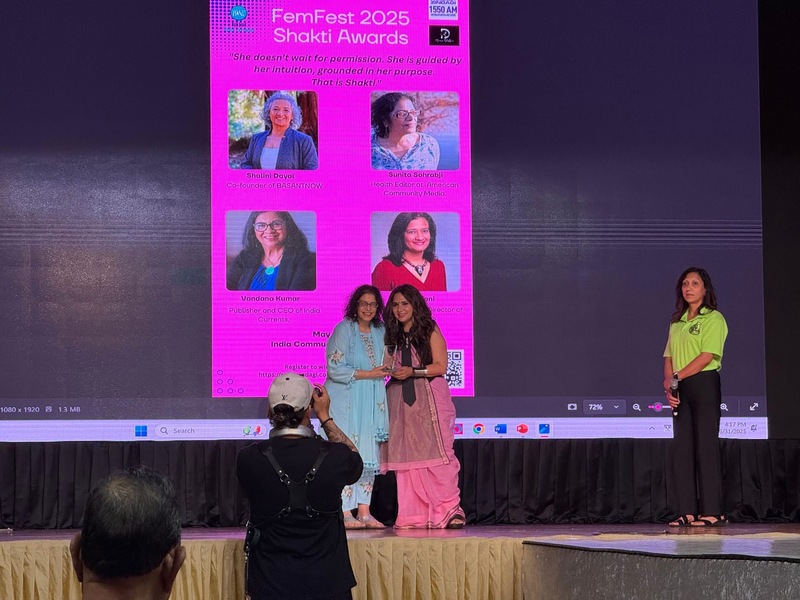
Sunita Sohrabji accepting a Shakti Award, 2025. Courtesy of Sunita Sohrabji.
Featured Work
Note: Selected articles are available through ProQuest and may require institutional access.
“Vigil Mourns Slain Prof”
Reporting connected to the killing of Navroze Mody and anti-South Asian violence.
“Postpartum Depression: South Asian Moms Suffer…”
Coverage of postpartum depression and maternal mental health in South Asian American communities.
“Suicide Amongst Indian Americans”
Reporting on mental wellness, suicide awareness, and stigma in Indian American communities.
“The ‘Nani’ Diaries”
A story on older South Asian women working as domestic caregivers and the vulnerabilities of immigrant labor.
“U.S. Electronic Waste Endangers Health of Poor in India”
Investigative reporting on U.S. e-waste, informal labor, and environmental health risks in India.