

Sasha Khokha
Public radio reporting rooted in immigrant rights, community nuance, and California history
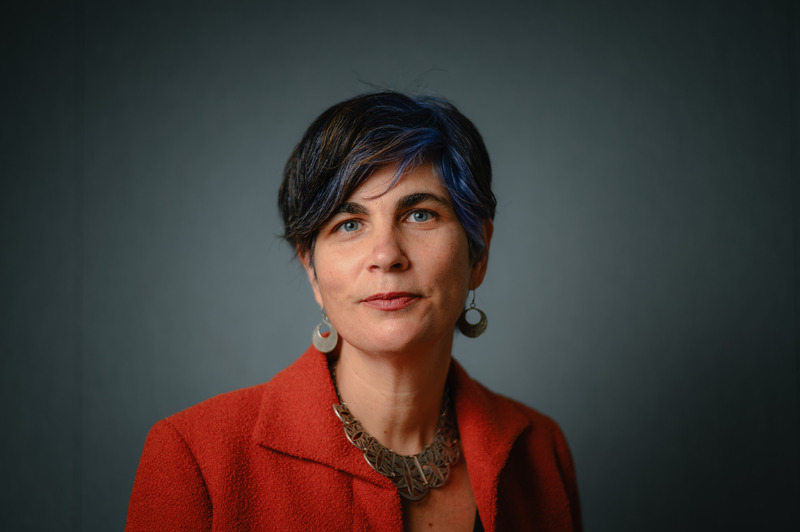
Sasha Khokha is a public radio journalist whose reporting centers on immigrant communities, civic participation, and the lived consequences of political decisions. As a host, correspondent and editor for The California Report Magazine on KQED and NPR, her work brings national attention to local stories, particularly those rooted in California’s diverse communities. Through long-form audio journalism, Khokha combines rigorous reporting with narrative depth, amplifying voices that are often underrepresented in mainstream media.
Finding a Path into Journalism
When I was in journalism school, I realized that there was such a vacuum of stories about the South Asian community that really brought more nuance and complexity.
—Sasha Khokha
Sasha Khokha’s path to journalism took shape long before she entered a newsroom. Growing up, she learned the art of listening and documentation from her father, who had been fascinated by the United States after after growing up in Partition-era Delhi and encouraged her curiosity about the world. Though she initially studied ethnic studies and worked in immigrant rights advocacy, her frustration with shallow media coverage pushed her toward journalism.
Journalists would call me to find families affected by immigration raids, but the stories felt cursory. They didn’t give nuance.
Her earliest reporting appeared in India Currents, which she credits as a crucial entry point. She describes the publication as both grassroots and generative for emerging reporters:
It’s such a grassroots place, but they take a chance on people.
Reporting With Community at the Center
Over the past two decades, Khokha has become a leading voice in public radio as a host, correspondent, and editor at The California Report Magazine. Her reporting has examined labor exploitation, sexual violence, immigration, and class disparities, often through long-form investigations rooted in accountability journalism.
Her 18-month investigation Rape on the Night Shift exposed systemic sexual violence against janitors, while Rape in the Fields documented similar abuse faced by farmworkers. Both investigations brought national attention to long-silenced abuses and contributed to organizing efforts and changes in California state law.
They used our journalism to open the conversation about something that had been an open secret.
Khokha is deeply committed to challenging stereotypes about South Asians in the Bay Area.
The stereotype is that all South Asians are doctors, lawyers, and engineers. I feel committed to covering working-class South Asians who may be undocumented or struggling.
She also emphasizes the importance of archiving community history, recording hours-long oral histories with early pioneers like Kartar Dhillon, whose father was part of the Ghadar Party.
I feel like I’ve been a witness to history.
For Khokha, journalism is not just about reporting the present. It is about preserving memory, mentoring future storytellers, and ensuring that underrepresented voices remain part of the public record. Her advice to future journalists:
See your cultural connections and language abilities as an asset. Don’t be afraid to cover your own community.
Featured Work
The California Report Magazine
KQED / NPR – Host and Reporter
The California Report Magazine
As host of The California Report Magazine, Sasha Khokha leads long-form audio storytelling that captures the complexity of life in California. Her work blends narrative depth, historical context, and community-centered reporting, reflecting values rooted in her early experiences with South Asian community media.
Mapping a Radical Legacy of South Asian Activism in the Bay Area
KQED
In this California Report Magazine feature, host Sasha Khokha explores more than a century of South Asian activism in California. Partnering with politics correspondent Marisa Lagos, she highlights how immigrants from India, Pakistan, Bangladesh, and their children helped shape social movements in the Bay Area, from early 20th-century anti-colonial and labor struggles to grassroots efforts that intersected with broader civil rights and free speech activism. Through an immersive look at the Berkeley South Asian Radical History Walking Tour and the overlooked stories of organizers and freedom fighters, the piece brings to life a radical legacy that has often been absent from mainstream narratives of Bay Area history.
There Is Anger. He Should Be Alive. An Investigation Into Deadly COVID-19 Outbreaks at Foster Farms
KQED
As an editor on this California Report Magazine investigation, Khokha helped guide in-depth reporting on deadly COVID-19 outbreaks at Foster Farms poultry plants in California’s Central Valley. Centering the voices of workers and families, the project exposed how systemic failures and lack of accountability put immigrant and low-wage workers at heightened risk during the pandemic.
Letter to My California Dreamer
KQED
Blending personal narrative with broader immigration history, this essay reflects on family, migration, and the meaning of home. It illustrates how Khokha weaves lived experience into public-facing journalism without sacrificing rigor.
Growing Up Mixed and Grappling With the Question “What Are You?”
The California Report Magazine
In this episode, Khokha explores the lived experiences of mixed-race Californians navigating identity, belonging, and visibility. The story reflects her long-standing interest in nuance over labels and the personal dimensions of race that are often flattened in mainstream coverage.
Love You for You: What Parents Can Learn From Their Trans Kids
KQED / The California Report Magazine
This reporting centers the voices of trans and gender-expansive youth and their families, foregrounding care, listening, and trust. Khokha’s approach exemplifies journalism that prioritizes community dignity over controversy.
Celebrating a Long-Lost History of California’s Black Trans Trailblazers
KQED
By recovering overlooked histories, this story positions journalism as a form of public memory and archival repair. Khokha connects past and present to show how communities preserve their own legacies when institutions fail to do so.