

Ravi Kapur
Founder of Diya TV, Broadcast Journalist
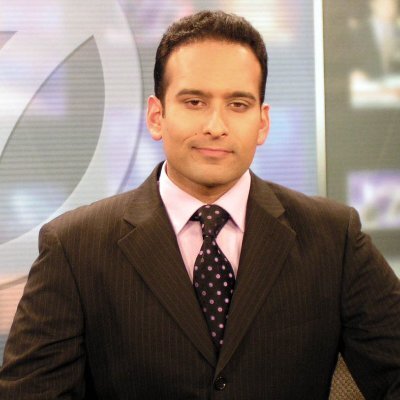
Ravi Kapur is a broadcast journalist and media entrepreneur whose work helped establish South Asian television as a vital part of the American media landscape. As the founder of Diya TV, Kapur created one of the first U.S. television networks dedicated to South Asian communities, expanding access to news, culture, and storytelling at a time when such coverage was largely absent from mainstream broadcast media.

Why Diya TV matters
Kapur launched Diya TV in 2009 in response to the limited and often superficial representation of South Asian communities in U.S. television. The network offered programming that reflected everyday community life, including news, public affairs, cultural content, and coverage of issues affecting South Asian Americans across the country. By centering these stories on a broadcast platform, Diya TV reached audiences beyond ethnic enclaves and affirmed the importance of South Asian voices in public media.
From Journalism to Broadcast Infrastructure
Before founding Diya TV, Kapur built his career in mainstream television news, gaining experience in reporting, production, and newsroom leadership. That background shaped his approach to community media, combining professional broadcast standards with a commitment to representation and audience trust. His work bridged mainstream journalism practices with community-driven storytelling.
Building a Network for Community-Centered Coverage
Diya TV’s early programming began on a modest scale, but as South Asian communities grew in size and influence, the network expanded its scope. Programming covered a wide range of topics including technology, business, sports, politics, and community affairs, positioning South Asian Americans as active participants in civic life rather than a niche or peripheral audience.
The network initially operated alongside programming for other immigrant communities, reflecting a broader commitment to multilingual and multicultural broadcasting. Over time, Diya TV developed a more focused South Asian editorial identity, responding to the specific needs, concerns, and interests of its viewers.
Editorial Philosophy and Responsibility
Central to Kapur’s vision was an emphasis on context-driven journalism. He highlights the importance of examining issues from multiple perspectives, understanding consequences rather than reacting only to headlines, and maintaining journalistic rigor even when covering contentious or emotionally charged topics.
This approach was especially significant in an era of increasing misinformation and political polarization. Kapur expressed particular concern about how misinformation can affect immigrant and older audiences, underscoring the responsibility of ethnic media to provide careful, verified reporting that helps viewers navigate complex public issues.
Expansion, Adaptation, and Digital Transition
Under Kapur’s leadership, Diya TV expanded beyond the Bay Area into additional markets such as Chicago and Dallas, operating a mix of owned-and-operated stations and affiliated channels. As cable television consumption declined and digital platforms grew, the network adapted by extending its presence through streaming services, online video platforms, and digital distribution.
This transition reflected a broader shift within ethnic media, where survival and relevance increasingly depend on meeting audiences across multiple platforms while preserving editorial integrity.



Featured Reporting
Legacy
Kapur’s contributions illustrate how South Asian media makers have used television to claim space, visibility, and narrative authority within the American media ecosystem. His work forms an important chapter in the broader history of community journalism in Silicon Valley and beyond.