

Naatak
Founded: 1995
Languages of Performance: Hindi, Tamil, English
Naatak was founded in 1995 by students at UC Berkeley and Stanford University as a volunteer-driven theater collective committed to staging meaningful and engaging plays in Indian languages. What began as a campus initiative has grown into one of the most prominent South Asian theater companies in the United States, sustained by a community of Silicon Valley professionals who pursue theater alongside careers in the tech industry. Over three decades, Naatak has produced more than 100 plays, building a substantial and enduring body of work.
Naatak’s productions draw from the dramatic traditions of the Indian subcontinent and center stories rooted in South Asian experiences, often exploring themes such as identity, displacement, gender, and social change with nuance and artistic rigor. Guided by its “natural language” philosophy, the company stages works in the languages its characters would authentically speak, using English supertitles to ensure accessibility.
CSU Archives Oral History with Sujit Saraf, Founder of Naatak
-
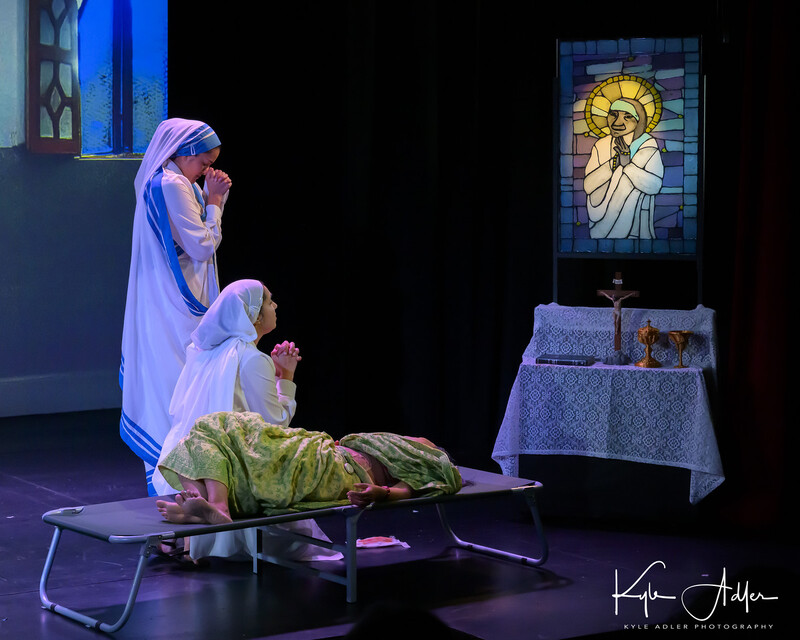 BlessedBlessed is a Naatak original inspired by the widely reported miracle attributed to Mother Teresa, in which a woman named Monica Besra was believed to have been cured of a tumor. The play examines the intersection of faith, institutional authority, and skepticism, exploring the processes and politics behind sainthood within the Catholic Church
 -
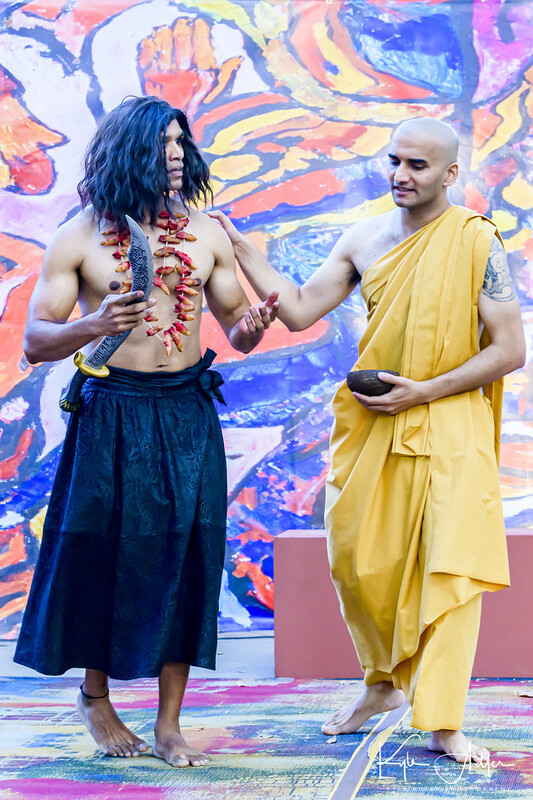 BuddhaBuddha is a Naatak original musical that traces the life of Siddhartha Gautama, from his departure from royal life to his attainment of enlightenment and his journey as a teacher. Set in the sixth century BCE and written in verse, the play combines narrative, music, and choreography to explore themes of renunciation, compassion, and transformation. Staged outdoors, the production uses ensemble performance and visual design to create a fluid, immersive theatrical experience. This image captures an interaction between two contrasting figures, one representing worldly life and the other spiritual transformation, visually emphasizing the play’s central tension between material desire and the path toward enlightenment.
 -
 Dial M for MurderDial M for Murder is a classic suspense thriller centered on a meticulously planned plot to murder a wife for financial gain. As the plan begins to unravel, the narrative shifts into a tense investigation of deception, manipulation, and shifting power within intimate relationships. Known for its tightly constructed plot and psychological intensity, the play builds suspense through dialogue, timing, and confined domestic space.
 -
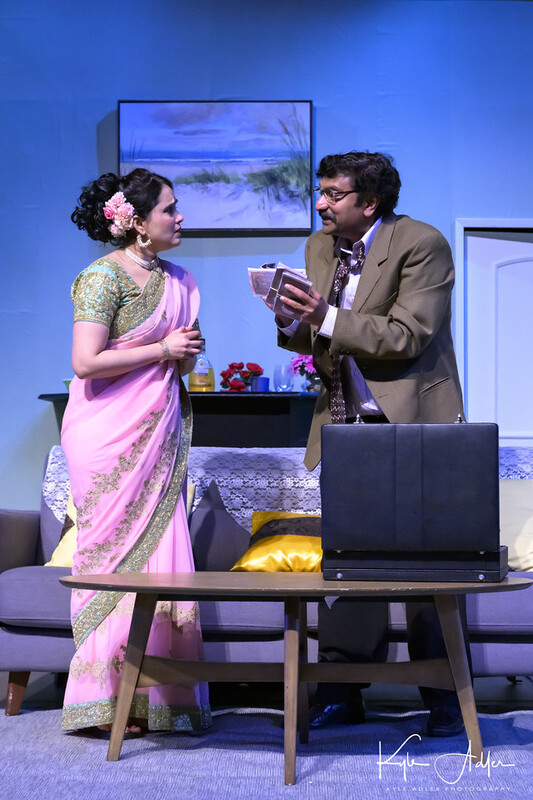 Funny MoneyFunny Money is a fast-paced farce centered on mistaken identity and escalating chaos. The story follows a man who accidentally picks up the wrong briefcase and discovers it is filled with money, setting off a chain of comic misunderstandings, deception, and increasingly desperate attempts to keep control of the situation. Known for its rapid dialogue and tightly constructed comedic timing, the play relies on physical humor and escalating tension to drive its narrative. Naatak’s production situates the action within a domestic interior, where everyday spaces become sites of confusion and farce. This image captures a moment of comic tension, with characters focused on the contents of a briefcase, highlighting the object at the center of the play’s escalating misunderstandings and the interplay between secrecy, suspicion, and humor.
 -
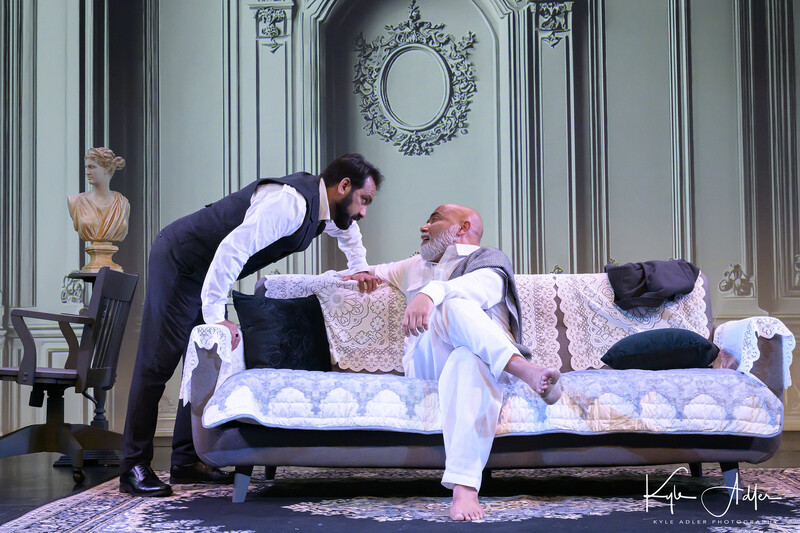 GaslightGaslight is a psychological thriller centered on a husband who manipulates his wife into doubting her own perceptions, giving rise to the term “gaslighting.” First staged in 1938, the play explores power, control, and the fragility of trust within intimate relationships, unfolding within a domestic interior where reality itself becomes unstable.
 -
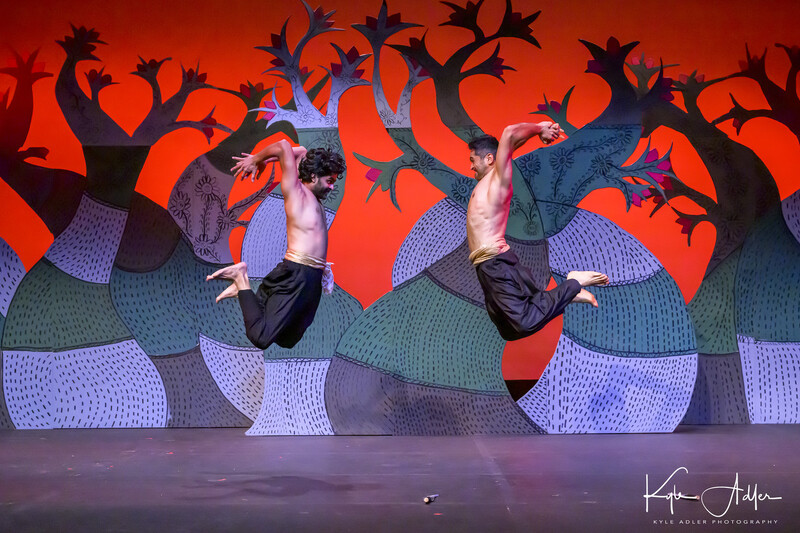 HayavadanHayavadan is Naatak’s staging of Girish Karnad’s play Hayavadana, a landmark work that explores identity, completeness, and desire through a story of intertwined lives. Centered on a love triangle between Padmini, Devadatta, and Kapila, the narrative takes a surreal turn when the men’s heads are exchanged, raising questions about the relationship between body, mind, and self. Drawing from Indian myth and folklore as well as modernist influences, the play blends philosophical inquiry with theatrical experimentation.
 -
 HoleHole is a Naatak original that imagines a Silicon Valley startup undertaking an ambitious engineering project: a tunnel through the Earth connecting Cupertino to Delhi in under an hour. Blending science fiction with social satire, the play examines technological ambition, risk-taking culture, and the consequences of innovation driven by speed over reflection. Drawing on the ethos of contemporary startup culture, the production situates futuristic speculation within familiar Bay Area contexts, linking global connectivity with local identity.
 -
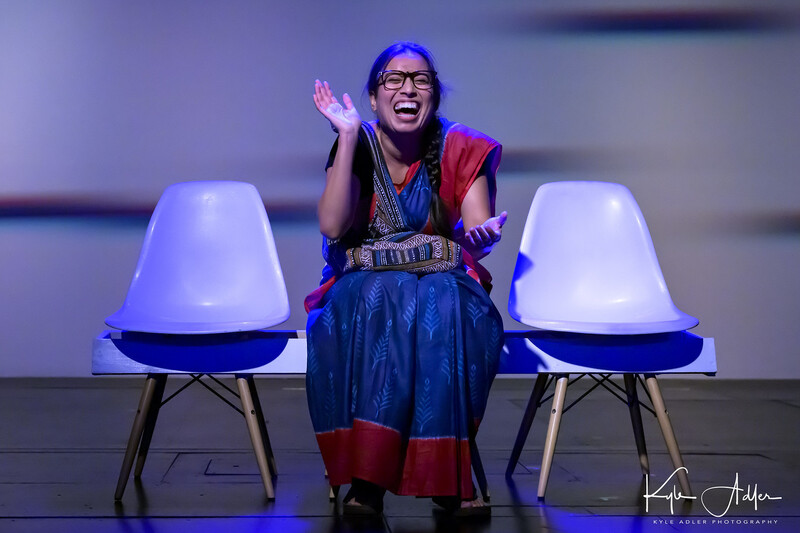 K.K.K.K. follows a central character navigating the bustling landscape of Connaught Place in New Delhi, encountering a wide range of figures from everyday urban life, including vendors, shoppers, and passersby. Structured as a theatrical romp inspired by popular Hindi cinema, the play blends humor, movement, and rapid character shifts, with a single performer embodying multiple roles within an imagined crowd. The production emphasizes performance as transformation, using minimal staging and physical expression to create a dynamic, populated world on stage.
 -
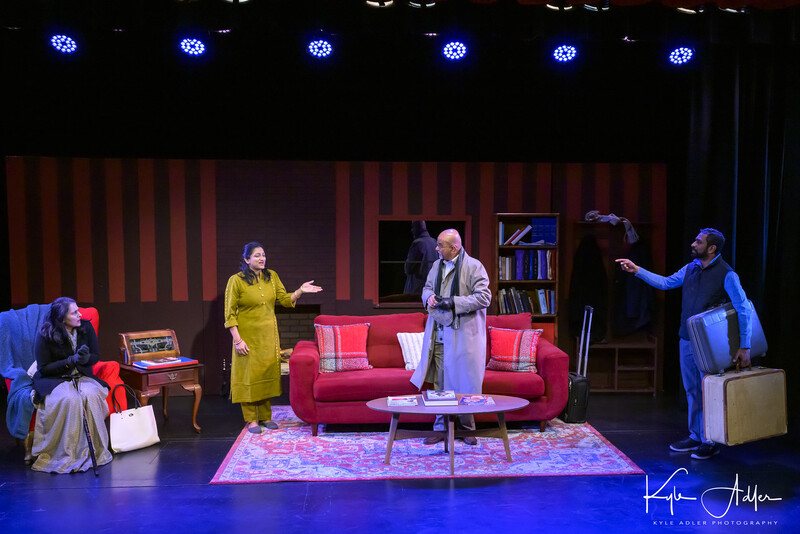 MousetrapThe Mousetrap is Agatha Christie’s classic murder mystery, in which a group of strangers becomes snowbound in a remote guesthouse as news of a murder unfolds. When a police officer arrives, the guests realize that the killer may be among them, turning suspicion inward.
 -
 Pehli Pehli MarutiPehli Pehli Maruti is a Naatak original inspired by a little-known story from 1983, when India’s first Maruti-800 was officially presented to a government employee, while an earlier car had already been privately delivered to a Delhi shopkeeper. The play reimagines this “first” car as a disruptive presence within an ordinary neighborhood, exploring how a single object can reshape social dynamics, aspiration, and memory. Blending humor with social observation, the production examines middle-class life at a moment of technological and cultural transition in late twentieth-century India. This image captures the ceremonial arrival of the Maruti, adorned with garlands and treated as an object of celebration and reverence, reflecting its symbolic role as both aspiration and spectacle within the community.
 -
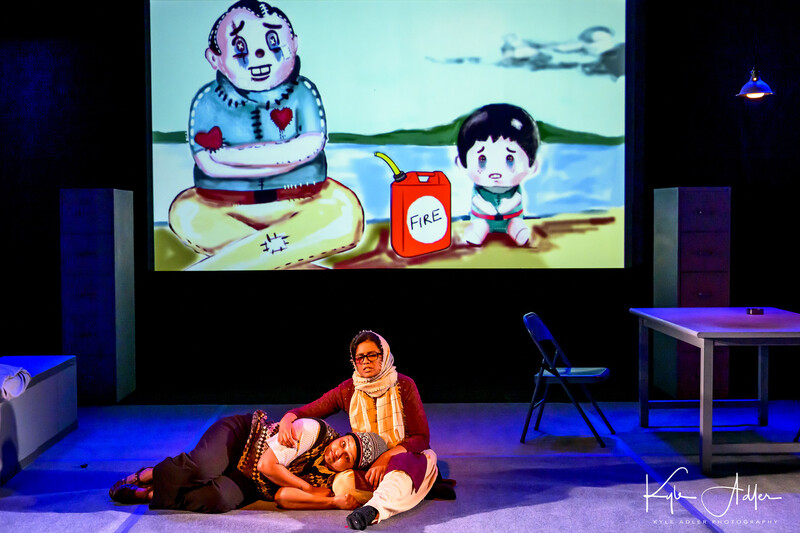 PillowmanThe Pillowman is a dark psychological drama centered on a writer interrogated about a series of murders that resemble the violent stories he has written. The play explores the relationship between storytelling and reality, examining themes of authorship, censorship, trauma, and the moral responsibility of the artist.Naatak’s production uses projection and visual storytelling to stage the writer’s fictional narratives alongside the unfolding action.
 -
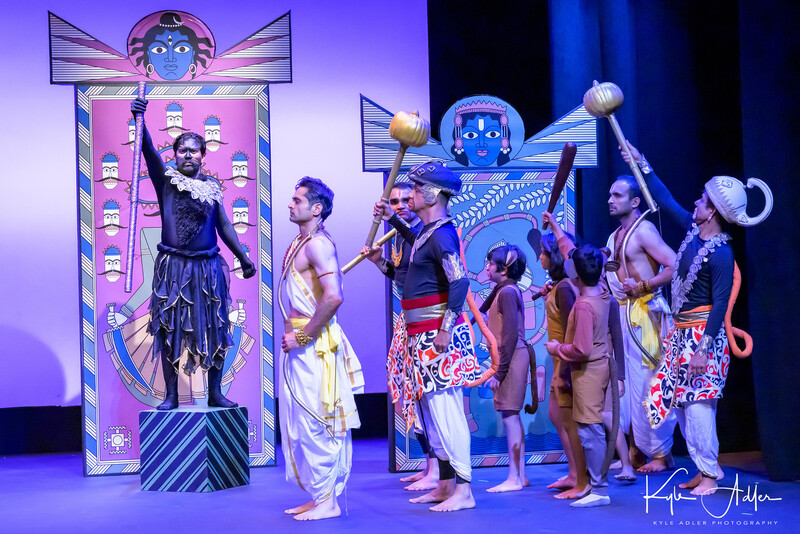 RamayanRamayan marks Naatak’s 100th production, presenting a stage adaptation of one of South Asia’s most enduring epic narratives. Drawing from Tulsidas’s Ramcharitmanas, the production follows the story of Rama, Sita, and Ravana, bringing together themes of duty, devotion, exile, and cosmic order through an ensemble-driven performance. The staging integrates live music, choreography, and stylized visual design, reflecting the poetic structure and rhythmic qualities of Tulsidas’s text. In translating a sacred and literary tradition to the stage, the production emphasizes performance as both storytelling and cultural transmission, connecting diasporic audiences in Silicon Valley to a foundational epic of South Asian heritage. This image captures a choreographed ensemble sequence centered on Ravana, with symmetrical formation and gesture highlighting the production’s emphasis on movement, spectacle, and mythic characterization.
 -
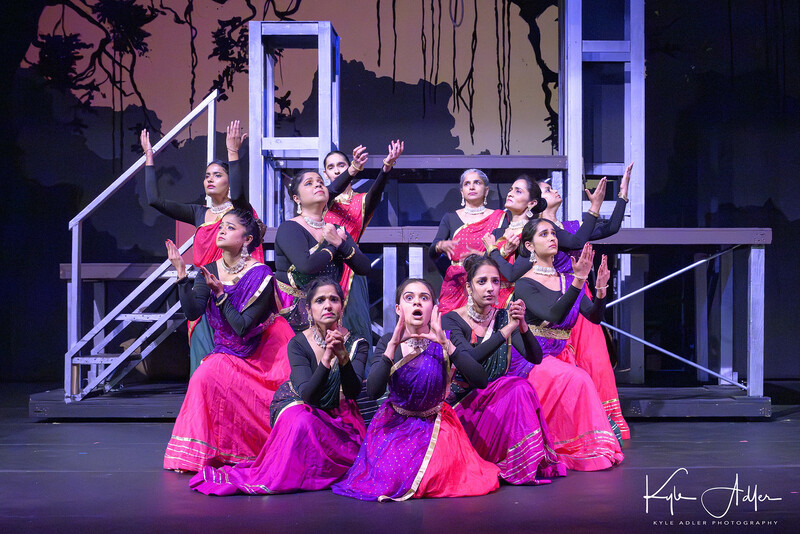 Sultana DakuSultana Daku is a Naatak original musical based on the historical figure of Sultana Daku, a notorious bandit active in North India in the early twentieth century. Adapted from The Confession of Sultana Daku, the play traces his rise to notoriety through raids, evasion, and eventual capture by British colonial authorities in 1924. Blending historical narrative with theatrical spectacle, the production incorporates live music, dance, and elements of swang performance to evoke the cultural landscape of 1920s India. Through its portrayal of outlaw heroism and colonial policing, the play engages questions of resistance, myth-making, and popular memory within South Asian storytelling traditions.
 -
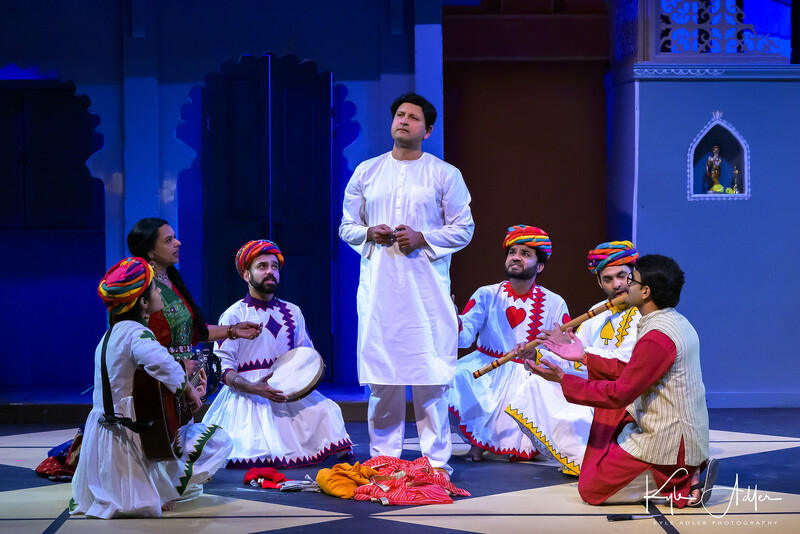 Suraj Ka Satwan GhodaAdapted from Dharamvir Bharati’s celebrated novella, Suraj Ka Satwan Ghoda unfolds through a series of interwoven love stories narrated by Manik Mulla, whose storytelling blurs the boundaries between memory, fiction, and interpretation. Set against the rhythms of everyday life, the narrative moves fluidly across time and perspective, resisting definitive conclusions about love, truth, and human relationships. The play’s episodic structure and layered narration foreground the act of storytelling itself, a form deeply embedded in South Asian literary and oral traditions. In performance, Naatak brings this narrative complexity to the stage through ensemble work, music, and shifting tonal registers, reflecting both the intimacy and ambiguity of lived experience.
 -
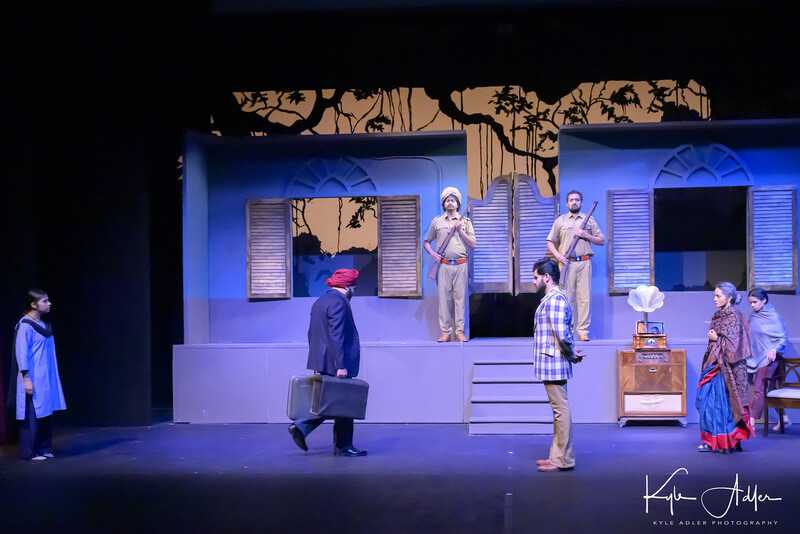 Vilayat MahalVilayat Mahal is a Naatak original play inspired by the real-life story of a woman who claimed royal lineage as the descendant of Wajid Ali Shah, the last nawab of Oudh. Set in 1970s India, the narrative follows her arrival in a public railway waiting room and her assertion of identity, status, and historical legitimacy in the face of skepticism and bureaucracy. Blending historical reference with theatrical invention, the play unfolds as a tragicomedy that examines questions of power, displacement, and recognition. Through its portrayal of a self-fashioned royal household negotiating modern state structures, the production reflects on postcolonial identity and the persistence of memory and myth within South Asian histories.
 -
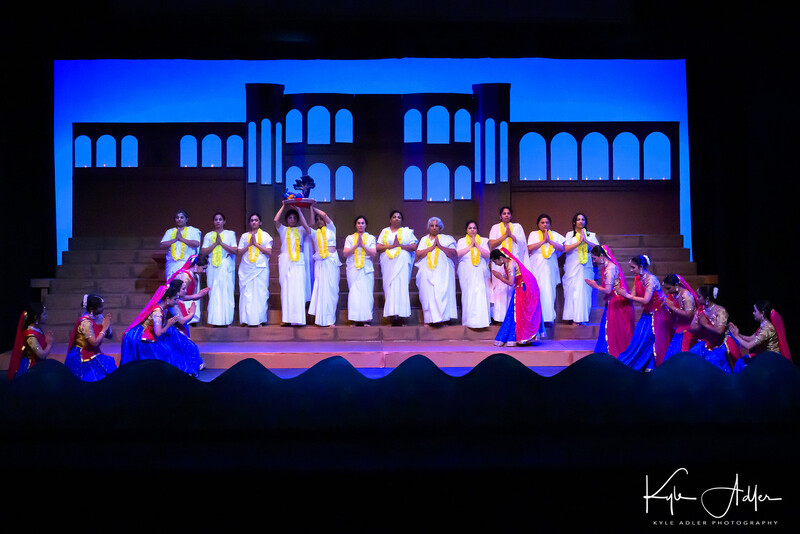
VrindavanVrindavan is a Naatak original musical inspired by contemporary debates surrounding widows living in the temple town of Vrindavan, India. The play follows a group of widows whose tightly structured lives are disrupted by the arrival of a public figure, sparking confrontation, humor, and unexpected forms of solidarity.Blending classical references with popular culture, the production juxtaposes devotional traditions associated with Radha and Krishna alongside Bollywood music and theatrical spectacle. Through this interplay, Vrindavan examines gender, marginalization, and agency, while situating these issues within both Indian social contexts and the diasporic imagination of Silicon Valley audiences.This image captures an ensemble moment of ritual and performance, with widows in white contrasted against vividly dressed dancers, visually reinforcing the play’s tension between austerity and expression.
-
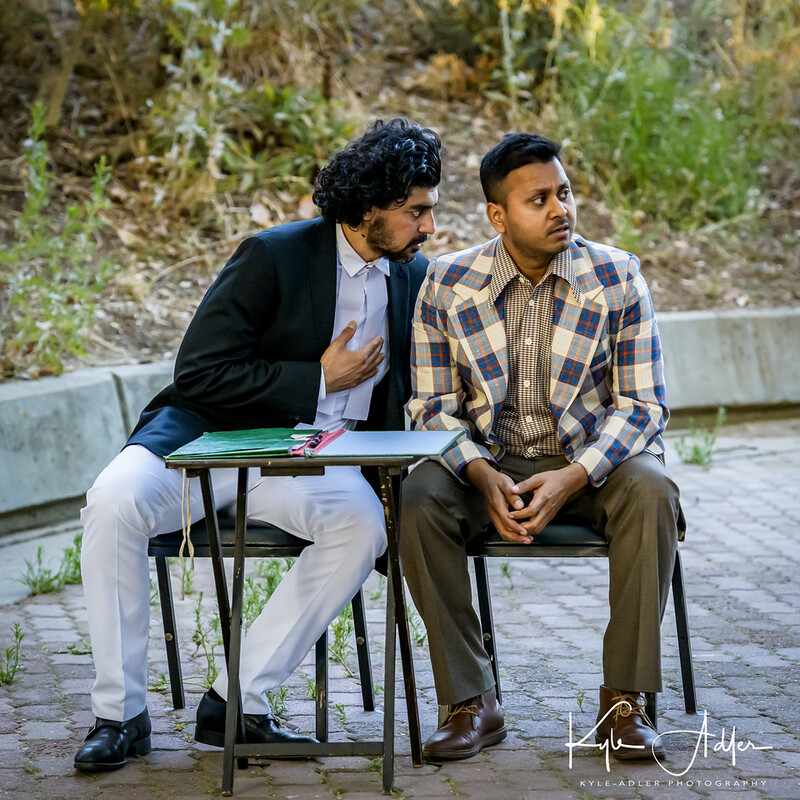 Witness for the ProsecutionPerformed outdoors during the COVID-19 pandemic, Witness for the Prosecution is Naatak’s staging of Agatha Christie’s courtroom drama, presented in an open-air amphitheater to accommodate public health conditions. The play follows Leonard Vole, a man accused of murder, whose fate hinges on the testimony of his wife, Romaine, whose unexpected revelations complicate the case. Staged in Silicon Valley, the play reflects the company’s ability to adapt both form and venue, sustaining live theater through covid constraints while maintaining a focus on narrative tension, performance, and audience intimacy.
 -
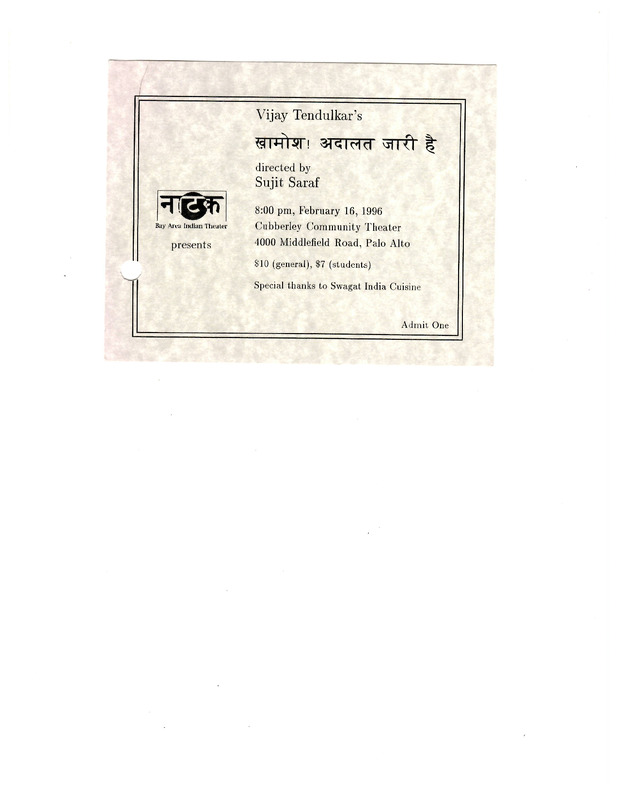 Physical ticket for first showScan of a physical/printed ticket for the first show of 'Khaamosh' in 1996.
 -
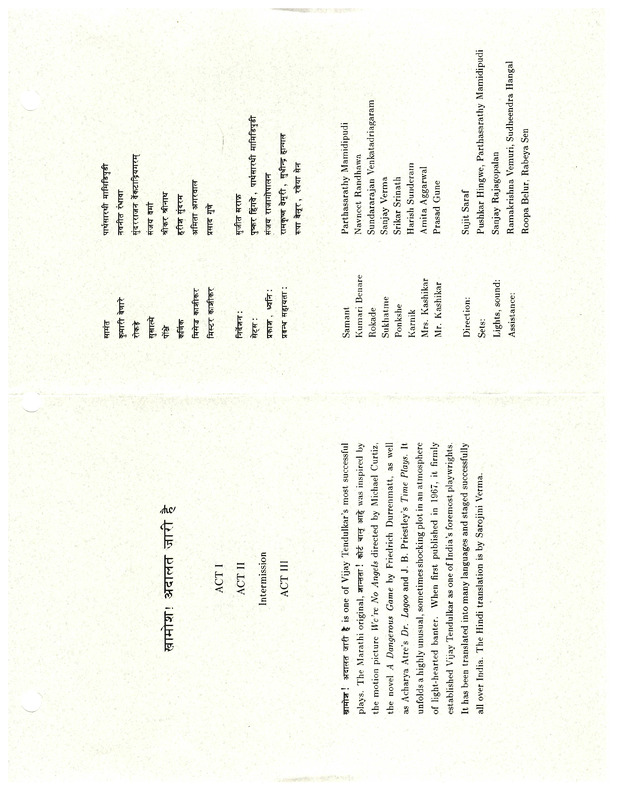 Program GuideProgram guide for Naatak's first production, 'Khaamosh'. 1996.
 -
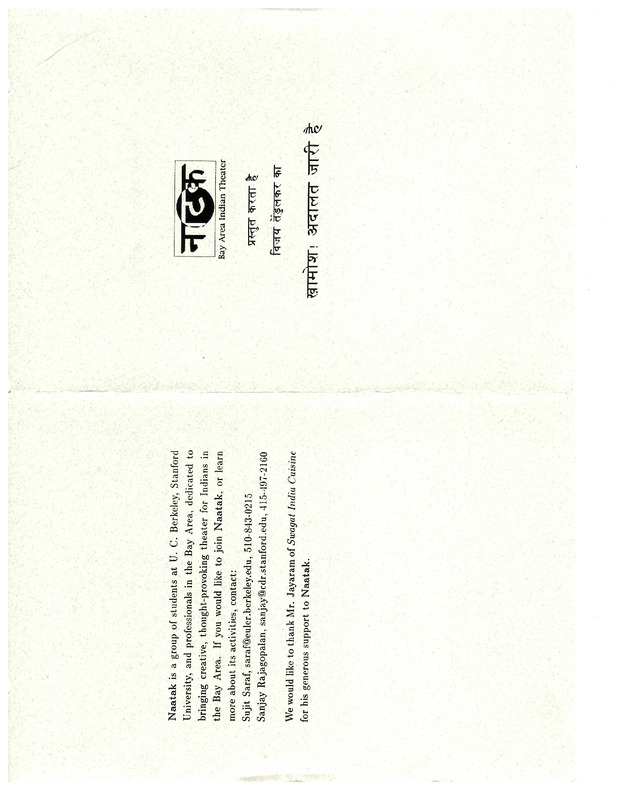 Program GuideProgram guide for Naatak's first production, 'Khaamosh'. 1996.
 -
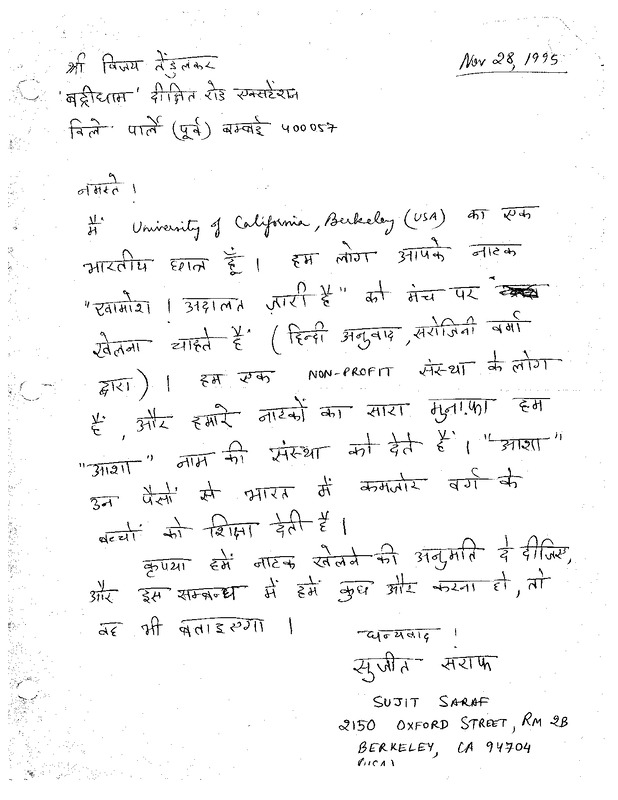 Letter to Vijay TendulkarSujit Saraf's letter to Vijay Tendulkar asking for the rights to stage 'Khaamosh! Adalat Jaari Hain' in the Bay Area. 1995.
 -
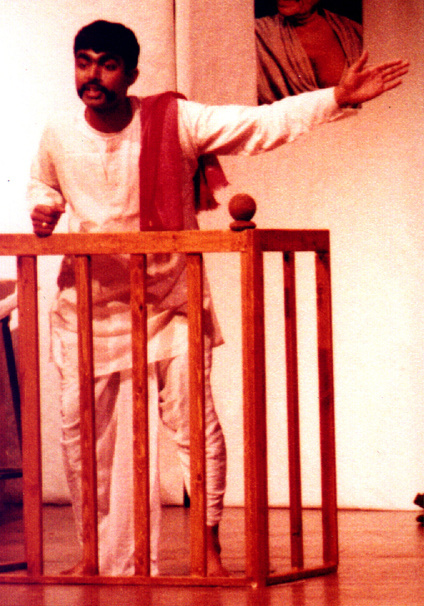 KhaamoshScene from 'Khaamosh'. 1997.
 -
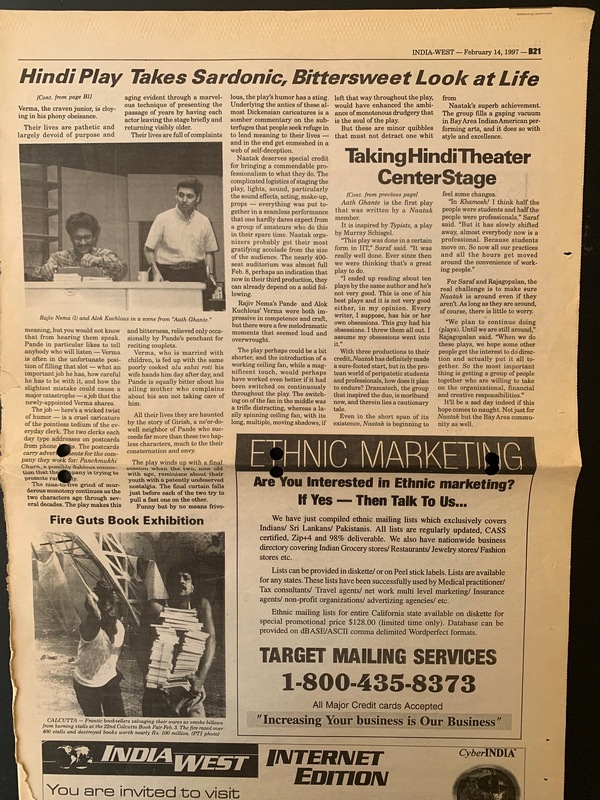 India West coverage, contd. 1997.The magazine 'India West' draws attention to Hindi theater becoming center stage with Naatak's productions. 1997.
 -
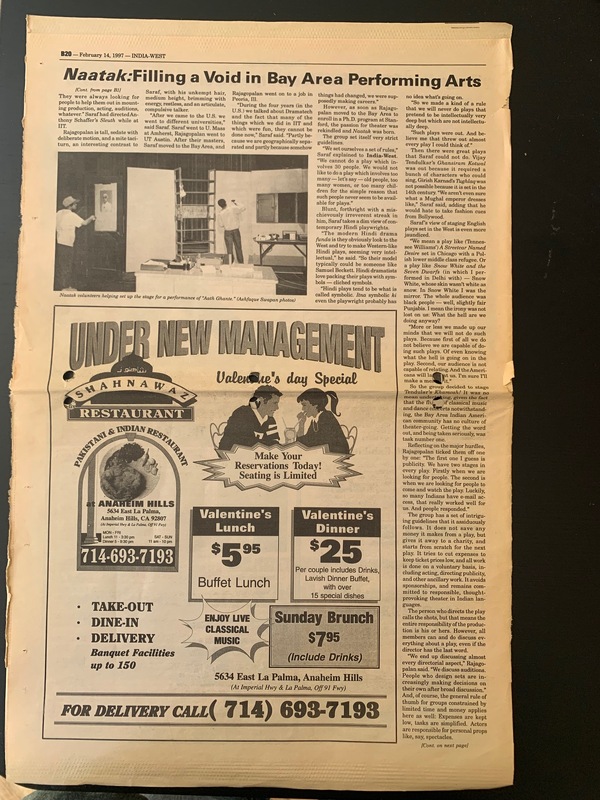 India West coverage, contd. 1997.India West' coverage, contd. 1997.
 -
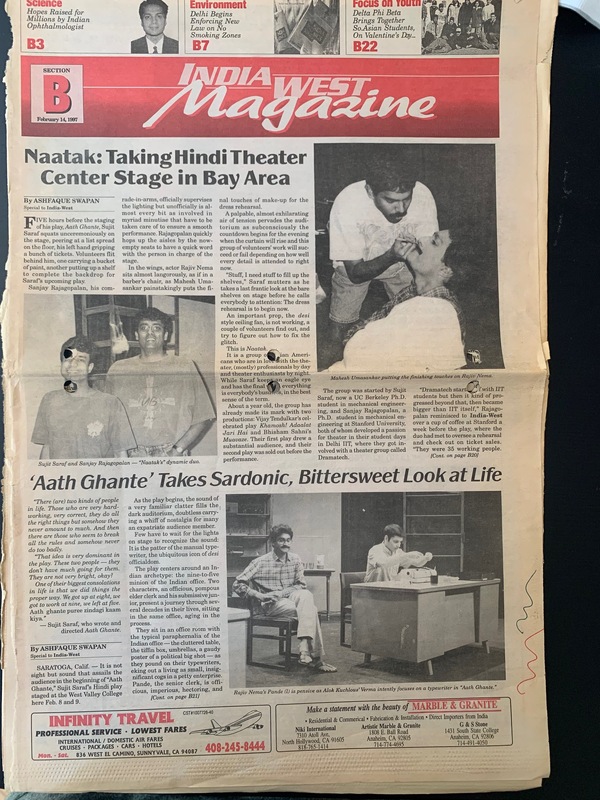 India West's coverage of Naatak's staging of a famous Indian playwright's work for the first time in the Bay Area. 1997.The first news coverage of Naatak's production, 'Khaamosh! Adalat Jaari Hain (Silence! The Court is in Session)' on February 14, 1997, in the magazine, India West. Vijay Tendulkar is the playwright.
 -
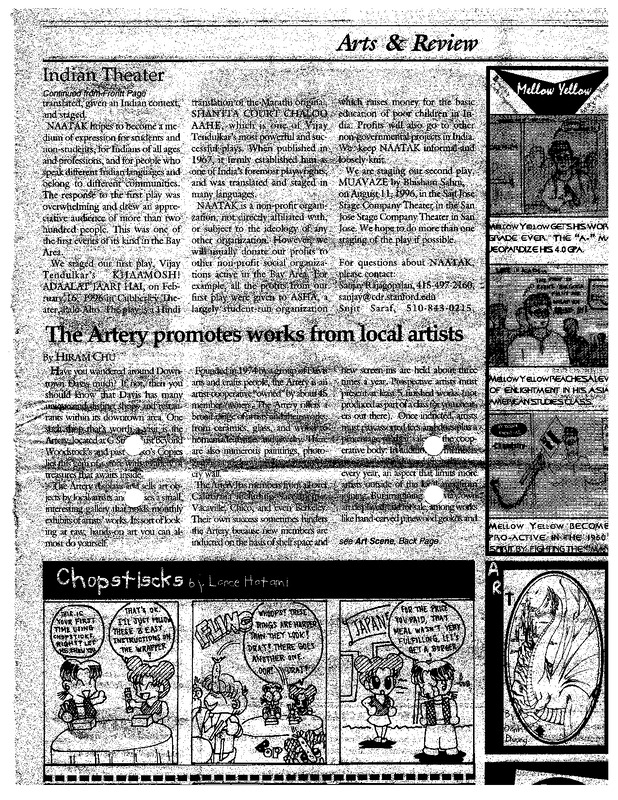 The first press received by Naatak in a local Berkeley newspaper in 1996.Sujit Saraf, co-founder of Naatak, writes about the establishment of the theatre group and its thespian goals in a Berkeley local newspaper. 1996.
 -
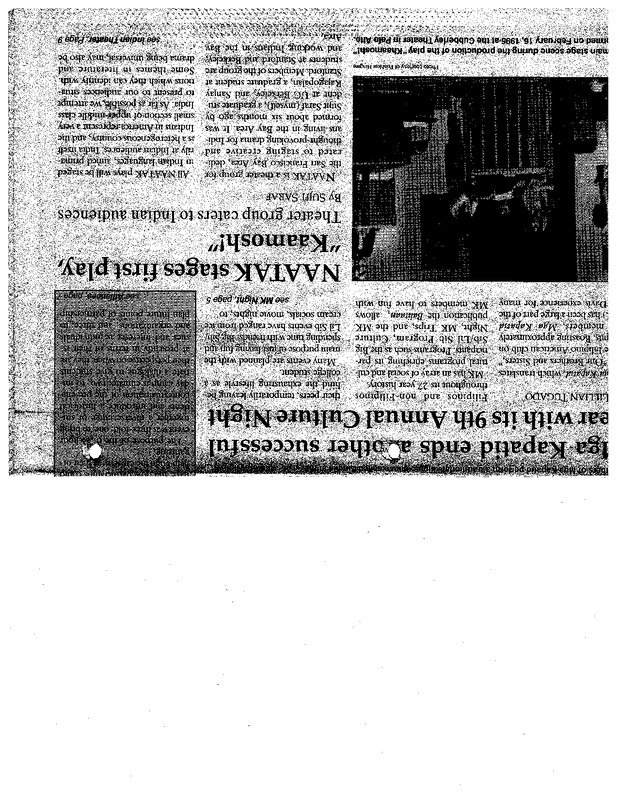 The first press received by Naatak in a local Berkeley newspaper in 1996.Sujit Saraf, co-founder of Naatak, writes about the establishment of the theatre group and its thespian goals in a Berkeley local newspaper. 1996.