
Deepa Fernandes
Journalism across borders, platforms, and communities
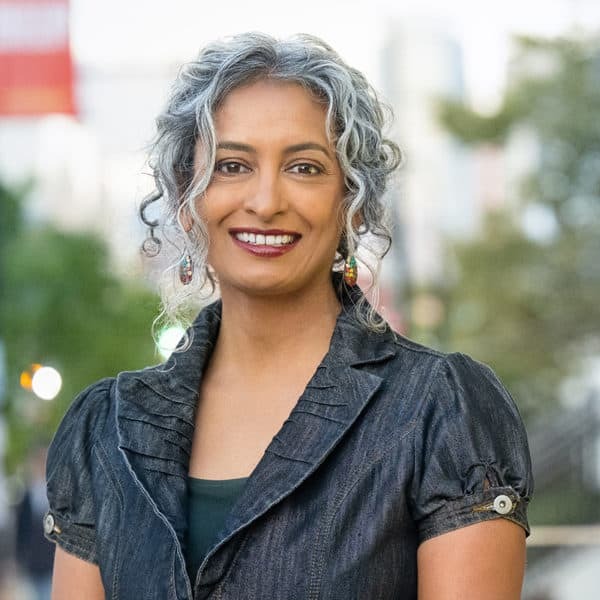
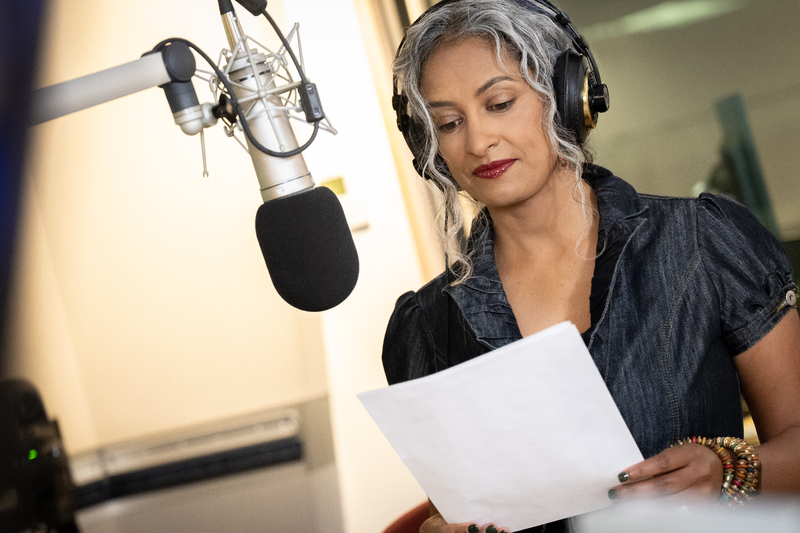
Deepa Fernandes is a journalist and author working across public radio and print, whose path into journalism was shaped by movement across borders and early encounters with power, labor, and migration. Currently a 2025–2026 Annenberg Communications Fellow at Stanford University’s Center for Advanced Study in the Behavioral Sciences, she began her career in university radio in Australia, where she first experienced the impact of asking questions missing from mainstream news coverage. Holding a microphone and speaking directly with people affected by political and economic decisions made clear to her that journalism could serve as a tool for accountability and visibility.
As her reporting expanded, Fernandes gravitated toward stories rooted in lived experience rather than institutional authority. She has been drawn to communities navigating displacement, labor exploitation, and political violence, not as abstract issues but as daily realities. This orientation has guided her work across public radio and print, where she consistently seeks out voices rarely positioned as experts in traditional newsrooms.
I’ve always prioritized voices that have the least power in our society. To me, an expert is somebody who’s lived it.
— Deepa Fernandes
Over time, this approach took her from local reporting to international stories, including coverage of migration and resistance movements abroad. Whether reporting from California or overseas, Fernandes described her work as driven by the same underlying question: whose story is being told, and who is being left out.
From community radio to public media
Fernandes entered journalism through university radio in Australia, where she first experienced the power of holding a microphone and asking questions that were otherwise absent from mainstream news. That experience shaped a career defined by challenging who is considered newsworthy and who is positioned as an authority.
Across public radio and print, she has consistently worked to center immigrant and diasporic communities not as subjects of reporting, but as participants in public discourse. Her work reflects a sustained critique of media practices that privilege institutional voices over lived experience, and a commitment to journalism that remains accountable to the communities it covers.
Community media as documentation and resistance
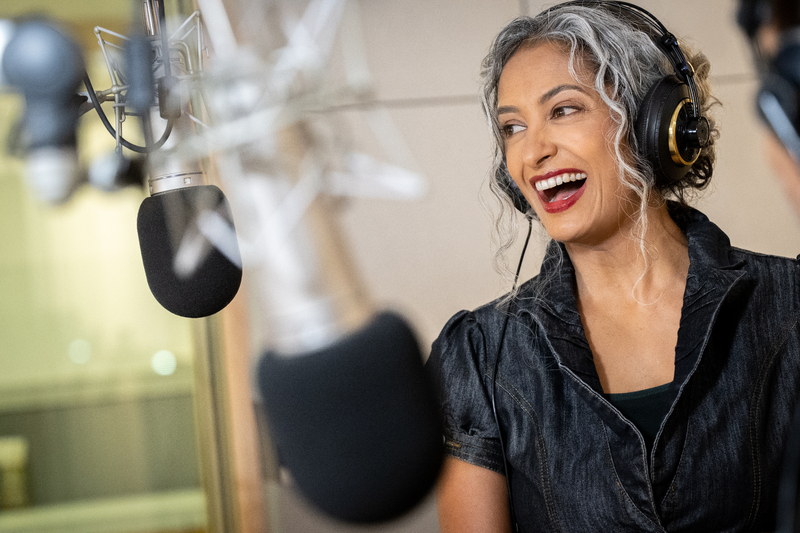
Throughout her career, Fernandes has returned to community and ethnic media as essential spaces for truthful documentation, especially in moments of political pressure and social upheaval.
Community and ethnic media are deeply rooted in the every day experiences of ordinary people. They expose the institutions that so often fail communities, while documenting the impact of decisions by those with power on ordinary people.
She emphasizes that even when stories do not “trickle up” into mainstream outlets, the act of recording lived experience matters. Journalism, in this sense, becomes an archive for future generations and a record of the present.
Reporting across borders and formats
Fernandes’s work spans local, national, and international contexts. She has reported extensively on labor and migration, including stories she is particularly proud of, such as her reporting from Peru on an Indigenous grandmother resisting one of the world’s largest mining companies.
Her reporting exists across formats, including long-form radio, investigative print, and books. Regardless of medium, her approach remains consistent: rigorous verification, refusal of stereotypes, and a commitment to narrative complexity.
Print journalism and long-form reporting
In addition to radio, Fernandes has written extensively for print publications, including the San Francisco Chronicle, producing in-depth reporting that situates individual stories within broader historical and political frameworks.
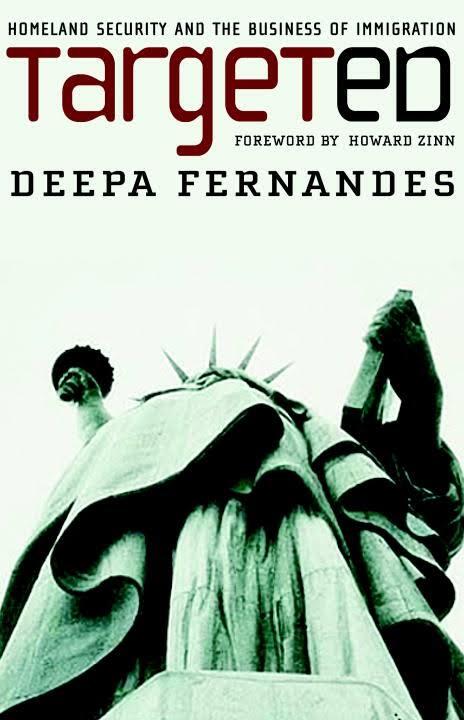
She is also the author of Targeted, a book that examines migration, labor, and state power through a global lens, further extending her commitment to storytelling that connects systems to lived experience.
Featured Work
Deepa Fernandes’ journalism spans public radio, long-form audio documentaries, and investigative print reporting. Across formats, her work centers culture, migration, power, and lived experience, connecting South Asian communities to global and local stories with depth and care.
South Asian voices and cultural storytelling (Audio)
- Zakir Hussain on music, memory, and touring — NPR / Here & Now
- South Indian fish curry and food as cultural memory — NPR / Here & Now
- Culturally responsive arts education — NPR
- Artist Manjari Sharma on memory, mythology, and loss — NPR / Here & Now
- Memoir of growing up Muslim in Gujarat during riots — NPR / Here & Now
- Saket Soni on indentured servitude in Mississippi — NPR / Here & Now
- Rahul Bhattia on Indian authoritarianism — NPR / Here & Now
Global justice and international reporting
- Civilian deaths in Yemen — NPR / Here & Now
- Peruvian Indigenous woman stands up to a mining corporation — The World
U.S. politics, migration, and community impact
Investigative print journalism
- Visa crisis affecting children of Silicon Valley immigrants — San Francisco Chronicle
- Investigation into care failures and disability rights — San Francisco Chronicle
- Title 42 and asylum seekers — San Francisco Chronicle
Advice to the next generation
When asked what advice she would give to South Asian or immigrant-background journalists, Fernandes is direct:
Don’t ask permission from gatekeepers. Tell stories. Use the tools of journalism to be rigorous, accurate, and disruptive.
She encourages young journalists to experiment with form while remaining deeply committed to accuracy and ethics, and to imagine journalism that does not have to replicate existing power structures.