

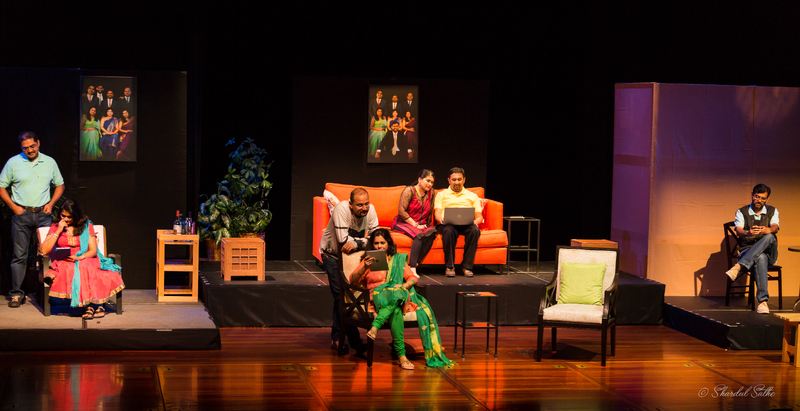
CalAA: California Arts Association
Founded: 2002
Languages of Performance: Marathi
California Arts Association, widely known as CalAA, is a 501(c)(3) nonprofit organization dedicated to producing, presenting, and preserving the performing arts traditions of India. Established in 2002, CalAA’s mission is to promote artistic experimentation while maintaining high standards of quality and intellectual rigor in theater. Its guiding ethos, “Cherish Art… Through Art… For Art,” reflects a sustained commitment to serious, impactful performance.
CalAA is a leading force in Marathi theater in the Bay Area, filling a distinctive linguistic and cultural niche. Each year, the organization presents two mainstage productions, two intimate theater productions, and hosts visiting troupes from India. Beyond staged performances, CalAA cultivates an ongoing theatrical ecosystem through monthly play readings, artist conversations, poetry recitals, staged excerpts, and audiobook productions.
In 2025, CalAA expanded its institutional footprint by establishing a 50-seat Black Box Theater in the South Bay and launching CalAA University to offer formal education in theater, with plans to extend into film, music, and dance. Through sustained production, archiving, and education, CalAA plays a central role in preserving and advancing live South Asian theater in Silicon Valley.
-
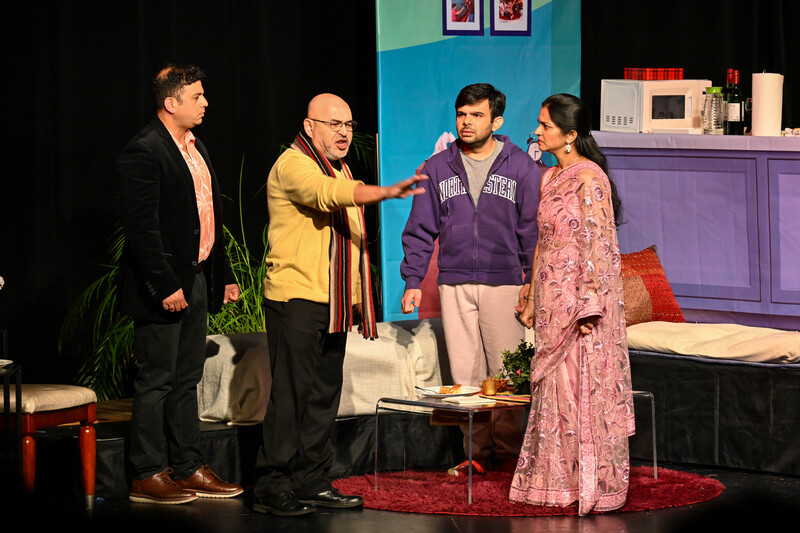 Red Wine White Wine (2026)Red Wine White Wine marked a notable engagement with contemporary social themes within Marathi-language theater. Adapted by Vikram Watave from Mike Bartlett’s West End and Off-Broadway play Cock, the work centers on a same-sex couple navigating family expectations, generational tension, and evolving definitions of identity. Balancing humor with emotional complexity, the play situates questions of acceptance and authenticity within a domestic setting. Its modern subject matter and experimental tonal shifts reflect CalAA’s willingness to engage themes that resonate strongly with younger and more diverse audiences in Silicon Valley. By presenting Red Wine White Wine, CalAA expanded the thematic scope of its repertoire, demonstrating how Marathi theater continues to evolve alongside changing social realities.
 -
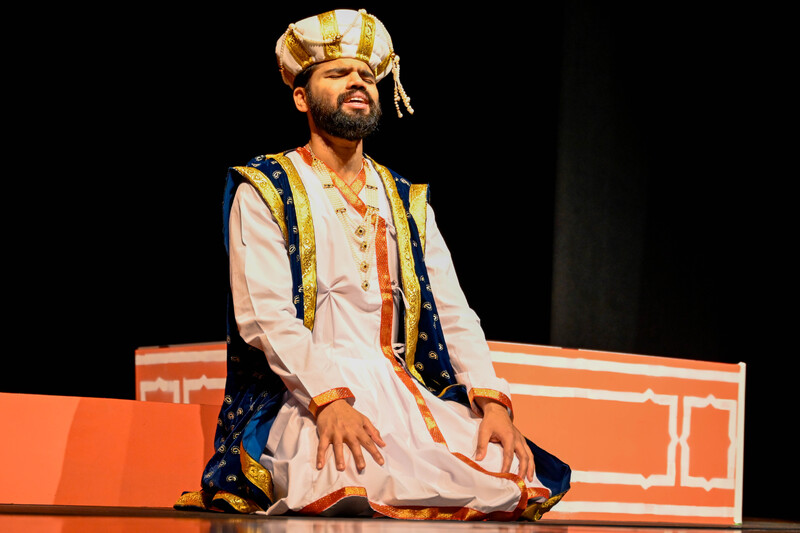 Tughlaq (2025)Tughlaq revisited Girish Karnad’s landmark historical drama, presented in Marathi through Vijay Tendulkar’s adaptation. The play examines the reign of Muhammad bin Tughlaq, the fourteenth-century Sultan of Delhi, whose ambitious reforms and radical political experiments earned him a reputation as both visionary and tyrant. Often remembered as a “mad king,” Tughlaq’s decision to shift the capital from Delhi to Daulatabad, introduce currency reforms, and restructure governance exposed the fragile balance between idealism and political pragmatism. Karnad’s text portrays a ruler deeply invested in philosophy, poetry, and intellectual debate, yet increasingly isolated by mistrust and unintended consequences.
 -
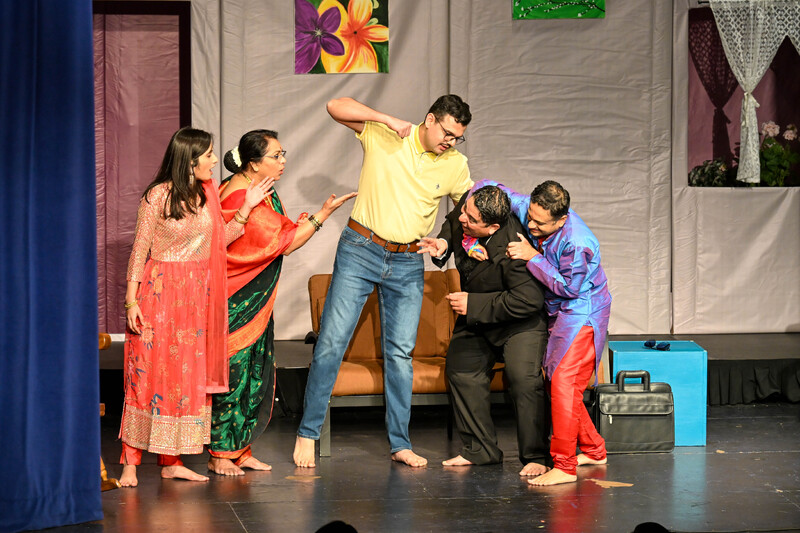 Sasu Majhi Dhaasu (2025)Sasu Majhi Dhaasu embraced high-energy farce and exaggerated domestic comedy. The plot centers on a financially desperate man who devises a scheme to extract a large sum of money from his formidable mother-in-law. What follows is a cascade of mistaken identities, misunderstandings, disguises, and escalating deception.
 -
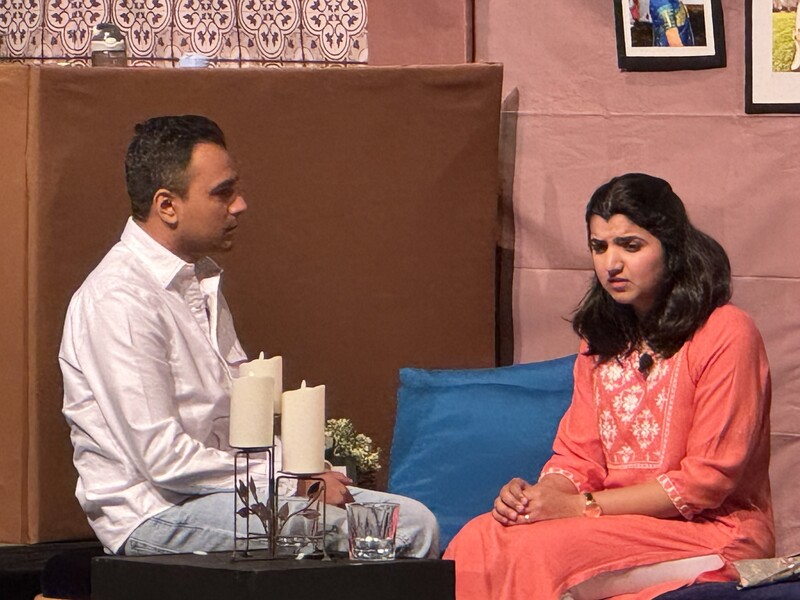 Don’t Worry, Be Happy (2025)Don’t Worry, Be Happy explores contemporary marriage through the lens of emotional misalignment, economic uncertainty, and unspoken vulnerability. The play centers on a young couple navigating professional instability and the pressures of parenthood. As the wife confronts gynecological health challenges that complicate their ability to have children, deeper fractures emerge in communication and empathy. Feeling unseen and misunderstood, she ultimately chooses independence over quiet resignation. The couple separates, and she redefines her life through travel, trekking, and social engagement, affirming personal fulfillment beyond conventional expectations. Resonating strongly with younger audiences, the production reflects a generational shift in how Marathi theater addresses marriage, autonomy, and women’s agency.
 -
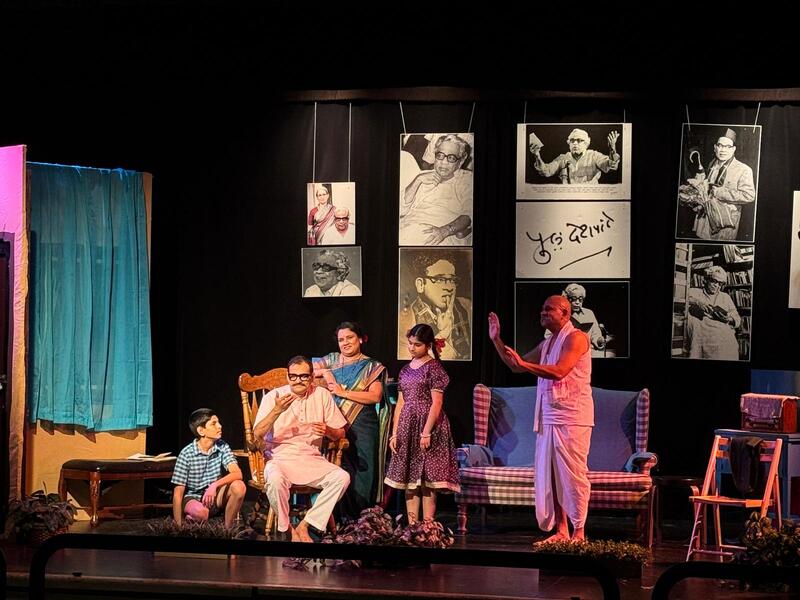 Asaa Mee Asaamee (2025)Asaa Mee Asaamee revisited one of Pu. La. Deshpande’s most beloved social comedies. The play follows a lower middle-class man deeply rooted in tradition as he navigates personal ambition, economic aspiration, and shifting social hierarchies. As his professional environment transitions from colonial British influence to Marwari business leadership, the protagonist confronts questions of identity, class mobility, and cultural continuity. Balancing satire with empathy, the work captures the anxieties and aspirations of upward mobility within a changing social order. Ratnakar Matkari’s adaptation preserves Deshpande’s humor while sharpening the narrative for contemporary performance.
 -
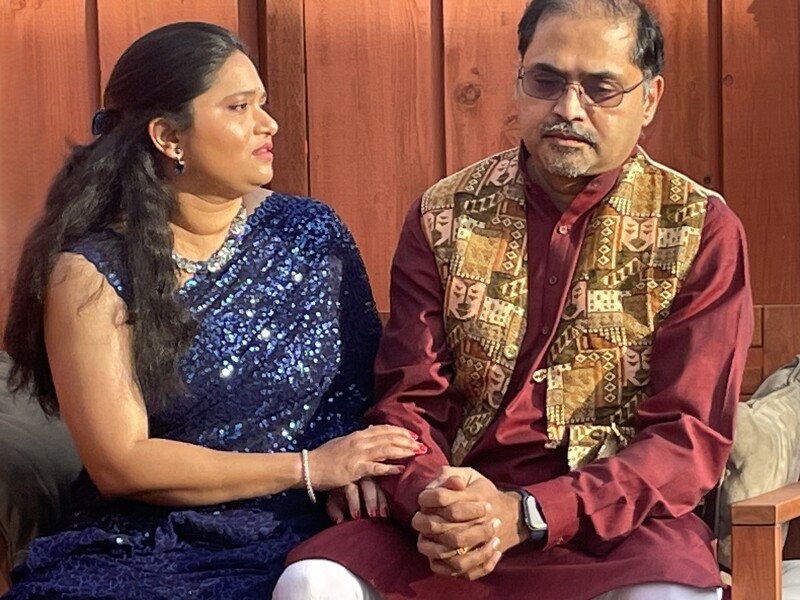 Party (2024)Party brought Mahesh Elkunchwar’s incisive social drama to Bay Area audiences. The play unfolds over the course of an elite urban gathering, where intellectuals, artists, and cultural figures assemble for an evening of conversation. Beneath the surface civility, tensions emerge around ideology, privilege, artistic responsibility, and moral complicity.
 -
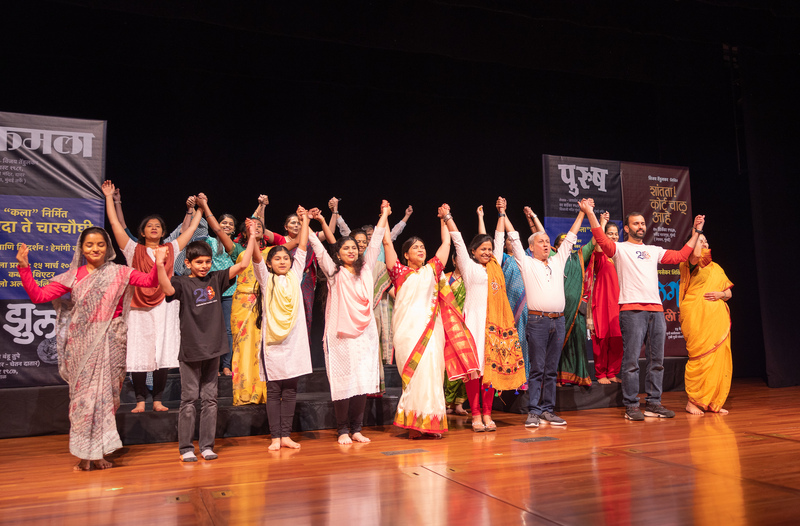 Sharda Te Char Choughi (2023)To mark CalAA’s twentieth anniversary, Sharda Te Char Choughi was conceived as a curated journey through the evolution of Marathi theater. The production featured staged excerpts spanning from Sharda, a landmark nineteenth-century social reform drama, to the modern play Char Choughi, alongside selections from works such as Kamala, Purush, and Shantata! Court Chalu Aahe, CalAA’s first major production in 2003. By juxtaposing canonical texts across eras, the program traced shifts in dramaturgy, performance style, and especially the representation of women on the Marathi stage.
 -
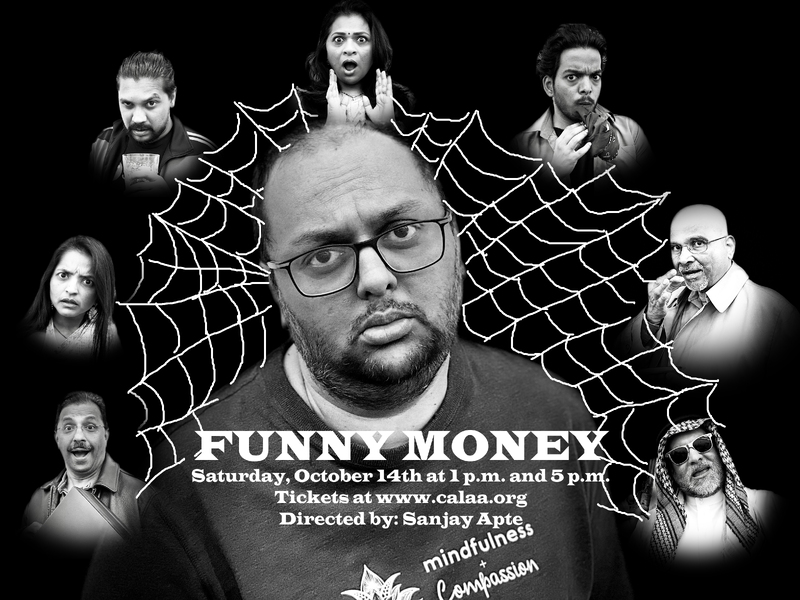 Funny Money (2023)Funny Money reinterpreted Ray Cooney’s fast-paced British farce for Marathi-speaking audiences. The play follows an ordinary man who accidentally exchanges briefcases and discovers a large sum of illicit cash. What begins as a windfall quickly spirals into deception, mistaken identity, and escalating comic chaos. Adapted into Marathi by Mukund Marathe, the production retained Cooney’s rapid-fire structure while infusing local linguistic humor and diasporic context. The posters emphasize exaggeration and caricature, visually reflecting the farcical tone and mounting absurdity central to the narrative.
 -
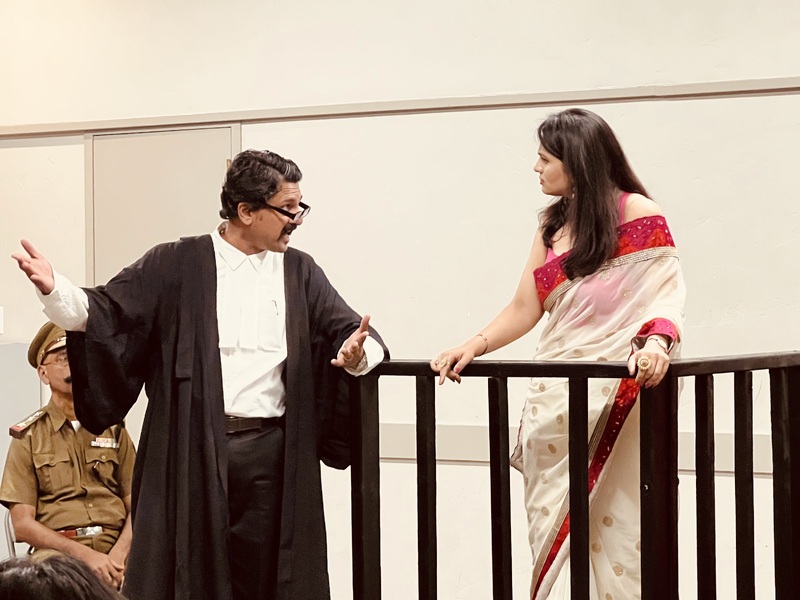 Ratra Sola January Chi (2022)Ratra Sola January Chi reinterpreted the courtroom drama The Night of January 16th for Marathi audiences under its Sameep intimate theater initiative. The play examines the suspicious death of a powerful industrialist and the trial that ensnares his mistress, who was present at the penthouse where the incident occurred. As testimony unfolds, the narrative probes ambiguity, motive, and the instability of truth. Presented in a community room setting at Campbell Community Center, Sameep deliberately broke the traditional proscenium distance between actors and audience. With spectators seated only feet away and the Jury selected from the attendees, the courtroom exchanges became immediate and immersive, transforming viewers into near-participants in the judicial proceedings. This production exemplifies CalAA’s experimentation with spatial form while sustaining Marathi-language dramatic tradition in Silicon Valley.
 -
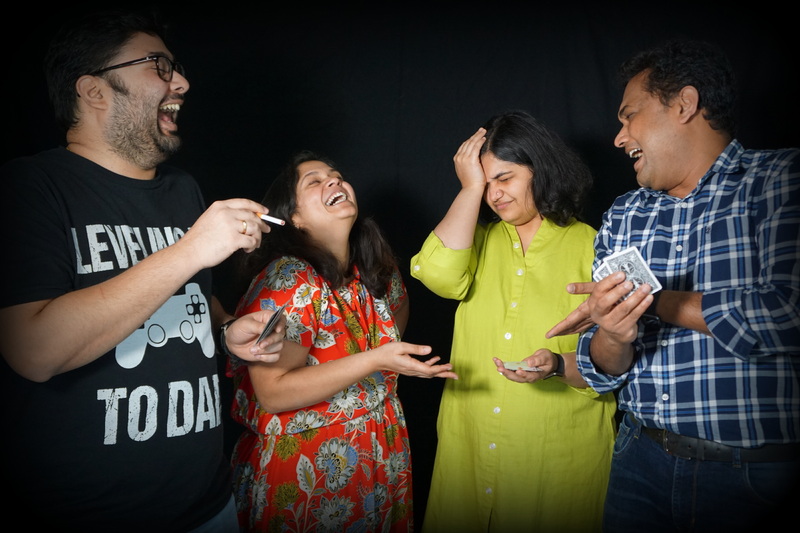 Tuzhi Mazhi Jodi (2019)Tuzhi Mazhi Jodi reimagined Neil Simon’s iconic comedy The Odd Couple within a Marathi cultural framework. While the original centers on two mismatched male roommates, this adaptation introduced a gendered twist: the messy and disorderly roommate was reconfigured as a woman, subverting audience expectations and refreshing the dynamic of domestic incompatibility. The play explores friendship, cohabitation, and clashing personalities through sharp dialogue and situational humor. By altering the gender dynamics while preserving the comedic structure, the adaptation highlights how classic Western texts can be reshaped to resonate within regional language theater and diasporic audiences.
 -
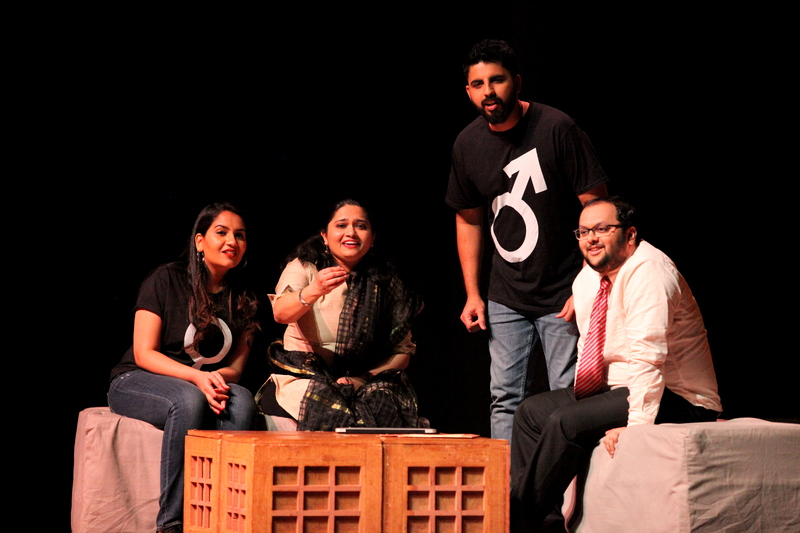 Never Mind (2018)Never Mind blended romantic comedy with theatrical experimentation. The play centers on a corporate executive and a visual art director who meet for business but develop a mutual attraction they struggle to express. Externalizing their inner hesitation, two alter egos appear on stage, attempting to guide, provoke, and complicate the unfolding relationship. As the narrative progresses, the alter egos develop a dynamic of their own, ultimately forming a connection even as the “real” couple falters in miscommunication. The structure playfully dramatizes internal conflict, ego, and emotional risk in contemporary professional life. Notably, the production incorporated live music performed onstage, with a visible band positioned behind the actors featuring guitar, keyboard, percussion, and vocalists. This integration of live musical accompaniment expanded CalAA’s staging vocabulary and reflected its continued experimentation with form while maintaining accessible, character-driven storytelling.
 -
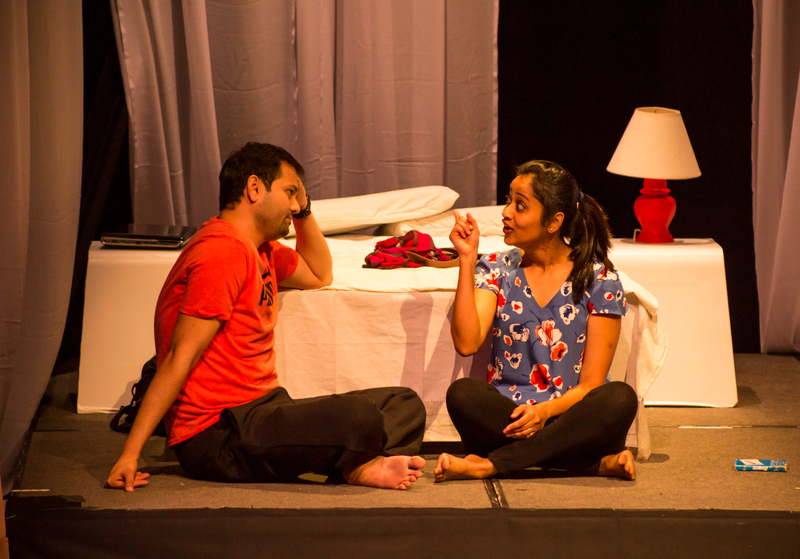 CalAA, Nava Gadi Nava Rajya (2017)Nava Gadi Nava Rajya marked a strategic shift in the organization’s programming philosophy. As reflected in director Mukund Marathe’s recollection, earlier productions had largely appealed to a smaller, dedicated segment of Marathi theater enthusiasts. With this play, CalAA sought to broaden its audience by presenting work that remained thoughtful yet accessible to a wider community. The drama centers on a newly married couple navigating insecurity and misunderstanding when the wife’s close college friend visits. The husband, unsettled by the openness and familiarity between the two, begins to question their relationship. The play explores jealousy, trust, and communication within contemporary marriage, ultimately emphasizing dialogue and emotional growth over suspicion. By blending humor with relatable domestic tension, Nava Gadi Nava Rajya represents CalAA’s move toward crossover programming designed to engage both traditional theater audiences and a broader diasporic public.
 -
CalAA, Alibaba Ani Chalishitale Chor (2017)Alibaba Ani Chalishitale Chor presents a contemporary Marathi social comedy structured around suspicion, gossip, and social pretense. Set during a private party hosted by a doctor in his forties, the evening takes an unexpected turn when the lights suddenly go out and guests hear the unmistakable sound of a kiss and a slap. When the lights come back, speculation spreads rapidly, exposing fragile egos and hidden tensions among the attendees. As accusations and rumors escalate, the host ultimately confesses that he staged the sounds himself, revealing the ease with which perception overtakes truth. The play examines middle-class morality, performative respectability, and the dynamics of rumor within tightly knit social circles.
-
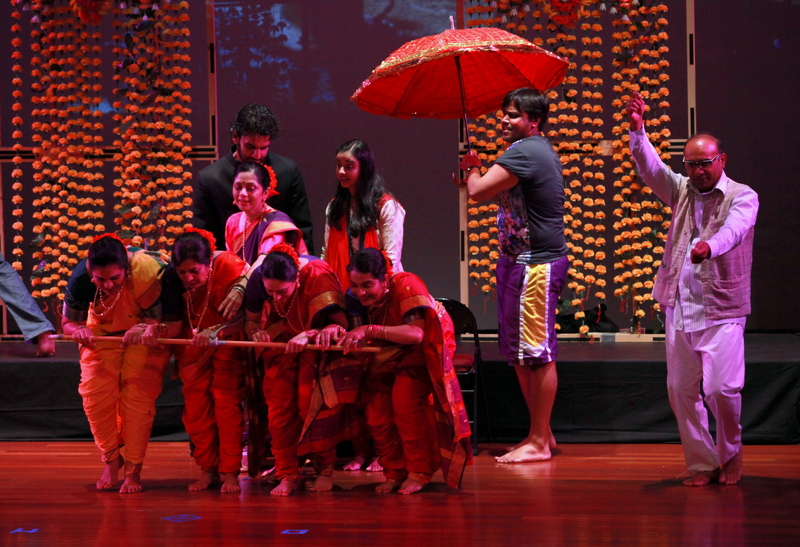 Teen Paishacha Tamasha (2015)The staging of Teen Paishacha Tamasha marked CalAA's 40th production and was presented at the Cubberley Theater in Palo Alto. Adapted into Marathi by Pu. La. Deshpande, the play reinterprets Brecht and Weill’s The Threepenny Opera through the idiom of Marathi musical satire. Retaining the original’s critique of corruption, capitalism, and moral duplicity, Deshpande’s adaptation situates the narrative within a culturally resonant linguistic and performative framework.
 -
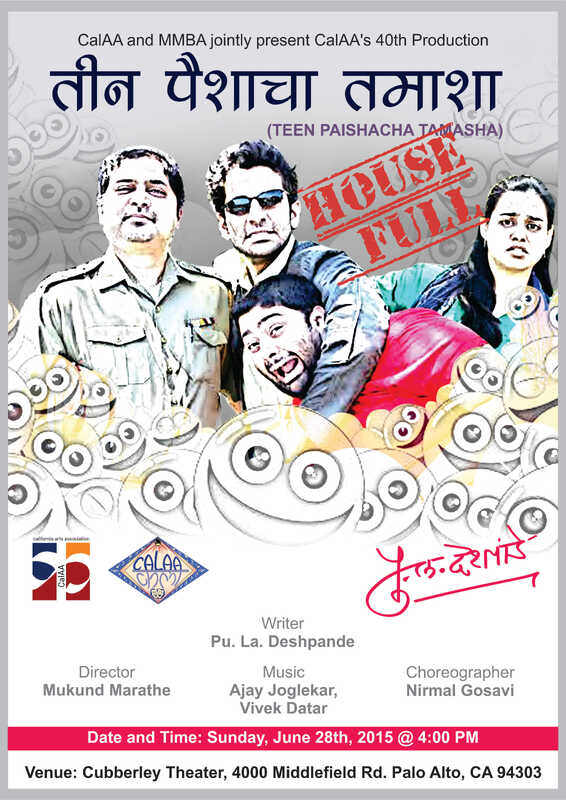 Teen Paishacha Tamasha (2015) posterThe poster announces CalAA’s 2015 staging of 'Teen Paishacha Tamasha', an adaptation of 'The Threepenny Opera', and marked its 40th production. The poster’s bold “House Full” stamp underscores the production’s popularity, reflecting both the enduring appeal of Brechtian satire and the vitality of Marathi musical theater in Silicon Valley.
 -
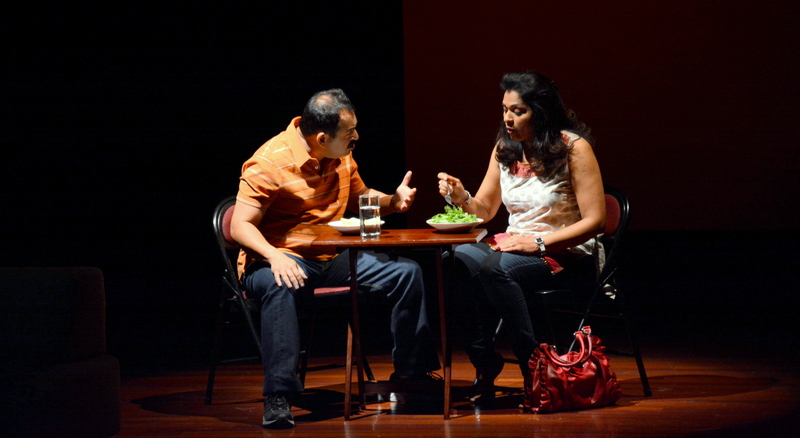 12 Varsha 9 Mahine 6 Diwas (2015)12 Varsha 9 Mahine 6 Diwas reimagined the romantic-comedy structure of When Harry Met Sally within a Marathi cultural framework. Adapted and directed by local playwright Vikram Watave, the play traces the evolving relationship between two individuals whose lives intersect repeatedly over time. Their conversations, disagreements, and shifting emotional boundaries explore whether intimacy between a man and a woman can remain purely platonic. By relocating a familiar Western narrative into Marathi language and diasporic sensibility, CalAA demonstrated how adaptation becomes a form of cultural translation. The production situates global popular storytelling within regional linguistic performance, reflecting the hybridity of South Asian life in Silicon Valley.
 -
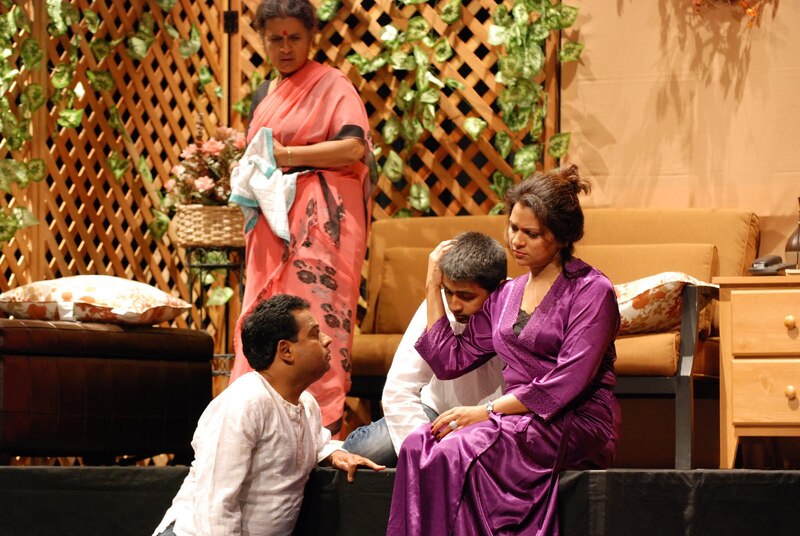 Jaswandi (2011)In Jaswandi, Sai Paranjpye crafts a layered examination of marriage, control, and emotional isolation. The play centers on a woman trapped in a deeply restrictive domestic environment dominated by her husband. Within this world, male figures orbit her life in distorted ways, underscoring both her confinement and the imbalance of power that defines her marriage. As the narrative unfolds, the protagonist seeks companionship and recognition beyond the rigid structure imposed upon her. When those attempts are suppressed, her actions become a form of resistance, challenging the authority that governs her life. Rather than presenting a simple moral tale, Jaswandi probes the psychological consequences of patriarchal control and the complexities of agency within constrained spaces.
 -
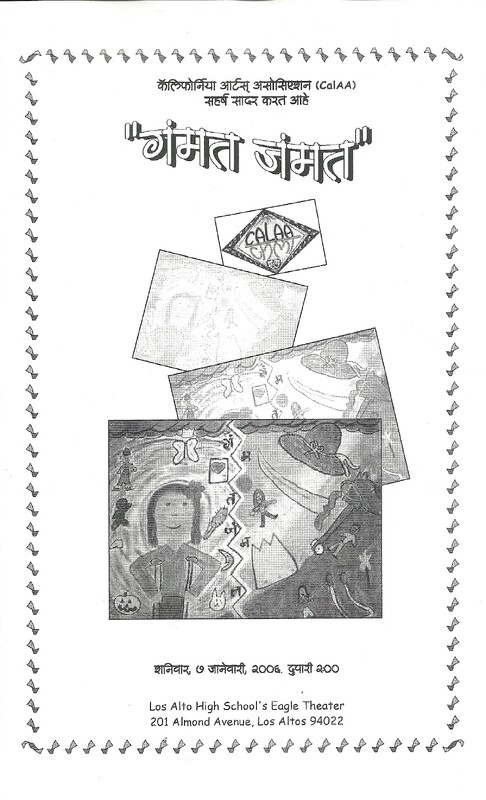 Gammat Jammat (2006) PosterThis 2006 poster for Gammat Jammat reflects the playful, imaginative spirit of CalAA’s children’s theater production. The hand-drawn aesthetic and layered imagery evoke a child’s dreamscape, visually reinforcing the story’s structure in which fantasy figures appear to encourage and inspire a young girl navigating physical disability. Presented in Marathi, the production marked an important expansion of CalAA’s programming into youth-centered theater. By staging children’s plays in a regional Indian language, CalAA fostered intergenerational language continuity while creating performance opportunities for young members of the Bay Area’s South Asian community.
 -
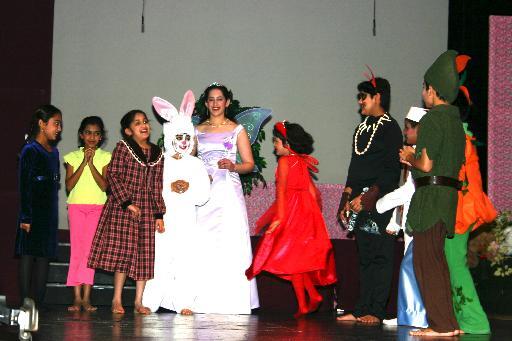 Gammat Jammat (2006)Gammat Jammat marked an expansion into children’s theater within the Marathi-language stage tradition in Silicon Valley. The play centers on a young girl who has polio and struggles with mobility. In a dreamlike sequence, a host of imaginative characters appear before her, offering encouragement, companionship, and courage. Through fantasy and theatrical playfulness, the narrative explores resilience, self-belief, and the emotional world of a child navigating physical limitation. By the conclusion of the drama, the girl gains confidence and agency, symbolized through her ability to walk without reliance on crutches. This production reflects CalAA’s commitment not only to canonical adult drama but also to intergenerational cultural transmission. By staging children’s theater in Marathi, the organization fostered language continuity, community participation, and youth engagement within the South Asian diaspora.
 -
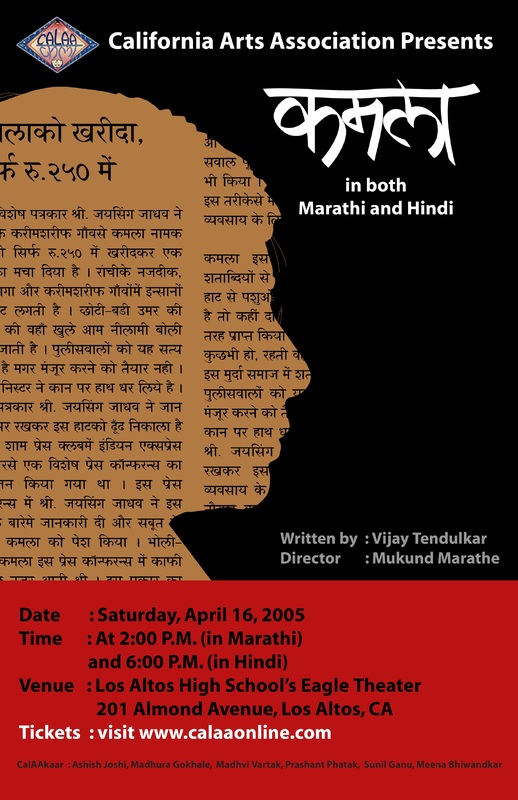 Kamala (2005) posterThis 2005 poster for Kamala announces CalAA’s bilingual presentations of Vijay Tendulkar’s searing social drama, performed in both Marathi and Hindi on the same day. The design juxtaposes bold typography with a silhouetted female profile layered over newspaper text, visually referencing the play’s focus on journalism, public exposure, and the commodification of women. At the center of the narrative is a journalist who purchases a tribal woman to demonstrate the reality of human trafficking, only to reveal the moral contradictions within his own marriage. By presenting the play bilingually, CalAA expanded its audience reach while preserving the linguistic roots of Tendulkar’s original text, further solidifying its place in the Bay Area’s South Asian theatrical landscape.
 -
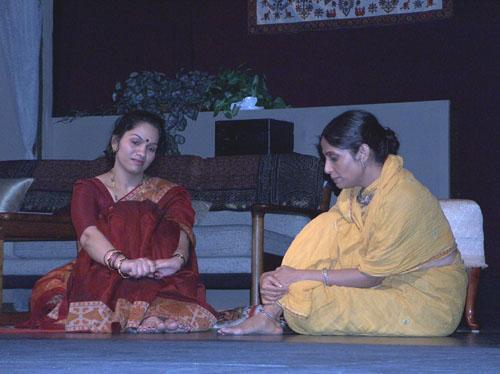 Kamala (2005)In Vijay Tendulkar’s Kamala, a journalist in Delhi learns that women are being auctioned as bonded laborers in rural markets. Determined to expose the story, he purchases a woman named Kamala as proof for a press conference. What begins as investigative zeal gradually reveals deeper layers of exploitation within his own household. In this scene, Kamala, the woman he has bought, sits beside the journalist’s wife. Through their encounter, the wife begins to recognize her own confinement within a patriarchal marriage. Tendulkar’s play shifts the focus from public scandal to private domination, exposing how systems of control operate both in the marketplace and within the domestic sphere. CalAA’s 2005 staging was presented in two performances on the same day, one in Marathi and one in Hindi, reflecting the organization’s commitment to linguistic accessibility while preserving the integrity of regional dramatic literature.
 -
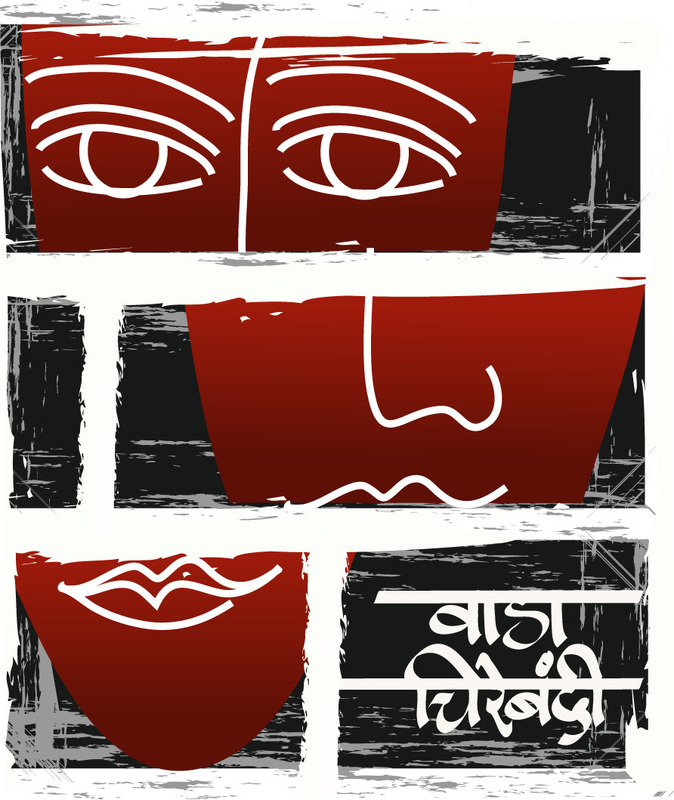 Wada Chirebandi (2004) posterThis 2004 poster for Wada Chirebandi uses bold red, black, and white abstraction to evoke psychological fracture and generational rupture. Fragmented facial features divided by stark horizontal bands visually echo the tensions at the heart of Mahesh Elkunchwar’s landmark Marathi drama. The play centers on the decline of a traditional rural Maharashtrian family following the death of its patriarch, as relatives gather in the ancestral stone mansion and confront shifting authority, economic change, and eroding values. Widely regarded as a cornerstone of modern Marathi theater, the work examines the disintegration of feudal structures in post-independence India. By staging and archiving Elkunchwar’s work, CalAA demonstrated its commitment to preserving major voices of India’s modern dramatic canon while cultivating Marathi-language theater within Silicon Valley’s diasporic cultural landscape.
 -
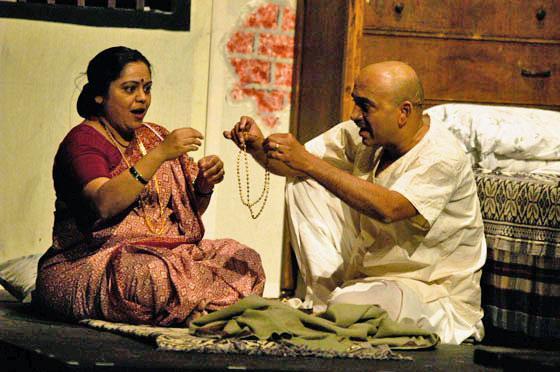 Wada Chirebandi (2004)In Wada Chirebandi, translated as “The Stone Mansion” in English, renowned Marathi playwright Mahesh Elkunchwar examines the slow unraveling of a traditional rural family in Maharashtra following the death of its patriarch. As relatives gather for the funeral in the ancestral stone mansion, long-suppressed tensions surface, revealing generational fractures, economic decline, and the erosion of inherited authority. The play is widely regarded as a landmark of modern Marathi theater and was later adapted into Hindi under the title Virasat. CalAA’s staging of this work reflects its commitment to presenting canonical Marathi drama that interrogates social transformation and cultural continuity. By producing and archiving works by major playwrights such as Elkunchwar, CalAA positions itself not only as a presenting organization but also as a custodian of regional theatrical heritage within the South Asian diaspora. The production underscores the organization’s pride in documenting and preserving influential voices from India’s modern dramatic tradition.
 -
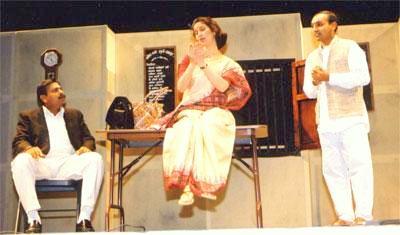 Shantata! Court Chalu Aahe (2003)Staged in 2003, Shantata! Court Chalu Aahe was CalAA’s first major full-length production following its founding in 2002, when the organization had initially presented shorter one-act plays. This production marked a defining moment in CalAA’s transition from a newly formed cultural collective to a serious Marathi-language theater institution in Silicon Valley. Written by acclaimed Indian playwright Vijay Tendulkar, the play centers on a traveling amateur theater group that stages a mock trial as part of its rehearsal process. What begins as theatrical improvisation, gradually reveals deeply rooted social hierarchies, misogyny, and moral hypocrisy. Tendulkar’s work is a cornerstone of modern Indian drama, known for its sharp critique of social conventions and its unflinching portrayal of power dynamics.