

BAAT: Bay Area Amateur Thespians
Founded: 2018
Languages of Performance: Bengali
Bay Area Amateur Thespians (BAAT) is a nonprofit theater organization dedicated to producing high-quality South Asian drama in the Bay Area. Founded in 2018, BAAT is a collaborative platform for performers, directors, designers, and technicians committed to multilingual, culturally rooted storytelling. The company stages works in Bengali, Hindi, and English, ranging from contemporary thrillers and comedies to adaptations of significant South Asian literary texts. BAAT frequently incorporates English supertitles to broaden accessibility and engage intergenerational and cross-cultural audiences.
-
 BAAT (Bay Area Amateur Thespians) LogoBay Area Amateur Thespians (BAAT) is a nonprofit theater organization dedicated to producing high-quality South Asian drama in the Bay Area. Founded in 2018, BAAT is a collaborative platform for performers, directors, designers, and technicians committed to multilingual, culturally rooted storytelling. The company stages works in Bengali, Hindi, and English, ranging from contemporary thrillers and comedies to adaptations of significant South Asian literary texts. BAAT frequently incorporates English supertitles to broaden accessibility and engage intergenerational and cross-cultural audiences.Positioned within Silicon Valley’s vibrant South Asian diaspora, BAAT bridges classical and modern narratives, cultivating community through disciplined ensemble work and fully realized theatrical production.
 -
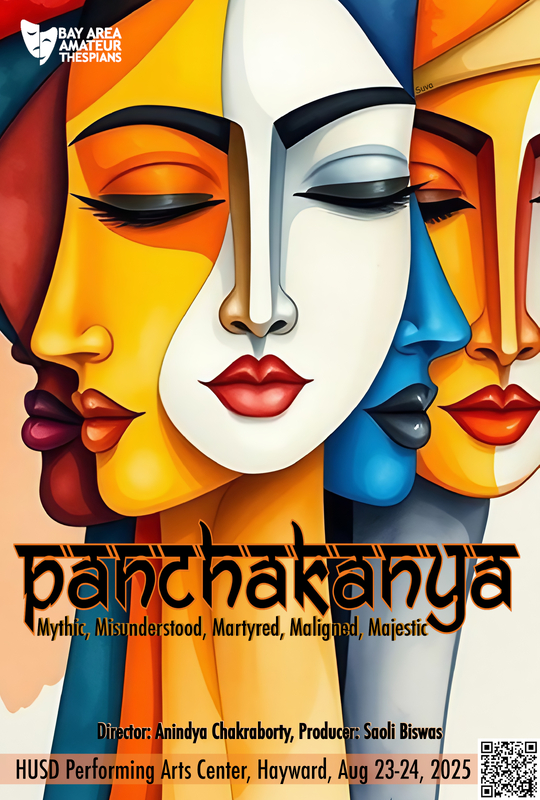 Poster of PanchakanyaPromotional poster for Panchakanya, written by Anindya Chakraborty and Sayoni Roy, reimagines five women from the Ramayana and Mahabharata: Mandodari, Ahalya, Tara, Kunti, and Draupadi. Traditionally invoked together in Sanskrit verse as figures of moral complexity, the “Panchakanyas” occupy distinctive and often paradoxical roles within South Asian epic literature. BAAT’s production approached these characters through five distinct performance styles, incorporating music and choreography to explore questions of power, gender, and moral ambiguity. Rather than retelling familiar episodes, the play reinterprets these figures within a contemporary theatrical framework, inviting audiences to reconsider inherited narratives from the epics
 -
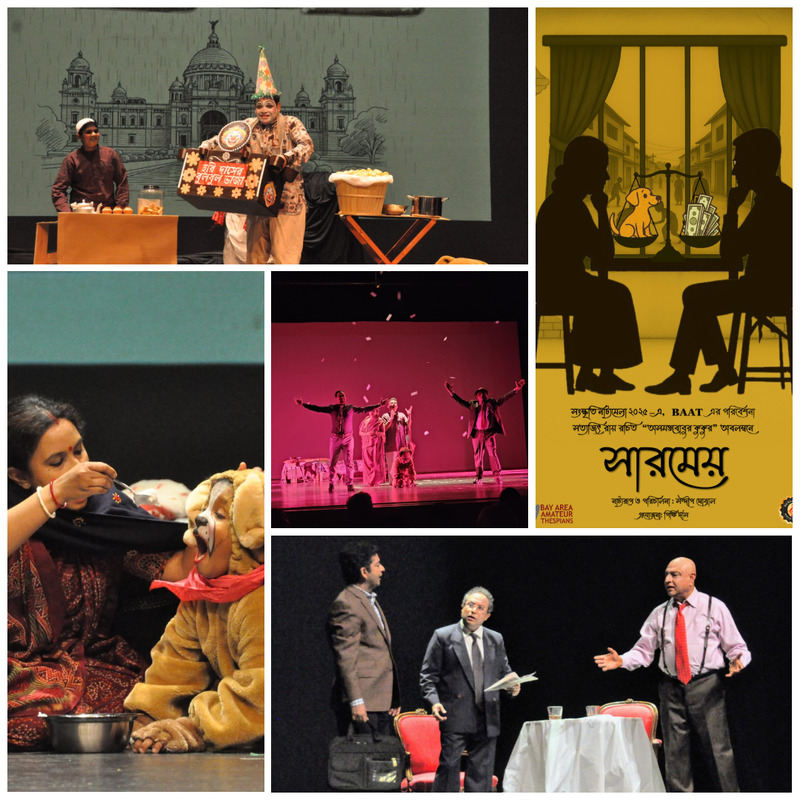 SaromeyoPresented in 2025, Saromeyo is BAAT’s theatrical homage to the imaginative storytelling of filmmaker and writer Satyajit Ray. Blending elements of fantasy, satire, and social commentary, the production creates a stylized theatrical world where everyday encounters take on allegorical meaning. Through ensemble performance and visual storytelling, Saromeyo explores themes of empathy, social hierarchy, and moral responsibility. The production reflects BAAT’s ongoing engagement with Ray-inspired narratives and introduces Bay Area audiences to theatrical interpretations of Bengali literary and cinematic traditions.
 -
 Prodosh Theke Protush PorjontoPart of BAAT’s February 2025 Bengali-language double feature, Prodosh Theke Protush Porjonto, written by Anindya Chakraborty and directed by Tania Bhattacharya, is adapted from Surendra Verma’s acclaimed Hindi play Suraj Ki Antim Kiran se Suraj Ki Pehli Kiran Tak. Set in the 10th-century kingdom of Malla, the drama explores questions of power, duty, and moral responsibility through a series of events unfolding between sunset and dawn.
 -
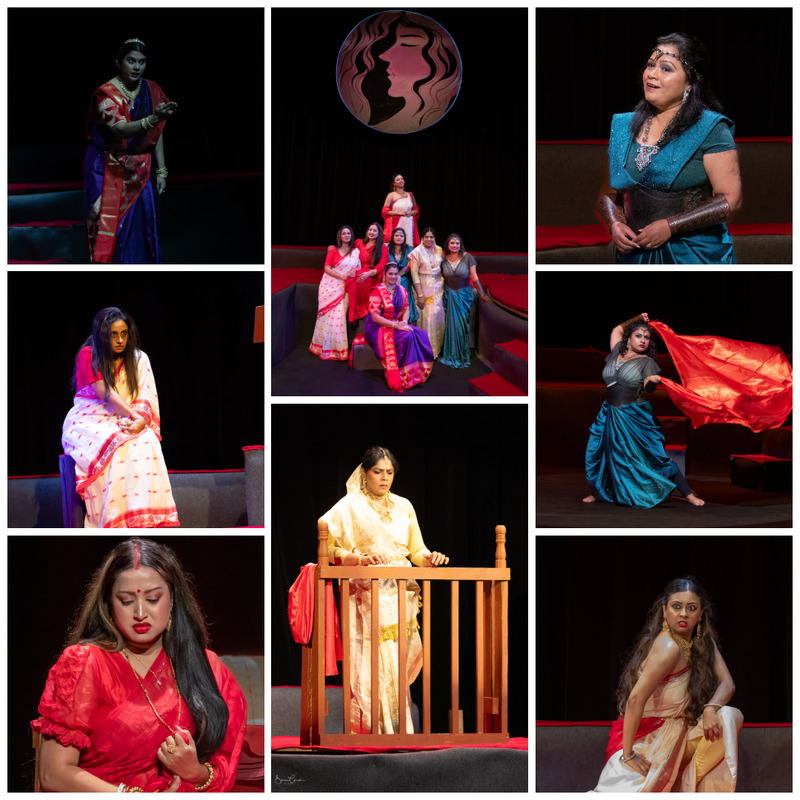 PanchakanyaPresented in August 2025, Panchakanya, written by Anindya Chakraborty and Sayoni Roy and directed by Chakraborty, reimagines five women from the Ramayana and Mahabharata—Mandodari, Ahalya, Tara, Kunti, and Draupadi. Blending music, choreography, and varied performance styles, the production invites audiences to reconsider inherited narratives about gender and power.
 -
 KittonkholaBAAT's May 2024 production of Selim Al Deen's Kittonkhola, directed and co-performed by renowned practitioners Partha Pratim Deb and Rupa Deb, brought rural Bangladesh's marginalized performers and villagers to life — their struggles of love and survival rendered through a collaboration between Silicon Valley artists and distinguished figures of the Bengali stage.
 -
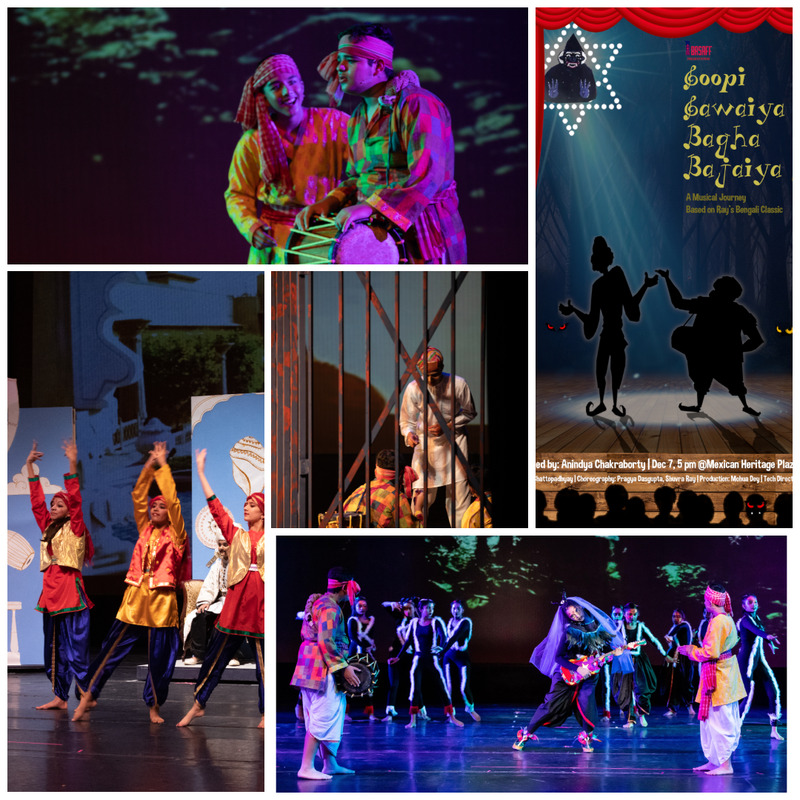 Goopi Gayen Bagha BayenAdapted for stage and directed by Anindya Chakraborty, BAAT’s December 2019 production reimagined Goopy Gyne Bagha Byne, Satyajit Ray’s 1969 film adaptation of Upendrakishore Ray Chowdhury’s classic Bengali tale. Featuring Hindi folk-inspired music, an English-language script for Bay Area youth performers, and choreography, the production brought the kingdoms of Shundi and Halla to life for a multigenerational audience.
 -
 Touring and Digital Performances (2018–2021)This collage documents BAAT’s performances beyond the Bay Area, including cities such as Dallas and Chicago, as well as its pivot to virtual theater during the COVID-19 pandemic.
 -
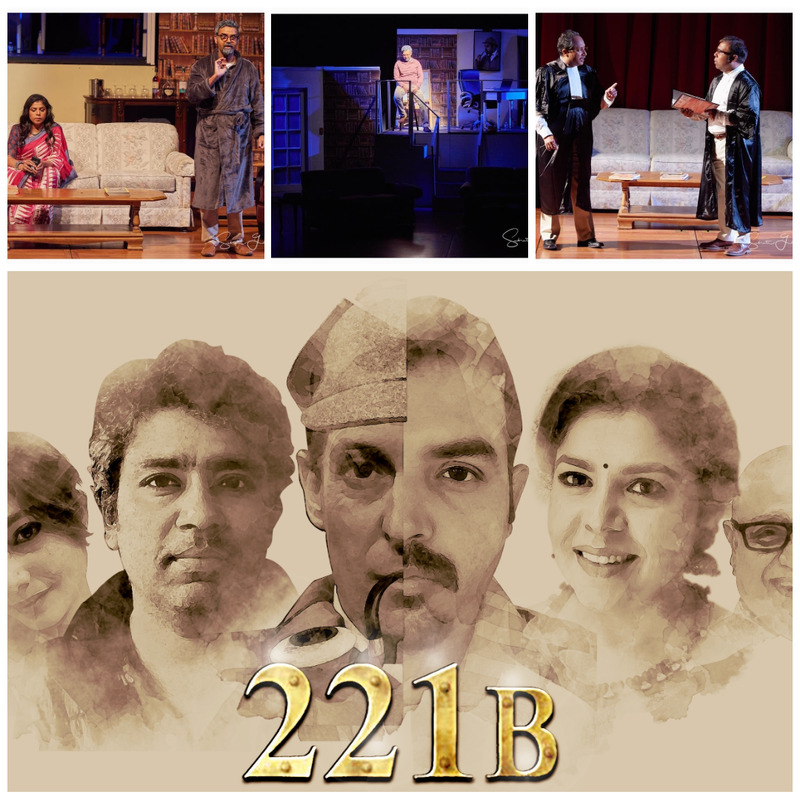 221BPresented in April 2022, 221B is a contemporary Bengali suspense thriller written by Arindam Mukherjee and adapted from his 2010 play originally staged in Kolkata. The drama centers on a renowned economist and avid admirer of Sherlock Holmes, whose carefully ordered world begins to unravel within the confines of his home. BAAT’s production introduced Bay Area audiences to a modern Bengali theatrical work that draws on the conventions of psychological mystery and detective fiction.
 -
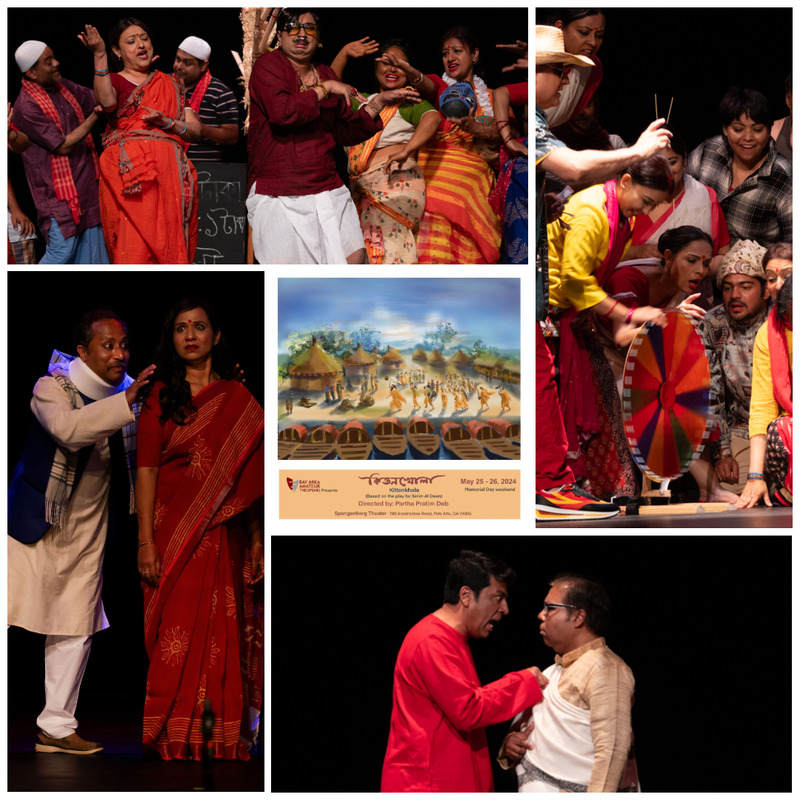 KittonkholaPresented in 2024, BAAT staged Kittonkhola, the celebrated play by Bangladeshi playwright Selim Al Deen. Set in rural Bangladesh along the Kittonkhola River, the drama explores the tensions between communal festivity and the hardships of everyday life. Combining elements of drama, music, and movement, the work is known for its poetic language and non-linear structure and is widely regarded as a modern classic of Bengali theatre. The production brought Bay Area performers into collaboration with theatre practitioners Partha Pratim Deb and Rupa Deb, artists closely associated with contemporary Bengali stage traditions.
 -
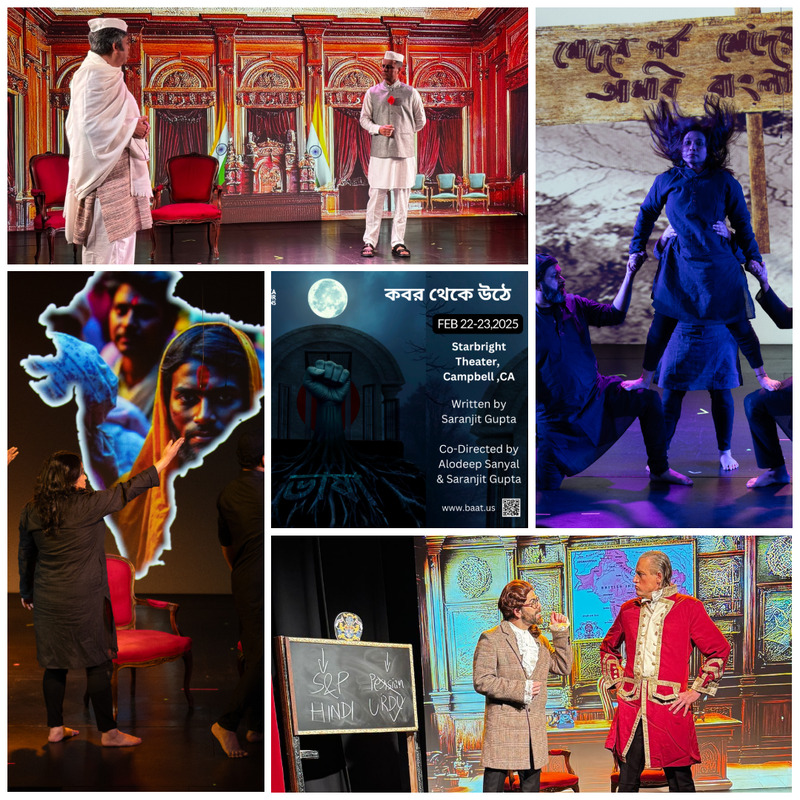 Kobor Theke UtheWritten by Saranjit Gupta, Kobor Theke Uthe draws inspiration from Kobor (The Grave), the landmark 1952 play by Bangladeshi playwright Munier Chowdhury. Chowdhury’s original drama emerged during the Bangla Language Movement in East Pakistan, when students and intellectuals protested for recognition of Bangla as a state language. BAAT’s multilingual production revisits this theatrical lineage, exploring questions of linguistic identity, memory, and cultural belonging. By referencing the historical struggle for language rights, the play connects contemporary audiences with a defining moment in South Asian political and literary history. Presented in February 2025 as part of BAAT’s season-opening Bengali-language double feature, Kobor Theke Uthe was staged alongside Prodosh Theke Protush Porjonto at Starlight Theater in Campbell, California.
 -
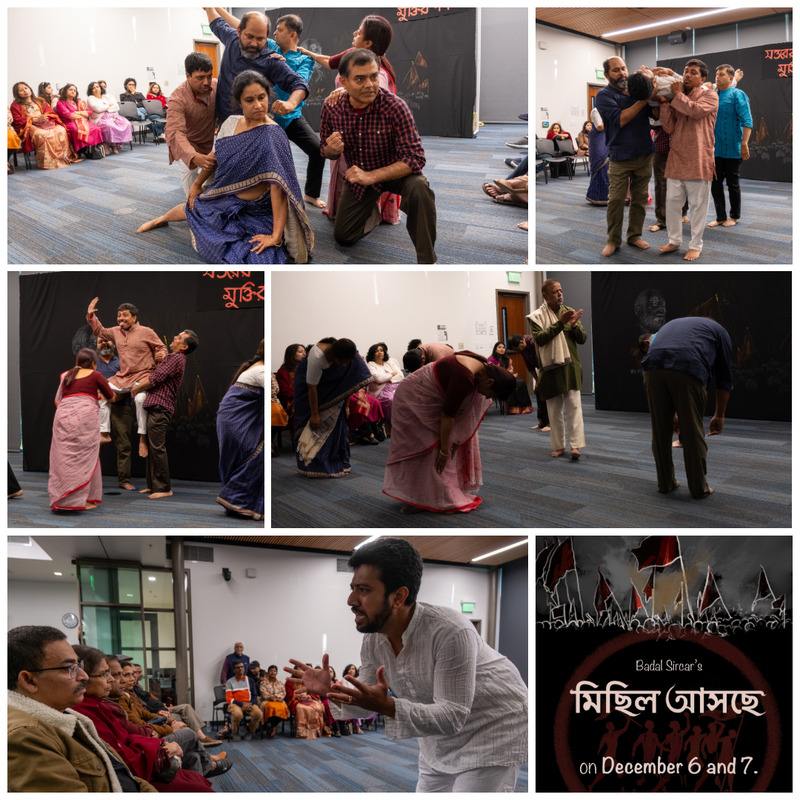 MichhilIn December 2025, BAAT staged Badal Sircar’s Michhil (1974), a defining work of the Third Theatre movement. Set in 1970s Kolkata during the height of political unrest associated with the Naxalite movement, the play examines how everyday civic life persists amid ideological violence, state repression, and social upheaval. In keeping with Sircar’s performance philosophy, the production was staged without proscenium framing, elaborate sets, or technical spectacle. The audience surrounded the actors on three sides of the playing space, creating an intimate environment that emphasized collective experience and reflected the anti-institutional aesthetics central to Third Theatre practice.
 -
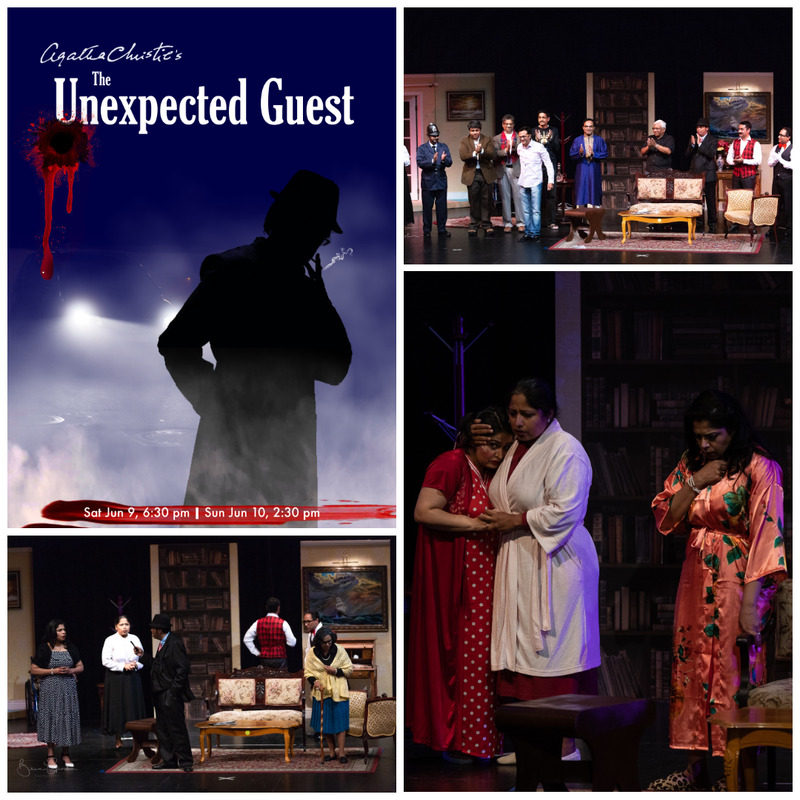 The Unexpected GuestBAAT’s inaugural production presented Agatha Christie’s The Unexpected Guest, an original English-language stage mystery that opened in London’s West End in 1958. Directed by Anindya Chakraborty, the production marked the company’s entry into full-scale theatrical staging and its engagement with the global tradition of detective drama.