Here & Now is a nationally distributed public radio news program co-produced by WBUR Boston and NPR. The show features live, in-depth reporting on national and international news, politics, culture, and social issues, and is a prominent example of contemporary public radio journalism.
Hole is a Naatak original that imagines a Silicon Valley startup undertaking an ambitious engineering project: a tunnel through the Earth connecting Cupertino to Delhi in under an hour. Blending science fiction with social satire, the play examines technological ambition, risk-taking culture, and the consequences of innovation driven by speed over reflection. Drawing on the ethos of contemporary startup culture, the production situates futuristic speculation within familiar Bay Area contexts, linking global connectivity with local identity.
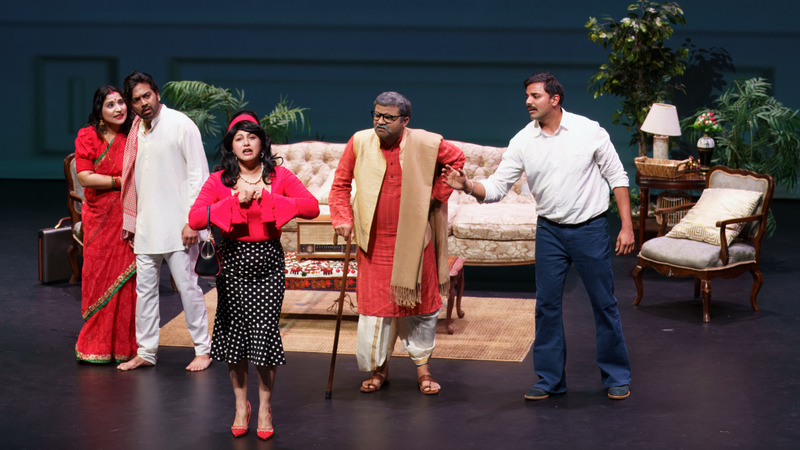
Set in 1970s India, this laugh-out-loud comedy takes place in a small, tight-knit community where rumors and reputations matter more than reality. When Sheela finds herself under pressure to present the image of a “perfect husband,” she devises an unconventional plan—only for things to spiral into a whirlwind of hilarious misunderstandings.
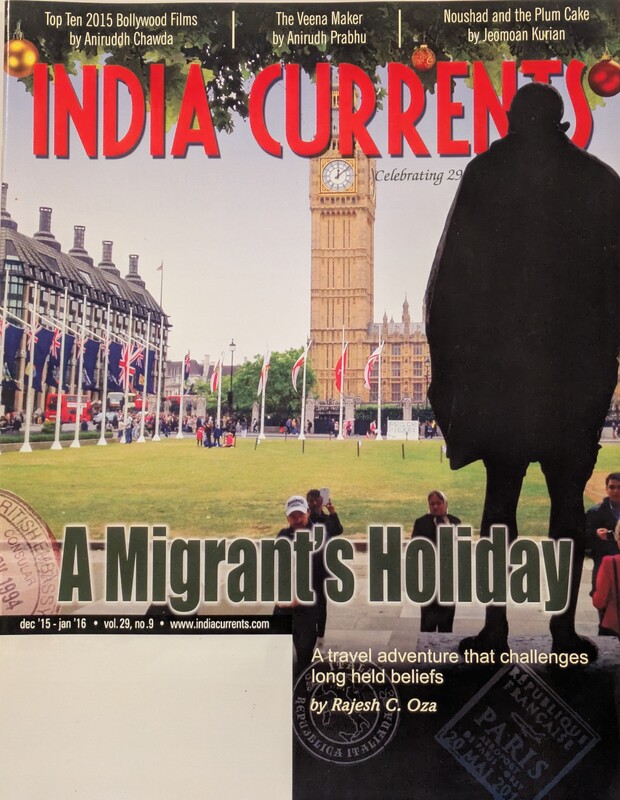
Cover of the December 2015–January 2016 issue of India Currents (Vol. 29, No. 9), featuring the lead story “A Migrant’s Holiday” by Rajesh C. Oza. The story presents a travel narrative in which the author grapples with long-held beliefs, identity, and the emotional complexities of being a migrant navigating global spaces.
The cover image, showing Big Ben in London and the silhouette of a traveler, symbolizes transnational movement and the layered experiences of South Asian immigrants who journey between cultures, homelands, and adopted countries.
Additional cover mentions include:
Top Ten 2015 Bollywood Films by Aniruddh Chawda
The Veena Maker by Anirudh Prabhu
Noushad and the Plum Cake by Jeomon Kurian
This issue reflects India Currents’ continued effort to explore multicultural identity, travel, arts, and diaspora storytelling during its 29th year of publication.
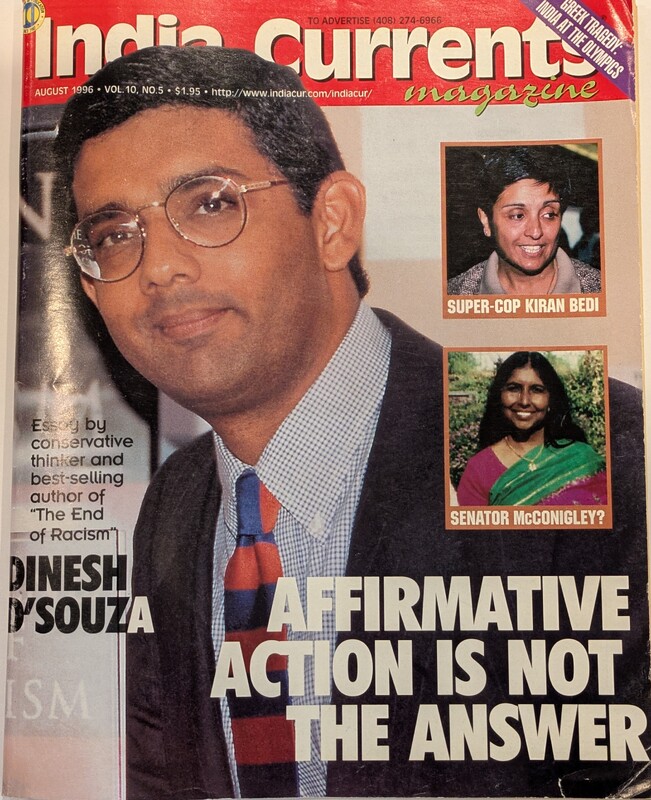
Cover of the August 1996 issue of India Currents (Vol. 10, No. 5), featuring conservative writer Dinesh D’Souza alongside the headline “Affirmative Action Is Not the Answer.” This issue highlights a major national debate of the 1990s and showcases how Indian American voices, including those with differing political viewpoints, engaged with U.S. social policy.
The cover also features:
Kiran Bedi, pioneering Indian police officer, under the title “Super-Cop Kiran Bedi”
A piece teasing whether a Bay Area community leader might become “Senator McConigley?”
This issue demonstrates India Currents’ editorial range at the time, balancing political commentary, profiles of South Asian public figures, and civic engagement topics. It reflects the magazine’s role as a space where South Asian Americans explored identity, politics, and belonging in the United States during a formative decade.
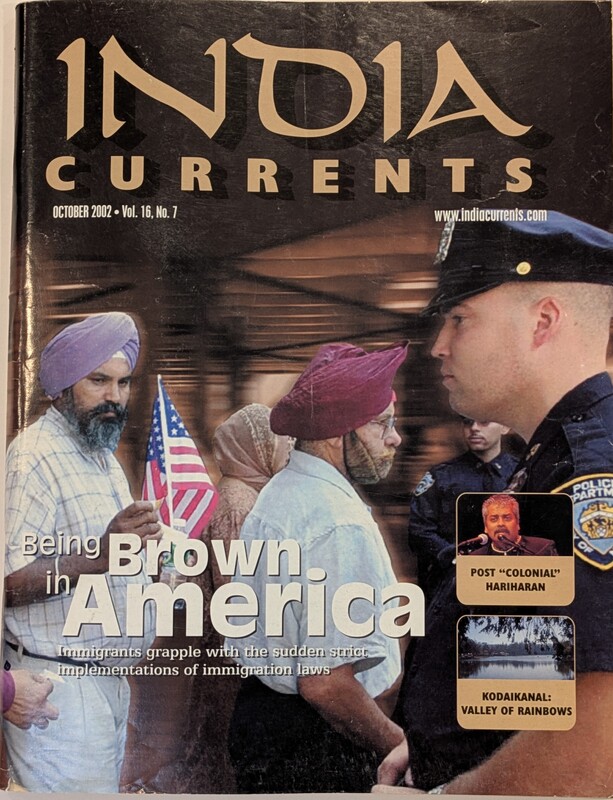
Cover of the October 2002 issue of India Currents (Vol. 16, No. 7), featuring the headline “Being Brown in America.” This issue examines the challenges faced by South Asian, Sikh, and Muslim immigrants in the aftermath of 9/11, as communities grappled with intensified scrutiny, racial profiling, and newly rigid immigration enforcement.
The cover image, depicting Sikh men in conversation with police officers, captures the tension and vulnerability experienced by many South Asians during this period. The issue includes related stories alongside cultural features such as “Post ‘Colonial’ Hariharan” and “Kodaikanal: Valley of Rainbows.”
This edition reflects India Currents’ commitment to chronicling not only arts and culture, but also urgent political and social realities affecting the South Asian diaspora. It serves as a historical document of a profound shift in immigrant experiences, civil rights conversations, and American identity post-9/11.
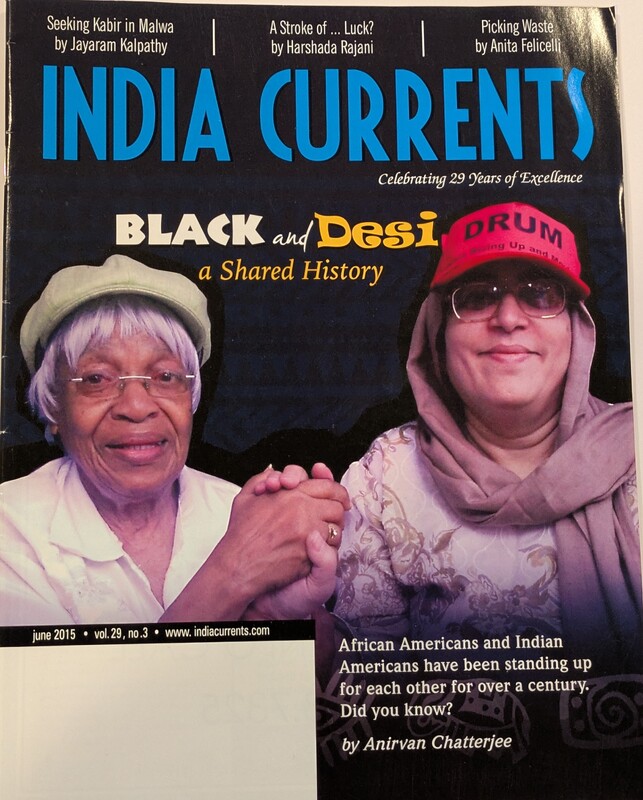
Cover of the June 2015 issue of India Currents (Vol. 29, No. 3), featuring the story “Black and Desi: A Shared History” by Anirvan Chatterjee. This issue explores more than a century of solidarity between Black Americans and South Asian immigrants — from early civil rights collaborations to contemporary activism.
The cover image, depicting two elders from African American and South Asian communities holding hands, symbolizes intergenerational connection and shared struggle. The issue foregrounds narratives of mutual support, anti-racism, migration, and coalition-building — themes especially relevant in the Bay Area’s diverse and politically engaged landscape.
Additional featured articles include:
“Seeking Kabir in Malwa” by Jayaram Malathy
“A Stroke of Luck?” by Harshad Rajani
“Picking Waste” by Anita Felicelli
Published during India Currents’ 29th year, the issue reflects the magazine’s commitment to amplifying cross-cultural dialogue, intersectional histories, and community advocacy.
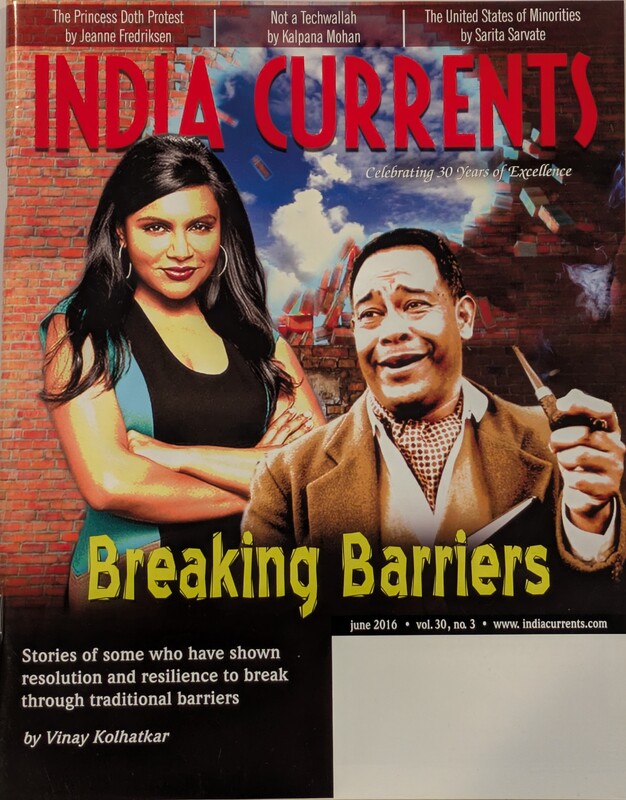
Cover of the June 2016 issue of India Currents (Vol. 30, No. 3), featuring the theme “Breaking Barriers.” The cover prominently shows Mindy Kaling, a trailblazing Indian American actor and creator, alongside an illustration of Louis Armstrong, symbolizing the breaking of racial, creative, and cultural boundaries across communities.
The lead story by Vinay Kolhatkar highlights individuals who demonstrated resilience and vision in challenging societal expectations, creating new pathways for success, representation, and artistic or personal freedom.
The issue also includes articles such as:
“The Princess Doth Protest” by Jeanne Fredriksen
“Not a Techwallah” by Kalpana Mohan
“The United States of Minorities” by Sarita Sarvate
Published during the magazine’s 30th anniversary year, this issue showcases India Currents’ longstanding commitment to celebrating boundary-pushing figures while elevating conversations around identity, politics, feminism, and cultural transformation within the South Asian diaspora.
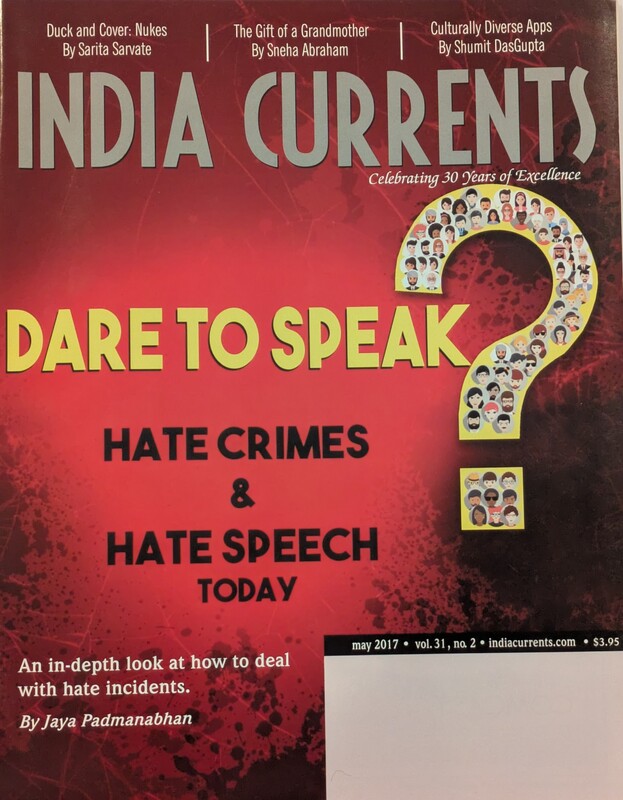
Cover of the May 2017 issue of India Currents (Vol. 31, No. 2), featuring the bold headline “Dare to Speak: Hate Crimes & Hate Speech Today.” The lead story by Jaya Padmanabhan examines the rise of hate incidents, the impact on immigrant and minority communities, and strategies for responding to and documenting hate crimes.
The cover design, a large question mark filled with illustrated multicultural faces, symbolizes the vulnerability and uncertainty felt by diverse communities navigating an era of heightened hostility. The deep red and black palette underscores the urgency of the topic.
Additional featured articles include:
“Duck and Cover: Nukes” by Sarita Sarvate
“The Gift of a Grandmother” by Sneha Abraham
“Culturally Diverse Apps” by Shumit DasGupta
Published during India Currents’ 30th anniversary year, this issue exemplifies the magazine’s role in addressing timely social challenges facing the South Asian diaspora, from racism and xenophobia to family and cultural innovation.
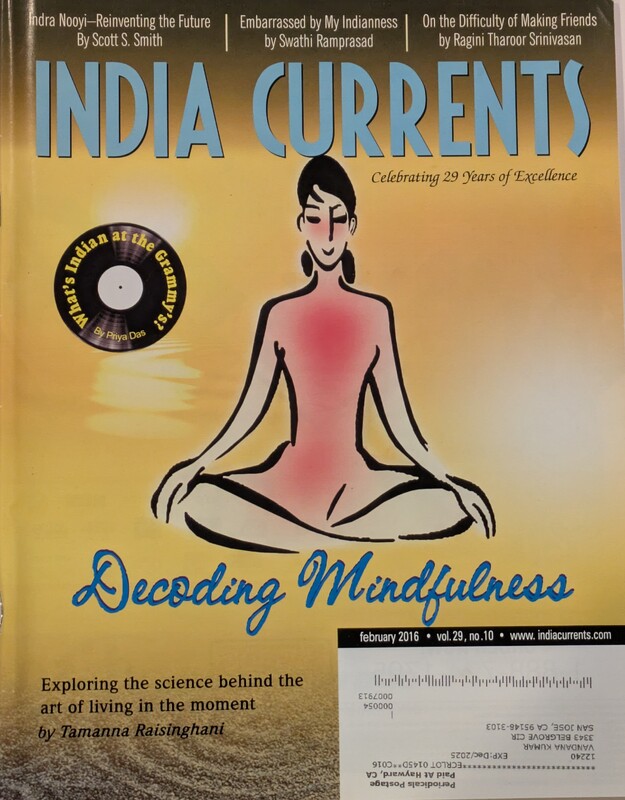
Cover of the February 2016 issue of India Currents (Vol. 29, No. 10), featuring the lead story “Decoding Mindfulness” by Tamanna Raisinghani. The illustrated cover depicts a serene figure in meditation, symbolizing the intersection of ancient South Asian practices with modern scientific approaches to mental well-being.
The issue explores the science behind mindfulness, the art of living in the present, and how meditative traditions are adapted by South Asians and others in contemporary American life.
Featured articles include:
“Indra Nooyi — Reinventing the Future” by Scott S. Smith
“Embarrassed by My Indianness” by Swathi Ramprasad
“On the Difficulty of Making Friends” by Ragini Tharoor Srinivasan
“What’s Indian at the Grammys?” by Priya Das
Published during India Currents’ 29th year, this issue reflects the magazine’s blend of cultural commentary, emotional exploration, and diaspora identity through personal essays and analytic features.
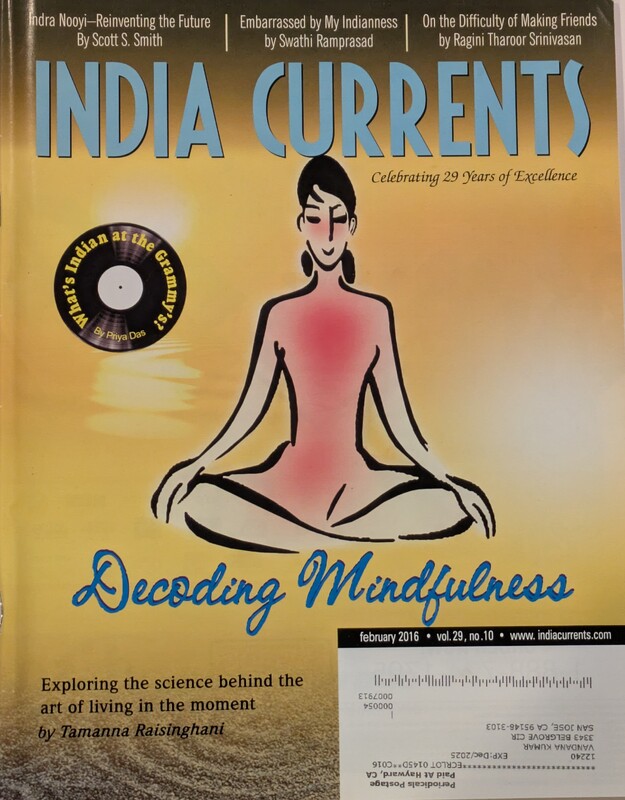
Cover of the February 2016 issue of India Currents (Vol. 29, No. 10), featuring the lead story “Decoding Mindfulness” by Tamanna Raisinghani. The illustrated cover depicts a serene figure in meditation, symbolizing the intersection of ancient South Asian practices with modern scientific approaches to mental well-being.
The issue explores the science behind mindfulness, the art of living in the present, and how meditative traditions are adapted by South Asians and others in contemporary American life.
Featured articles include:
“Indra Nooyi — Reinventing the Future” by Scott S. Smith
“Embarrassed by My Indianness” by Swathi Ramprasad
“On the Difficulty of Making Friends” by Ragini Tharoor Srinivasan
“What’s Indian at the Grammys?” by Priya Das
Published during India Currents’ 29th year, this issue reflects the magazine’s blend of cultural commentary, emotional exploration, and diaspora identity through personal essays and analytic features.
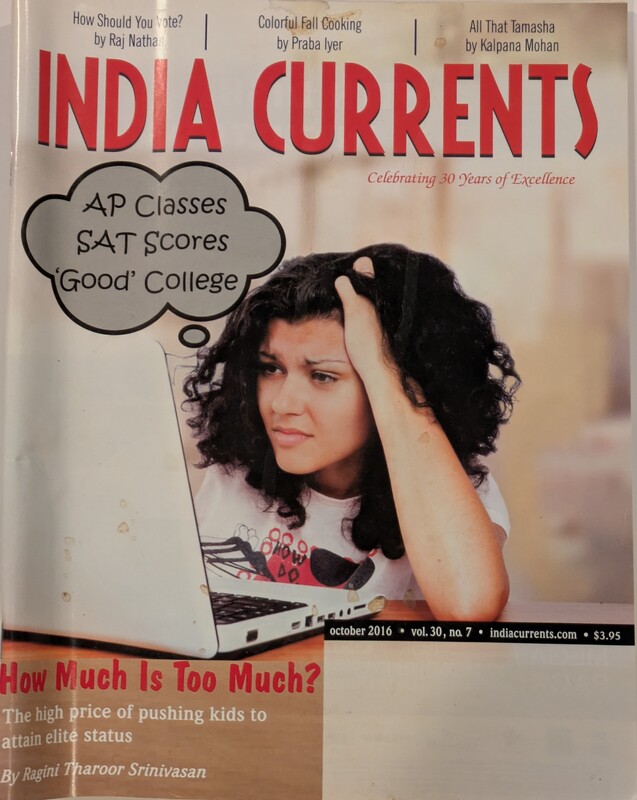
Cover of the October 2016 issue of India Currents (Vol. 30, No. 7), featuring the story “How Much Is Too Much?” by Ragini Tharoor Srinivasan. The cover highlights a young student overwhelmed by AP classes, SAT scores, and college expectations — capturing a central tension within many South Asian American families around achievement and elite status.
This issue explores the emotional and psychological impact of academic pressure on youth in the Indian American community, raising questions about cultural norms, parental aspirations, and the cost of striving for excellence.
The cover also showcases additional articles including:
“How Should You Vote?” by Raj Nathan
“Colorful Fall Cooking” by Praba Iyer
“All That Tamasha” by Kalpana Mohan
Published during India Currents’ 30th anniversary year, the issue reflects the magazine’s continued engagement with the social realities of diaspora life , especially intergenerational pressures and evolving definitions of success.
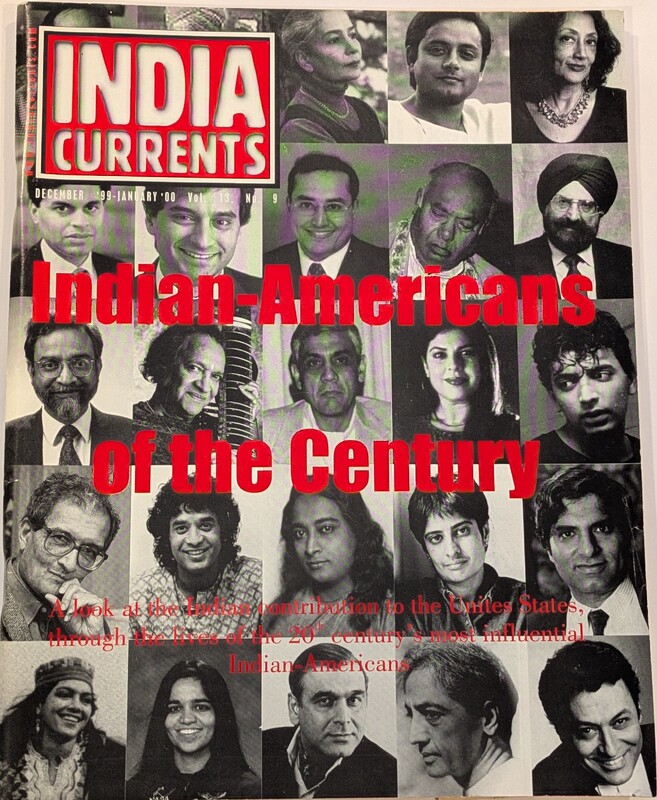
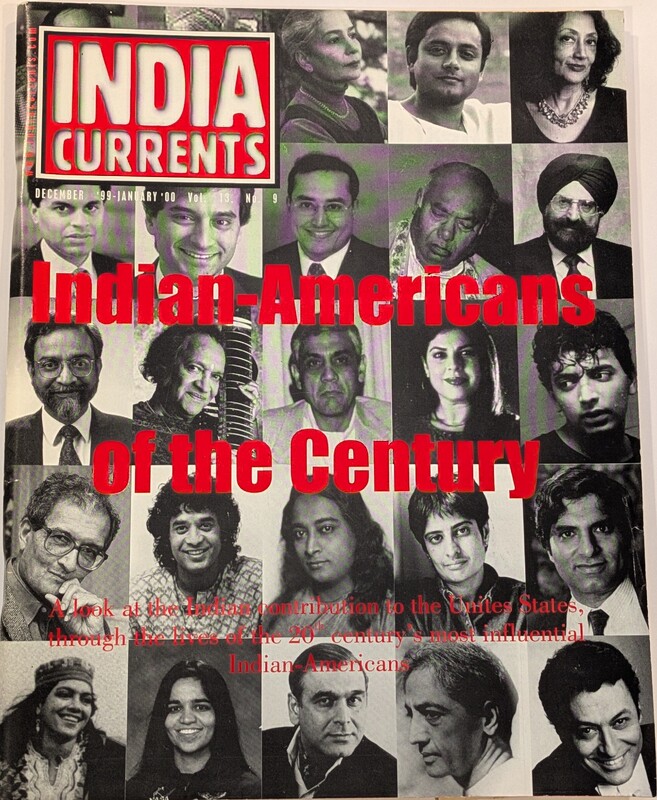
over of the December 1999–January 2000 issue of India Currents (Vol. 13, No. 9), titled “Indian-Americans of the Century.” This special edition highlights key Indian American figures whose contributions shaped U.S. cultural, artistic, scientific, political, and intellectual life during the 20th century.
The cover features a collage of influential Indian Americans — representing fields such as classical music, literature, computer science, performing arts, medicine, activism, and public service. The issue reflects both the growing visibility of Indian Americans at the turn of the millennium and India Currents’ editorial commitment to chronicling their stories for the broader diaspora.
Packaged at the dawn of a new century, this issue stands as a landmark in ethnic media, capturing a moment of reflection on the community’s progress, identity formation, and evolving presence in American society
over of the December 1999–January 2000 issue of India Currents (Vol. 13, No. 9), titled “Indian-Americans of the Century.” This special edition highlights key Indian American figures whose contributions shaped U.S. cultural, artistic, scientific, political, and intellectual life during the 20th century.
The cover features a collage of influential Indian Americans — representing fields such as classical music, literature, computer science, performing arts, medicine, activism, and public service. The issue reflects both the growing visibility of Indian Americans at the turn of the millennium and India Currents’ editorial commitment to chronicling their stories for the broader diaspora.
Packaged at the dawn of a new century, this issue stands as a landmark in ethnic media, capturing a moment of reflection on the community’s progress, identity formation, and evolving presence in American society
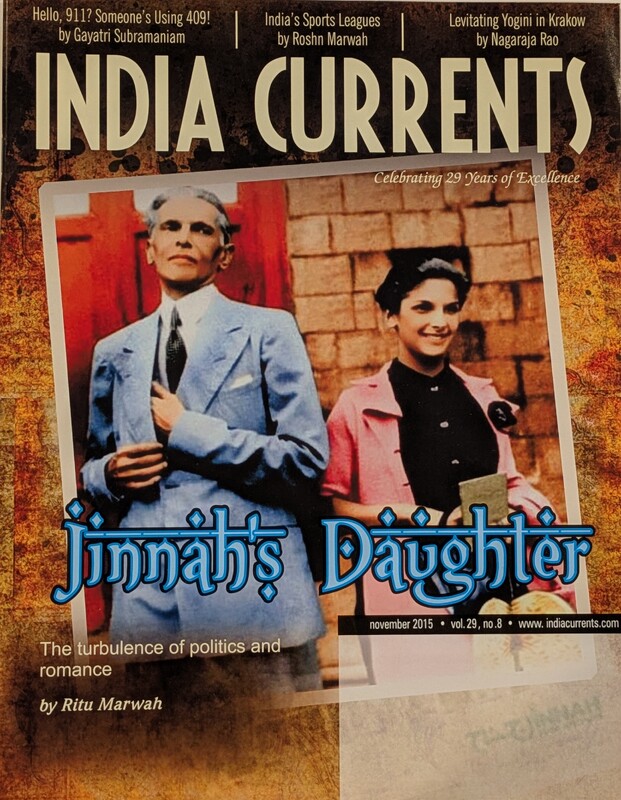
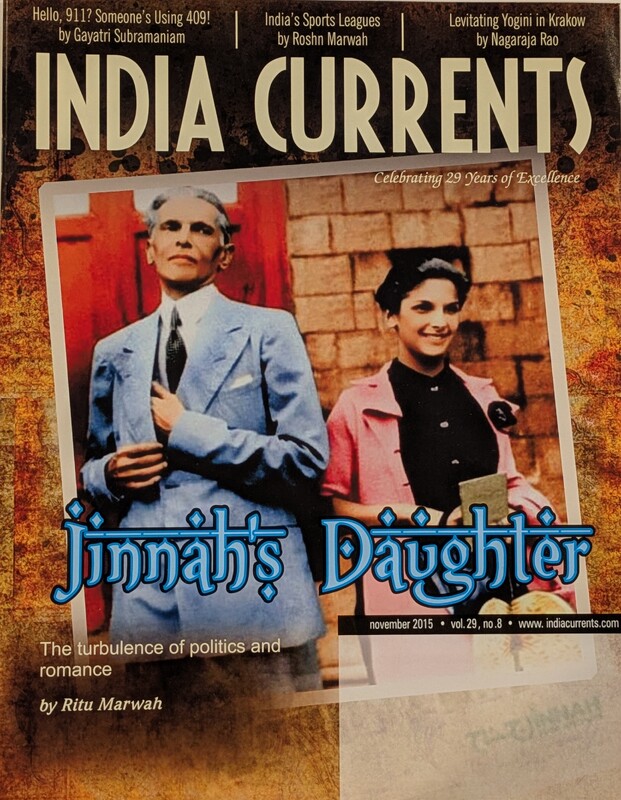
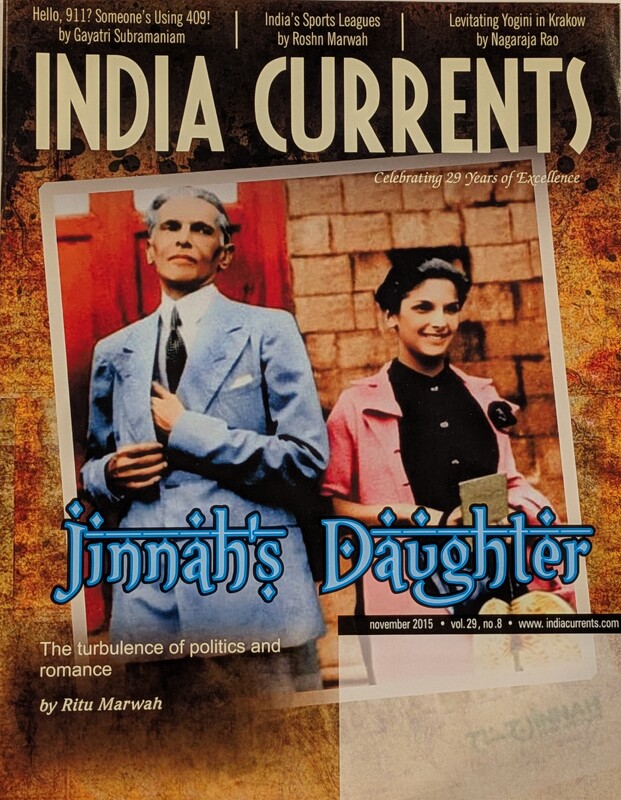
Cover of the November 2015 issue of India Currents (Vol. 29, No. 8), featuring the story “Jinnah’s Daughter: The Turbulence of Politics and Romance” by Ritu Marwah. The cover highlights a historical narrative centered on Dina Wadia, daughter of Muhammad Ali Jinnah, exploring how personal relationships intersected with the political upheavals of South Asian history.
The issue reflects India Currents’ longstanding commitment to publishing in-depth cultural and historical features that resonate with the Indian and Pakistani diaspora. Additional cover features include:
“Hello, 911? Someone’s Using 409!” by Gayatri Subramaniam
India’s Sports Leagues by Roshni Marwah
“Levitating Yogini in Krakow” by Nagaraja Rao
Published as part of the magazine’s 29th anniversary year, this issue blends contemporary diaspora topics with historical storytelling, bridging South Asian past and present.
Cover of the November 2015 issue of India Currents (Vol. 29, No. 8), featuring the story “Jinnah’s Daughter: The Turbulence of Politics and Romance” by Ritu Marwah. The cover highlights a historical narrative centered on Dina Wadia, daughter of Muhammad Ali Jinnah, exploring how personal relationships intersected with the political upheavals of South Asian history.
The issue reflects India Currents’ longstanding commitment to publishing in-depth cultural and historical features that resonate with the Indian and Pakistani diaspora. Additional cover features include:
“Hello, 911? Someone’s Using 409!” by Gayatri Subramaniam
India’s Sports Leagues by Roshni Marwah
“Levitating Yogini in Krakow” by Nagaraja Rao
Published as part of the magazine’s 29th anniversary year, this issue blends contemporary diaspora topics with historical storytelling, bridging South Asian past and present.
Cover of the November 2015 issue of India Currents (Vol. 29, No. 8), featuring the story “Jinnah’s Daughter: The Turbulence of Politics and Romance” by Ritu Marwah. The cover highlights a historical narrative centered on Dina Wadia, daughter of Muhammad Ali Jinnah, exploring how personal relationships intersected with the political upheavals of South Asian history.
The issue reflects India Currents’ longstanding commitment to publishing in-depth cultural and historical features that resonate with the Indian and Pakistani diaspora. Additional cover features include:
“Hello, 911? Someone’s Using 409!” by Gayatri Subramaniam
India’s Sports Leagues by Roshni Marwah
“Levitating Yogini in Krakow” by Nagaraja Rao
Published as part of the magazine’s 29th anniversary year, this issue blends contemporary diaspora topics with historical storytelling, bridging South Asian past and present.
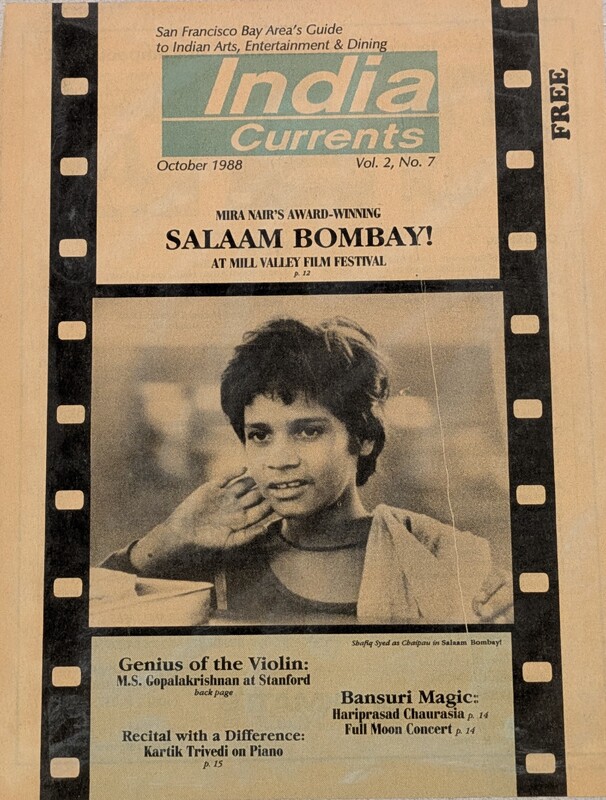
Cover of the October 1988 issue of India Currents (Vol. 2, No. 7), historically notable as one of the magazine’s first issues to introduce color printing on its cover. This technological shift marked an early stage in the publication’s expansion and growing visual sophistication.
The issue highlights Mira Nair’s award-winning film Salaam Bombay! at the Mill Valley Film Festival, featuring a still image of actor Shafiq Syed as Chaipau. It also previews articles on:
M.S. Gopalakrishnan at Stanford (“Genius of the Violin”)
Kartik Trivedi in a unique piano recital
Hariprasad Chaurasia’s bansuri performance (“Full Moon Concert”)
As the magazine entered its second year, this issue reflects India Currents’ strong emphasis on Indian arts, classical music, and diaspora cultural events — while showcasing the publication’s early experimentation with color and cinematic themes.
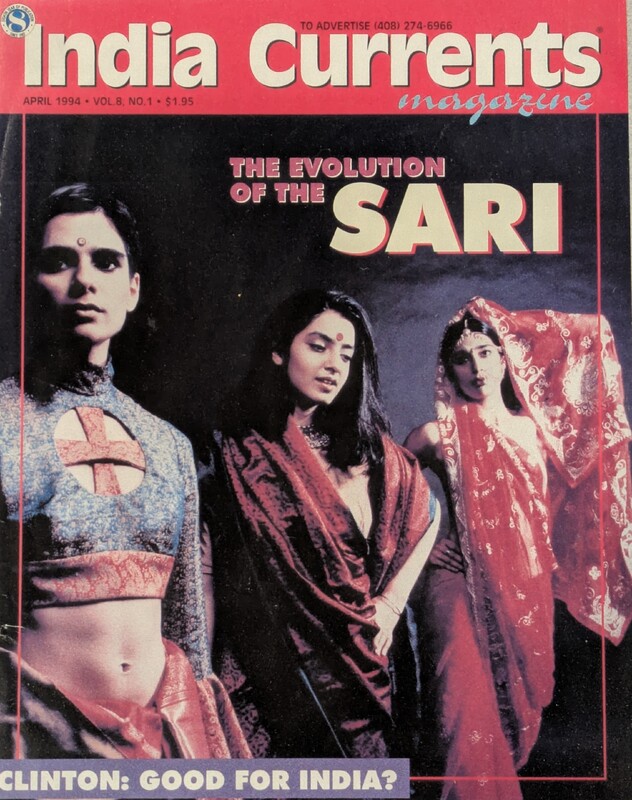
Cover of the April 1994 issue of India Currents (Vol. 8, No. 1), featuring the major story “The Evolution of the Sari.” The cover showcases three models in diverse sari drapes and styles, illustrating the garment’s transformation across regions, generations, and diasporic contexts.
The issue explores how the sari, one of South Asia’s most iconic cultural symbols, has adapted through modernization, migration, and artistic reinterpretation. By spotlighting sari fashion in 1994, India Currents captured a moment when Indian American women were renegotiating tradition and modernity in public and private life.
The cover also references the political climate of the era with the teaser: “Clinton: Good for India?”, demonstrating the magazine’s dual focus on cultural heritage and U.S.–India political relations as experienced by the diaspora community.