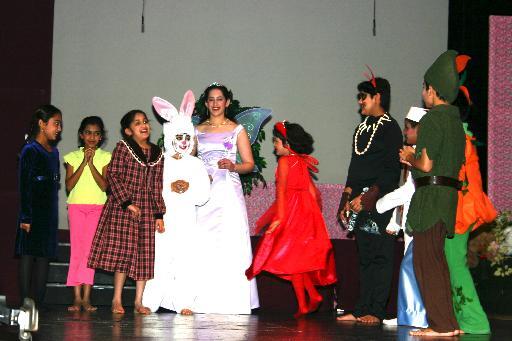
Gammat Jammat marked an expansion into children’s theater within the Marathi-language stage tradition in Silicon Valley. The play centers on a young girl who has polio and struggles with mobility. In a dreamlike sequence, a host of imaginative characters appear before her, offering encouragement, companionship, and courage. Through fantasy and theatrical playfulness, the narrative explores resilience, self-belief, and the emotional world of a child navigating physical limitation. By the conclusion of the drama, the girl gains confidence and agency, symbolized through her ability to walk without reliance on crutches. This production reflects CalAA’s commitment not only to canonical adult drama but also to intergenerational cultural transmission. By staging children’s theater in Marathi, the organization fostered language continuity, community participation, and youth engagement within the South Asian diaspora.
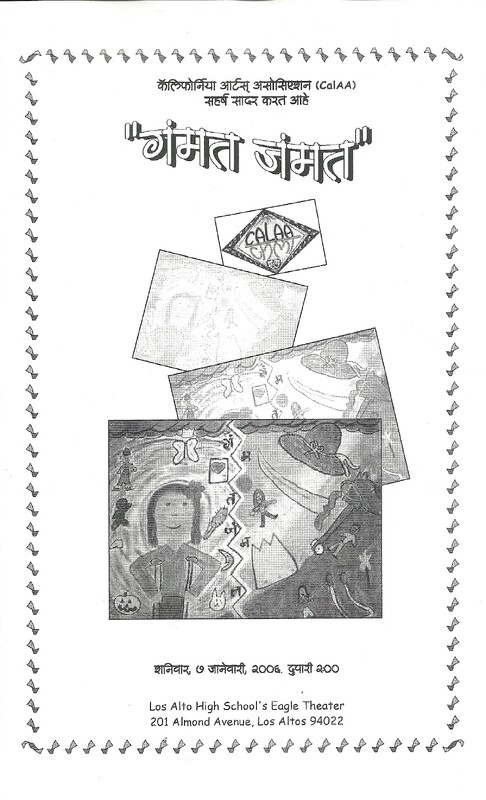
This 2006 poster for Gammat Jammat reflects the playful, imaginative spirit of CalAA’s children’s theater production. The hand-drawn aesthetic and layered imagery evoke a child’s dreamscape, visually reinforcing the story’s structure in which fantasy figures appear to encourage and inspire a young girl navigating physical disability. Presented in Marathi, the production marked an important expansion of CalAA’s programming into youth-centered theater. By staging children’s plays in a regional Indian language, CalAA fostered intergenerational language continuity while creating performance opportunities for young members of the Bay Area’s South Asian community.
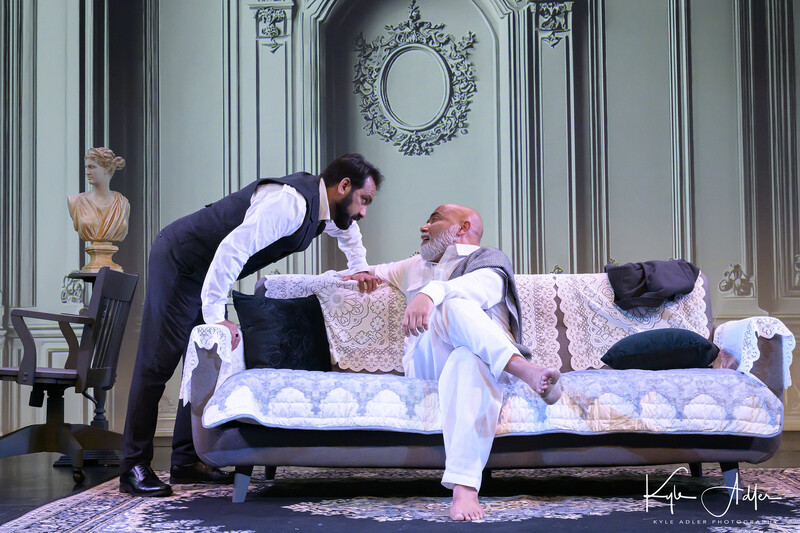
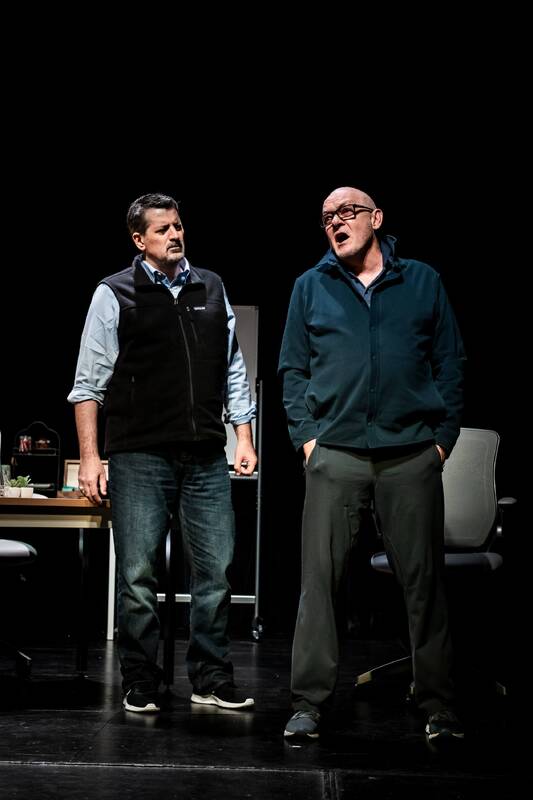
Gaslight is a psychological thriller centered on a husband who manipulates his wife into doubting her own perceptions, giving rise to the term “gaslighting.” First staged in 1938, the play explores power, control, and the fragility of trust within intimate relationships, unfolding within a domestic interior where reality itself becomes unstable.
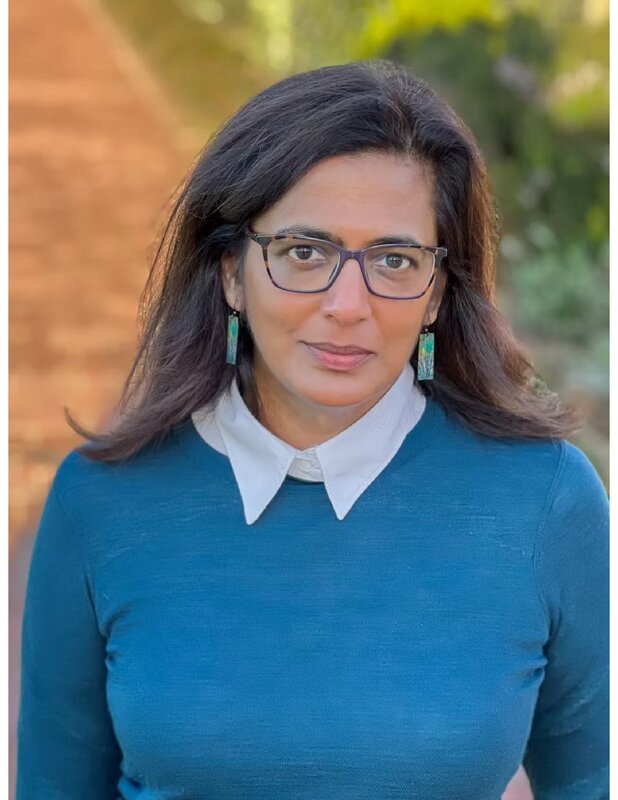
Geetha Reddy has written several plays and has been commissioned by major production houses and theatre festivals. Ranging from plays based on The Mahabharata to South Asian diaspora experiences to the retelling of British classical literature to the story of Henrietta Lacks, her plays tell many kinds of stories that are relevant to all kinds of audiences. In this exhibit, we feature two of her plays that are thematically South Asian but explore human relationships that resonate with everyone.
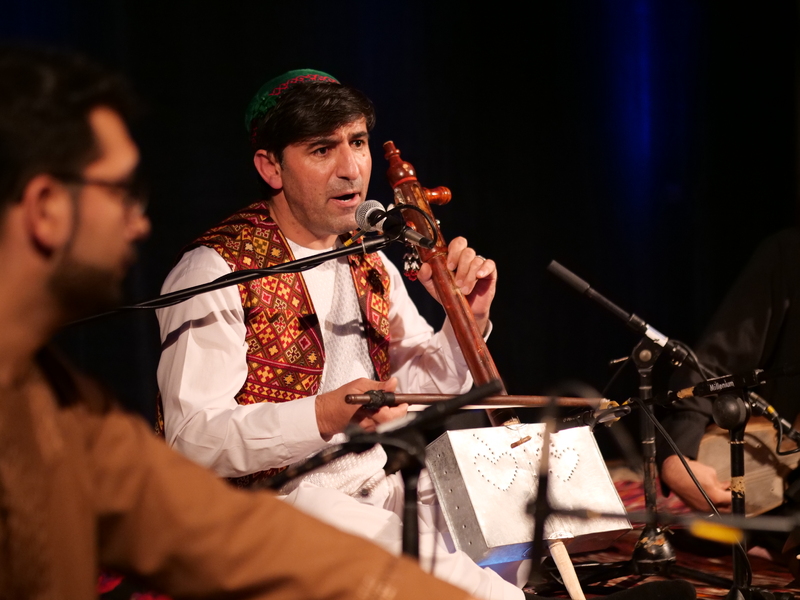
The ghaychak or gheychak is a bowed lute used in Iran, Afghanistan, Pakistan, and Tajikistan. (Source: Wikipedia) It is often used in Balochi folk music, which is popular in Iran, Pakistan, and Oman.
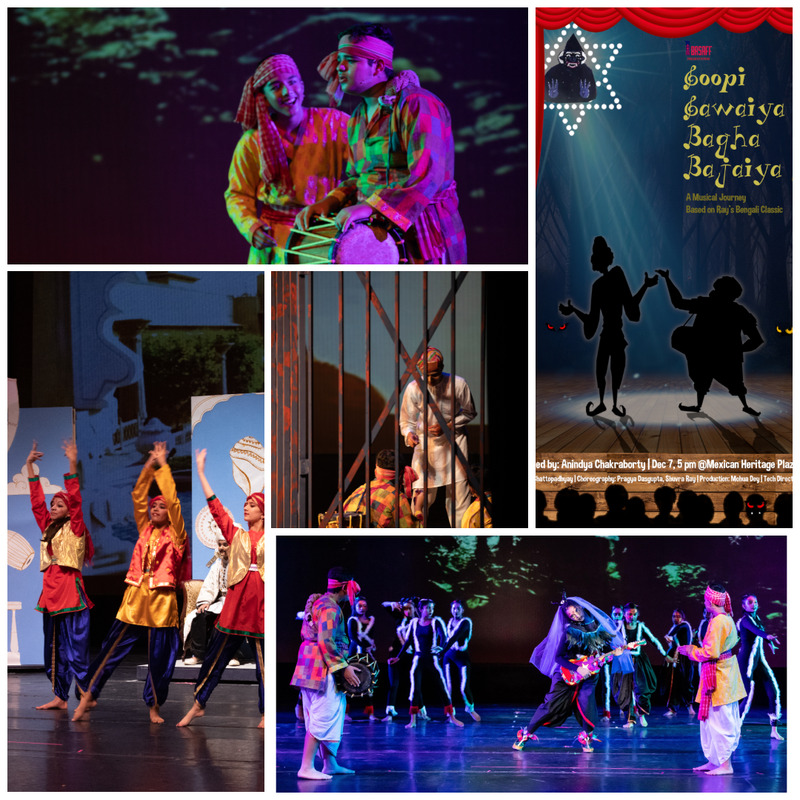
Adapted for stage and directed by Anindya Chakraborty, BAAT’s December 2019 production reimagined Goopy Gyne Bagha Byne, Satyajit Ray’s 1969 film adaptation of Upendrakishore Ray Chowdhury’s classic Bengali tale. Featuring Hindi folk-inspired music, an English-language script for Bay Area youth performers, and choreography, the production brought the kingdoms of Shundi and Halla to life for a multigenerational audience.
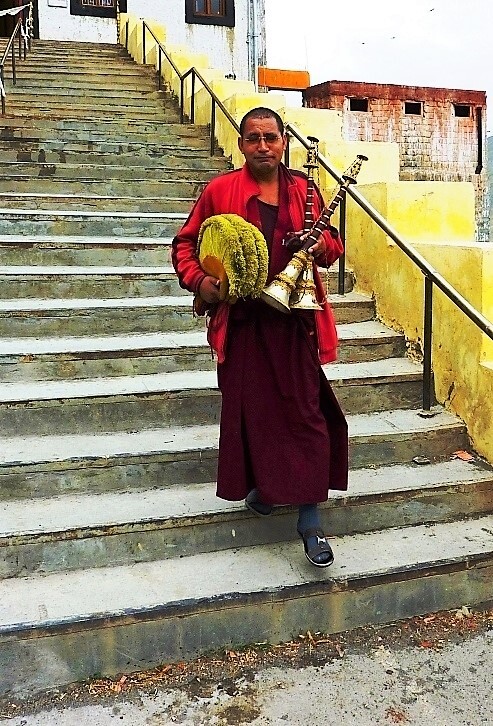
The Gyaling is a traditional woodwind instrument used in Tibet and Nepal. In order to play the Gyaling, you must use a circular breathing technique. The Gyaling is often played during rituals and ceremonies.
The Indian harmonium is also known as samvadini, peti ("box"), or baja, and is generally smaller in size than traditional European harmoniums. There are differing schools of thought as to the use of the harmonium in Indian classical music, with some musicians noting that the instrument is unable to produce slides between notes, while others appreciate the harmonium's ease-of-use and amplified drone sound. The harmonium is often used in North Indian classical vocal music.
Hassina Leelarathna is a Sri Lankan American journalist, editor, and publisher based in Los Angeles and the San Francisco Bay Area. She co-founded and served as editor of the Sri Lankan Express, a community newspaper established in the 1990s that covered news, culture, and civic engagement within the Sri Lankan diaspora across California. Through her reporting and leadership, Leelarathna became one of the first Sri Lankan women journalists in the U.S. to publish a community newspaper focusing on both diaspora issues and cross-South Asian stories.
Her work has also appeared in broader South Asian and international media, where she continues to advocate for independent journalism and the representation of Sri Lankan voices in American media.
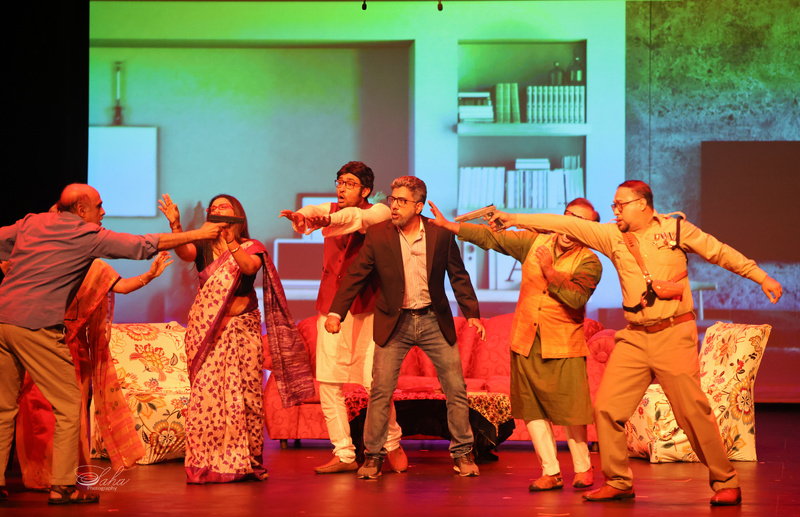
Hayavadan is Naatak’s staging of Girish Karnad’s play Hayavadana, a landmark work that explores identity, completeness, and desire through a story of intertwined lives. Centered on a love triangle between Padmini, Devadatta, and Kapila, the narrative takes a surreal turn when the men’s heads are exchanged, raising questions about the relationship between body, mind, and self. Drawing from Indian myth and folklore as well as modernist influences, the play blends philosophical inquiry with theatrical experimentation.