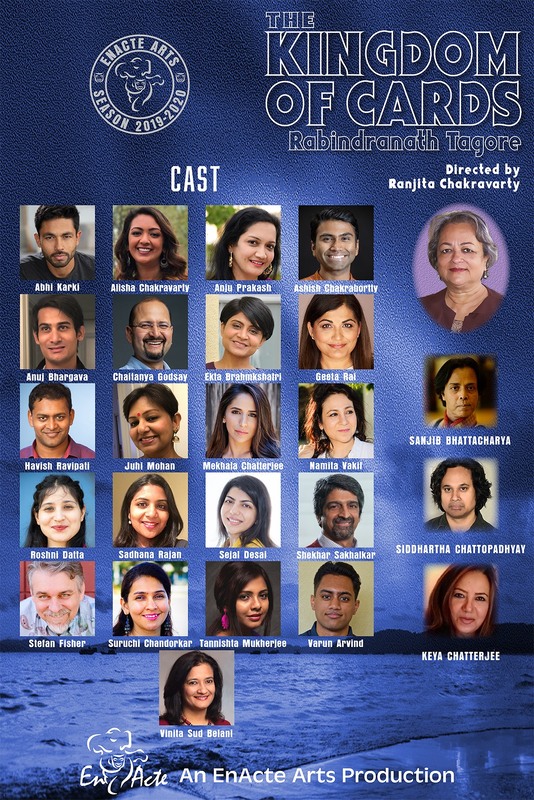
Promotional poster for EnActe Arts’ production of Rabindranath Tagore’s The Kingdom of Cards (Tasher Desh). Directed by Ranjita Chakravarty, the production reimagined Tagore’s satirical allegory of conformity and liberation for contemporary Bay Area audiences. Originally written in 1933, the play critiques rigid social hierarchies through a fantastical kingdom governed by rules and ritual. This staging reflects Silicon Valley’s ongoing engagement with Tagore’s modernist theatrical legacy and the reinterpretation of canonical South Asian texts within diasporic performance practice.
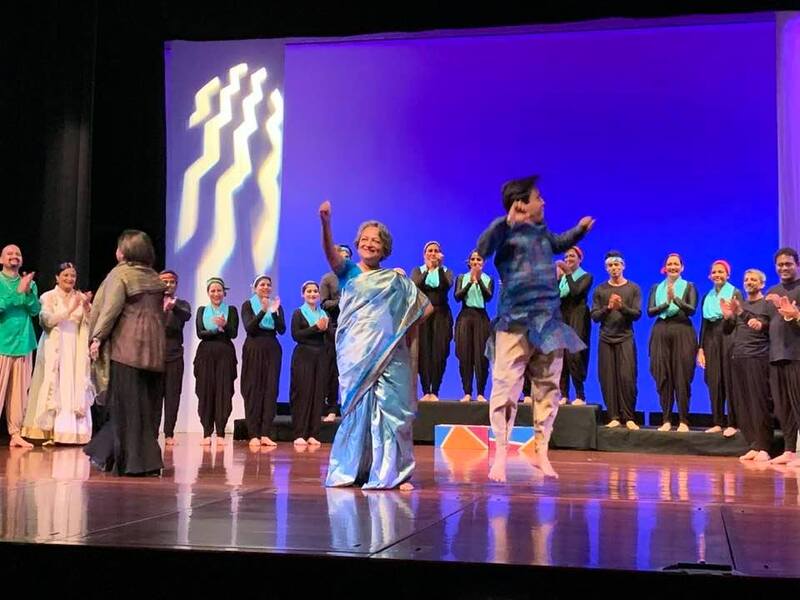
Director Ranjita Chakravarty joins the cast onstage during the curtain call of EnActe Arts’ production of Rabindranath Tagore’s The Kingdom of Cards (Tasher Desh). Originally written in 1933, Tagore’s allegorical satire critiques rigid social systems through a fantastical kingdom governed by rules and ritual. Under Chakravarty’s direction, the production blended movement, ensemble choreography by Sanjib Bhattacharya, and contemporary staging to reintroduce Tagore’s modernist theatrical vision to Bay Area audiences
A video interview conducted by Diya TV’s Ravi Kapur at the 2016 Democratic National Convention with Kamala Harris, then California Attorney General, as she discussed her historic candidacy and the role of Indian‐American identity in U.S. politics. The clip illustrates the ways South Asian media outlets engage both diaspora audiences and mainstream political narrative.
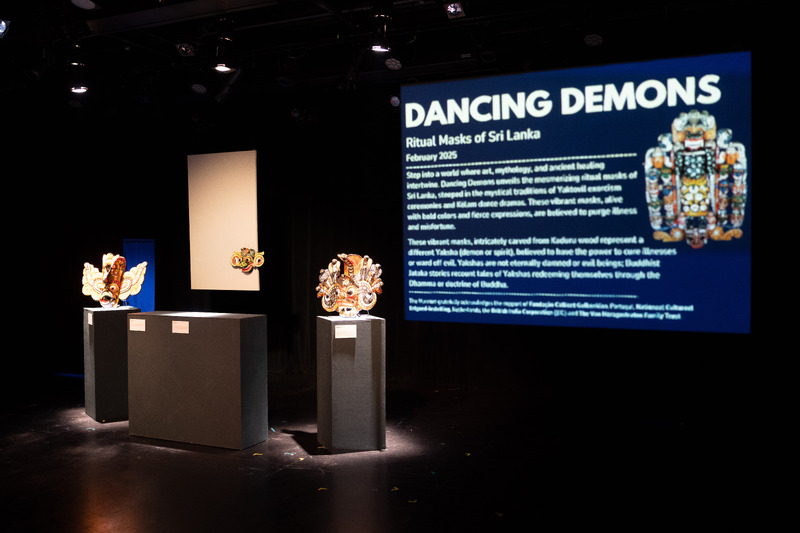
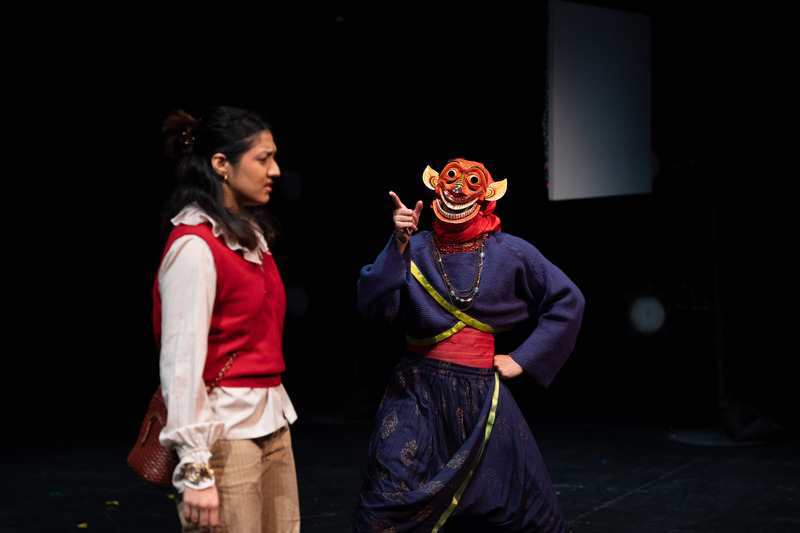
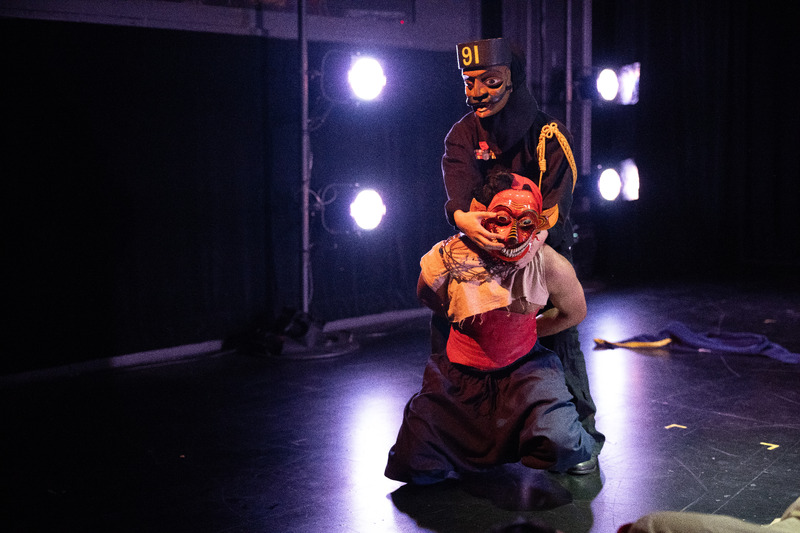
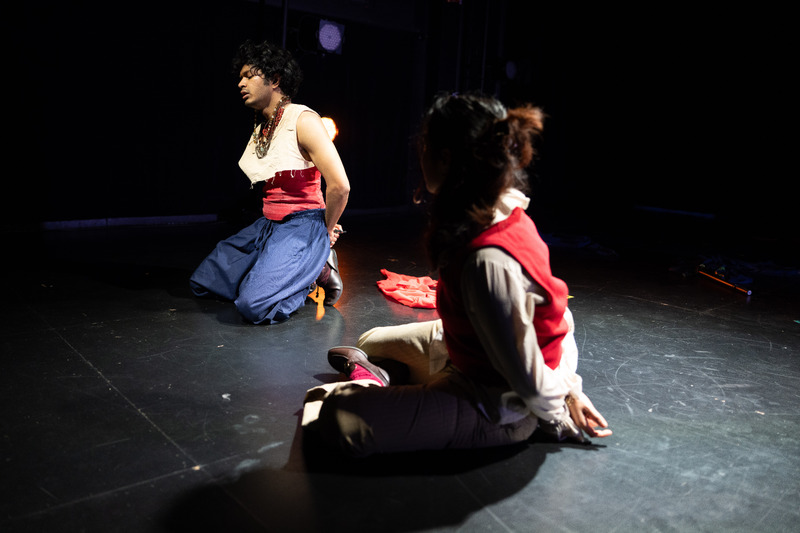
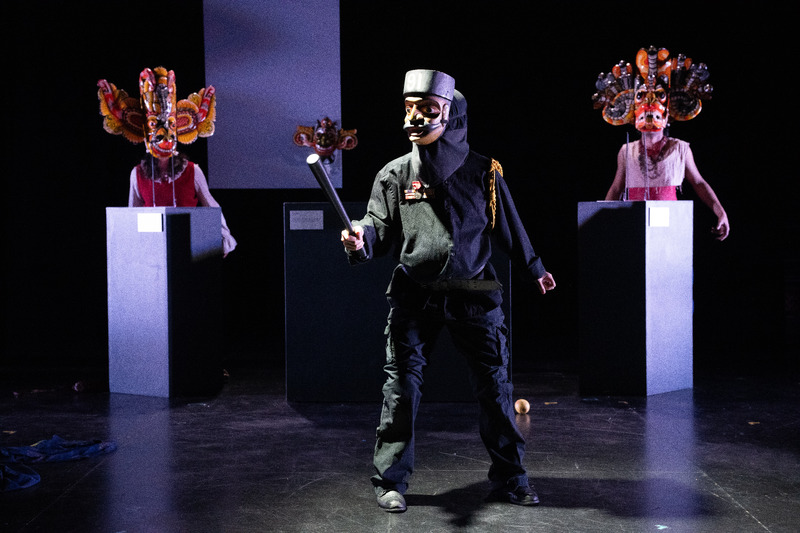
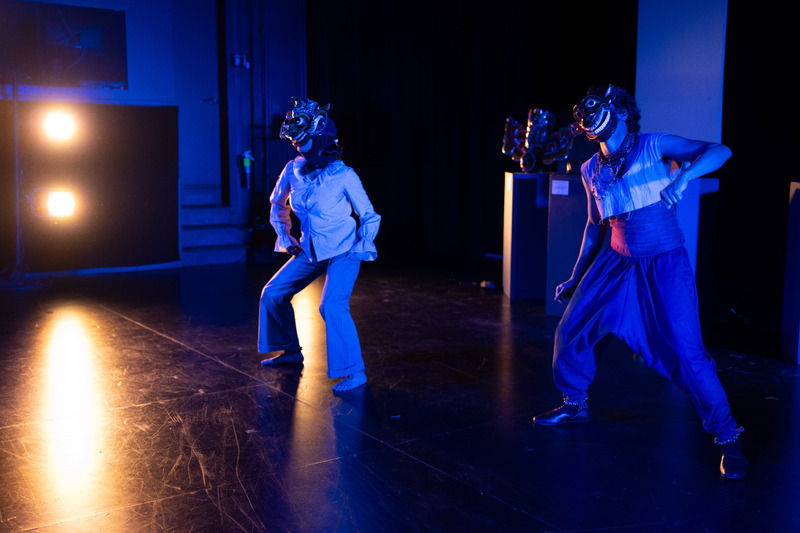
Set in a museum and incorporating elements of Sri Lankan folklore, colonial history, and personal identity, the play examines the themes of decolonization, repatriation, and cultural restoration.
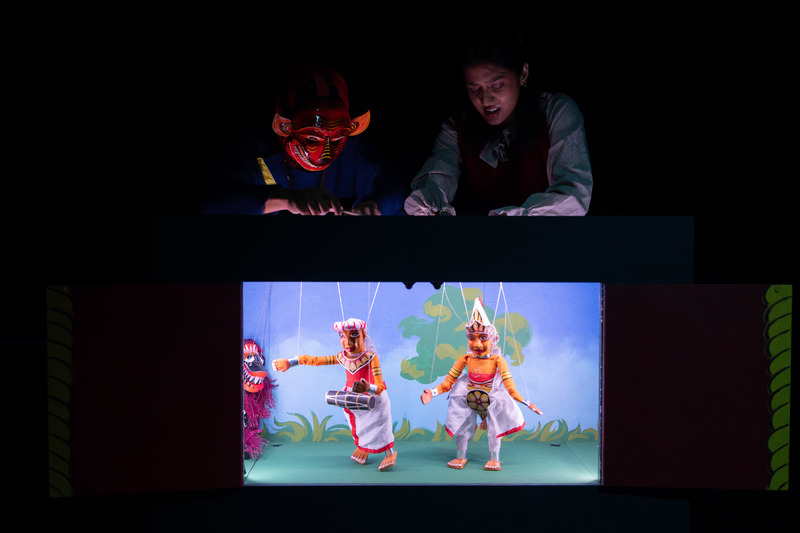
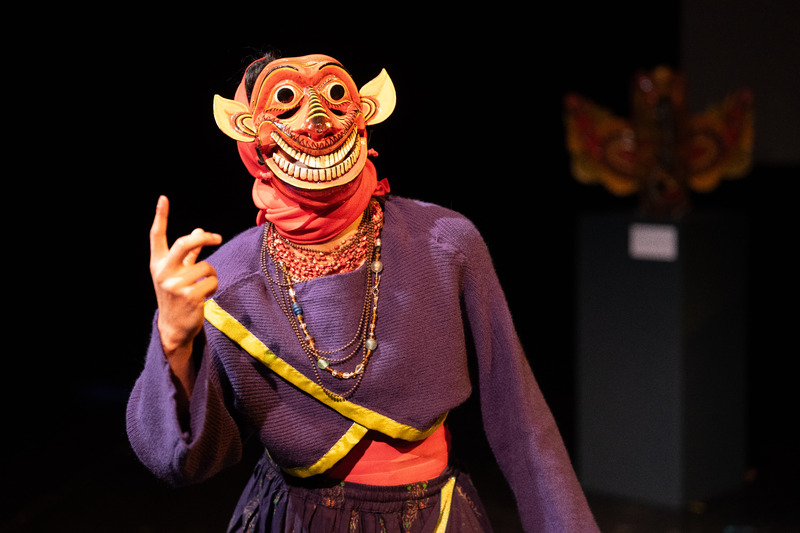
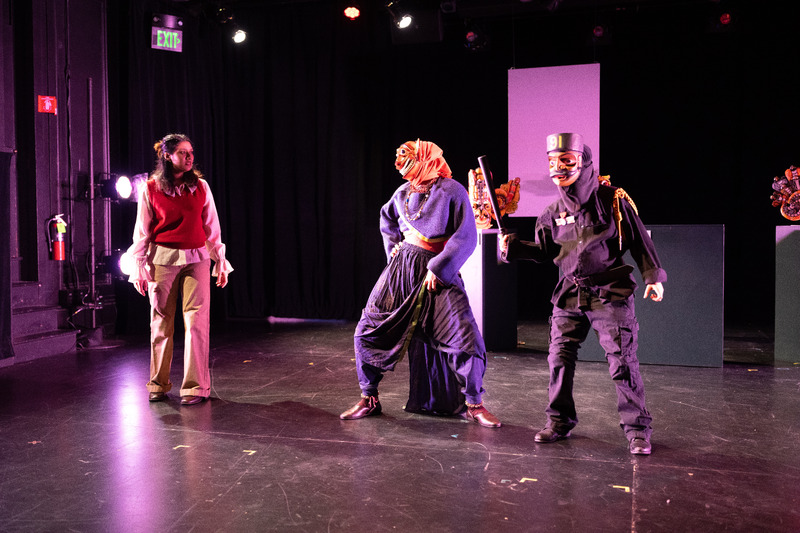
Amaya, a Sri Lankan-American visits a museum where artefacts from Sri Lanka are on exhibition. She encounters Riri Yaka, Jr, a Sri Lankan mythical demon, among the museum artifacts.
Rukada puppetry is used as a tool to critique contemporary Sri Lankan politics; a traditional form highlights the intersection between folklore and political realities.
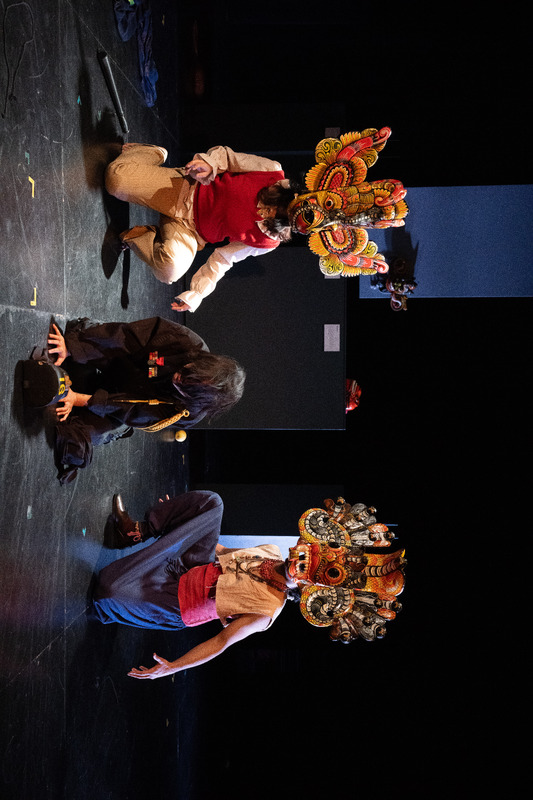
Stolen Sri Lankan cultural artefacts, such as traditional masks, in Western musuem spaces critique colonization. The integration of Kolam and Rukada masks and the embodiment of the mythical and supernatural figure of Riri Yaka, inform the moment when the fragmented identity of the diasporic Amaya recognizes the agency of cultural reclamation.
A museum space can feel like a sepulchre for performative arts and traditions; here, the brief agency of the Sri Lankans is squashed when they are relegated to becoming motionless museum artefacts.
Can the fractured identity among the diaspora become whole when they fully embrace and celebrate their roots with their feet planted in their diasporic lives?
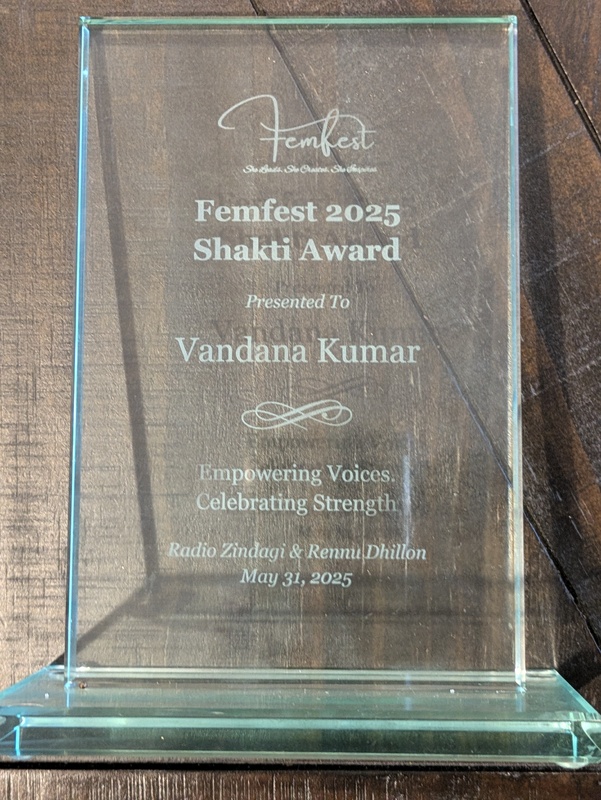
Photograph of the Femfest 2025 Shakti Award presented to Vandana Kumar, longtime publisher of India Currents magazine. Awarded on May 31, 2025, the honor recognizes her contributions to empowering community voices and strengthening South Asian representation in American media.
Presented by Radio Zindagi and Rennu Dhillon, the Shakti Award celebrates women who demonstrate leadership, creative vision, and community impact. Vandana Kumar’s decades of work at India Currents—from amplifying diaspora stories to sustaining one of the longest-running South Asian publications in the United States—embody Femfest’s mission of “Empowering Voices, Celebrating Strength.”
This award highlights Kumar’s continued influence as a cultural leader and media innovator in Silicon Valley, and her role in shaping the landscape of South Asian American journalism.
In this reflective first-person essay published on Scroll.in on December 1, 2023, journalist Anahita Mukherji describes how a chapter on economic migration in an old college economics textbook unexpectedly foreshadowed her own path as an immigrant.
With characteristic insight and narrative wit, Mukherji explores how academic frameworks around migration, wages, opportunity differentials, push-pull factors, flatten the emotional, familial, and deeply personal dimensions of moving across borders. Through her story, she illustrates how immigrant journeys often blend rational economic choices with longing, serendipity, and the search for belonging.
This essay contributes to the broader narrative of South Asian diaspora experience, illuminating the tension between what migrants are taught migration “should” be and what it actually becomes in lived reality.
Funny Money is a fast-paced farce centered on mistaken identity and escalating chaos. The story follows a man who accidentally picks up the wrong briefcase and discovers it is filled with money, setting off a chain of comic misunderstandings, deception, and increasingly desperate attempts to keep control of the situation. Known for its rapid dialogue and tightly constructed comedic timing, the play relies on physical humor and escalating tension to drive its narrative. Naatak’s production situates the action within a domestic interior, where everyday spaces become sites of confusion and farce. This image captures a moment of comic tension, with characters focused on the contents of a briefcase, highlighting the object at the center of the play’s escalating misunderstandings and the interplay between secrecy, suspicion, and humor.
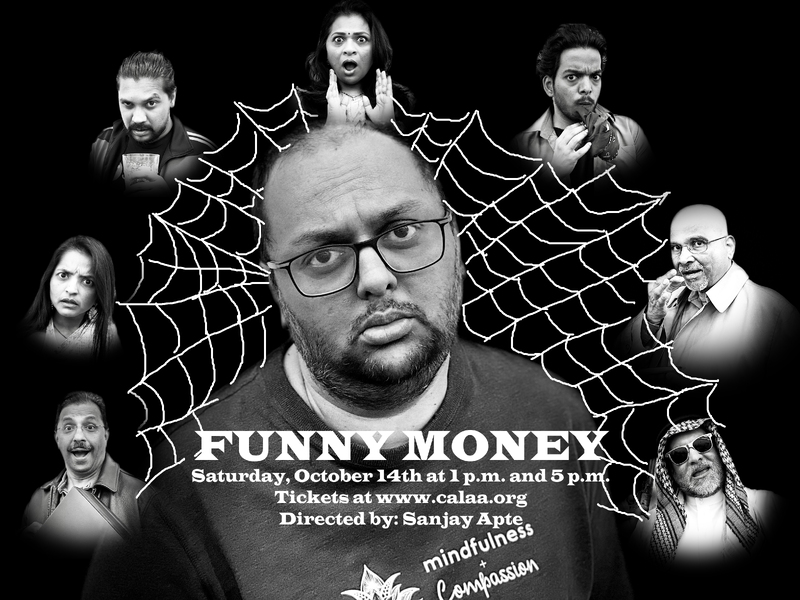
Funny Money reinterpreted Ray Cooney’s fast-paced British farce for Marathi-speaking audiences. The play follows an ordinary man who accidentally exchanges briefcases and discovers a large sum of illicit cash. What begins as a windfall quickly spirals into deception, mistaken identity, and escalating comic chaos. Adapted into Marathi by Mukund Marathe, the production retained Cooney’s rapid-fire structure while infusing local linguistic humor and diasporic context. The posters emphasize exaggeration and caricature, visually reflecting the farcical tone and mounting absurdity central to the narrative.