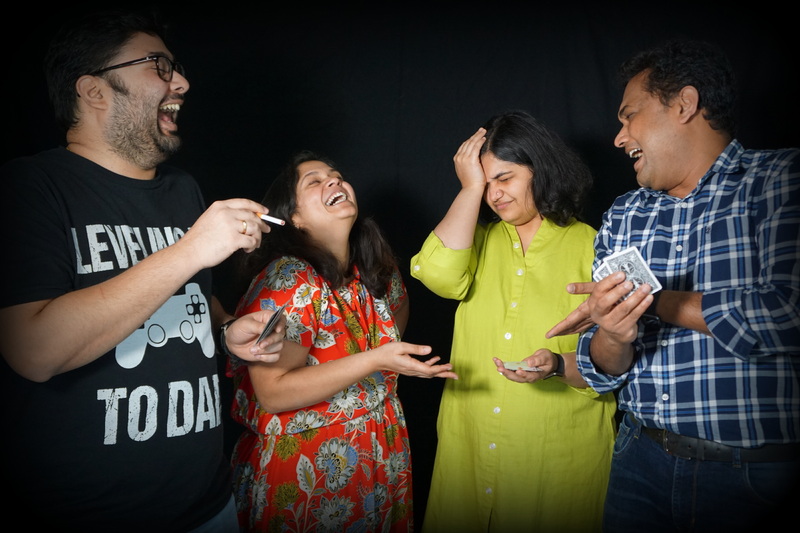
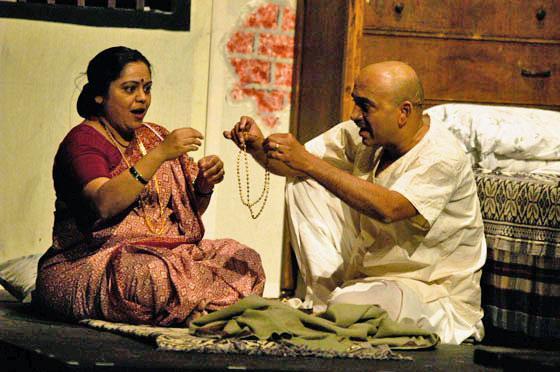
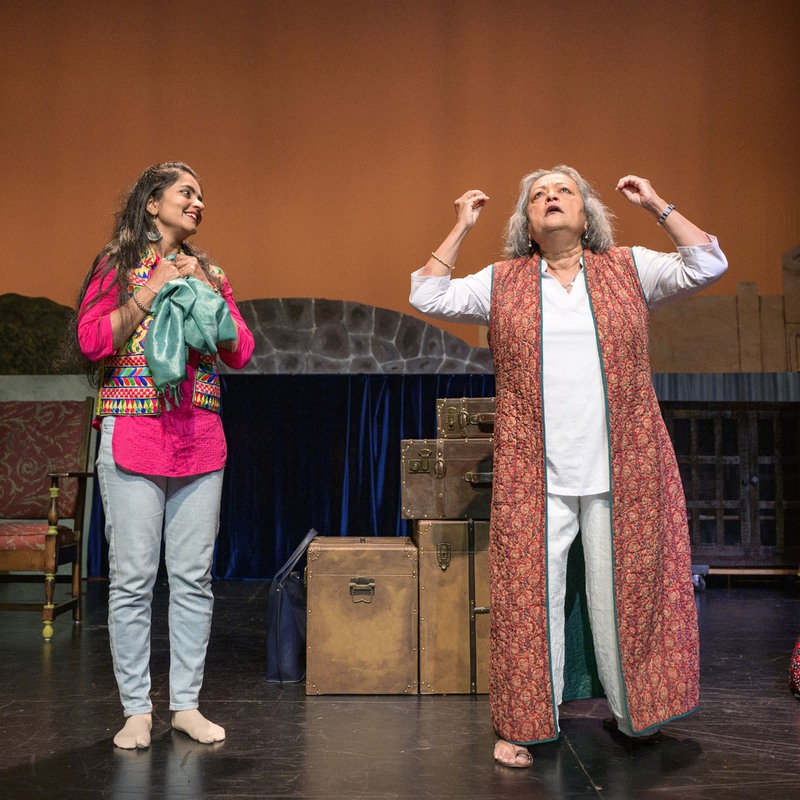
Tuzhi Mazhi Jodi reimagined Neil Simon’s iconic comedy The Odd Couple within a Marathi cultural framework. While the original centers on two mismatched male roommates, this adaptation introduced a gendered twist: the messy and disorderly roommate was reconfigured as a woman, subverting audience expectations and refreshing the dynamic of domestic incompatibility. The play explores friendship, cohabitation, and clashing personalities through sharp dialogue and situational humor. By altering the gender dynamics while preserving the comedic structure, the adaptation highlights how classic Western texts can be reshaped to resonate within regional language theater and diasporic audiences.
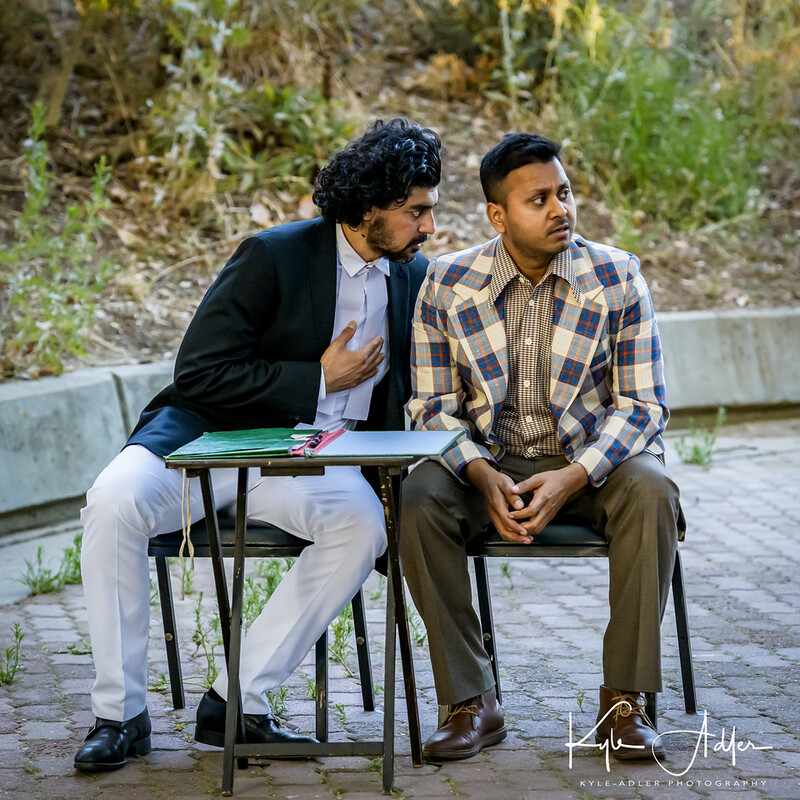
Two actors from Surajmukhi Aur Hamlet, part of Short Cut Productions’ 2026 Hindi comedy double bill Two Much Chaos, share a playful moment where the art of persuasion takes center stage.
The ensemble cast of Permit Pending, part of Short Cut Productions’ 2026 Hindi comedy double bill Two Much Chaos, brainstorms how to secure a permit for a rushed film shoot by “cooperating” with local power brokers.
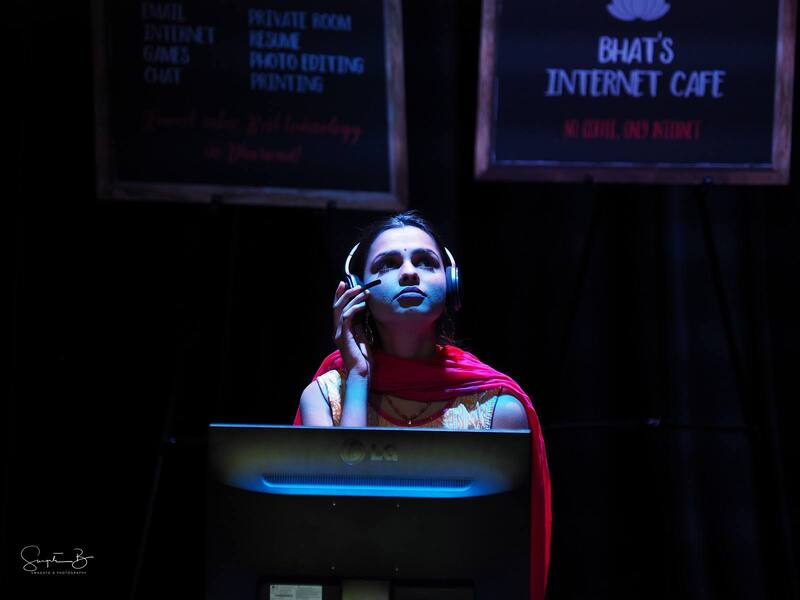
The hero and heroine of Permit Pending, part of Short Cut Productions’ 2026 Hindi comedy double bill Two Much Chaos, prepare for their next shot with voiceover work and a makeup check.
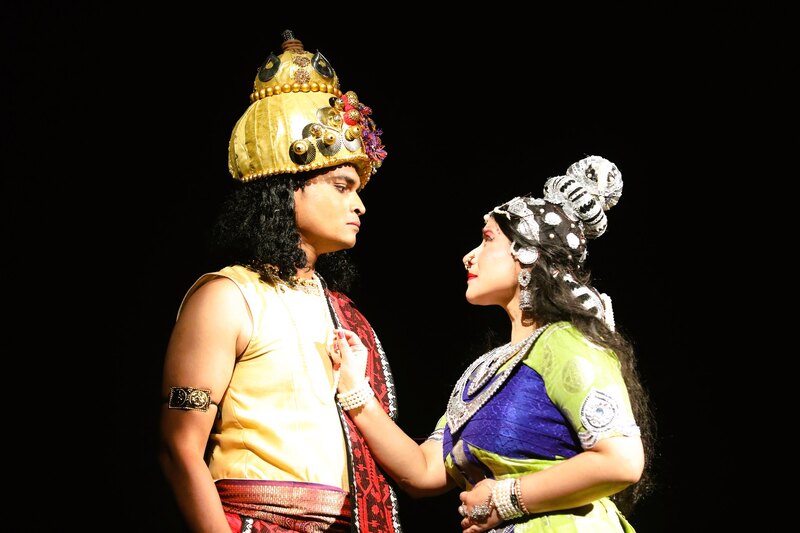
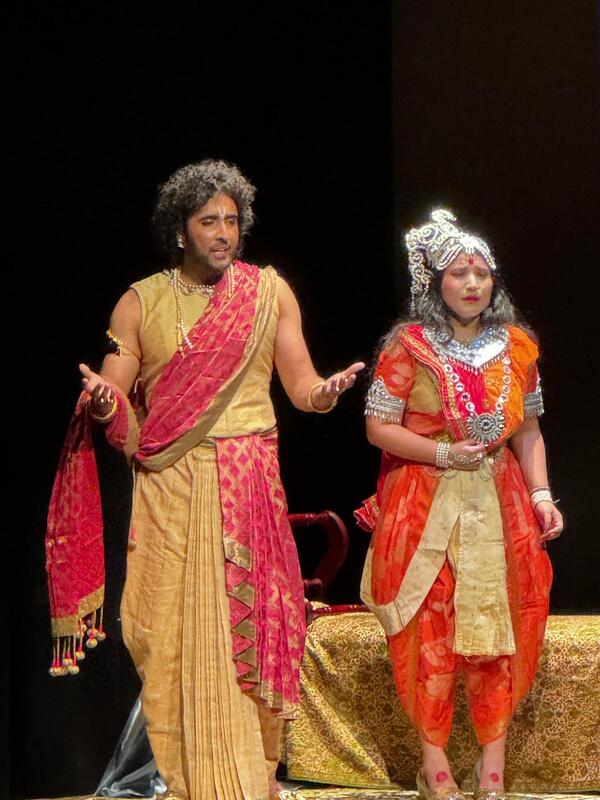
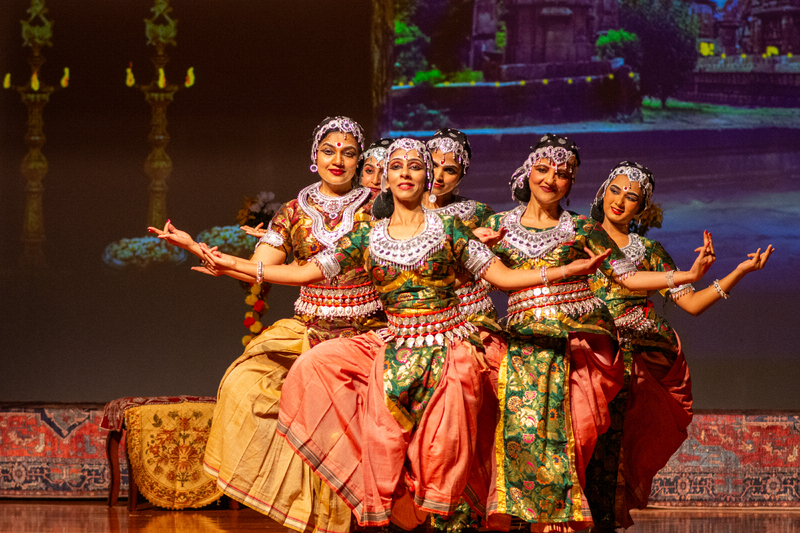
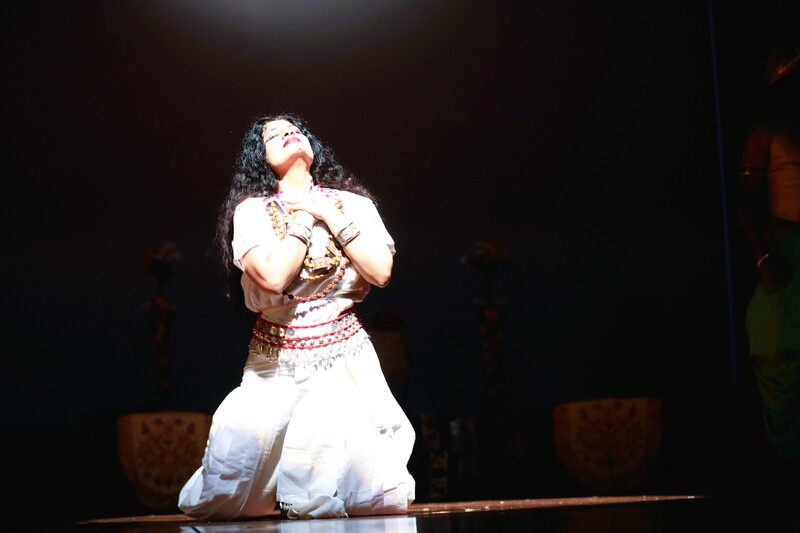
Utsarga: উৎসর্গ (The Sacrifice) is an original Bengali musical by Stagecraft Productions, based on true historical events and real characters. Set in 1435 AD, the production follows warrior king Kapilendra, a devdasi, and a devoted queen as they navigate love, duty, emotional conflict, and sacrifice during the rise of an eastern Indian empire. The musical features music by Pandit Tejendra Narayan Majumdar, choreography by Guru Sutapa Talukdar, and script and direction by Bibek Das.
Utsarga: উৎসর্গ (The Sacrifice) is an original Bengali musical by Stagecraft Productions, based on true historical events and real characters. Set in 1435 AD, the production follows warrior king Kapilendra, a devdasi, and a devoted queen as they navigate love, duty, emotional conflict, and sacrifice during the rise of an eastern Indian empire. The musical features music by Pandit Tejendra Narayan Majumdar, choreography by Guru Sutapa Talukdar, and script and direction by Bibek Das.
Utsarga: উৎসর্গ (The Sacrifice) is an original Bengali musical by Stagecraft Productions, based on true historical events and real characters. Set in 1435 AD, the production follows warrior king Kapilendra, a devdasi, and a devoted queen as they navigate love, duty, emotional conflict, and sacrifice during the rise of an eastern Indian empire. The musical features music by Pandit Tejendra Narayan Majumdar, choreography by Guru Sutapa Talukdar, and script and direction by Bibek Das.
Utsarga: উৎসর্গ (The Sacrifice) is an original Bengali musical by Stagecraft Productions, based on true historical events and real characters. Set in 1435 AD, the production follows warrior king Kapilendra, a devdasi, and a devoted queen as they navigate love, duty, emotional conflict, and sacrifice during the rise of an eastern Indian empire. The musical features music by Pandit Tejendra Narayan Majumdar, choreography by Guru Sutapa Talukdar, and script and direction by Bibek Das.
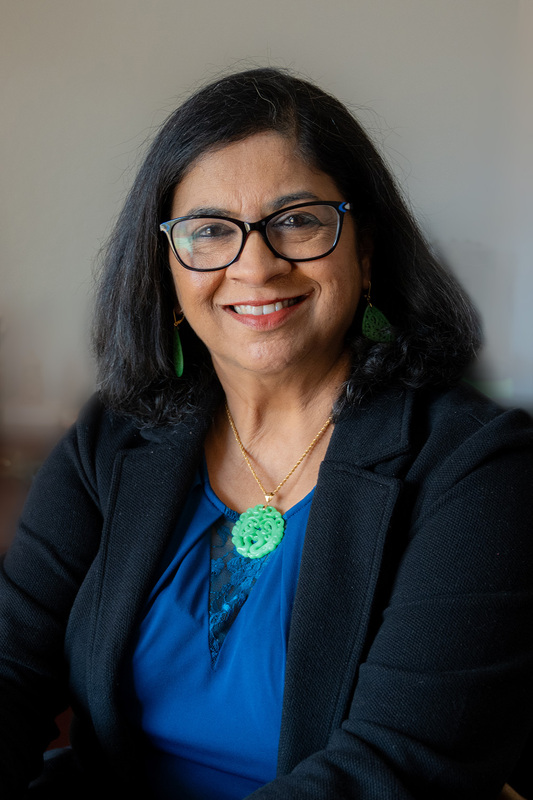
Vandana Kumar founded India Currents in 1987 from her living room, creating what would become one of the most influential South Asian publications in the Bay Area. What began as a “labor of love” to connect newly arrived immigrants quickly grew into a vital cultural resource, documenting community events, arts, politics, and the everyday experiences of Indian Americans.
Under her leadership, India Currents became known for its thoughtful storytelling and its role as a community connector, a place where families found music and dance teachers, local celebrations, small businesses, and the voices and perspectives missing from mainstream media. Vandana guided the magazine through its transition from print to digital, ensuring that its mission endured as the South Asian community evolved.
Today, she continues to steward India Currents as a platform for dialogue, identity, and community journalism, sustaining a legacy that spans nearly four decades.
Carrying Forward a Legacy of South Asian Media
Vansh Gupta is the Managing Editor of Siliconeer, one of the longest-running South Asian magazines in the Bay Area. Founded by his family during the Y2K tech boom, Siliconeer, short for Silicon Valley Engineer, was created to serve the growing community of Indian and South Asian professionals working in technology, business, and innovation.
Under Vansh Gupta’s leadership, Siliconeer has evolved from a niche print publication into a dynamic multimedia platform that bridges generations. His vision emphasizes quality journalism, diverse voices, and meaningful community dialogue. Gupta has helped expand the magazine’s reach to include younger readers, encouraging high school and college students to contribute stories and perspectives on identity, culture, and technology.
Through a blend of traditional storytelling and modern digital engagement, he has revitalized Siliconeer’s role as a cornerstone of South Asian media in Silicon Valley. His commitment to mentorship and authenticity has inspired a new generation of writers and readers to see journalism as a vital connector between culture, community, and innovation.
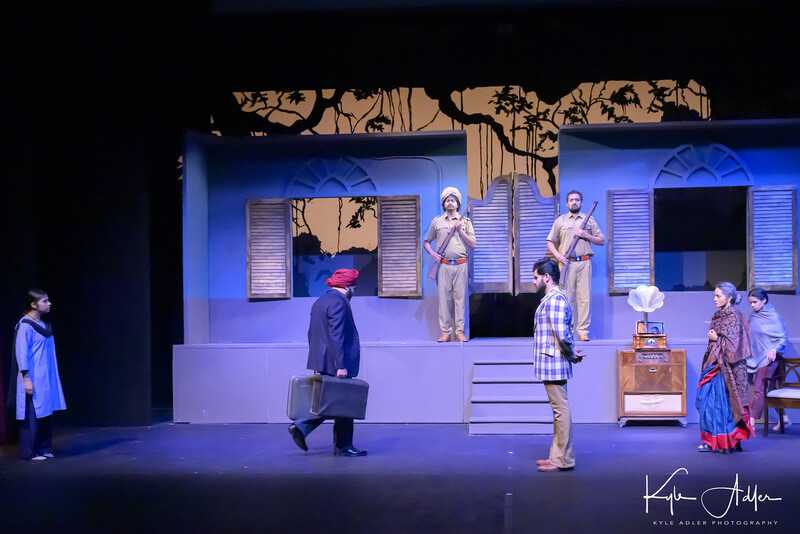
Vilayat Mahal is a Naatak original play inspired by the real-life story of a woman who claimed royal lineage as the descendant of Wajid Ali Shah, the last nawab of Oudh. Set in 1970s India, the narrative follows her arrival in a public railway waiting room and her assertion of identity, status, and historical legitimacy in the face of skepticism and bureaucracy. Blending historical reference with theatrical invention, the play unfolds as a tragicomedy that examines questions of power, displacement, and recognition. Through its portrayal of a self-fashioned royal household negotiating modern state structures, the production reflects on postcolonial identity and the persistence of memory and myth within South Asian histories.
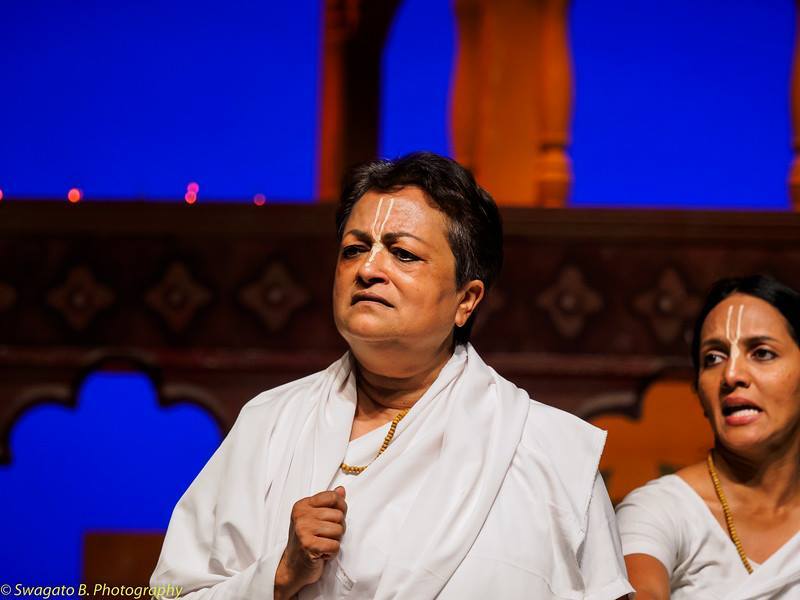
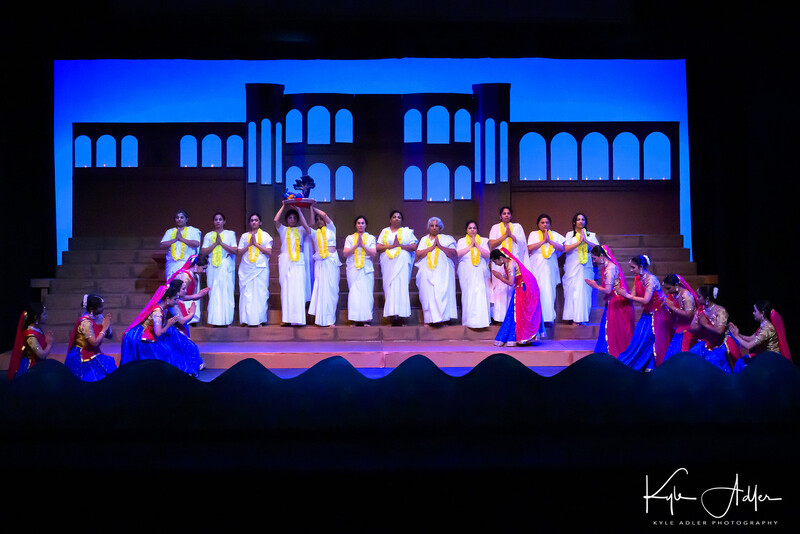
Vrindavan is a Naatak original musical inspired by contemporary debates surrounding widows living in the temple town of Vrindavan, India. The play follows a group of widows whose tightly structured lives are disrupted by the arrival of a public figure, sparking confrontation, humor, and unexpected forms of solidarity.Blending classical references with popular culture, the production juxtaposes devotional traditions associated with Radha and Krishna alongside Bollywood music and theatrical spectacle. Through this interplay, Vrindavan examines gender, marginalization, and agency, while situating these issues within both Indian social contexts and the diasporic imagination of Silicon Valley audiences.This image captures an ensemble moment of ritual and performance, with widows in white contrasted against vividly dressed dancers, visually reinforcing the play’s tension between austerity and expression.
In Wada Chirebandi, translated as “The Stone Mansion” in English, renowned Marathi playwright Mahesh Elkunchwar examines the slow unraveling of a traditional rural family in Maharashtra following the death of its patriarch. As relatives gather for the funeral in the ancestral stone mansion, long-suppressed tensions surface, revealing generational fractures, economic decline, and the erosion of inherited authority. The play is widely regarded as a landmark of modern Marathi theater and was later adapted into Hindi under the title Virasat.
CalAA’s staging of this work reflects its commitment to presenting canonical Marathi drama that interrogates social transformation and cultural continuity. By producing and archiving works by major playwrights such as Elkunchwar, CalAA positions itself not only as a presenting organization but also as a custodian of regional theatrical heritage within the South Asian diaspora. The production underscores the organization’s pride in documenting and preserving influential voices from India’s modern dramatic tradition.
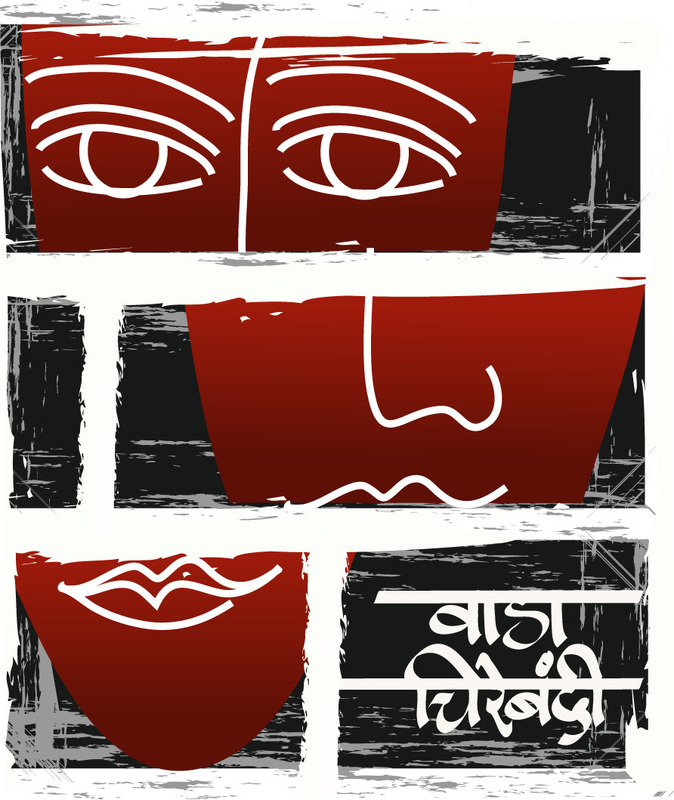
This 2004 poster for Wada Chirebandi uses bold red, black, and white abstraction to evoke psychological fracture and generational rupture. Fragmented facial features divided by stark horizontal bands visually echo the tensions at the heart of Mahesh Elkunchwar’s landmark Marathi drama. The play centers on the decline of a traditional rural Maharashtrian family following the death of its patriarch, as relatives gather in the ancestral stone mansion and confront shifting authority, economic change, and eroding values. Widely regarded as a cornerstone of modern Marathi theater, the work examines the disintegration of feudal structures in post-independence India. By staging and archiving Elkunchwar’s work, CalAA demonstrated its commitment to preserving major voices of India’s modern dramatic canon while cultivating Marathi-language theater within Silicon Valley’s diasporic cultural landscape.
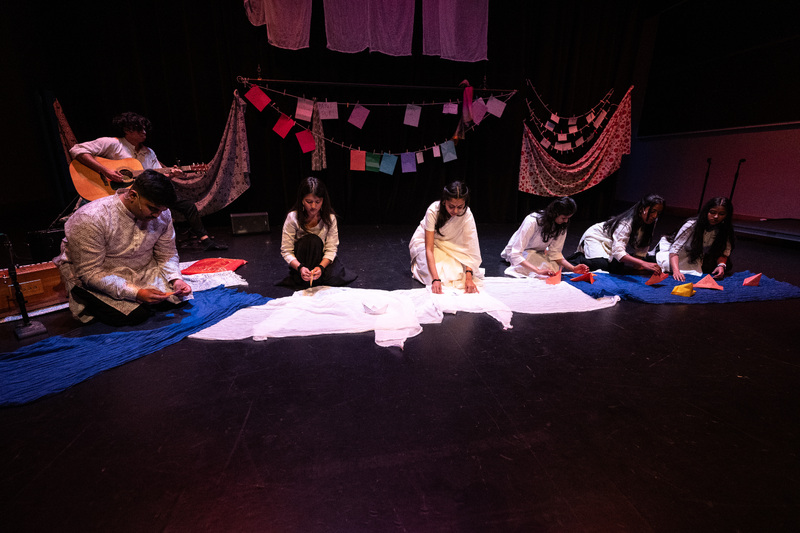
The final scene of a devised performance project, What's Your Story? Telling Stories of the Desi Diaspora, with the students of SJSU. The piece documents the South Asian diasporic experience, challenging stereotypes, and mapping the evolution of the American landscape through community storytelling.
Performed outdoors during the COVID-19 pandemic, Witness for the Prosecution is Naatak’s staging of Agatha Christie’s courtroom drama, presented in an open-air amphitheater to accommodate public health conditions. The play follows Leonard Vole, a man accused of murder, whose fate hinges on the testimony of his wife, Romaine, whose unexpected revelations complicate the case. Staged in Silicon Valley, the play reflects the company’s ability to adapt both form and venue, sustaining live theater through covid constraints while maintaining a focus on narrative tension, performance, and audience intimacy.
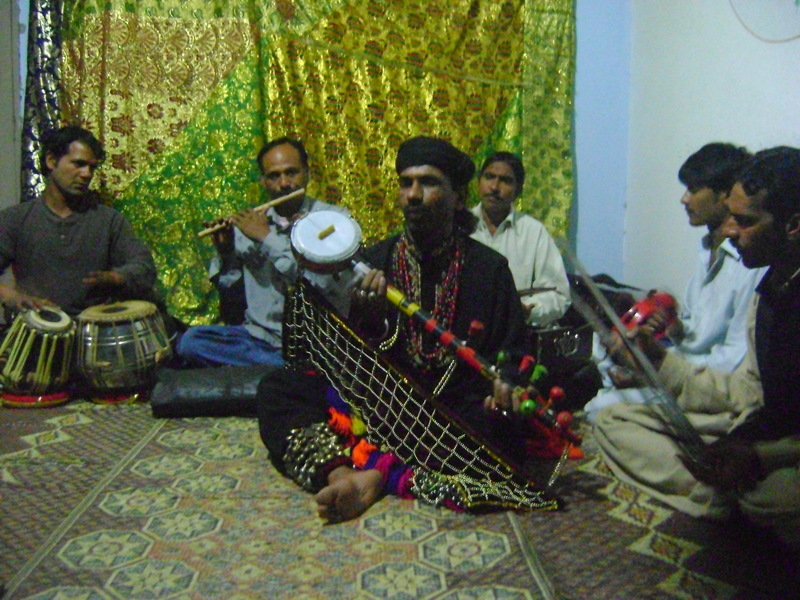
The Yaktaro is a single or double-stringed instrument made from a dried gourd and animal skin. It is common to the Sindh region of Pakistan and is often used as an accompaniment to singing.