San Francisco Chronicle is a major metropolitan newspaper serving the San Francisco Bay Area. The Chronicle has played a significant role in California journalism through investigative reporting, cultural coverage, and local news.
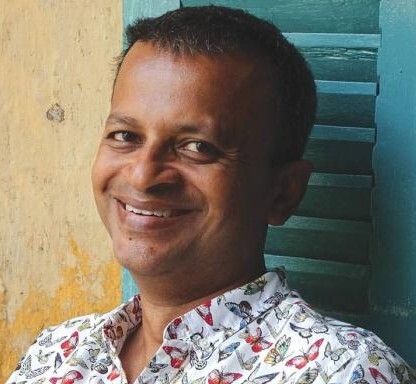
Sandip Roy is a journalist, writer, and radio commentator whose career began in the San Francisco Bay Area. After moving to the United States to study computer science, he worked in Silicon Valley while freelancing for *India Currents*, which gave him his first professional opportunities in journalism. He later edited *Trikone*, worked with New California Media/New America Media, hosted programs on KALW, and contributed reported commentaries to NPR’s *Morning Edition*. After returning to Kolkata in 2011, Roy continued his connection to Bay Area audiences through KALW’s *Dispatches from Kolkata*. He credits the Bay Area with giving him the confidence to leave technology and pursue writing full time.
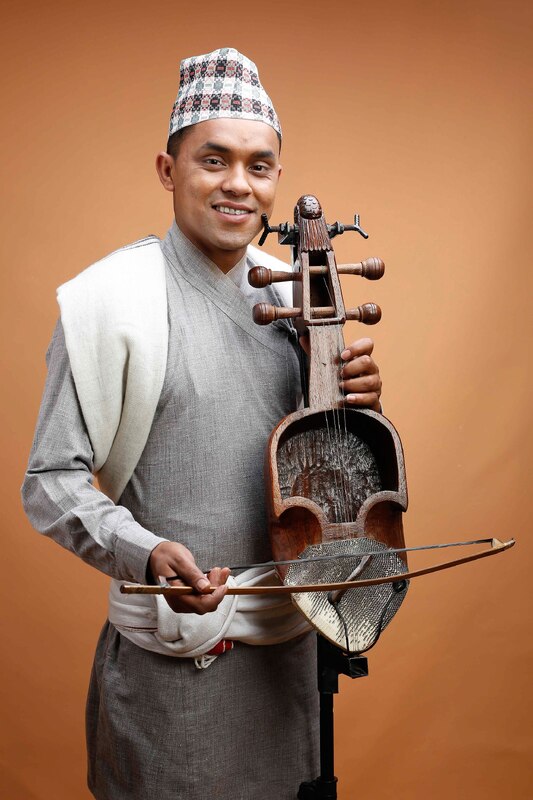
The Nepali Sarangi is a chordophone (four-stringed) iknstrument played by bowing, and was traditionally used by people of Gandarbha or Gaine caste. (Source: Wikipedia)
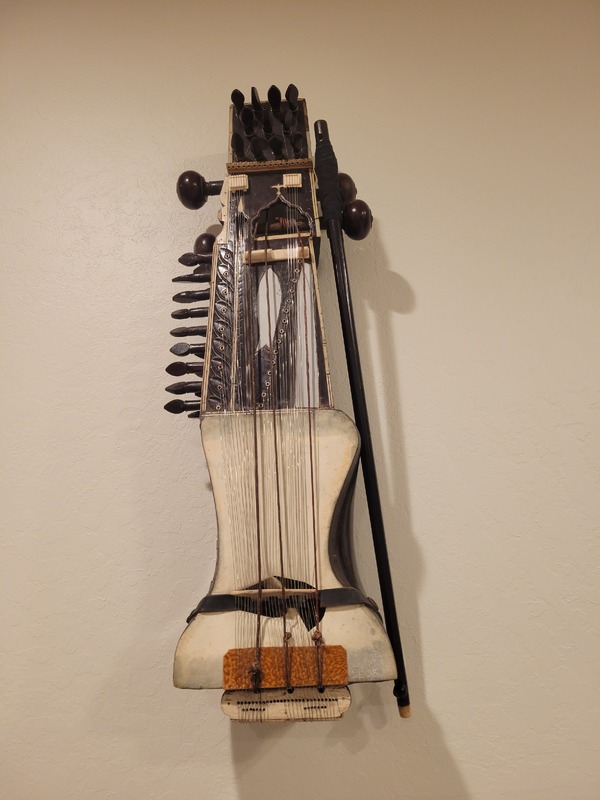
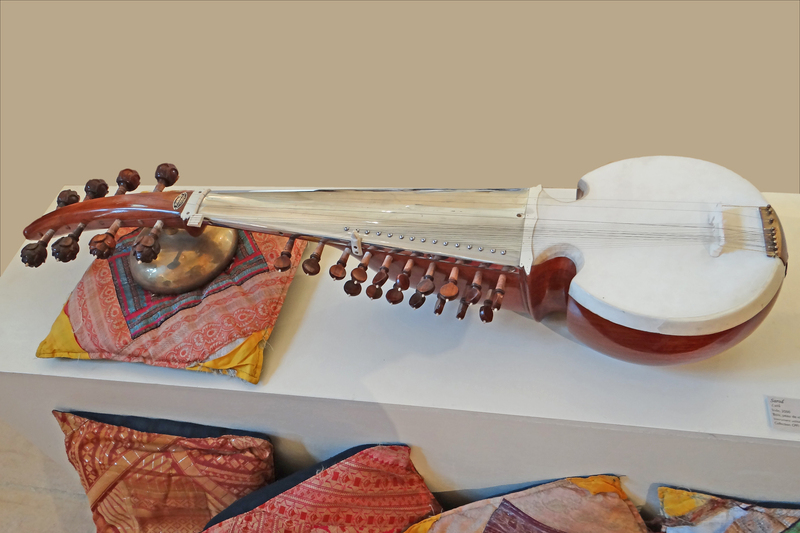
The Sarangi is a bowed string instrument played in several countries, including Bangladesh, India, Nepal, Pakistan. The Sarangi is often used in Hindustani folk and classical music of North India.
A Sarod is a stringed instrument of India, originally adapted from that Afghan Rabab. It is used in Hindustani music and is often accompanied by tabla and tambura.
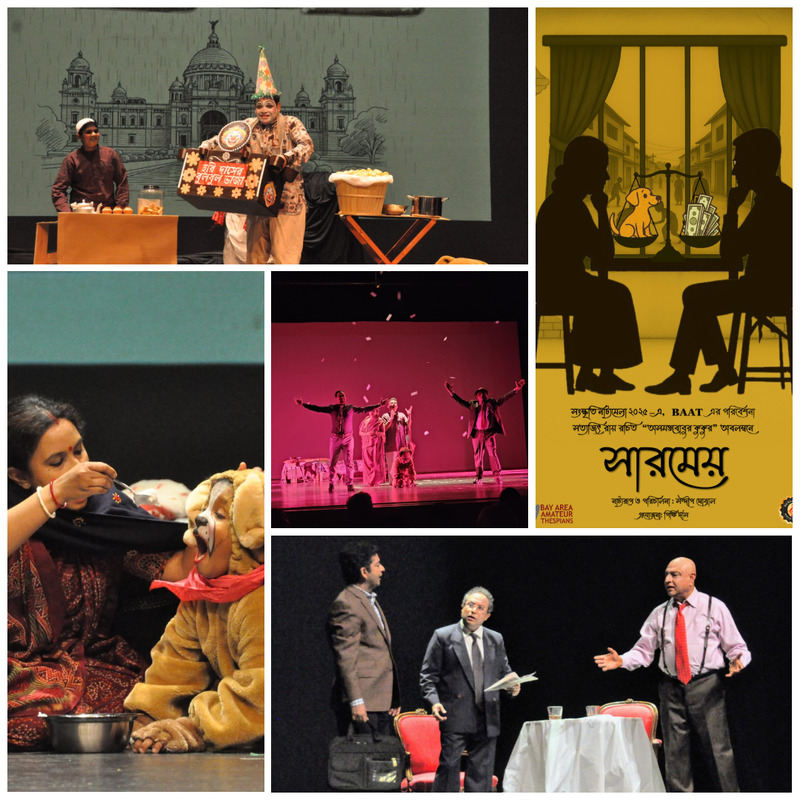
Presented in 2025, Saromeyo is BAAT’s theatrical homage to the imaginative storytelling of filmmaker and writer Satyajit Ray. Blending elements of fantasy, satire, and social commentary, the production creates a stylized theatrical world where everyday encounters take on allegorical meaning. Through ensemble performance and visual storytelling, Saromeyo explores themes of empathy, social hierarchy, and moral responsibility. The production reflects BAAT’s ongoing engagement with Ray-inspired narratives and introduces Bay Area audiences to theatrical interpretations of Bengali literary and cinematic traditions.
Sasha Khokha is an award-winning journalist, editor, and audio storyteller based in the San Francisco Bay Area. Khokha is a host, correspondent and editor at KQED’s The California Report Magazine, where she reports on immigration, labor, identity, and social justice issues across California.
Khokha has played a significant role in shaping long-form public radio journalism, blending investigative reporting with narrative audio. Earlier in her career, she was involved with India Currents, where she began reporting on grassroots and community issues affecting South Asians and immigrants.
Her work reflects a commitment to amplifying underrepresented voices, mentoring emerging journalists, and preserving the history of community-based journalism.
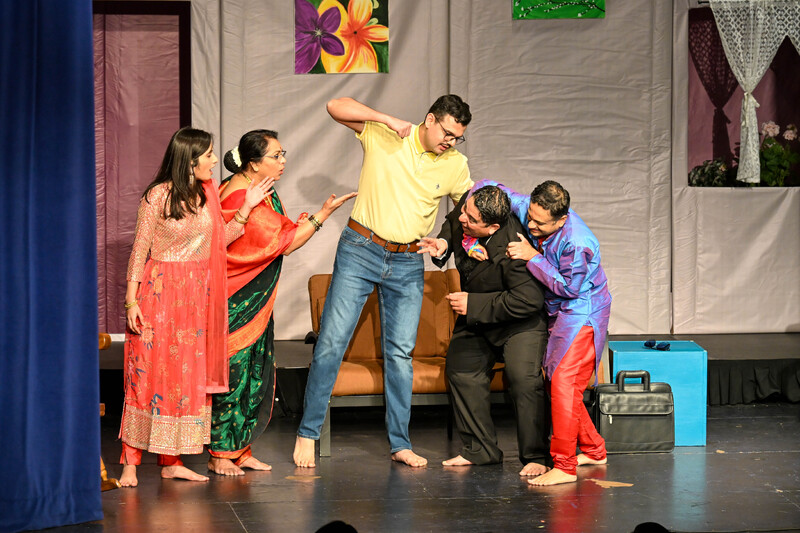
Sasu Majhi Dhaasu embraced high-energy farce and exaggerated domestic comedy. The plot centers on a financially desperate man who devises a scheme to extract a large sum of money from his formidable mother-in-law. What follows is a cascade of mistaken identities, misunderstandings, disguises, and escalating deception.
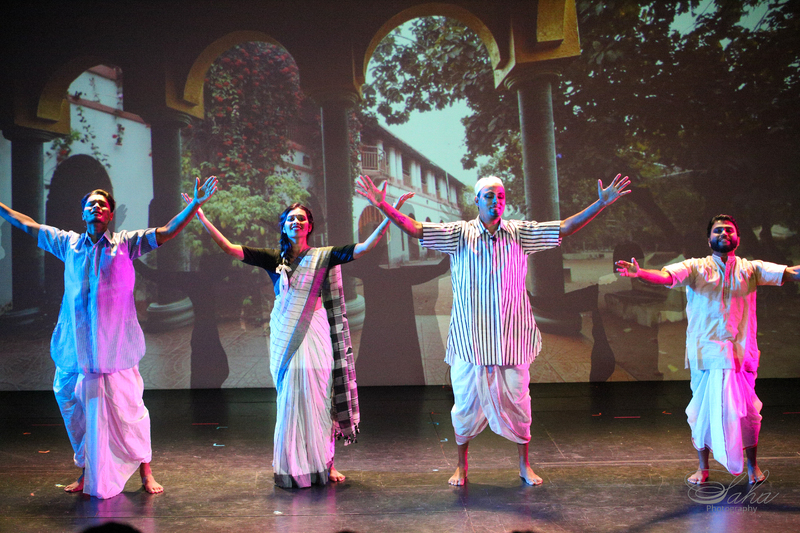
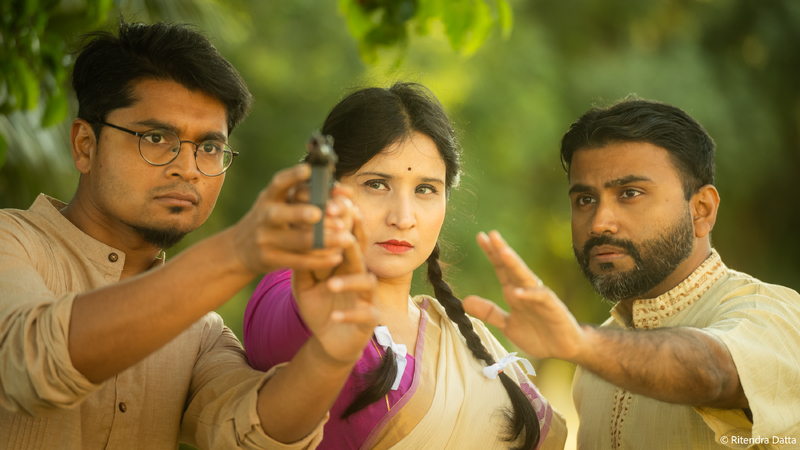
Dancers portray the veer-rasa in the face of an impossible ordeal. A critical moment in the plot of Satyamev Bhayate, 2025 satirical courtroom comedy written and directed by Ritendra Datta. Performed at The Pear Theatre and The Campbell Community Center, the play transforms the courtroom into a chaotic stage for eccentric judges, dramatic lawyers, unexpected witnesses, and sharp commentary on Indian bureaucracy, everyday life, and modern society.
A rebel lawyer tries to convince the judge and orderly that the defendant is not guilty, but simply gullible. This lighter moment comes from Satyamev Bhayate, a 2025 satirical courtroom comedy written and directed by Ritendra Datta. Performed at The Pear Theatre and the Campbell Community Center, the play transforms the courtroom into a chaotic stage of eccentric judges, dramatic lawyers, unexpected witnesses, and sharp commentary on Indian bureaucracy, everyday life, and modern society.
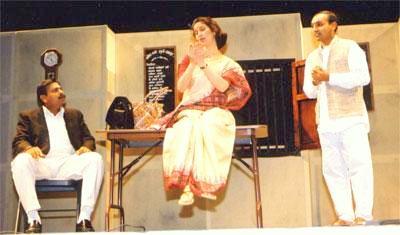
Staged in 2003, Shantata! Court Chalu Aahe was CalAA’s first major full-length production following its founding in 2002, when the organization had initially presented shorter one-act plays. This production marked a defining moment in CalAA’s transition from a newly formed cultural collective to a serious Marathi-language theater institution in Silicon Valley.
Written by acclaimed Indian playwright Vijay Tendulkar, the play centers on a traveling amateur theater group that stages a mock trial as part of its rehearsal process. What begins as theatrical improvisation, gradually reveals deeply rooted social hierarchies, misogyny, and moral hypocrisy. Tendulkar’s work is a cornerstone of modern Indian drama, known for its sharp critique of social conventions and its unflinching portrayal of power dynamics.
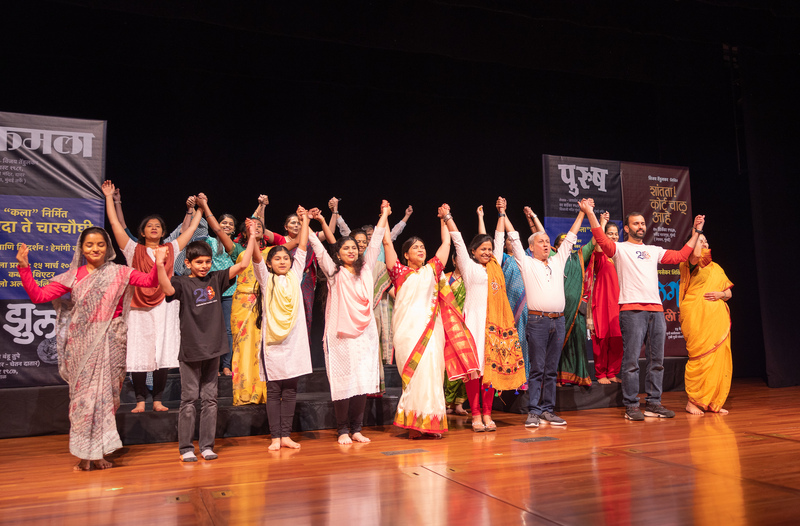
To mark CalAA’s twentieth anniversary, Sharda Te Char Choughi was conceived as a curated journey through the evolution of Marathi theater. The production featured staged excerpts spanning from Sharda, a landmark nineteenth-century social reform drama, to the modern play Char Choughi, alongside selections from works such as Kamala, Purush, and Shantata! Court Chalu Aahe, CalAA’s first major production in 2003. By juxtaposing canonical texts across eras, the program traced shifts in dramaturgy, performance style, and especially the representation of women on the Marathi stage.
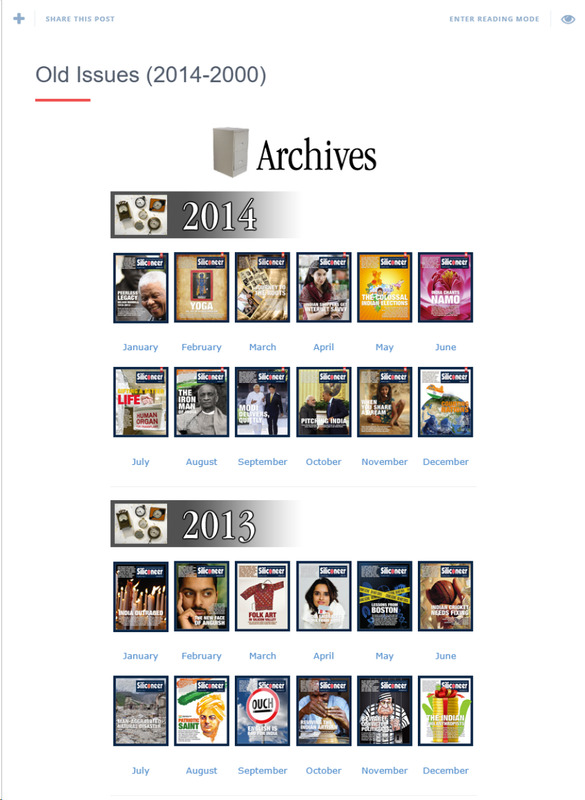
Siliconeer is a monthly magazine based in the San Francisco Bay Area that serves the South Asian diaspora, with a particular focus on tech-savvy professionals, younger generations, and multicultural community topics. Launched in February 2000, it has documented South Asian business, culture, technology, and community life in Northern California and beyond.
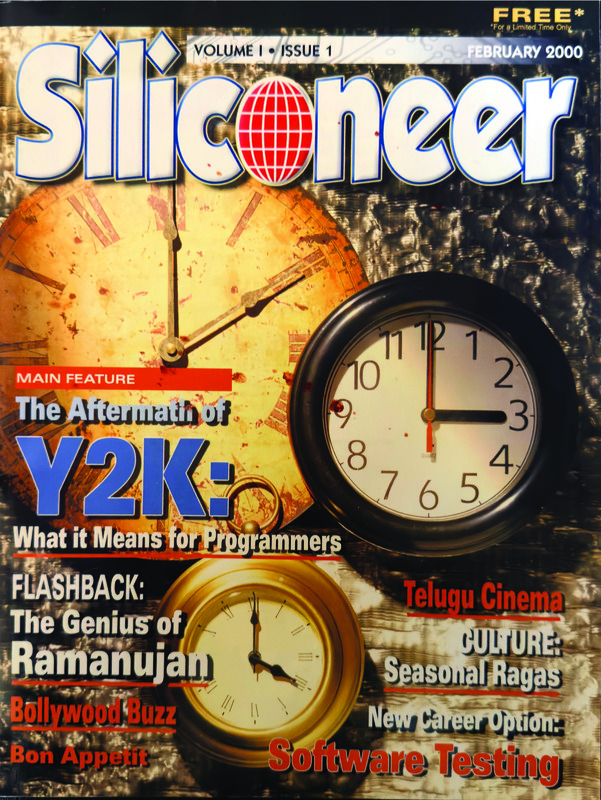
Cover of the inaugural issue of Siliconeer, Volume 1, Issue 1, dated February 2000. Featured coverlines include “The Aftermath of Y2K: What it Means for Programmers,” “Flashback: The Genius of Ramanujan,” “Bollywood Buzz,” “Telugu Cinema,” “Culture: Seasonal Ragas,” “Bon Appetit,” and “New Career Option: Software Testing.”
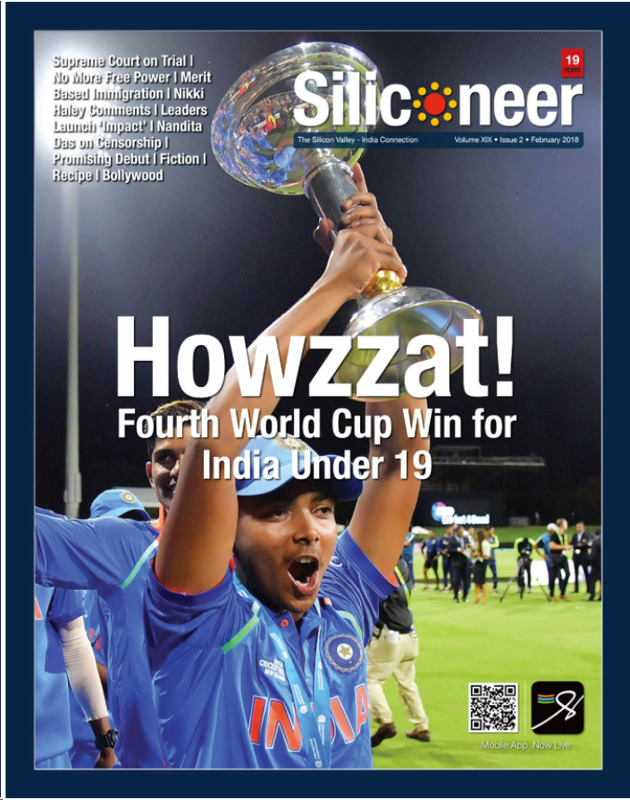
Cover of the February 2018 issue of Siliconeer (Volume XIX, Issue 2), featuring the headline “Howzzat! Fourth World Cup Win for India Under 19.” The cover celebrates India’s victory in the 2018 ICC Under-19 Cricket World Cup, spotlighting cricket as a cultural bridge connecting South Asians across the globe.
The issue reflects Siliconeer’s editorial interest in major cultural and sporting achievements while also covering civic, political, and community topics relevant to Silicon Valley’s South Asian population.
Other cover highlights include commentary on U.S. immigration policy, Indian cinema, leadership and merit debates, cultural events, and diaspora lifestyle features.
This cover represents the magazine’s redesigned modern visual style as it entered its nineteenth year, strengthening its identity as a publication focused on the intersection of Silicon Valley, India, and global South Asian communities.