In this April 21, 2025 article for MedCity News, Arundhati Parmar interviews Sachin Jain, CEO of SCAN Health Plan, exploring the strengths and vulnerabilities of the Medicare Advantage program. The piece highlights senior affordability challenges, regulatory concerns, and Jain’s candid acknowledgment that “I’m the first person to call my baby ugly” in reference to the program’s flaw
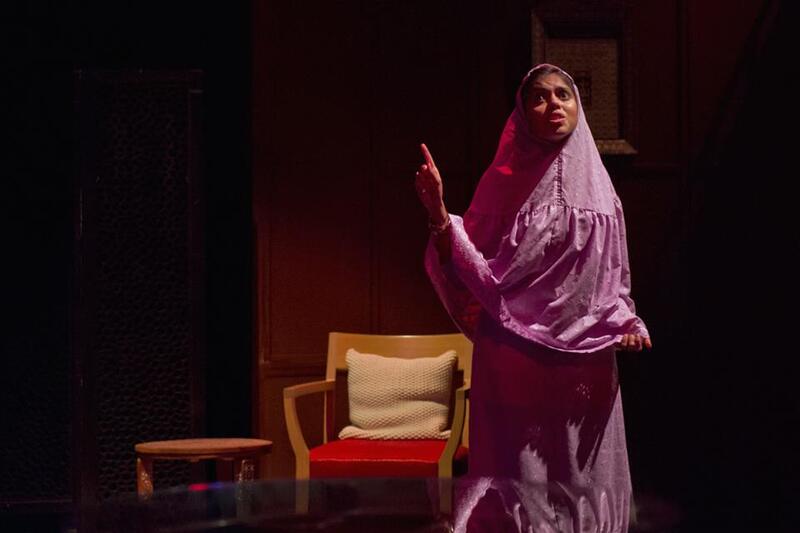
This is a scene from the play Merchant on Venice by Shishir Kurup. The play, which is an adaptation of Shakespeare's Merchant of Venice, follows Jitendra, a Bollywood actor chasing success in Hollywood, who plots to marry a wealthy heiress to fund his film but becomes entangled with a dangerous Muslim moneylender, risking his closest friendship; the play explores identity, ambition, and the tensions of diaspora life while probing themes of empathy, prejudice, and personal responsibility.
Mian Shabaz is a Pakistani American journalist and editor of the Pakistan Times USA, a community newspaper serving the Bay Area’s Pakistani and broader South Asian diaspora. Based in Northern California, he has led the publication’s coverage of community news, culture, business, and public affairs. Under his editorial direction, Pakistan Times USA has continued a long-standing tradition of Pakistani media in the United States, providing a platform for local voices and civic engagement within the diaspora.
Shabaz’s work emphasizes connecting generations of Pakistani Americans and fostering cross-community understanding through print and digital journalism. His contributions reflect the ongoing evolution of ethnic media in Silicon Valley and the wider Bay Area.
In December 2025, BAAT staged Badal Sircar’s Michhil (1974), a defining work of the Third Theatre movement. Set in 1970s Kolkata during the height of political unrest associated with the Naxalite movement, the play examines how everyday civic life persists amid ideological violence, state repression, and social upheaval. In keeping with Sircar’s performance philosophy, the production was staged without proscenium framing, elaborate sets, or technical spectacle. The audience surrounded the actors on three sides of the playing space, creating an intimate environment that emphasized collective experience and reflected the anti-institutional aesthetics central to Third Theatre practice.
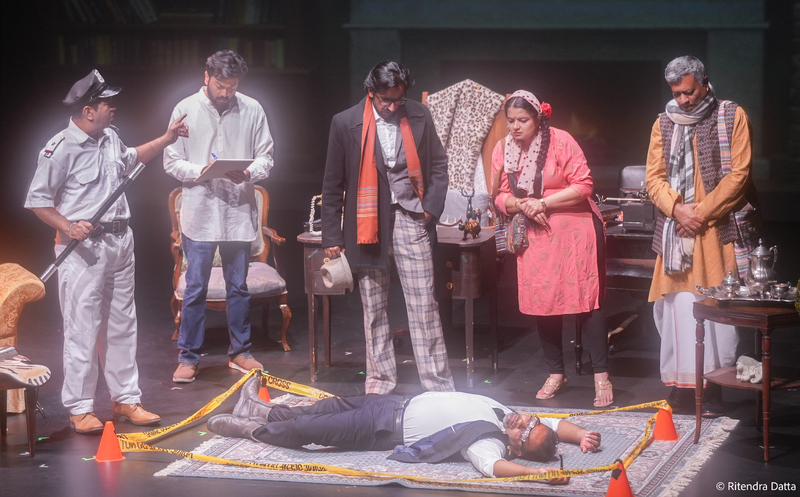
The Mousetrap is Agatha Christie’s classic murder mystery, in which a group of strangers becomes snowbound in a remote guesthouse as news of a murder unfolds. When a police officer arrives, the guests realize that the killer may be among them, turning suspicion inward.
The Mridangam is a percussion instrument used in Carnatic music. It is commonly made from jackfruit wood and animal skin, and can be heard in music from Hindu and Tamil cultures.
Munshir Palace is a gripping murder mystery set in 1970s Kolkata, India, where secrets whisper through palace walls and every character has something to hide.
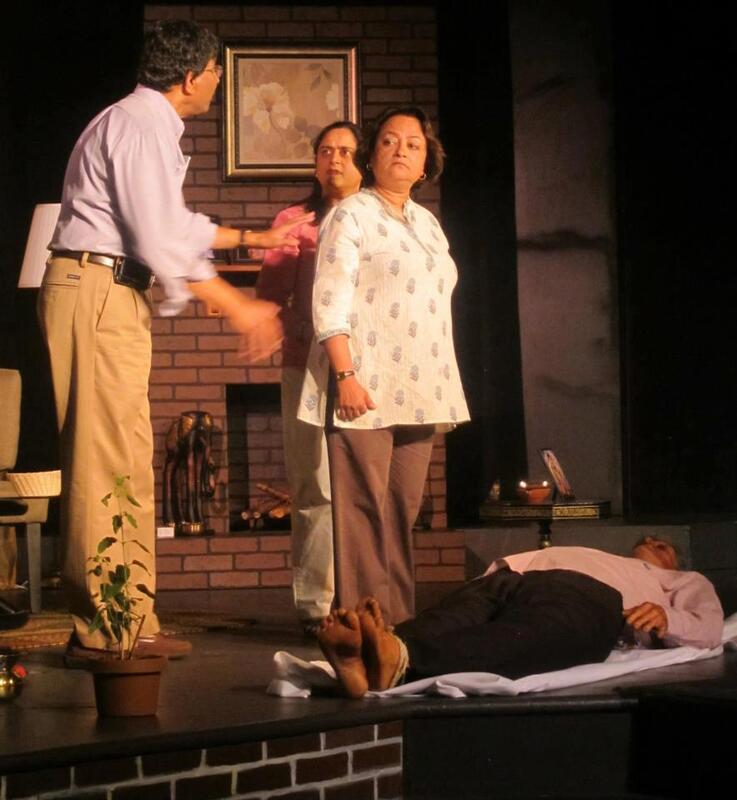
Ranjita Chakravarty appears in Naatak’s Death in San Francisco, an English play written by Sujit Saraf. This was a quirky comedy about what it means for an Indian to die in America with the proper “rites and ceremonies”
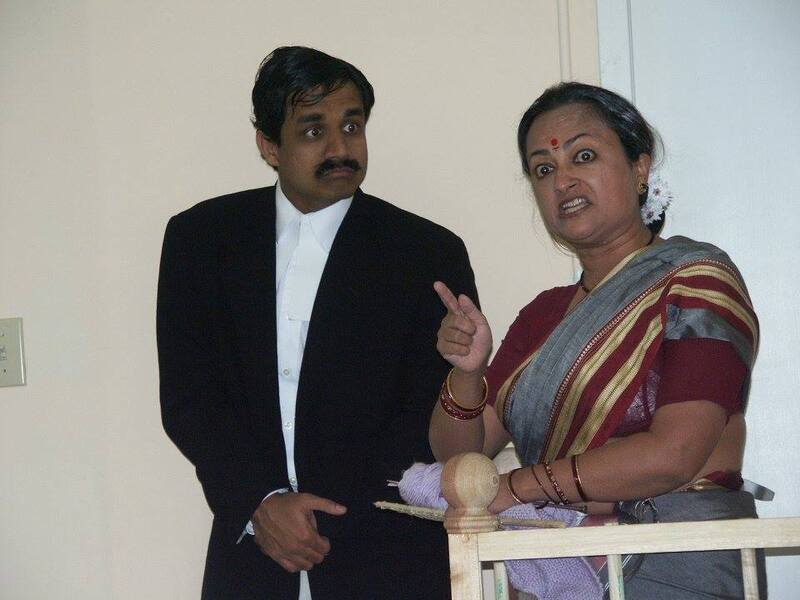
Ranjita Chakravarty plays Mrs. Kashikar in Naatak’s 13th production and its first presentation under the “Naatak in a Room” program. The Hindi play was performed November 16–17 and November 22–24, 2002 at the American India Foundation in Milpitas. The staging seated the audience on three sides, with performers moving among them.