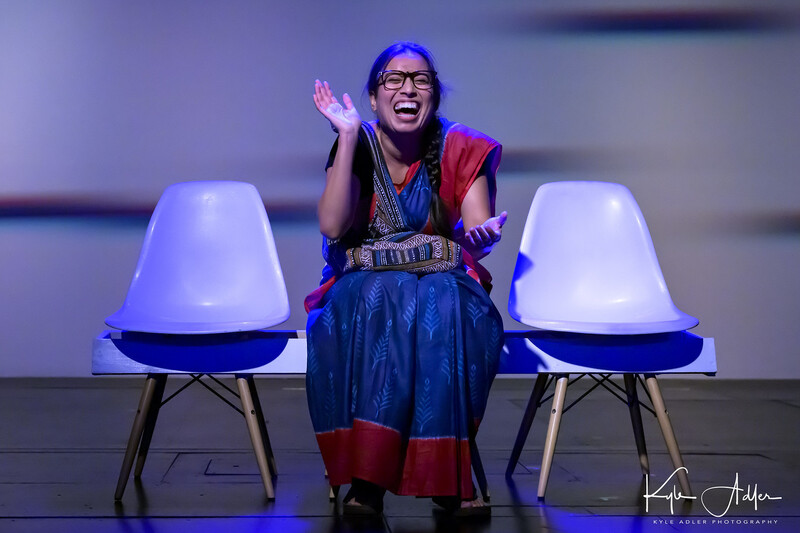
K.K. follows a central character navigating the bustling landscape of Connaught Place in New Delhi, encountering a wide range of figures from everyday urban life, including vendors, shoppers, and passersby. Structured as a theatrical romp inspired by popular Hindi cinema, the play blends humor, movement, and rapid character shifts, with a single performer embodying multiple roles within an imagined crowd. The production emphasizes performance as transformation, using minimal staging and physical expression to create a dynamic, populated world on stage.
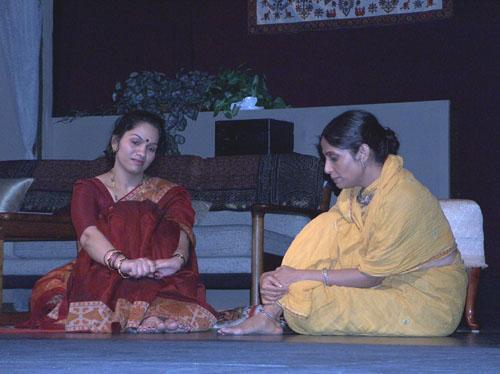
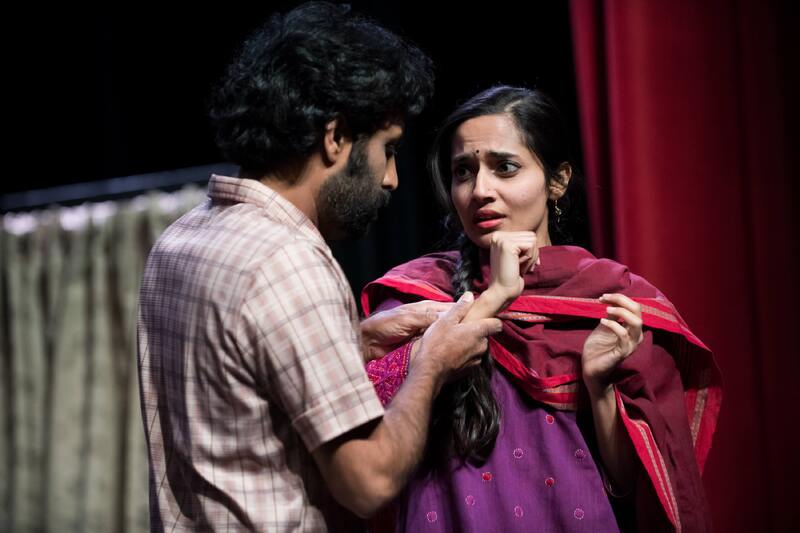
In Vijay Tendulkar’s Kamala, a journalist in Delhi learns that women are being auctioned as bonded laborers in rural markets. Determined to expose the story, he purchases a woman named Kamala as proof for a press conference. What begins as investigative zeal gradually reveals deeper layers of exploitation within his own household. In this scene, Kamala, the woman he has bought, sits beside the journalist’s wife. Through their encounter, the wife begins to recognize her own confinement within a patriarchal marriage. Tendulkar’s play shifts the focus from public scandal to private domination, exposing how systems of control operate both in the marketplace and within the domestic sphere. CalAA’s 2005 staging was presented in two performances on the same day, one in Marathi and one in Hindi, reflecting the organization’s commitment to linguistic accessibility while preserving the integrity of regional dramatic literature.
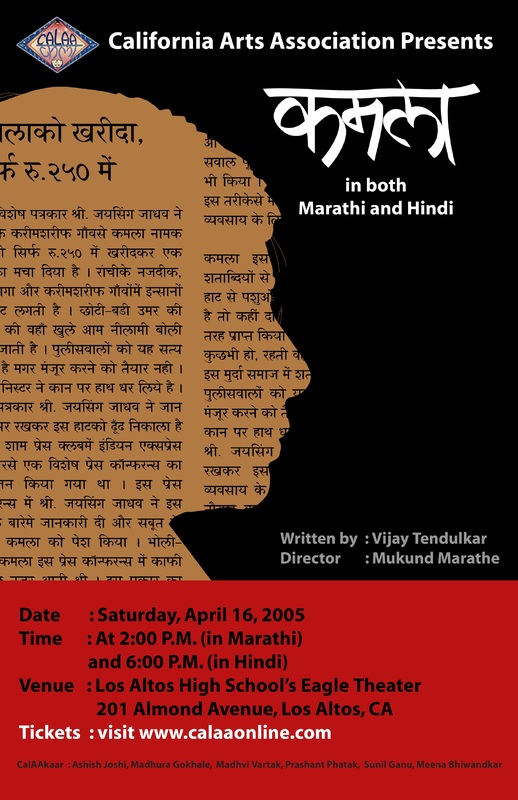
This 2005 poster for Kamala announces CalAA’s bilingual presentations of Vijay Tendulkar’s searing social drama, performed in both Marathi and Hindi on the same day. The design juxtaposes bold typography with a silhouetted female profile layered over newspaper text, visually referencing the play’s focus on journalism, public exposure, and the commodification of women. At the center of the narrative is a journalist who purchases a tribal woman to demonstrate the reality of human trafficking, only to reveal the moral contradictions within his own marriage. By presenting the play bilingually, CalAA expanded its audience reach while preserving the linguistic roots of Tendulkar’s original text, further solidifying its place in the Bay Area’s South Asian theatrical landscape.
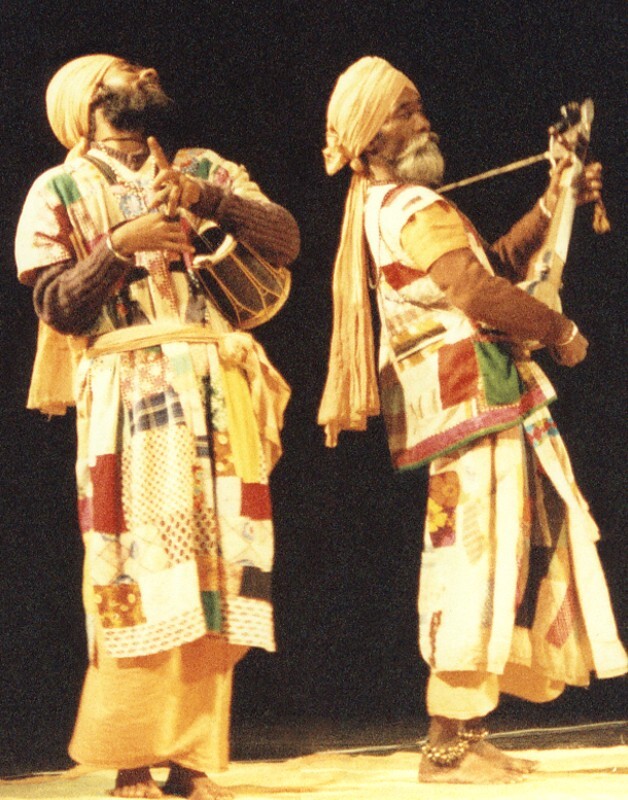
The Khamak is a one-headed drum played by plucking a string attached to the bowl of the drum. Typically played with 'Baul' (spiritual/folk) music, played in West Bengal and Assam, India as well.
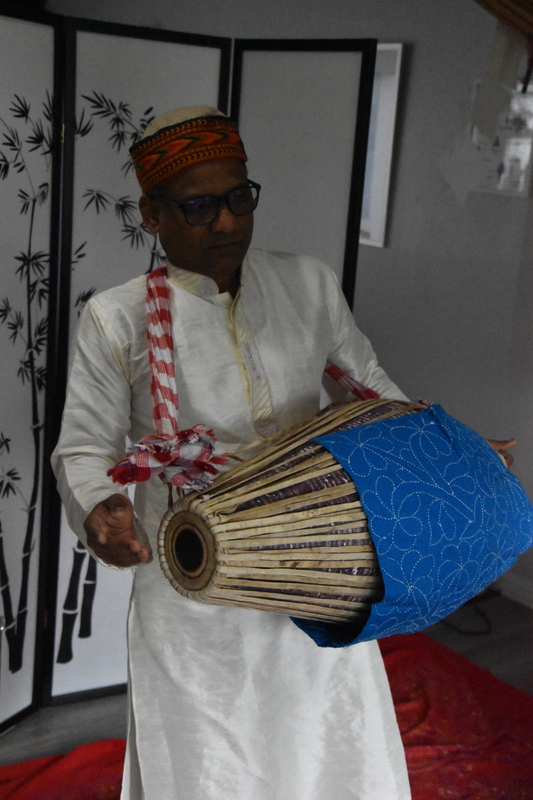
The Khol is a two-headed drum used in Bangladesh, and Northern and Eastern India. It is traditionally used in devotional music, and is known as the primary drum used for bhajan and kirtan in Hare Krishna practice.
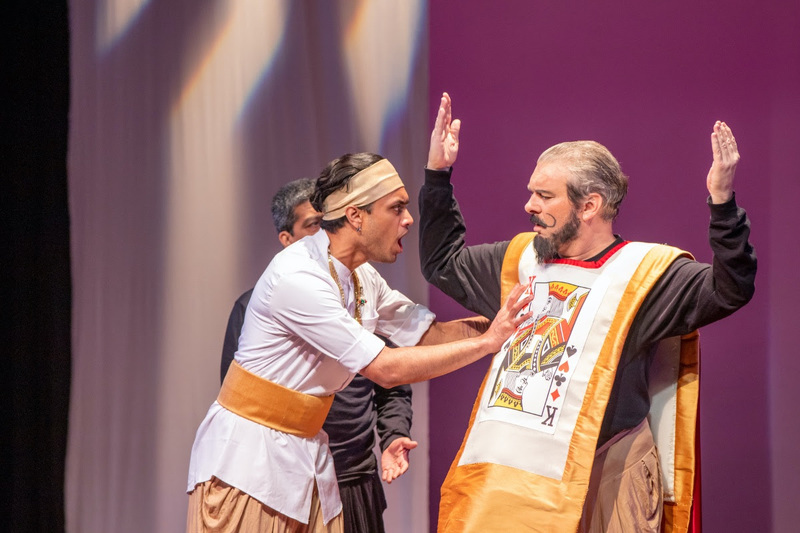
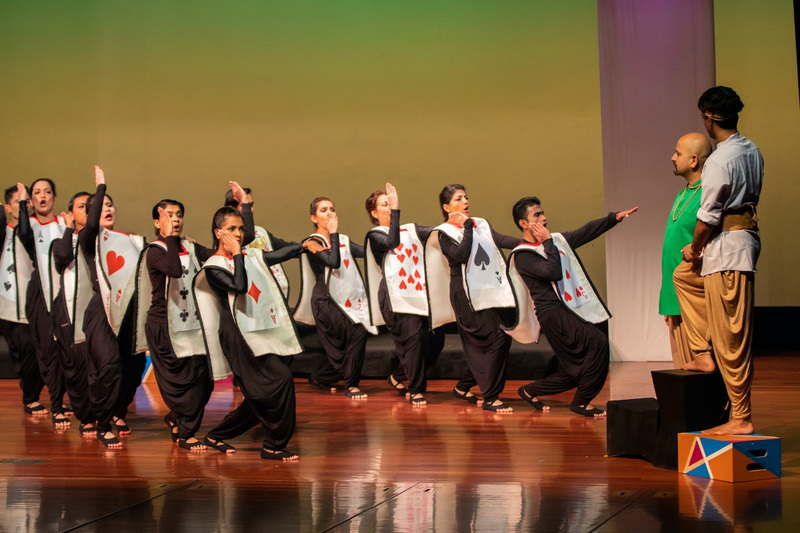
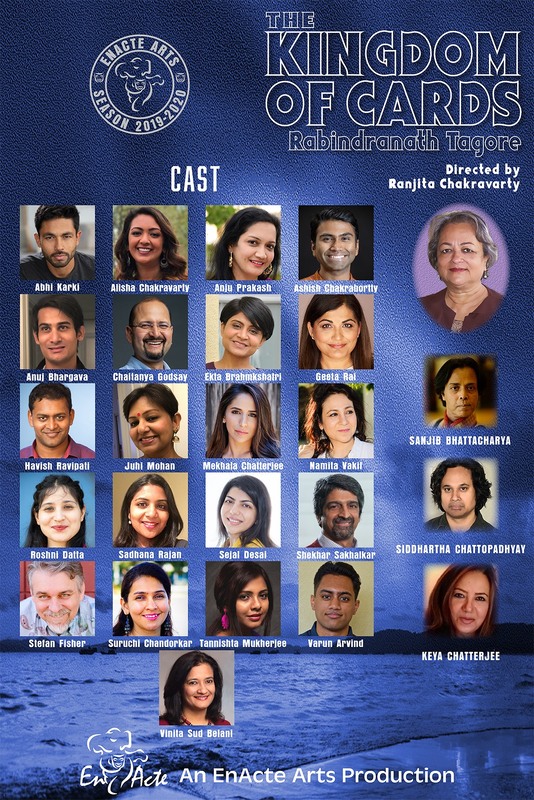
Written by Rabindranath Tagore, explores the dehumanizing effects of fascism and how rebellions begin. The Wanderer encourages the army of cards to find their third dimension.
Written by Rabindranath Tagore, explores the dehumanizing effects of fascism and how rebellions begin. The Wanderer encourages the army of cards to find their third dimension.
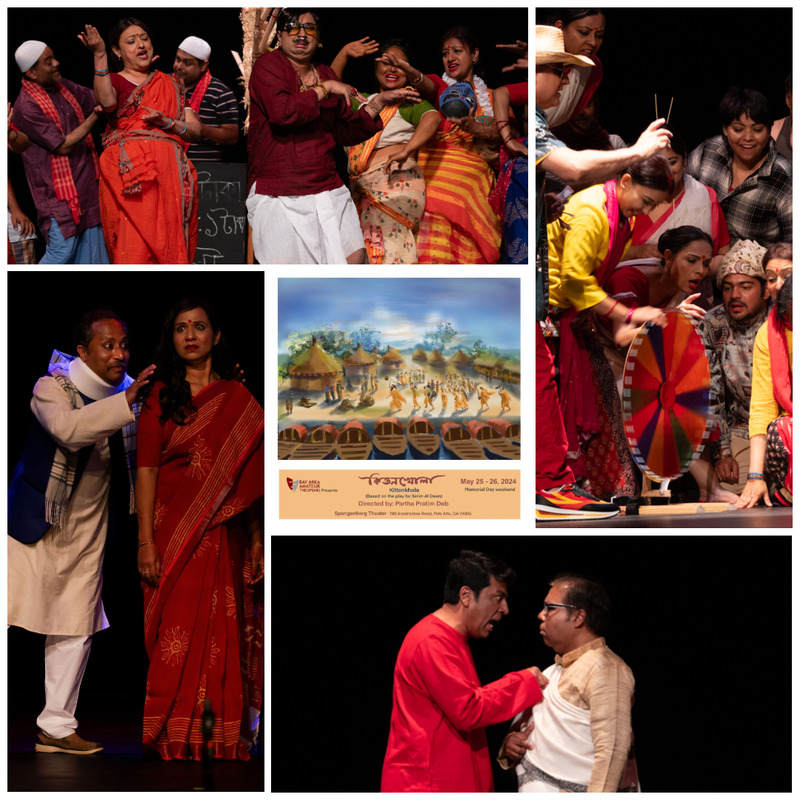
Presented in 2024, BAAT staged Kittonkhola, the celebrated play by Bangladeshi playwright Selim Al Deen. Set in rural Bangladesh along the Kittonkhola River, the drama explores the tensions between communal festivity and the hardships of everyday life. Combining elements of drama, music, and movement, the work is known for its poetic language and non-linear structure and is widely regarded as a modern classic of Bengali theatre.
The production brought Bay Area performers into collaboration with theatre practitioners Partha Pratim Deb and Rupa Deb, artists closely associated with contemporary Bengali stage traditions.
BAAT's May 2024 production of Selim Al Deen's Kittonkhola, directed and co-performed by renowned practitioners Partha Pratim Deb and Rupa Deb, brought rural Bangladesh's marginalized performers and villagers to life — their struggles of love and survival rendered through a collaboration between Silicon Valley artists and distinguished figures of the Bengali stage.
An early on-air promotional clip from the launch of Bolly 92.3 FM (KSJO 92.3 FM San Jose) in 2016, produced under Universal Media Access when the station became the Bay Area’s first and only 24/7 Bollywood FM music station. This short recording captures the station’s initial branding and upbeat style as it transitioned from earlier multilingual formats into a dedicated South Asian music platform. It reflects the moment when Bollywood radio moved from AM to FM in the Bay Area, a milestone for diaspora media.
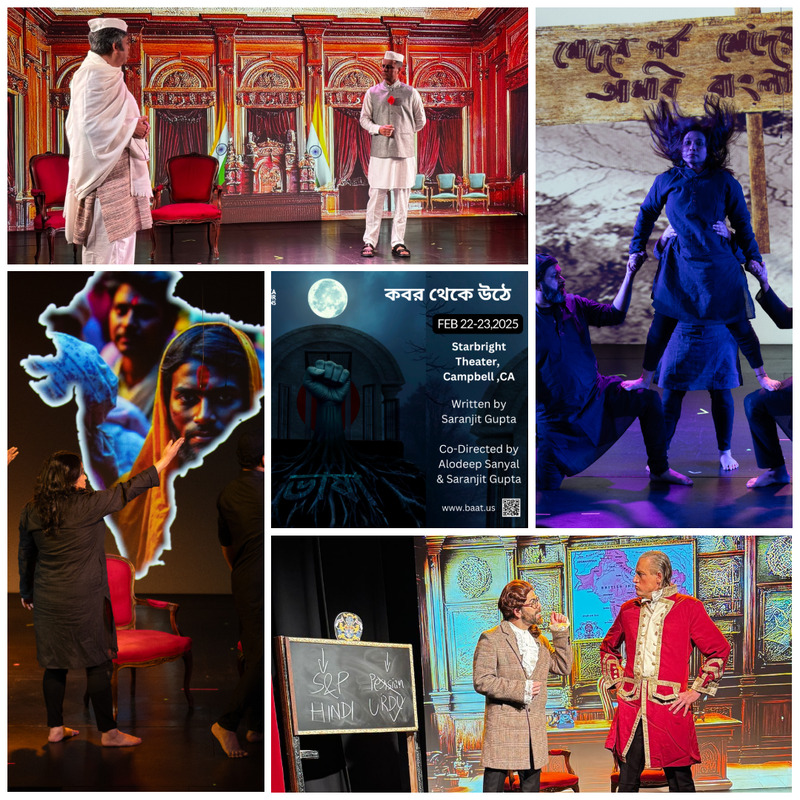
Written by Saranjit Gupta, Kobor Theke Uthe draws inspiration from Kobor (The Grave), the landmark 1952 play by Bangladeshi playwright Munier Chowdhury. Chowdhury’s original drama emerged during the Bangla Language Movement in East Pakistan, when students and intellectuals protested for recognition of Bangla as a state language. BAAT’s multilingual production revisits this theatrical lineage, exploring questions of linguistic identity, memory, and cultural belonging. By referencing the historical struggle for language rights, the play connects contemporary audiences with a defining moment in South Asian political and literary history. Presented in February 2025 as part of BAAT’s season-opening Bengali-language double feature, Kobor Theke Uthe was staged alongside Prodosh Theke Protush Porjonto at Starlight Theater in Campbell, California.
Radhika Rao appears with Kuch Kuch Bollywood, a Bay Area improv ensemble that brings Bollywood-inspired performance styles, humor, music, and cultural references into improvised theater. Rao is a member of the ensemble and has described this work as part of her broader improv practice, including her interest in how Bollywood sensibility can shape improvisation and live performance.