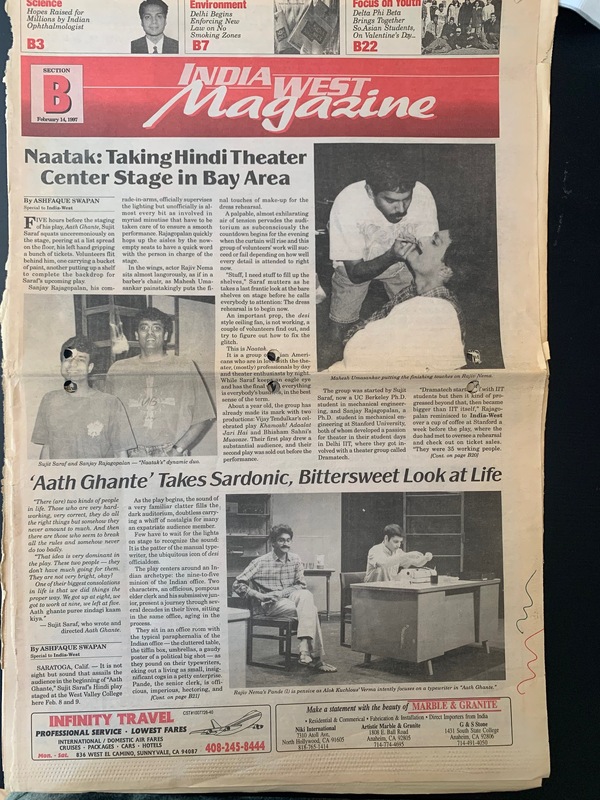
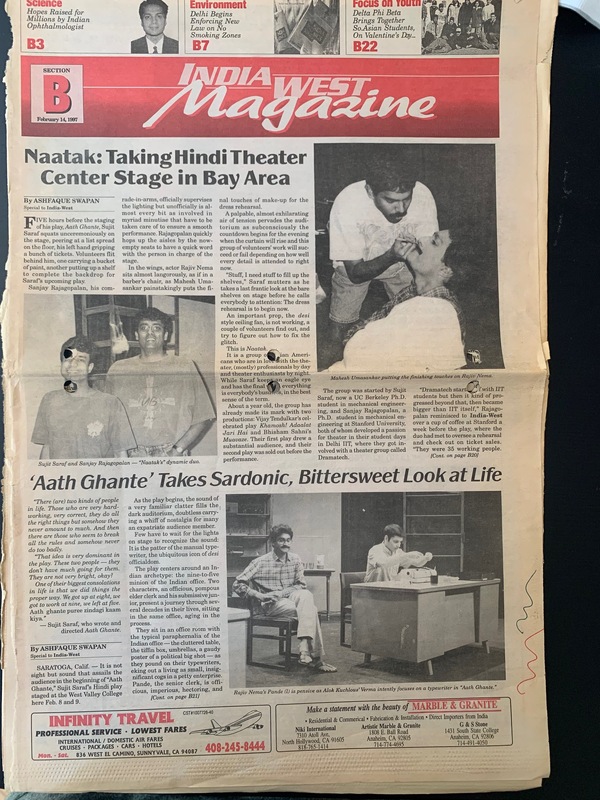
Section B (cover) of the February 1997 issue of India West, an English-language South Asian American newspaper serving the San Francisco Bay Area and national Indian American community. This cover reflects India West’s role in documenting South Asian immigrant life, community news, arts, and cultural activity during a period of growing South Asian visibility in the Bay Area.
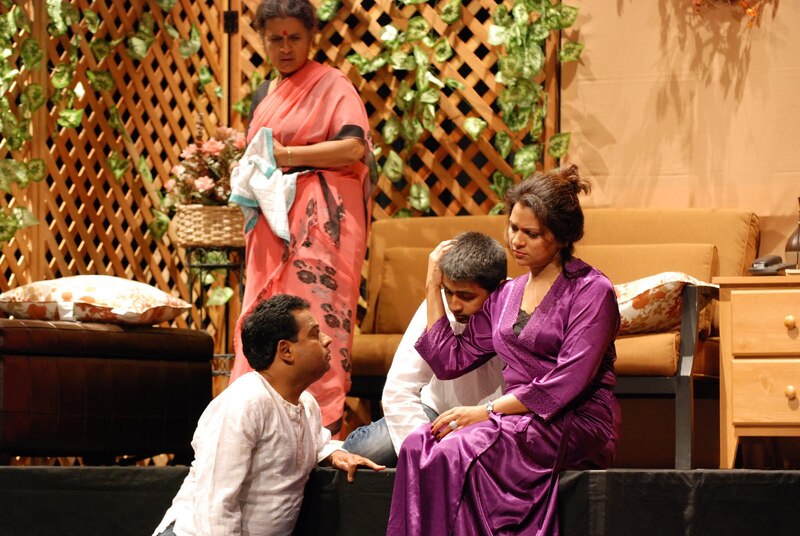
The first news coverage of Naatak's production, 'Khaamosh! Adalat Jaari Hain (Silence! The Court is in Session)' on February 14, 1997, in the magazine, India West. Vijay Tendulkar is the playwright.
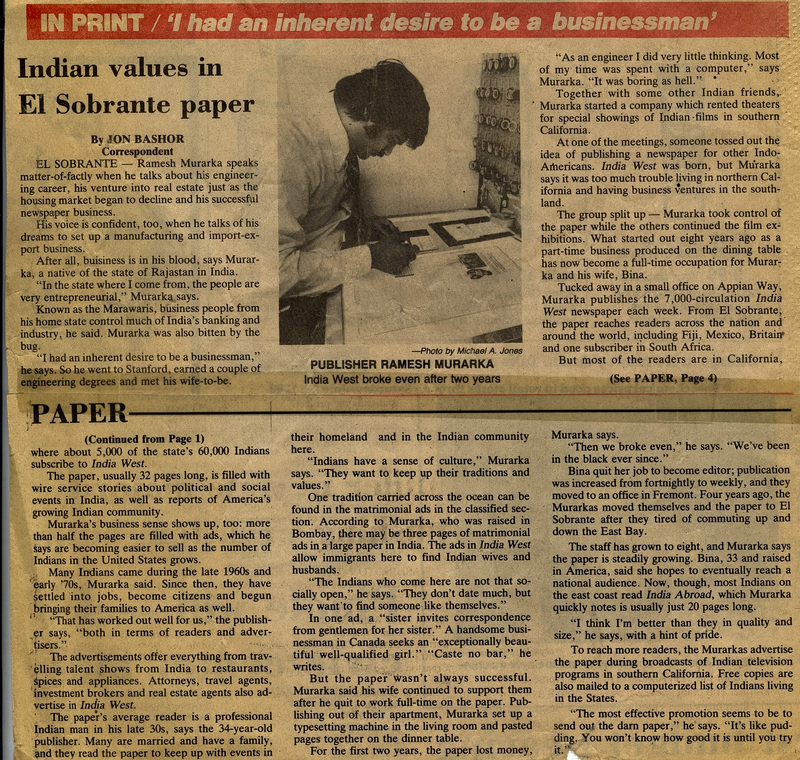
Clipping of Jon Bashor's profile of India-West and its founders, Ramesh and Bina Murarka. The article describes the newspaper's early production process, readership, advertising, and move from Fremont to El Sobrante. It includes a photograph of Ramesh Murarka at the layout table by Michael A. Jones.
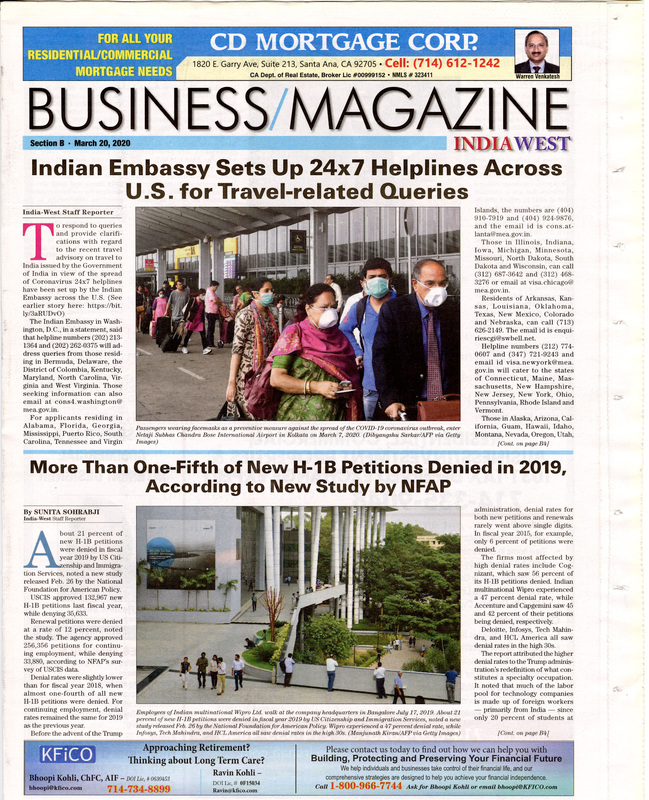
Three scans from India-West, Volume 45, Number 19, dated March 20, 2020, identified in the collection as the newspaper's final printed issue before online-only publication. The files include the front page, Business Magazine section, and Entertainment section. The front page documents the Bay Area shelter-in-place order and its effect on Indian American communities and arts organizations.
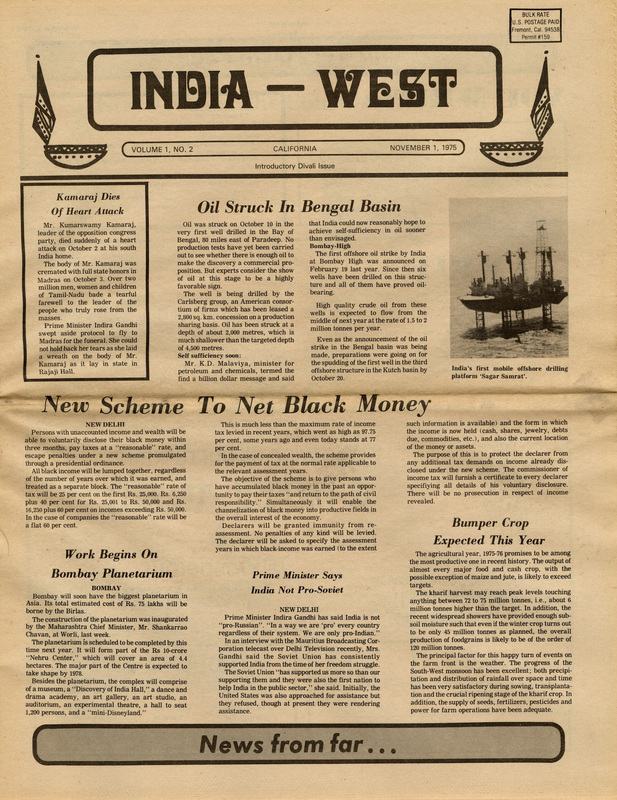
Front page of India-West's introductory Diwali issue, identified in the masthead as Volume 1, Number 2 and dated November 1, 1975. Lead stories cover Indian politics, industry, and agriculture.
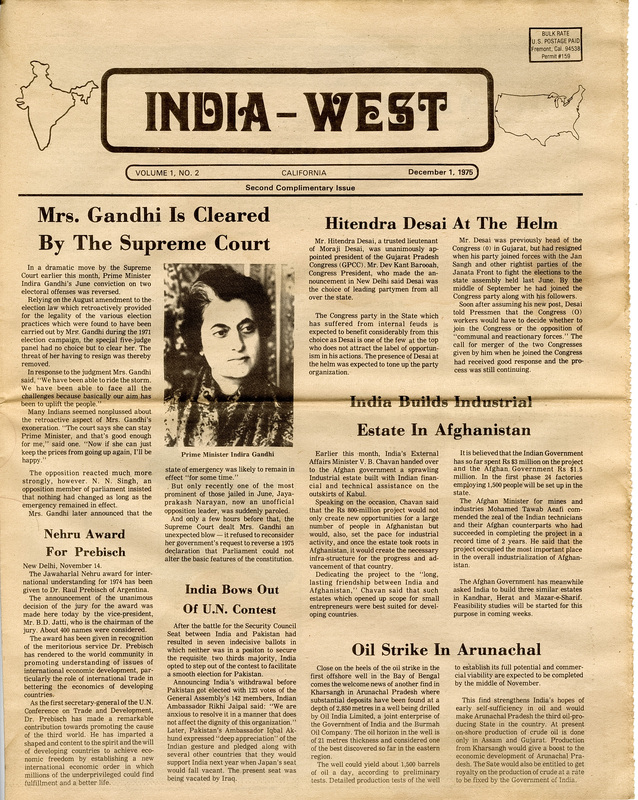
Front page of India-West's second complimentary issue. The issue is dated December 1, 1975 and includes articles on Indian politics, public affairs, and culture.
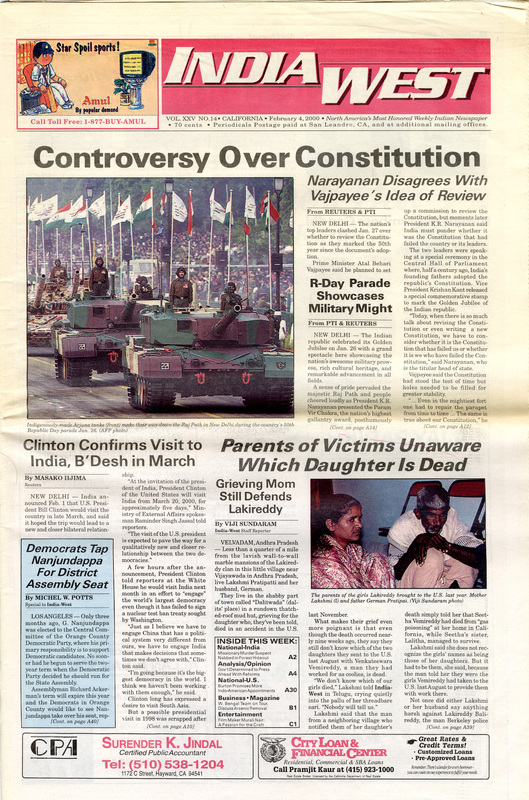
Front page of India-West dated February 4, 2000. The lead headline, 'Controversy Over Constitution,' reports on debate over reviewing India's Constitution. The page also includes reporting by Viji Sundaram. This issue also shows a redesigned masthead.
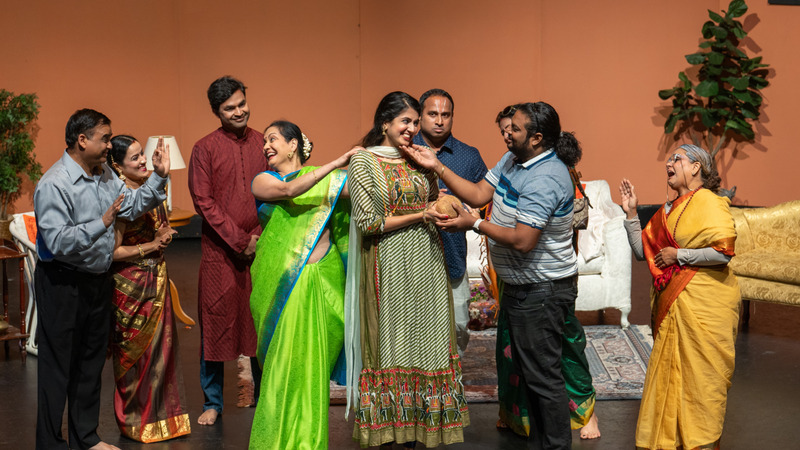
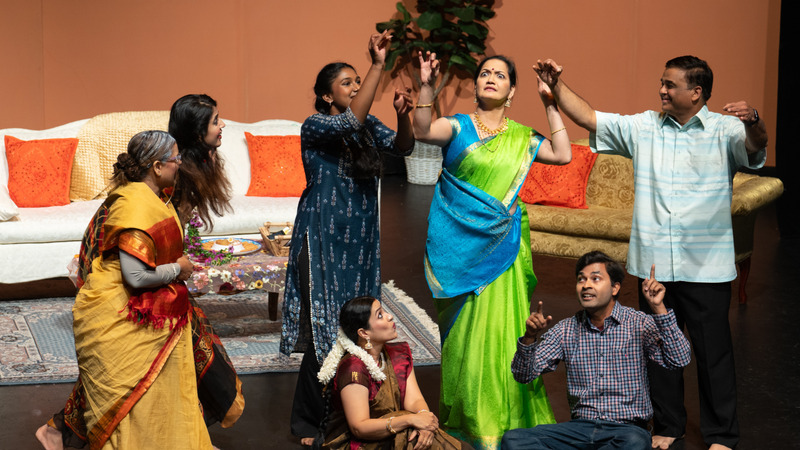
Indian Matchmaking is a hilarious and heartwarming English-language comedy that follows the journey of a young, independent woman as she navigates the world of arranged marriages.
Part-biographical and inspired by true events, the play blends lived experiences with creative storytelling. While certain elements have been adapted for dramatic effect, all characters and names are fictional.
Indian Matchmaking is a hilarious and heartwarming English-language comedy that follows the journey of a young, independent woman as she navigates the world of arranged marriages.
Part-biographical and inspired by true events, the play blends lived experiences with creative storytelling. While certain elements have been adapted for dramatic effect, all characters and names are fictional.
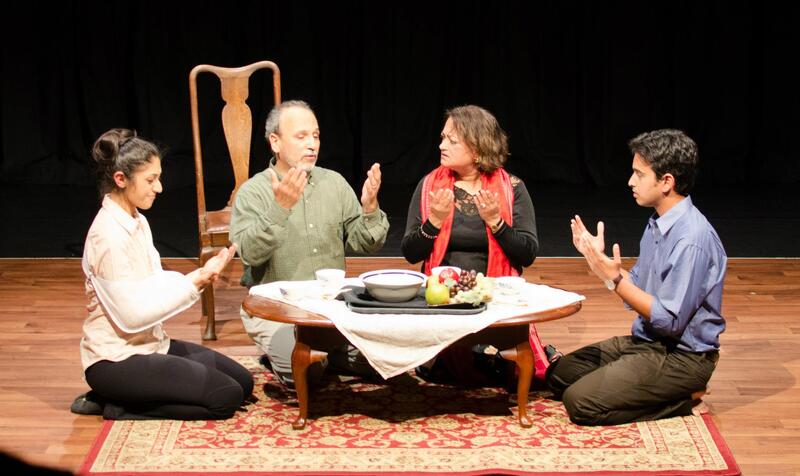
Ranjita Chakravarty appears here in 10 Acrobats in an Amazing Leap of Faith as Mona. Gathered around a low dining table, the characters navigate questions of faith, science, and generational change within a Muslim American household. The intimate domestic staging underscores the play’s exploration of belief systems in transition, particularly in Silicon Valley, where technological modernity and inherited tradition often coexist in tension.
This article by Anahita Mukherji, published in The Wire on January 31, 2022, examines the experiences of Dalit students in U.S. universities who face caste-based discrimination, isolation, and social exclusion within academic and community settings. Drawing on personal testimonies, the piece highlights how caste bias travels with South Asian migrants and manifests in American institutions, calling for greater awareness and policy change.
An investigative feature by Arundhati Parmar published February 13, 2025 on MedCity News. The article examines the acquisition of care-navigation firm Accolade by Transcarent, questioning whether CEO Glen Tullman’s move represents corporate hypocrisy or systemic pressure and highlighting broader ethical tensions in America’s healthcare-technology industry.
In this November 4, 2025 article published on MedCity News, Arundhati Parmar explores entrepreneur Mark Cuban’s critique of employer health plans and PBMs in the U.S. healthcare system. The piece examines whether Cuban’s challenge to self-insured employers is realistic, highlighting conflicting perspectives from industry executives who argue employers lack the purchasing power he claims.
In Jaswandi, Sai Paranjpye crafts a layered examination of marriage, control, and emotional isolation. The play centers on a woman trapped in a deeply restrictive domestic environment dominated by her husband. Within this world, male figures orbit her life in distorted ways, underscoring both her confinement and the imbalance of power that defines her marriage. As the narrative unfolds, the protagonist seeks companionship and recognition beyond the rigid structure imposed upon her. When those attempts are suppressed, her actions become a form of resistance, challenging the authority that governs her life. Rather than presenting a simple moral tale, Jaswandi probes the psychological consequences of patriarchal control and the complexities of agency within constrained spaces.