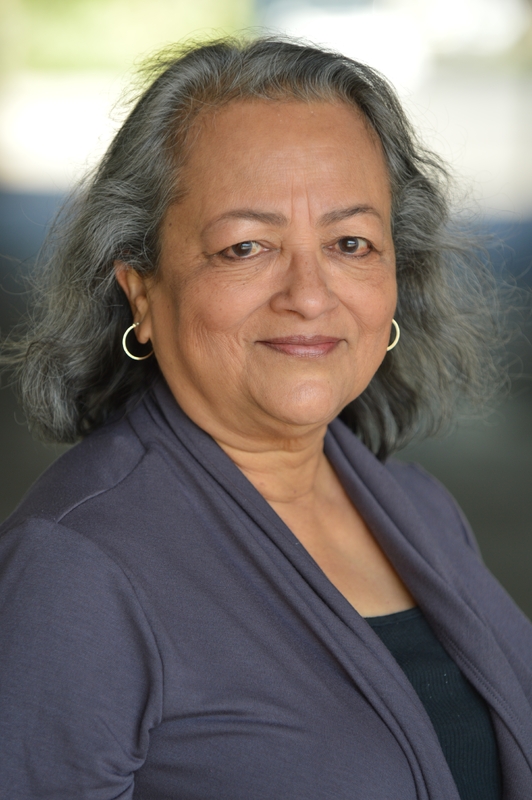
Ranjita Chakravarty wears many hats across different theater productions in the United States. In Silicon Valley's South Asian theater scene, she has been an actor, director, and playwright with equal aplomb. She has recently been a recurring guest artist in the Netflix series, Never Have I Ever.
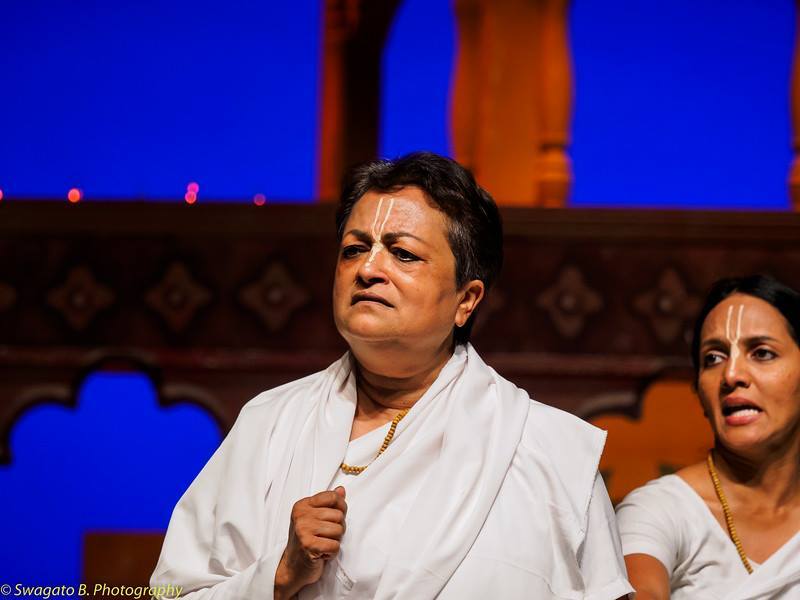
Ranjita Chakravarty portrays Protima Dasi, a widow living in the temple town of Vrindavan. Dressed in austere white, she embodies both spiritual devotion and the social marginalization faced by widows in the holy city. Vrindavan, a Hindi musical produced by Naatak in the Bay Area, explores faith, dignity, and community among women who have been displaced by tradition yet forge resilience through collective ritual and song. The production integrates devotional music, theatrical spectacle, and social commentary to interrogate the tension between sacred space and lived reality.
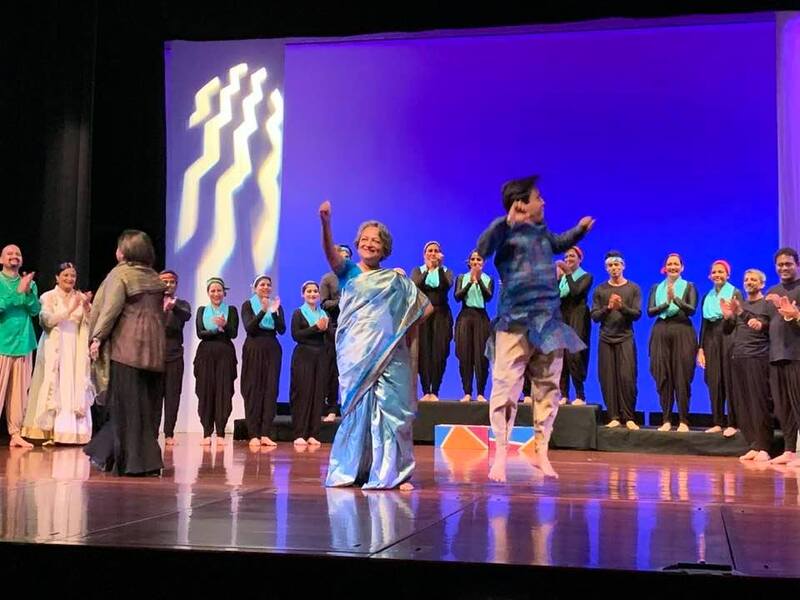
Director Ranjita Chakravarty joins the cast onstage during the curtain call of EnActe Arts’ production of Rabindranath Tagore’s The Kingdom of Cards (Tasher Desh). Originally written in 1933, Tagore’s allegorical satire critiques rigid social systems through a fantastical kingdom governed by rules and ritual. Under Chakravarty’s direction, the production blended movement, ensemble choreography by Sanjib Bhattacharya, and contemporary staging to reintroduce Tagore’s modernist theatrical vision to Bay Area audiences
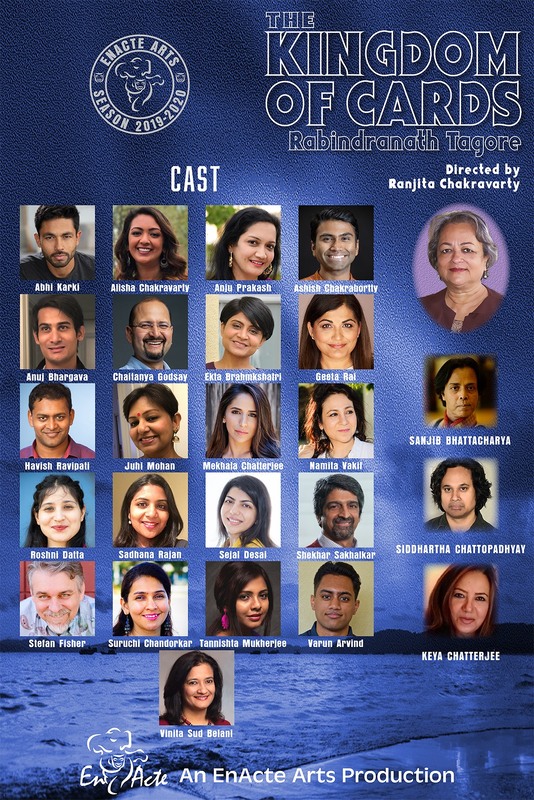
Promotional poster for EnActe Arts’ production of Rabindranath Tagore’s The Kingdom of Cards (Tasher Desh). Directed by Ranjita Chakravarty, the production reimagined Tagore’s satirical allegory of conformity and liberation for contemporary Bay Area audiences. Originally written in 1933, the play critiques rigid social hierarchies through a fantastical kingdom governed by rules and ritual. This staging reflects Silicon Valley’s ongoing engagement with Tagore’s modernist theatrical legacy and the reinterpretation of canonical South Asian texts within diasporic performance practice.
Promotional poster for EnActe Arts’ production of Chitra: The Warrior Princess, Rabindranath Tagore’s lyrical retelling of the Mahabharata story of Chitrangada. The play reimagines the warrior princess who questions conventional femininity, desire, and selfhood. Under the direction of Ranjita Chakravarty, the production foregrounded themes of gender fluidity, agency, and inner transformation, situating Tagore’s early twentieth-century feminist vision within contemporary diasporic discourse. The visual motif of multiple faces reflects the central tension between appearance and authenticity that defines Chitra’s journey.
Poster for the company’s production of Mahasweta Devi’s Mother of 1084, directed by Ranjita Chakravarty. The play traces a mother’s search for truth after her son is killed in political violence, transforming private grief into a broader indictment of state power and social silence.
Ranjita Chakravarty plays Tooranpoi the Malyalee Clown in EnActe Arts’ Bay Area production of Merchant on Venice, Shishir Kurup’s contemporary reimagining of Shakespeare’s The Merchant of Venice. Set in Venice Beach, California, the adaptation reframes the original through a multicultural, diasporic lens, blending Shakespearean verse with South Asian and American cultural references.
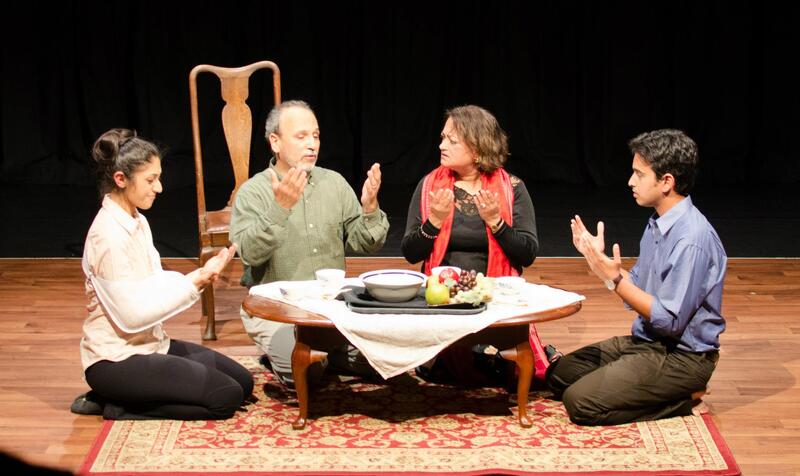
Ranjita Chakravarty appears here in 10 Acrobats in an Amazing Leap of Faith as Mona. Gathered around a low dining table, the characters navigate questions of faith, science, and generational change within a Muslim American household. The intimate domestic staging underscores the play’s exploration of belief systems in transition, particularly in Silicon Valley, where technological modernity and inherited tradition often coexist in tension.
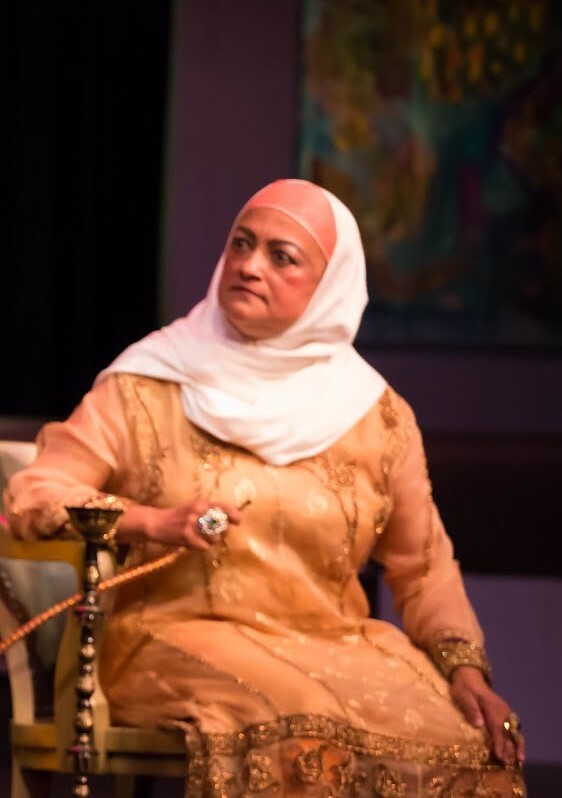
Noor dramatizes the political struggles of the Mughal court during the reign of Emperor Jahangir. The play centers on Mehrunissa Begum, later known as Noor Jehan, and the power negotiations among emperors, princes, Rajahs, and court factions. Ranjita Chakravarty portrays Ruqqaiya Begum, a senior royal figure and mentor within the imperial household.
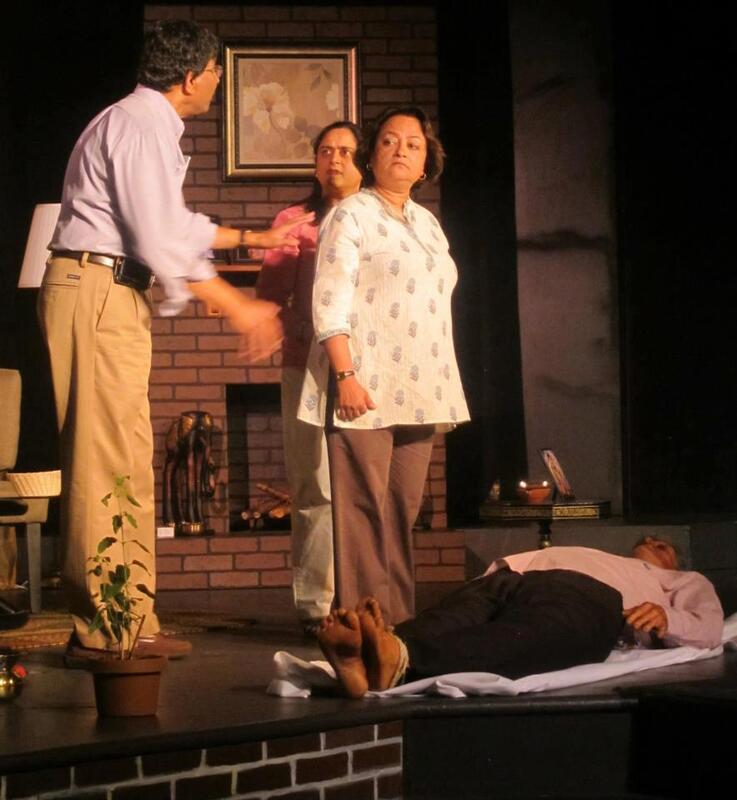
Ranjita Chakravarty appears in Naatak’s Death in San Francisco, an English play written by Sujit Saraf. This was a quirky comedy about what it means for an Indian to die in America with the proper “rites and ceremonies”
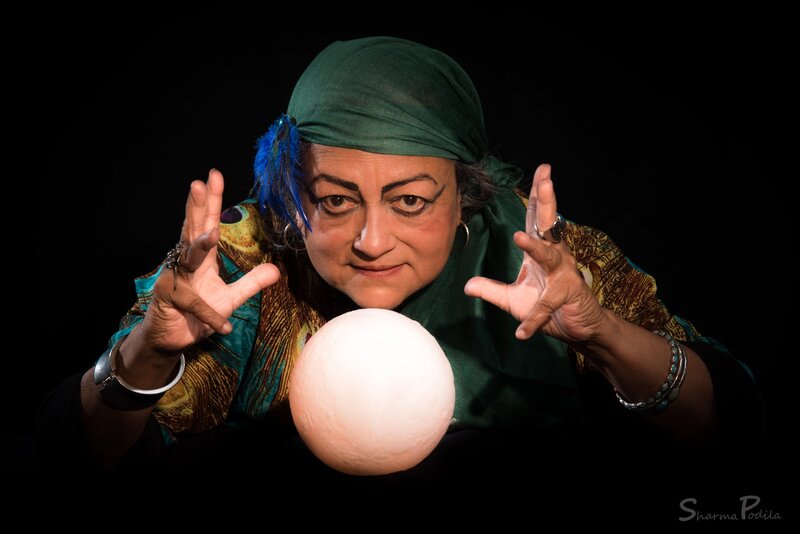
Ranjita Chakravarty plays the psychic in Naatak’s 64th production reimagines Akutagawa’s “In a Grove” in a contemporary Mumbai setting, staged in Hinglish with English supertitles. A psychological “whodunit,” the play unfolds through layered testimonies of a single violent incident, each account reshaping truth through memory, ego, and perception. Incorporating stylized fight choreography, live music, and cinematic flashbacks inspired by Akira Kurosawa’s landmark Japanese film adaptation, the production probes the instability of narrative authority.
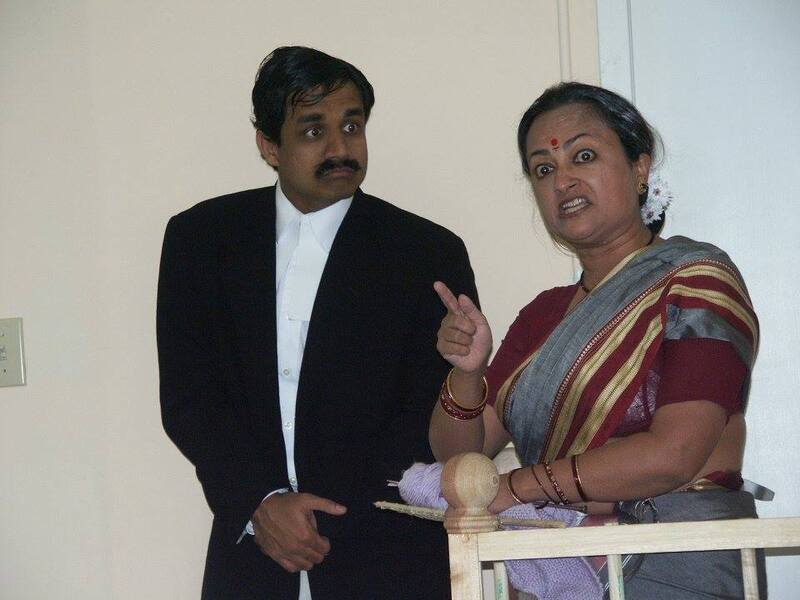
Ranjita Chakravarty plays Mrs. Kashikar in Naatak’s 13th production and its first presentation under the “Naatak in a Room” program. The Hindi play was performed November 16–17 and November 22–24, 2002 at the American India Foundation in Milpitas. The staging seated the audience on three sides, with performers moving among them.
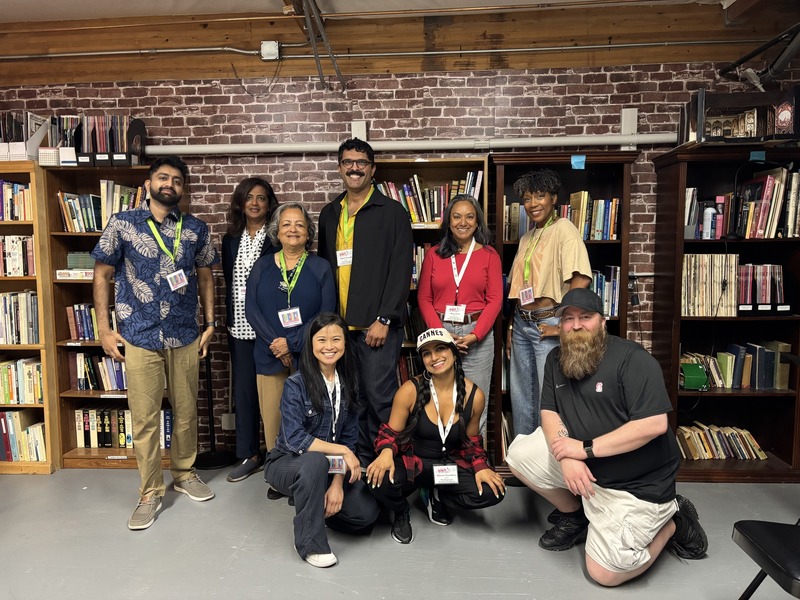
Cast members gather in rehearsal for the 2025 New Works Festival staged reading of The Employee Dharma Handbook. Pictured left to right: Kartic Bhargav, Geetha Reddy, Ranjita Chakravarty, Kunal Prasad, Reena Dutt, and Kathryn Smith McGlynn. Bottom row: Karen Law, Nikita Chaudhry, and Justin Buchs. Developed in a collaborative rehearsal setting, the reading brought together performers from diverse backgrounds to explore Reddy’s Silicon Valley–set drama. Through humor and tension, the play interrogates workplace bias, immigrant identity, and competing interpretations of professional and personal duty.
A post-show image of the cast and creative team of a dance-theatre performance, Raabdta, which is a dance-theatre production about discovering a deep, emotional connection to one’s home, homeland and cultural roots through nostalgic traditions and heritage.
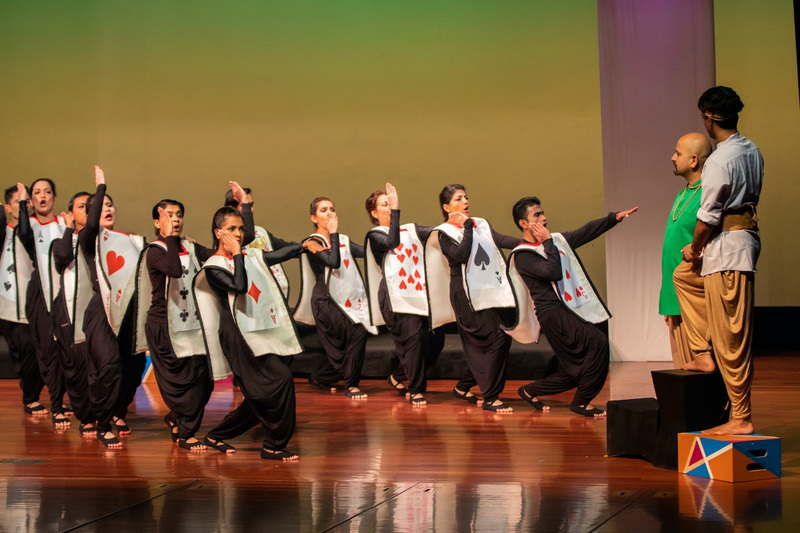
Written by Rabindranath Tagore, explores the dehumanizing effects of fascism and how rebellions begin. The Wanderer encourages the army of cards to find their third dimension.
Written by Rabindranath Tagore, explores the dehumanizing effects of fascism and how rebellions begin. The Wanderer encourages the army of cards to find their third dimension.
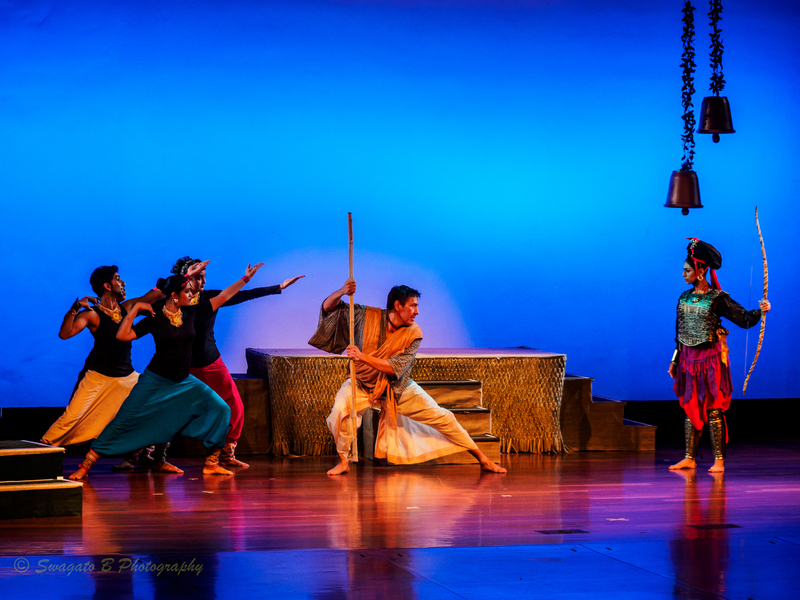
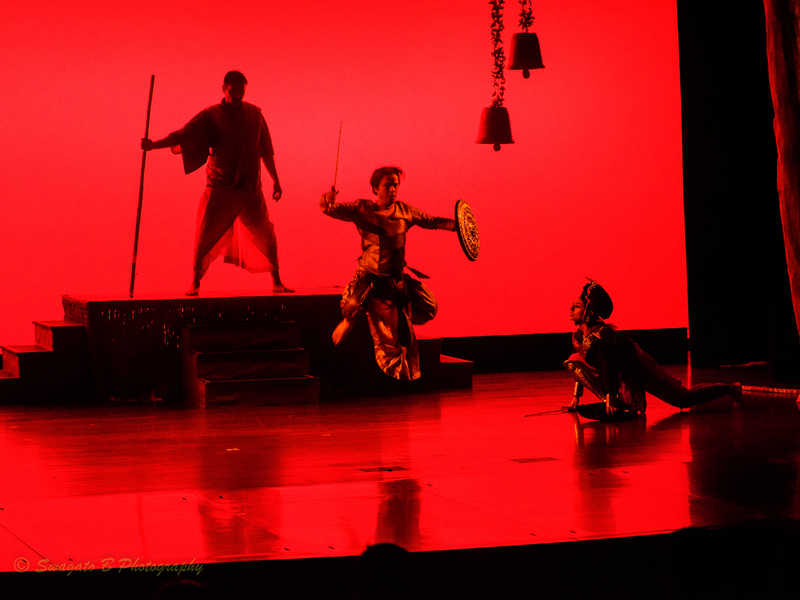
An episode from The Mahabharata: Born to a king promised on male heirs and raised as a male warrior, a chance meeting with Arjuna the legendary Pandava warrior invokes passion in Chitra's (Chitrangada) heart. The Pandava Warrior Arjun encounters the Warrior Princess in training.