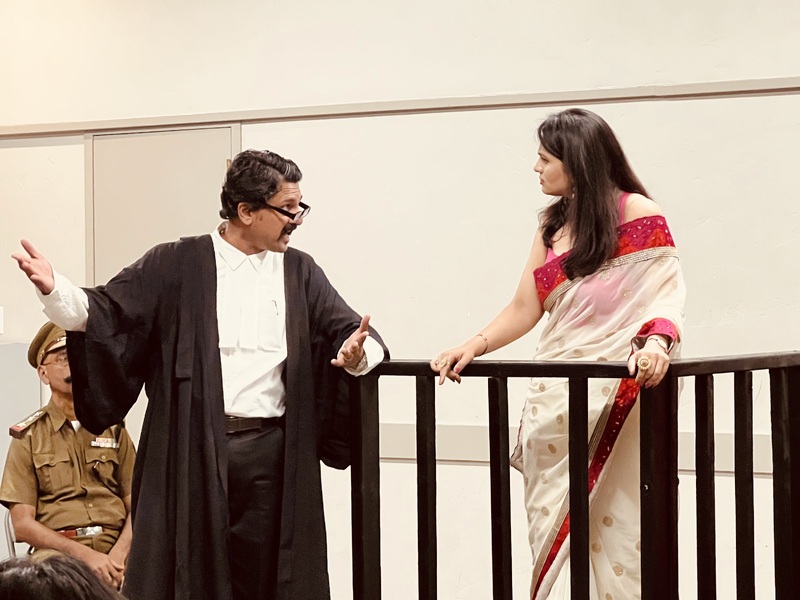
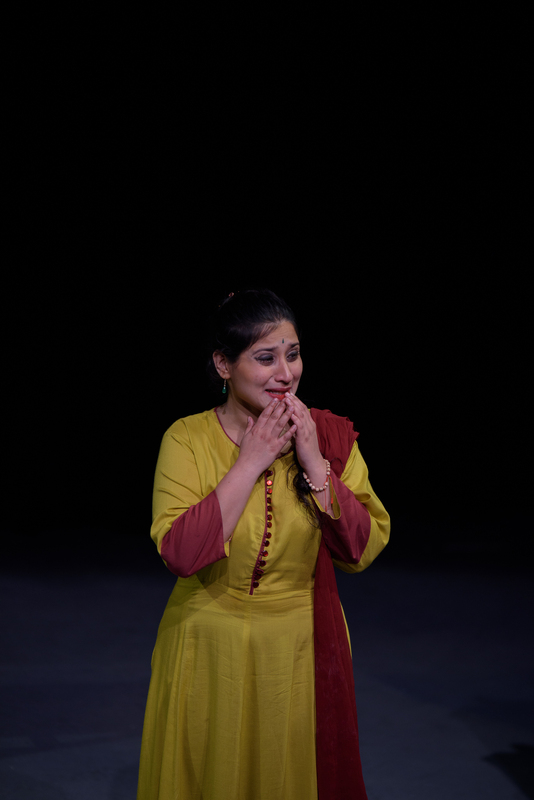
Ratra Sola January Chi reinterpreted the courtroom drama The Night of January 16th for Marathi audiences under its Sameep intimate theater initiative. The play examines the suspicious death of a powerful industrialist and the trial that ensnares his mistress, who was present at the penthouse where the incident occurred. As testimony unfolds, the narrative probes ambiguity, motive, and the instability of truth. Presented in a community room setting at Campbell Community Center, Sameep deliberately broke the traditional proscenium distance between actors and audience. With spectators seated only feet away and the Jury selected from the attendees, the courtroom exchanges became immediate and immersive, transforming viewers into near-participants in the judicial proceedings. This production exemplifies CalAA’s experimentation with spatial form while sustaining Marathi-language dramatic tradition in Silicon Valley.
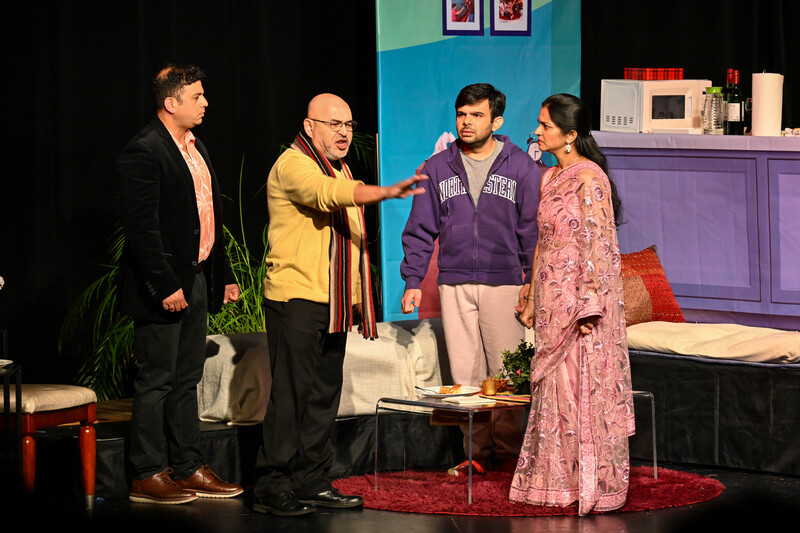
Red Wine White Wine marked a notable engagement with contemporary social themes within Marathi-language theater. Adapted by Vikram Watave from Mike Bartlett’s West End and Off-Broadway play Cock, the work centers on a same-sex couple navigating family expectations, generational tension, and evolving definitions of identity. Balancing humor with emotional complexity, the play situates questions of acceptance and authenticity within a domestic setting. Its modern subject matter and experimental tonal shifts reflect CalAA’s willingness to engage themes that resonate strongly with younger and more diverse audiences in Silicon Valley. By presenting Red Wine White Wine, CalAA expanded the thematic scope of its repertoire, demonstrating how Marathi theater continues to evolve alongside changing social realities.
The play anticipates contemporary concerns with the use and abuse of tremendous technological power. In a musical fantasy, 'Robotana' shows powerful people grabbing wealth and resources away from poorer people who want to use a robot for good but fall short of achievement owing to lack of resources.
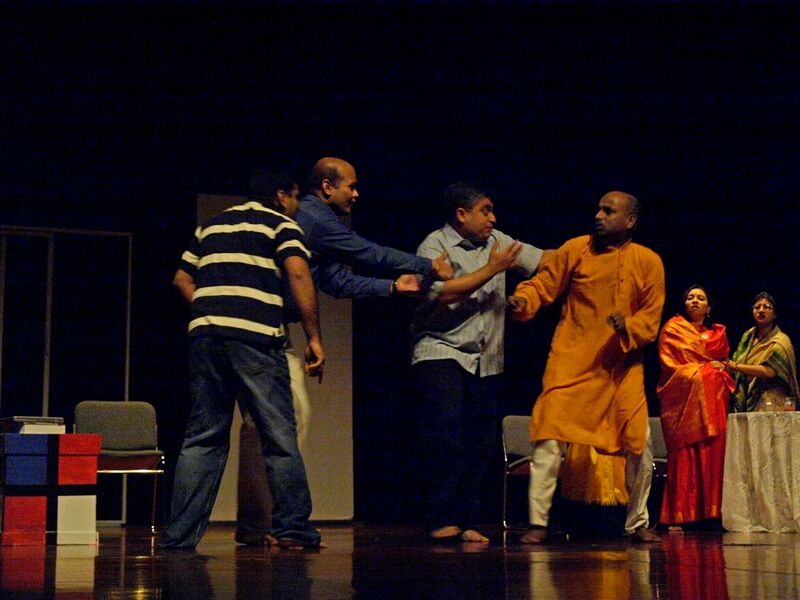
Parents of an Indian American soldier deployed in an ongoing war clash with the heady idealism of an army officer visiting from India who supports the war. The father of the soldier knows his son has fallen in service but has kept the news form his wife who will be devastated. The father's arguments with the army officer from India reach an untenable moment, to the dismay of the soldeir's unsuspecting mother and other guests, but an arrival at the door stuns everyone.
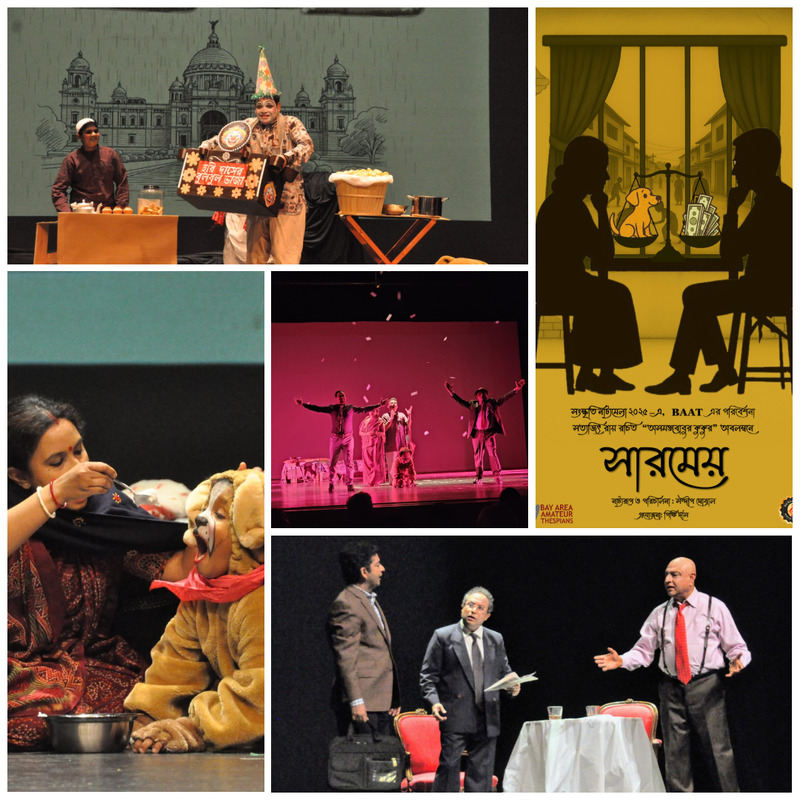
Presented in 2025, Saromeyo is BAAT’s theatrical homage to the imaginative storytelling of filmmaker and writer Satyajit Ray. Blending elements of fantasy, satire, and social commentary, the production creates a stylized theatrical world where everyday encounters take on allegorical meaning. Through ensemble performance and visual storytelling, Saromeyo explores themes of empathy, social hierarchy, and moral responsibility. The production reflects BAAT’s ongoing engagement with Ray-inspired narratives and introduces Bay Area audiences to theatrical interpretations of Bengali literary and cinematic traditions.
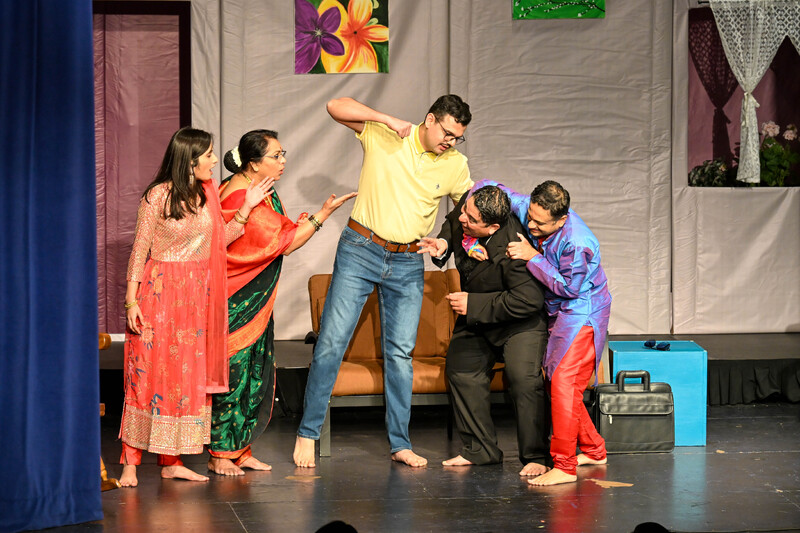
Sasu Majhi Dhaasu embraced high-energy farce and exaggerated domestic comedy. The plot centers on a financially desperate man who devises a scheme to extract a large sum of money from his formidable mother-in-law. What follows is a cascade of mistaken identities, misunderstandings, disguises, and escalating deception.
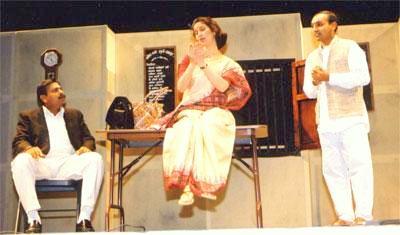
Staged in 2003, Shantata! Court Chalu Aahe was CalAA’s first major full-length production following its founding in 2002, when the organization had initially presented shorter one-act plays. This production marked a defining moment in CalAA’s transition from a newly formed cultural collective to a serious Marathi-language theater institution in Silicon Valley.
Written by acclaimed Indian playwright Vijay Tendulkar, the play centers on a traveling amateur theater group that stages a mock trial as part of its rehearsal process. What begins as theatrical improvisation, gradually reveals deeply rooted social hierarchies, misogyny, and moral hypocrisy. Tendulkar’s work is a cornerstone of modern Indian drama, known for its sharp critique of social conventions and its unflinching portrayal of power dynamics.
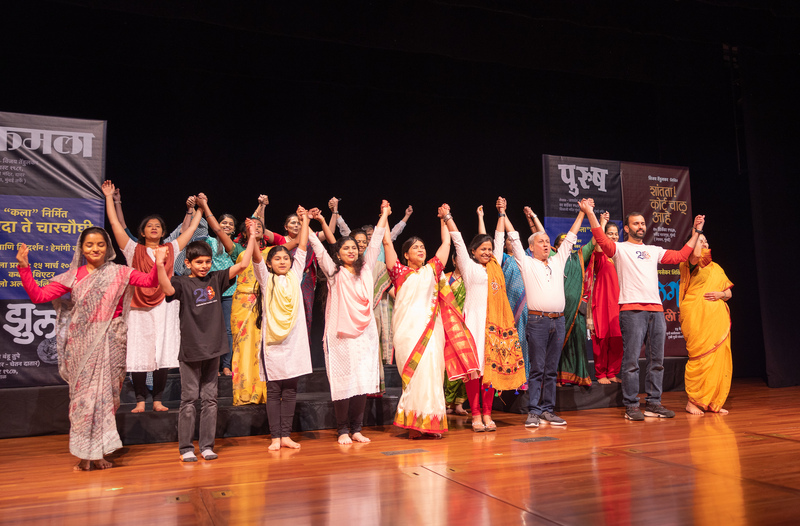
To mark CalAA’s twentieth anniversary, Sharda Te Char Choughi was conceived as a curated journey through the evolution of Marathi theater. The production featured staged excerpts spanning from Sharda, a landmark nineteenth-century social reform drama, to the modern play Char Choughi, alongside selections from works such as Kamala, Purush, and Shantata! Court Chalu Aahe, CalAA’s first major production in 2003. By juxtaposing canonical texts across eras, the program traced shifts in dramaturgy, performance style, and especially the representation of women on the Marathi stage.
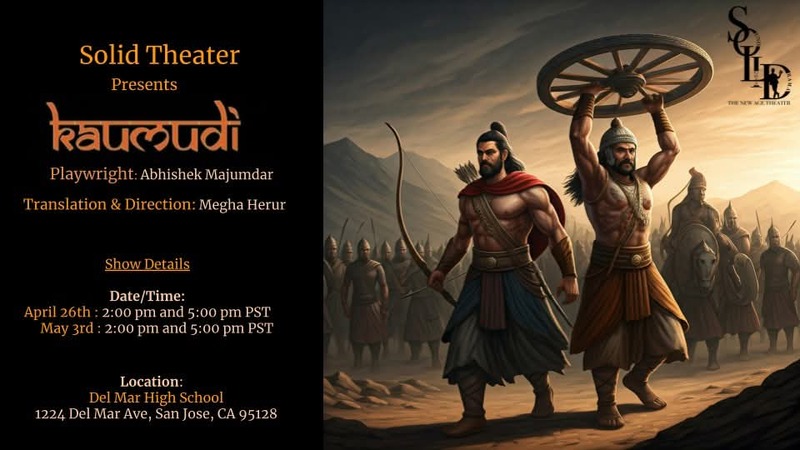
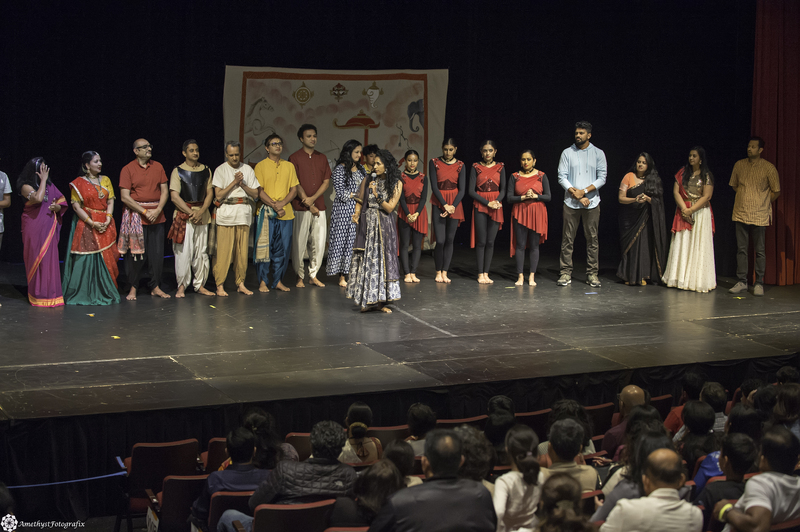
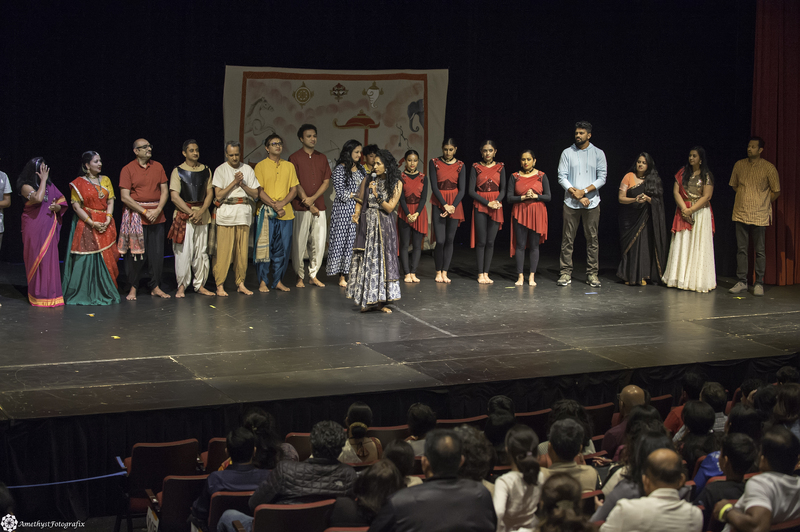
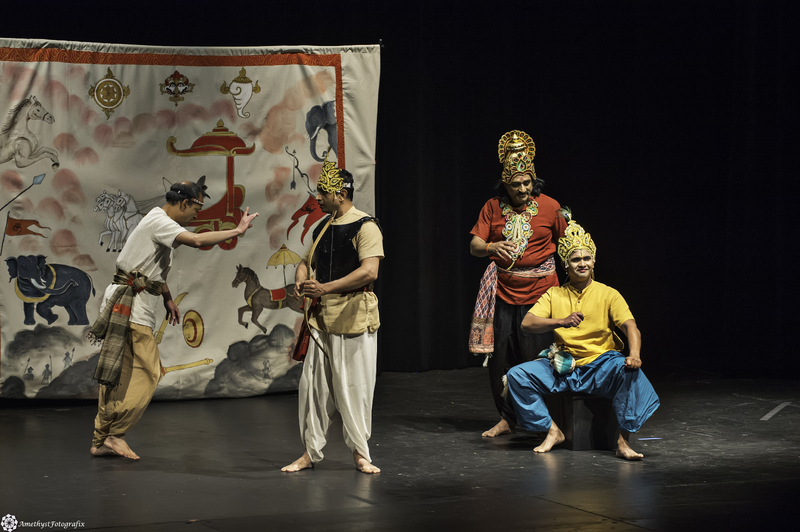
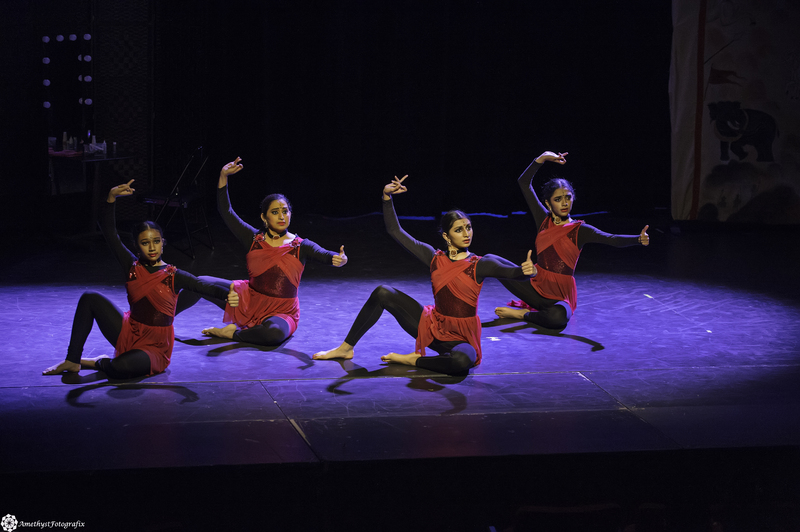
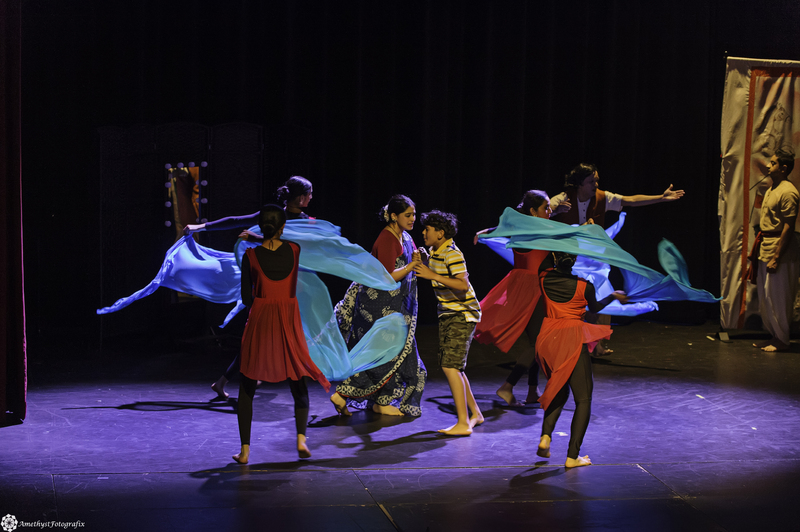
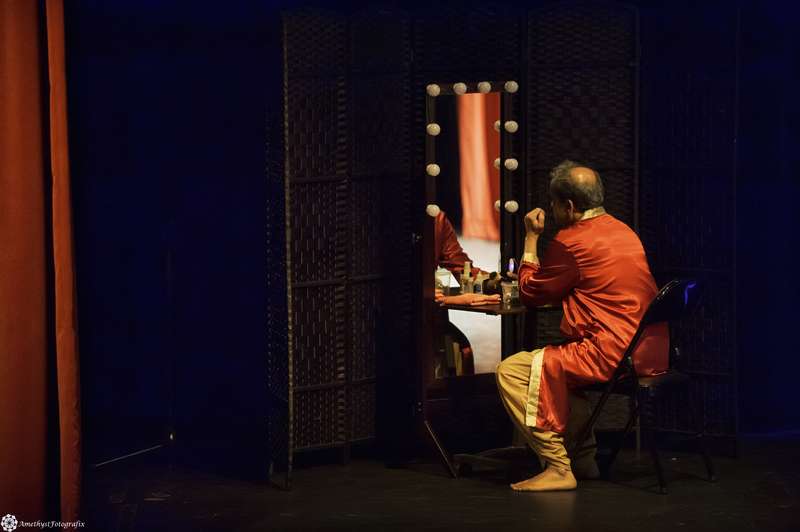
Kaumudi explores the intersections of performance, mythology, and human relationships through the story of Satyasheel, an aging and blind theatre actor known for portraying Ekalavya from the Mahabharata. As he prepares for his final performance, he is forced to collaborate with Paritosh, a younger actor set to replace him, with whom he shares a strained and unresolved past. The play draws parallels between their off-stage tensions and mythological narratives of Ekalavya and Abhimanyu, examining themes of sacrifice, legacy, and artistic truth. Influenced by literary and philosophical texts, the production reflects on the nature of theatre itself, questioning whether art reveals truth or constructs illusion.
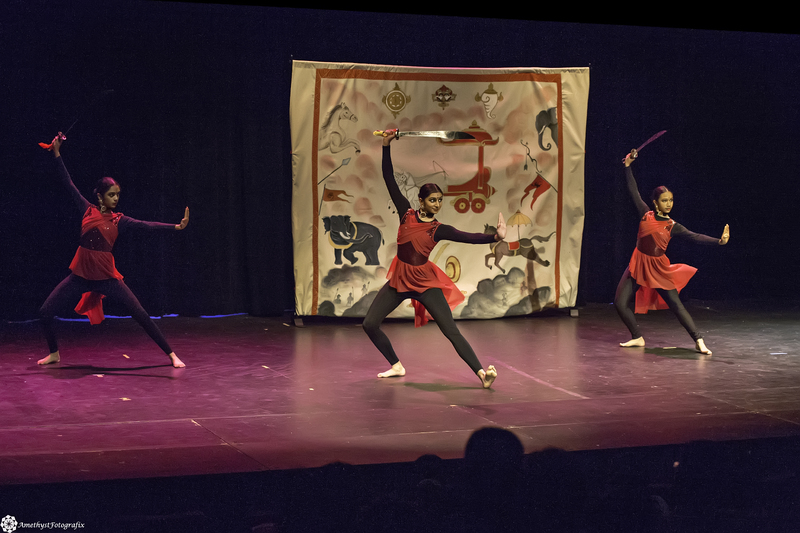
Ensemble movement sequence from Kaumudi (SoLiD Theater, 2025), featuring stylized choreography that contributes to the production’s layered visual storytelling.
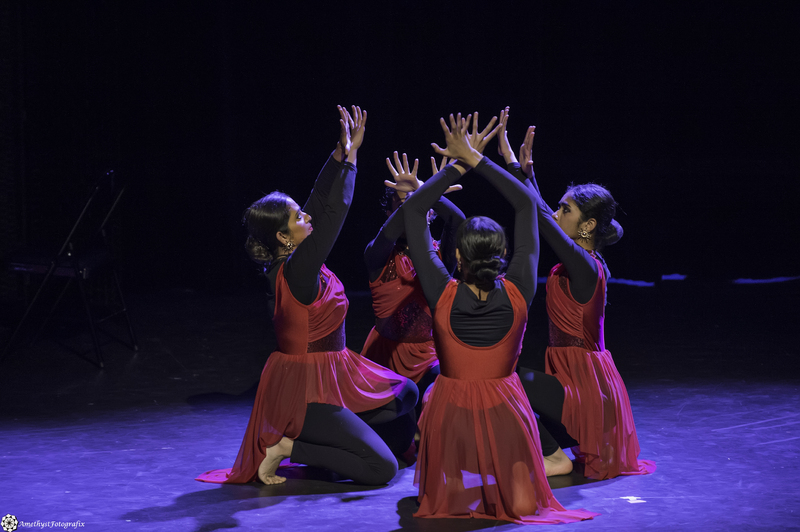
Ensemble performers execute coordinated gestures in a choreographed sequence from Kaumudi, reflecting the production’s integration of theatrical and dance vocabularies.
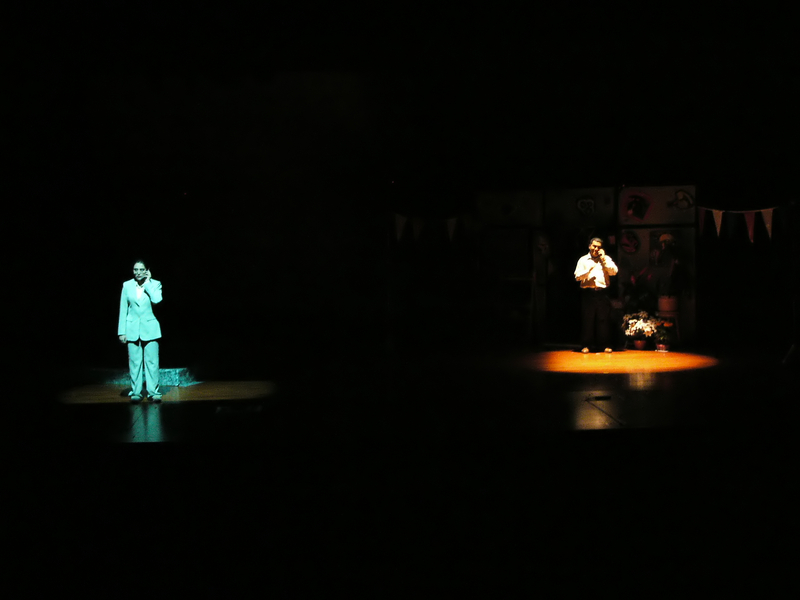
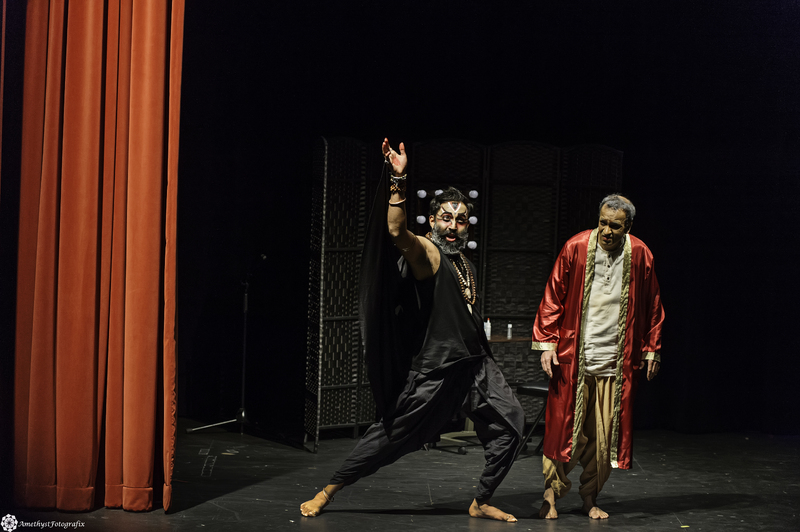
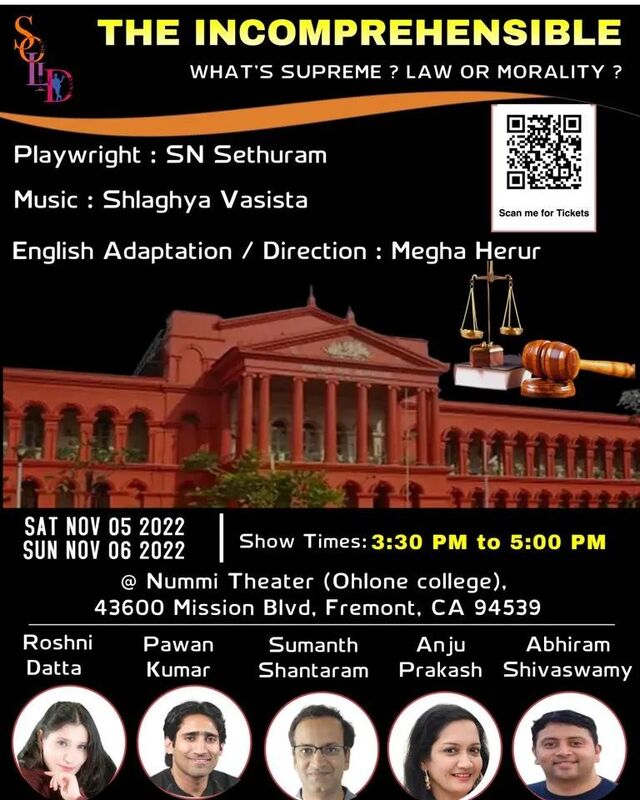
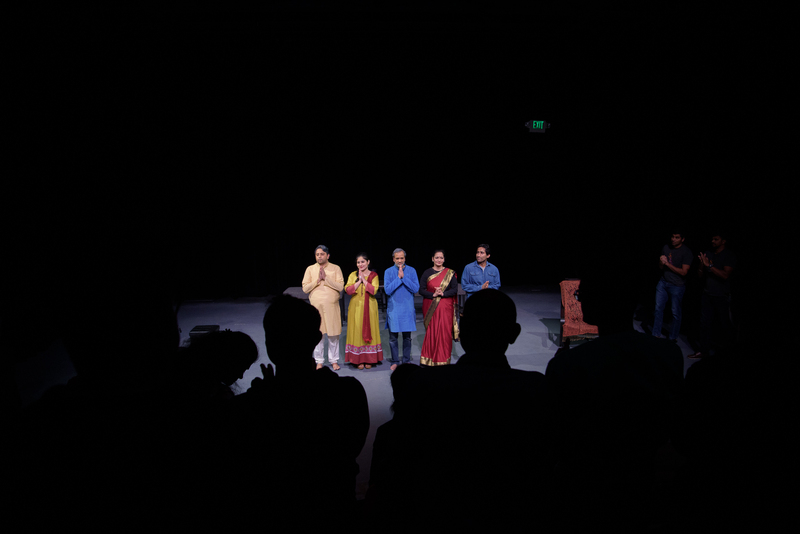
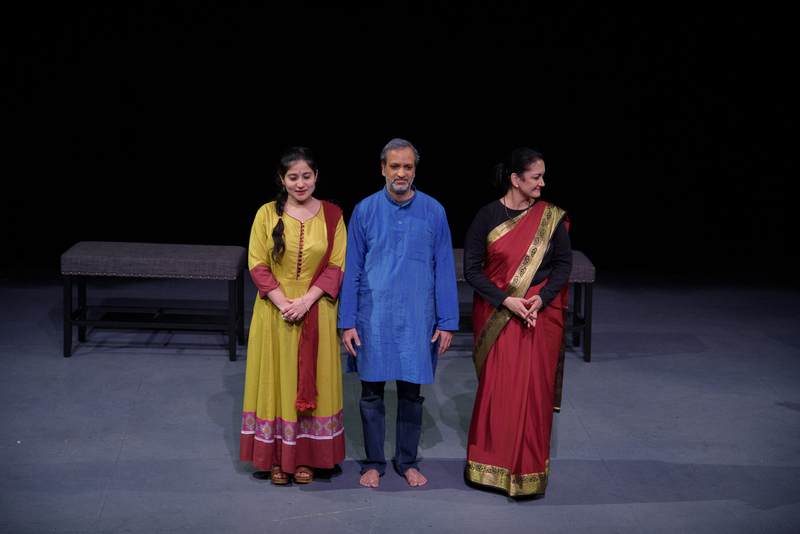
The Incomprehensible is an English adaptation of the Kannada play Atheetha, examining the blurred boundaries between justice and morality. The production interrogates how legal systems define justice while moral judgment remains shaped by faith, perception, and individual conscience. Through a series of reflective and philosophical moments, the play challenges audiences to reconsider societal norms, personal freedom, and the meaning of being “civilized,” positioning theatre as a space for ethical inquiry and self-reflection.
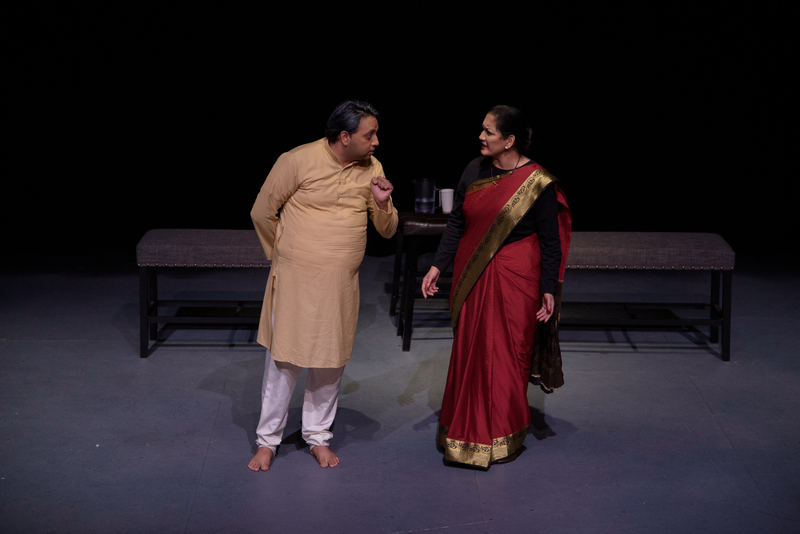
A scene from The Incomprehensible featuring two performers in a moment of dialogue, reflecting the play’s engagement with interpersonal conflict and moral questioning.