Party brought Mahesh Elkunchwar’s incisive social drama to Bay Area audiences. The play unfolds over the course of an elite urban gathering, where intellectuals, artists, and cultural figures assemble for an evening of conversation. Beneath the surface civility, tensions emerge around ideology, privilege, artistic responsibility, and moral complicity.
Pehli Pehli Maruti is a Naatak original inspired by a little-known story from 1983, when India’s first Maruti-800 was officially presented to a government employee, while an earlier car had already been privately delivered to a Delhi shopkeeper. The play reimagines this “first” car as a disruptive presence within an ordinary neighborhood, exploring how a single object can reshape social dynamics, aspiration, and memory.
Blending humor with social observation, the production examines middle-class life at a moment of technological and cultural transition in late twentieth-century India. This image captures the ceremonial arrival of the Maruti, adorned with garlands and treated as an object of celebration and reverence, reflecting its symbolic role as both aspiration and spectacle within the community.
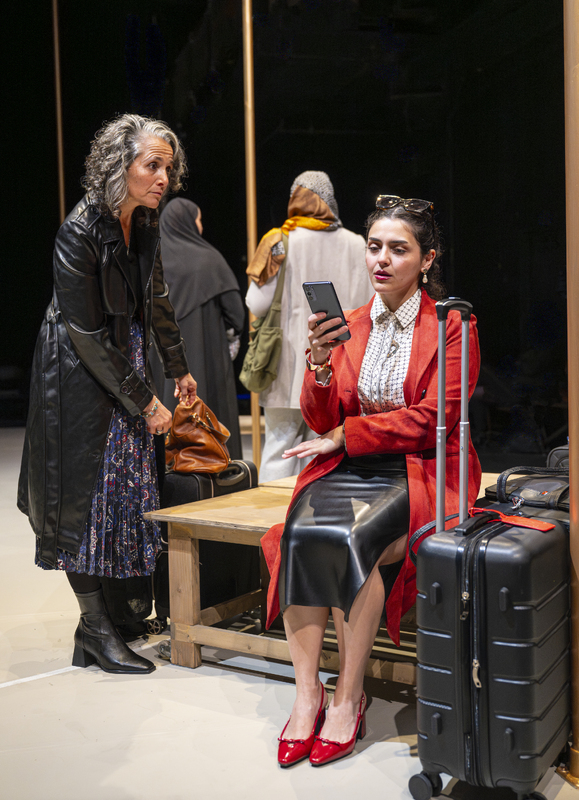
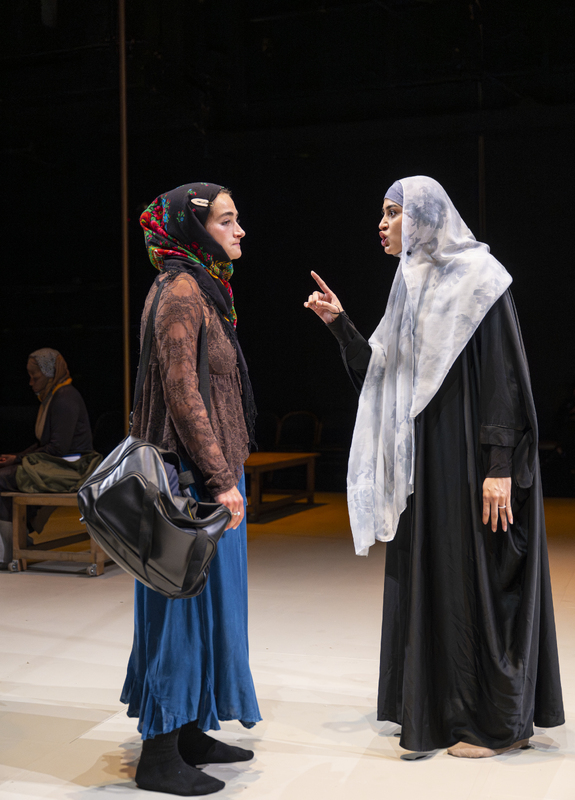
Nora el Samahy (Noor, left) and Fatemeh Mehraban (Maryam) in Pilgrimage. The world premiere examines intergenerational ties and spiritual belonging during Hajj. Presented by Golden Thread Productions and Z Space at Z Space’s Steindler Stage
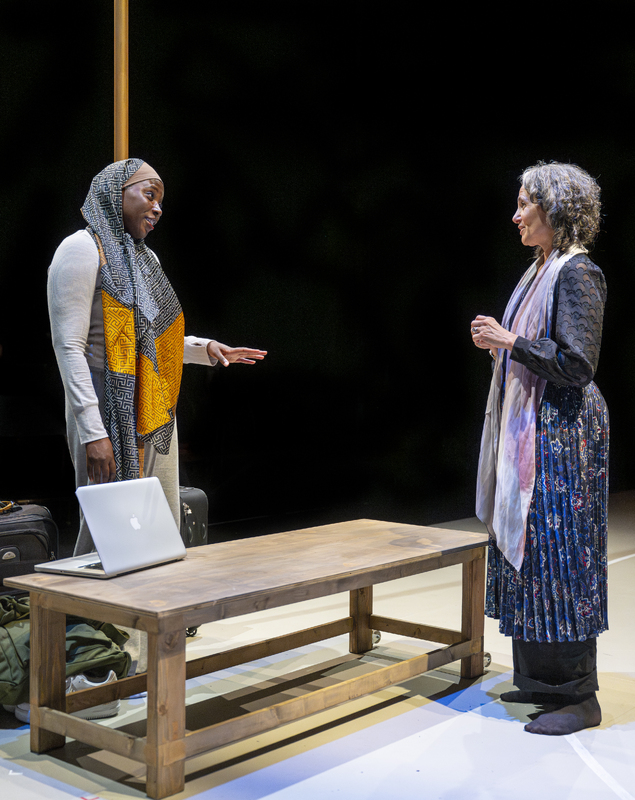
Nora el Samahy (Noor, right) and Jeunée Simon (Fatima) in Pilgrimage. Muslim women’s voices are foregrounded in this ensemble journey to Mecca. Presented by Golden Thread Productions and Z Space at Z Space’s Steindler Stage.
Isabel Alamin (Sosan, left) and Leda Rasooli (Nadia) in Pilgrimage. Estranged sisters navigate faith and reconciliation on pilgrimage. Presented by Golden Thread Productions and Z Space at Z Space’s Steindler Stage, Oct 24–Nov 9, 2025. Directed by Michelle Talgarow.
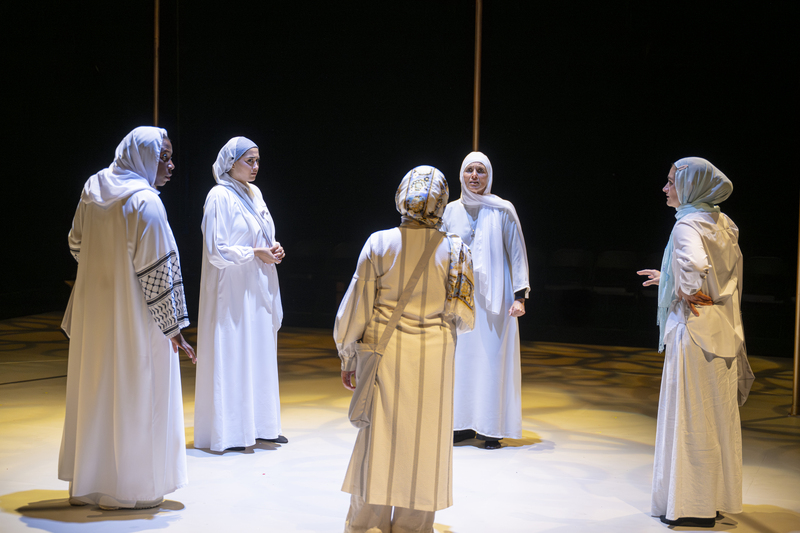
Cast of Pilgrimage (left to right: Jeunée Simon, Leda Rasooli, Fatemeh Mehraban, Nora el Samahy, Isabel Alamin). The ensemble highlights lived experiences of Muslim womxn in diaspora. Presented by Golden Thread Productions and Z Space at Z Space’s Steindler Stage, Oct 24–Nov 9, 2025. Directed by Michelle Talgarow.
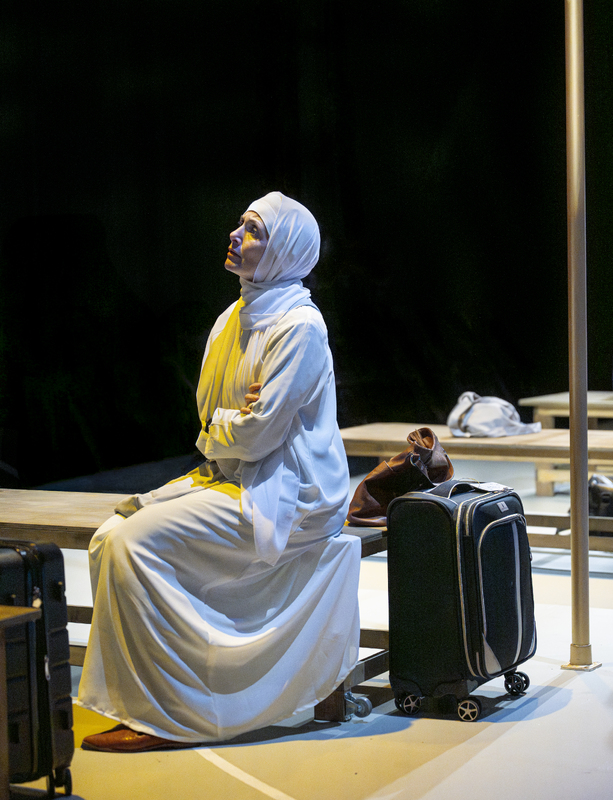
Nora el Samahy (Noor) in Pilgrimage. Noor’s journey fulfills a sister’s final wish through sacred ritual. Presented by Golden Thread Productions and Z Space at Z Space’s Steindler Stage, Oct 24–Nov 9, 2025. Directed by Michelle Talgarow.
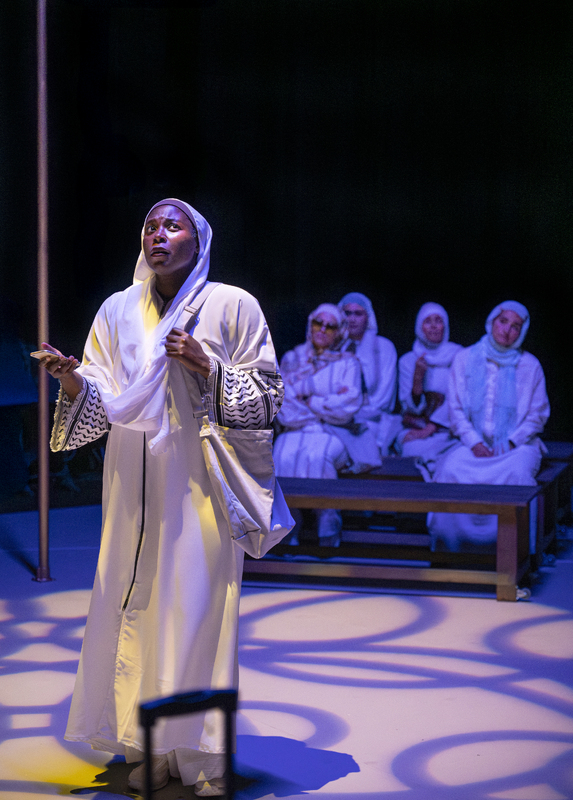
Jeunée Simon (Fatima) in Pilgrimage. A convert seeking belonging joins fellow pilgrims on a transformative journey. Presented by Golden Thread Productions and Z Space at Z Space’s Steindler Stage, Oct 24–Nov 9, 2025. Directed by Michelle Talgarow.
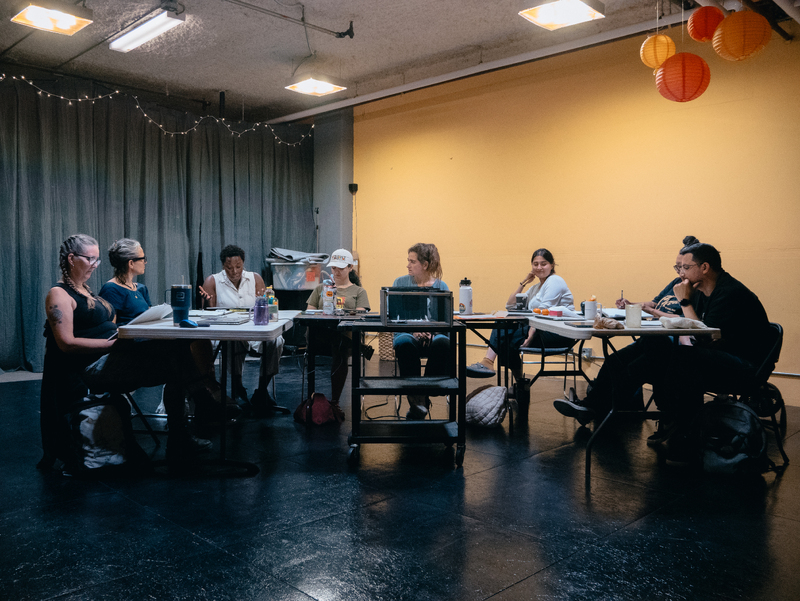
Cast members during a table read for Pilgrimage. Early rehearsals centered on collaborative script exploration and ensemble development prior to the World Premiere in fall of 2025, a Co-production between Golden Thread Productions and Z Space.
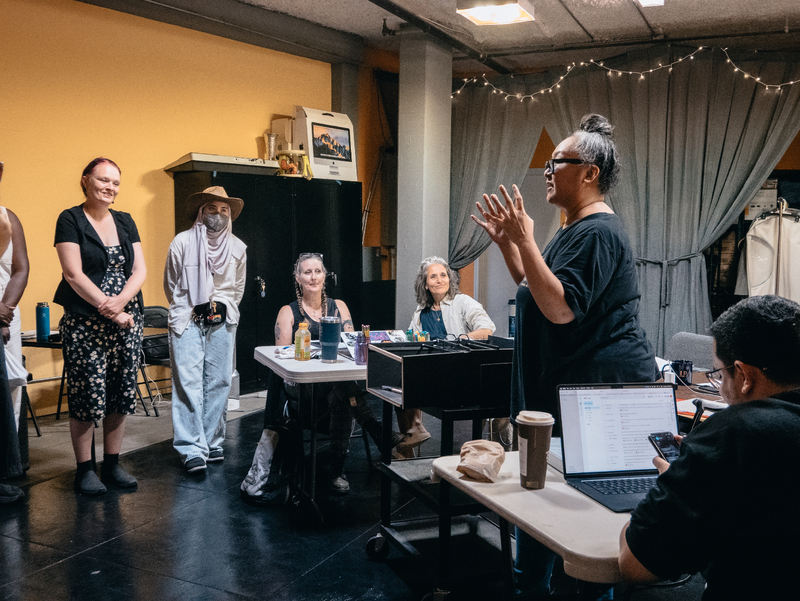
Director Michelle Talgarow works with performers during rehearsal for Pilgrimage. Golden Thread Productions’ rehearsal rooms function as spaces of dialogue, interpretation, and cultural grounding.
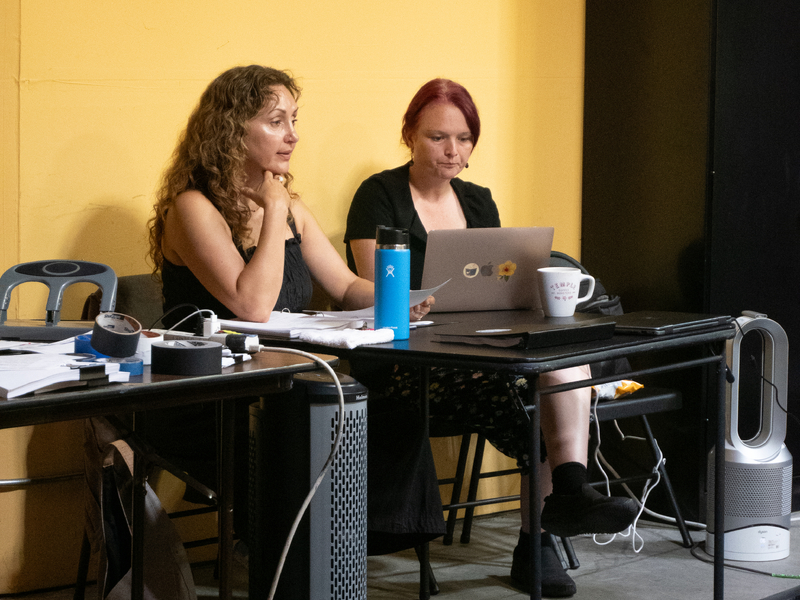
Playwrights Humaira Ghilzai and Bridgette Dutta Portman (left to right) at the first rehearsal. With the world premiere of Pilgrimage at Golden Thread Productions and Z Space, Humaira Ghilzai is the first female playwright of Afghan descent to receive a professional production in the U.S.
Cover of the official digital playbill for the world premiere of Pilgrimage. Featuring layered silhouette artwork and bold typography, the design reflects the play’s themes of journey, sisterhood, and spiritual reckoning. The playbill documents the production’s creative team, cast, developmental history, and Golden Thread’s 2025 Season of Solidarity.
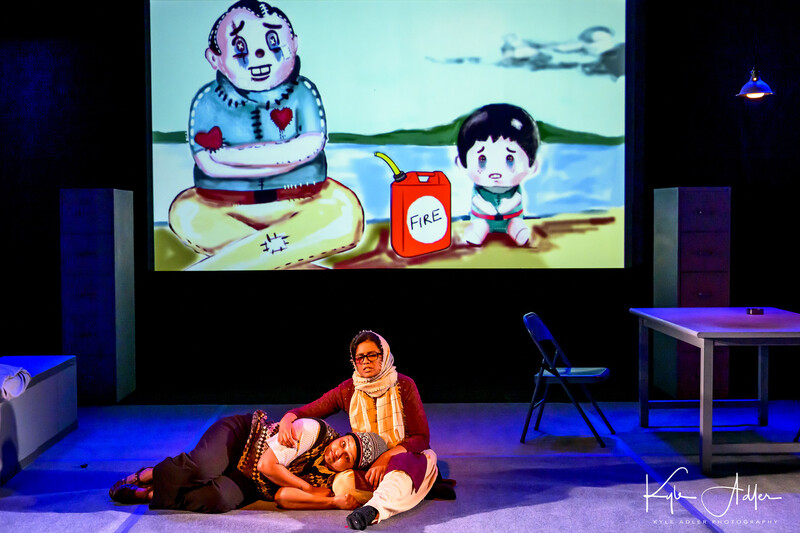
The Pillowman is a dark psychological drama centered on a writer interrogated about a series of murders that resemble the violent stories he has written. The play explores the relationship between storytelling and reality, examining themes of authorship, censorship, trauma, and the moral responsibility of the artist.Naatak’s production uses projection and visual storytelling to stage the writer’s fictional narratives alongside the unfolding action.
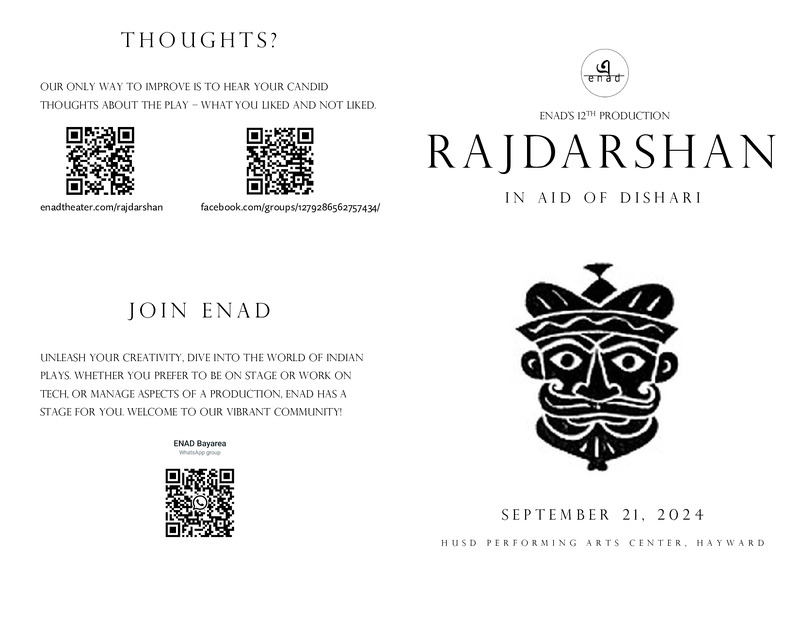
The play is set in a semi-fictional kingdom of India in the Middle Ages, before the Maurya period. A poor Brahmin (priestly caste) man's soul gets transported into the physical body of a king. The havoc that ensues, owing to the conflicts between the mind of a poor man and the body of a rich man, helps the play question social status, class, privilege, and cultural background.
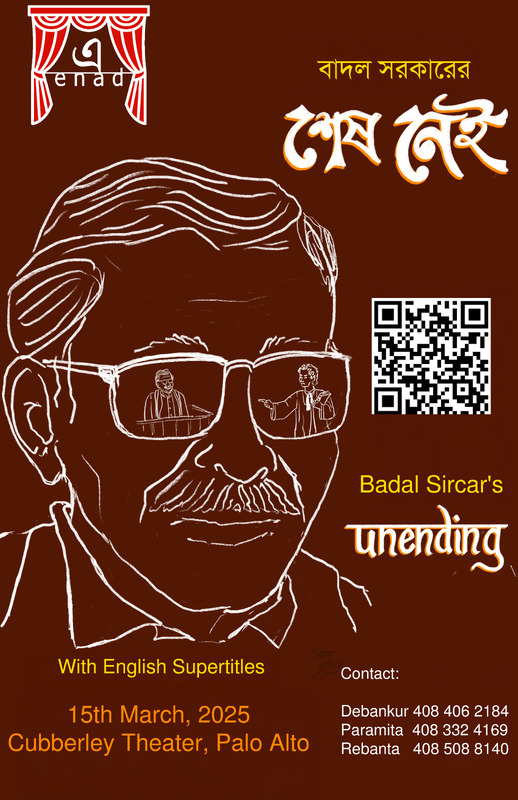
Marking Badal Sircar's birth centennary, 'Shesh Nei' stages the tension between the middle class's complacency and the unending cycle of triumphs and dejections, orchestrated by unfulfilled expectations. The protagonist is blamed by many around him for not fulfilling their expectations and then each accuser stands trial, as well, for failing someone else.
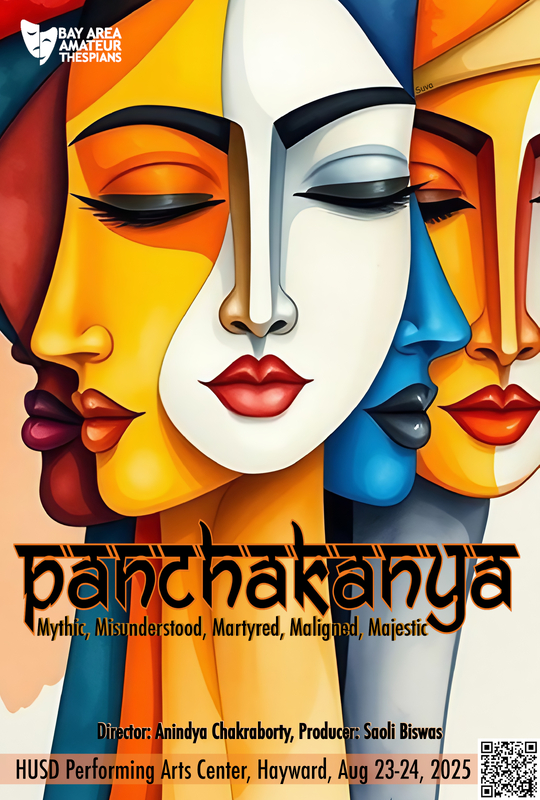
Promotional poster for Panchakanya, written by Anindya Chakraborty and Sayoni Roy, reimagines five women from the Ramayana and Mahabharata: Mandodari, Ahalya, Tara, Kunti, and Draupadi. Traditionally invoked together in Sanskrit verse as figures of moral complexity, the “Panchakanyas” occupy distinctive and often paradoxical roles within South Asian epic literature. BAAT’s production approached these characters through five distinct performance styles, incorporating music and choreography to explore questions of power, gender, and moral ambiguity. Rather than retelling familiar episodes, the play reinterprets these figures within a contemporary theatrical framework, inviting audiences to reconsider inherited narratives from the epics
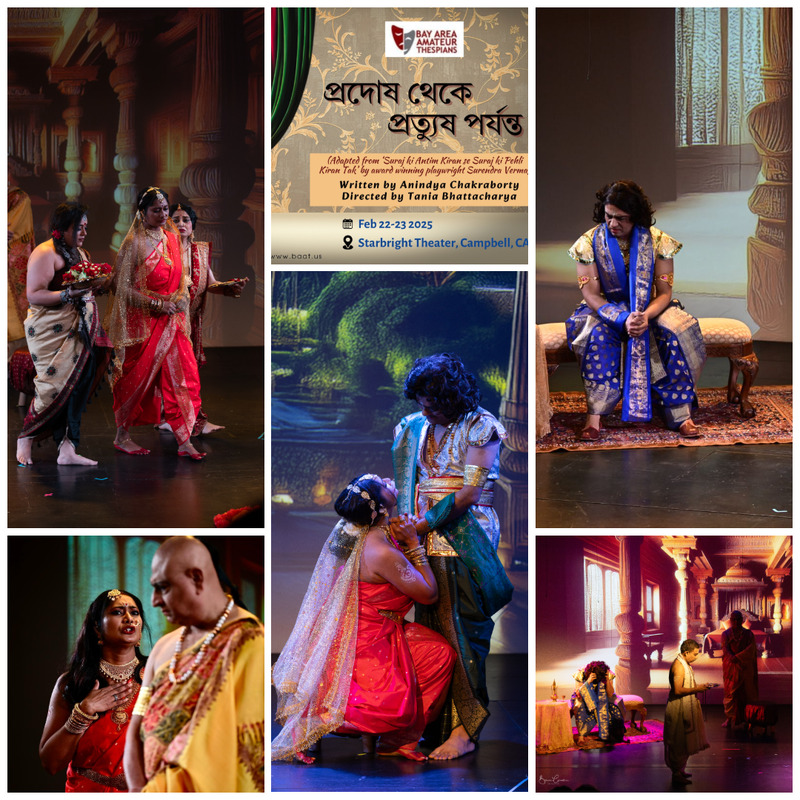
Part of BAAT’s February 2025 Bengali-language double feature, Prodosh Theke Protush Porjonto, written by Anindya Chakraborty and directed by Tania Bhattacharya, is adapted from Surendra Verma’s acclaimed Hindi play Suraj Ki Antim Kiran se Suraj Ki Pehli Kiran Tak. Set in the 10th-century kingdom of Malla, the drama explores questions of power, duty, and moral responsibility through a series of events unfolding between sunset and dawn.
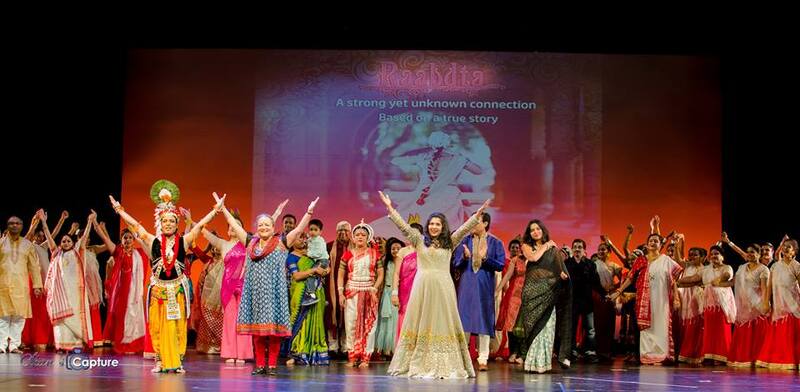
A post-show image of the cast and creative team of a dance-theatre performance, Raabdta, which is a dance-theatre production about discovering a deep, emotional connection to one’s home, homeland and cultural roots through nostalgic traditions and heritage.
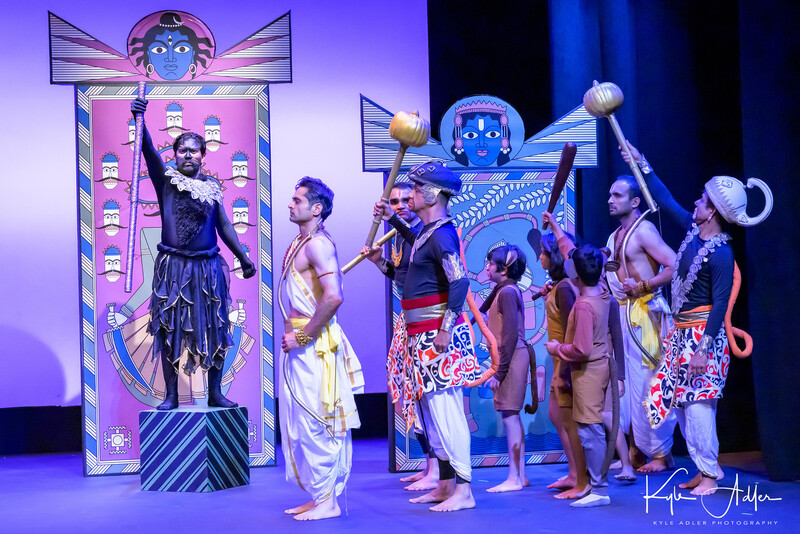
Ramayan marks Naatak’s 100th production, presenting a stage adaptation of one of South Asia’s most enduring epic narratives. Drawing from Tulsidas’s Ramcharitmanas, the production follows the story of Rama, Sita, and Ravana, bringing together themes of duty, devotion, exile, and cosmic order through an ensemble-driven performance.
The staging integrates live music, choreography, and stylized visual design, reflecting the poetic structure and rhythmic qualities of Tulsidas’s text. In translating a sacred and literary tradition to the stage, the production emphasizes performance as both storytelling and cultural transmission, connecting diasporic audiences in Silicon Valley to a foundational epic of South Asian heritage.
This image captures a choreographed ensemble sequence centered on Ravana, with symmetrical formation and gesture highlighting the production’s emphasis on movement, spectacle, and mythic characterization.