Presented in 2024, BAAT staged Kittonkhola, the celebrated play by Bangladeshi playwright Selim Al Deen. Set in rural Bangladesh along the Kittonkhola River, the drama explores the tensions between communal festivity and the hardships of everyday life. Combining elements of drama, music, and movement, the work is known for its poetic language and non-linear structure and is widely regarded as a modern classic of Bengali theatre.
The production brought Bay Area performers into collaboration with theatre practitioners Partha Pratim Deb and Rupa Deb, artists closely associated with contemporary Bengali stage traditions.
BAAT's May 2024 production of Selim Al Deen's Kittonkhola, directed and co-performed by renowned practitioners Partha Pratim Deb and Rupa Deb, brought rural Bangladesh's marginalized performers and villagers to life — their struggles of love and survival rendered through a collaboration between Silicon Valley artists and distinguished figures of the Bengali stage.
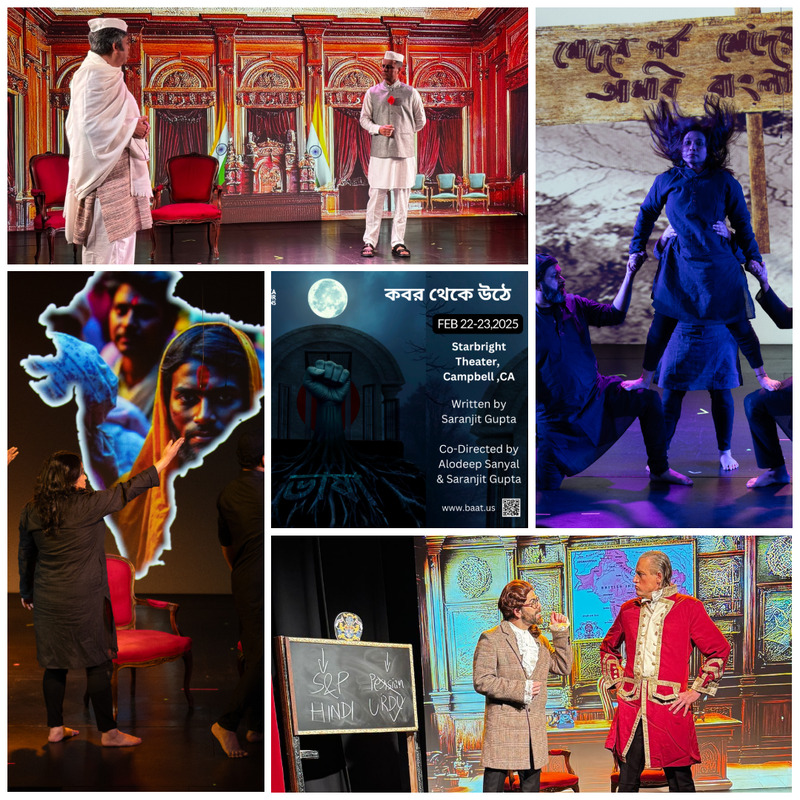
Written by Saranjit Gupta, Kobor Theke Uthe draws inspiration from Kobor (The Grave), the landmark 1952 play by Bangladeshi playwright Munier Chowdhury. Chowdhury’s original drama emerged during the Bangla Language Movement in East Pakistan, when students and intellectuals protested for recognition of Bangla as a state language. BAAT’s multilingual production revisits this theatrical lineage, exploring questions of linguistic identity, memory, and cultural belonging. By referencing the historical struggle for language rights, the play connects contemporary audiences with a defining moment in South Asian political and literary history. Presented in February 2025 as part of BAAT’s season-opening Bengali-language double feature, Kobor Theke Uthe was staged alongside Prodosh Theke Protush Porjonto at Starlight Theater in Campbell, California.
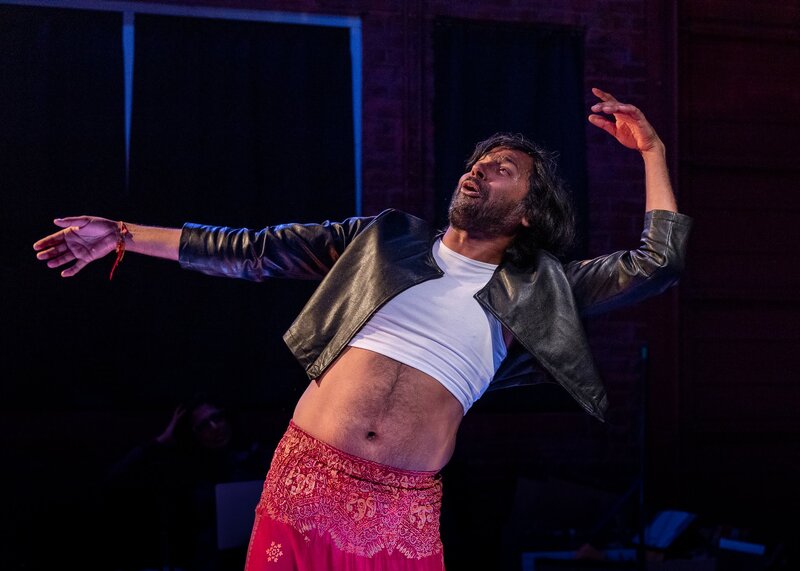
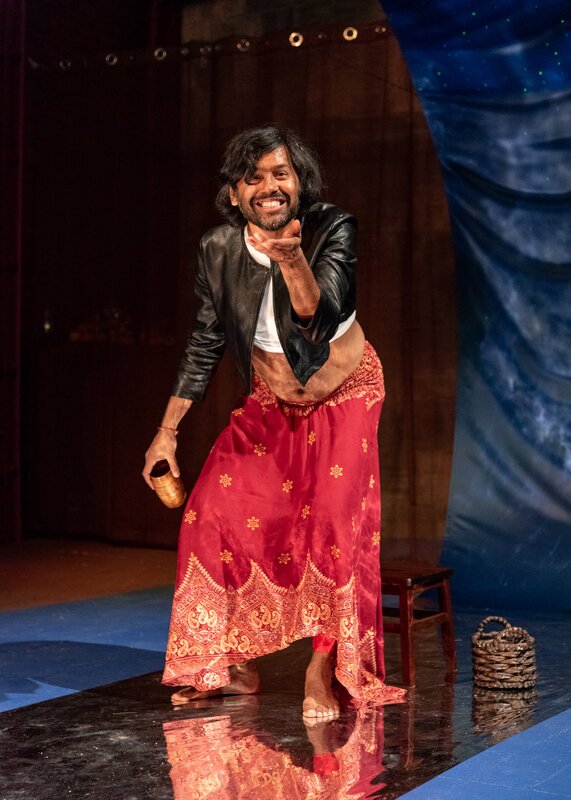
Presented at Flax Studios in Oakland from November 15 to December 8, 2019, this production featured J. Jha in a solo performance of Geetha Reddy’s adaptation of the ancient Indian epic Mahābhārata. Condensing one of South Asia’s most expansive mythological narratives into a single-performer format, the staging relied on physical transformation, gesture, and vocal modulation to evoke multiple characters and shifting moral landscapes. By reimagining the epic within an intimate Bay Area performance space, Reddy’s text foregrounded the enduring relevance of dharma, conflict, and kinship for contemporary diasporic audiences.
Presented at Flax Studios in Oakland from November 15 to December 8, 2019, this staging of Mahābhārata featured J. Jha as the Itahasavid, a solitary storyteller who guides audiences through the epic’s moral and familial conflicts. Written by Geetha Reddy, the production distilled the vast Sanskrit narrative into an intimate solo performance. Through physical transformation and vocal modulation, Jha embodied multiple figures across generations of war, kinship, and duty. Positioned within a contemporary Bay Area performance space, the work reframed the classical epic as a living, diasporic act of storytelling.
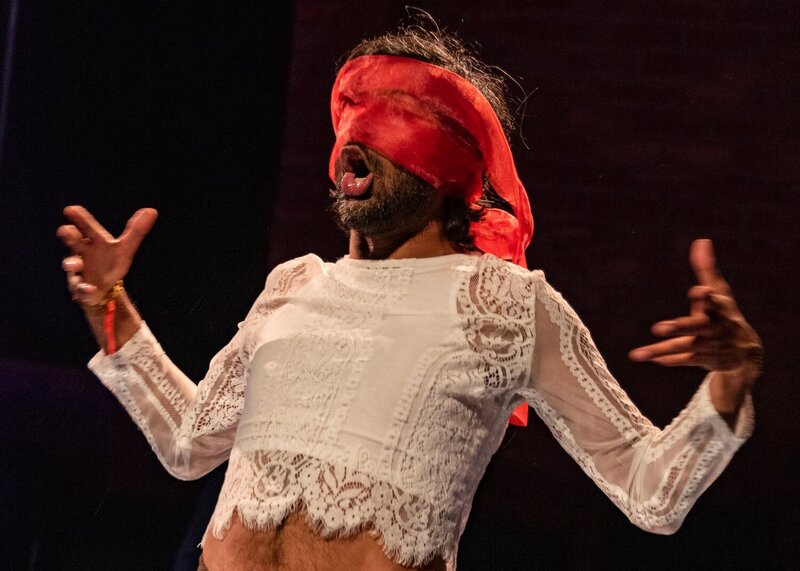
J. Jha portrays Sanjay, the clairvoyant narrator of the Mahābhārata, in Geetha Reddy’s 2019 Oakland staging at Flax Studios. In the epic, Sanjay recounts the events of the Kurukshetra war to the blind king Dhritarashtra, serving as witness and interpreter of unfolding catastrophe. Within this solo production, Jha moved fluidly between Sanjay and other figures, embodying the layered structure of epic narration. The performance foregrounded storytelling as transmission, positioning the ancient Sanskrit text within an intimate contemporary Bay Area performance space.
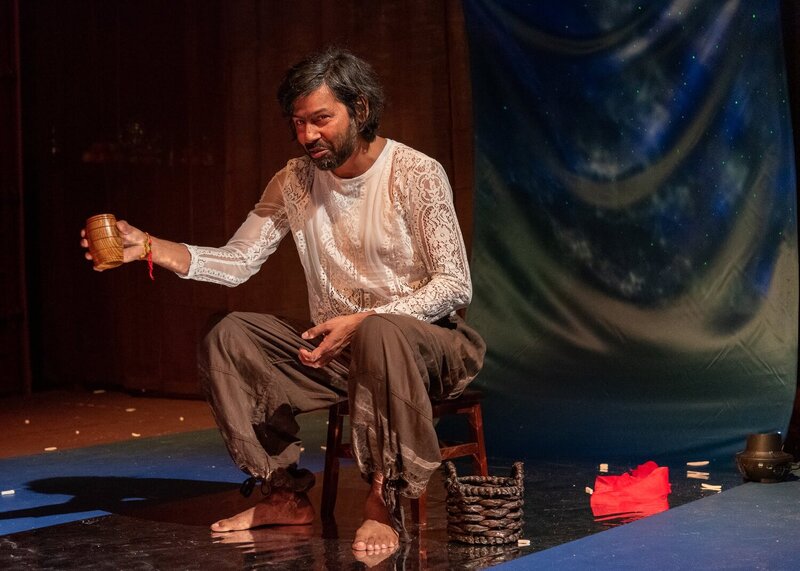
J. Jha appears as the Itahasavid, the storyteller who guides audiences through the unfolding events of the Mahābhārata in Geetha Reddy’s 2019 staging in Oakland. Seated with minimal props, the figure introduces episodes drawn from the epic’s vast narrative of kinship, war, and moral conflict. The solo format foregrounds the act of narration itself, positioning the Itihāsavid as both witness and conduit. Within the intimate setting of Flax Studios, Reddy’s text reframed the classical Sanskrit epic as a living, performative exchange between storyteller and audience.
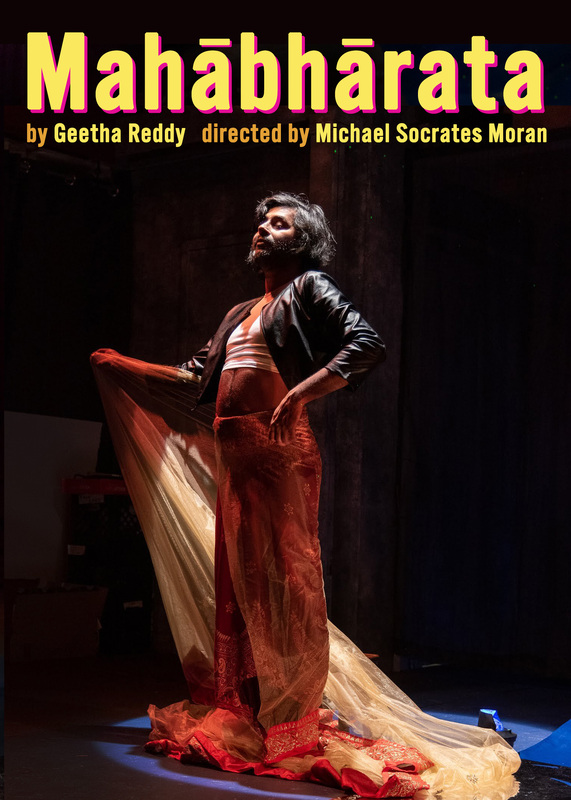
Promotional poster for the 2023 staging of Mahābhārata at Z Space in San Francisco. Written by Geetha Reddy and directed by Michael Socrates Moran, the production featured J. Jha in a solo performance encompassing multiple characters across the epic’s vast narrative landscape. Through physical transformation and embodied storytelling, Jha moved fluidly between warriors, kin, and narrators within a single theatrical frame. Presented in San Francisco’s contemporary performance venue, the work extended Reddy’s reimagining of the Sanskrit epic for Bay Area audiences.
This is a scene from the play Merchant on Venice by Shishir Kurup. The play, which is an adaptation of Shakespeare's Merchant of Venice, follows Jitendra, a Bollywood actor chasing success in Hollywood, who plots to marry a wealthy heiress to fund his film but becomes entangled with a dangerous Muslim moneylender, risking his closest friendship; the play explores identity, ambition, and the tensions of diaspora life while probing themes of empathy, prejudice, and personal responsibility.
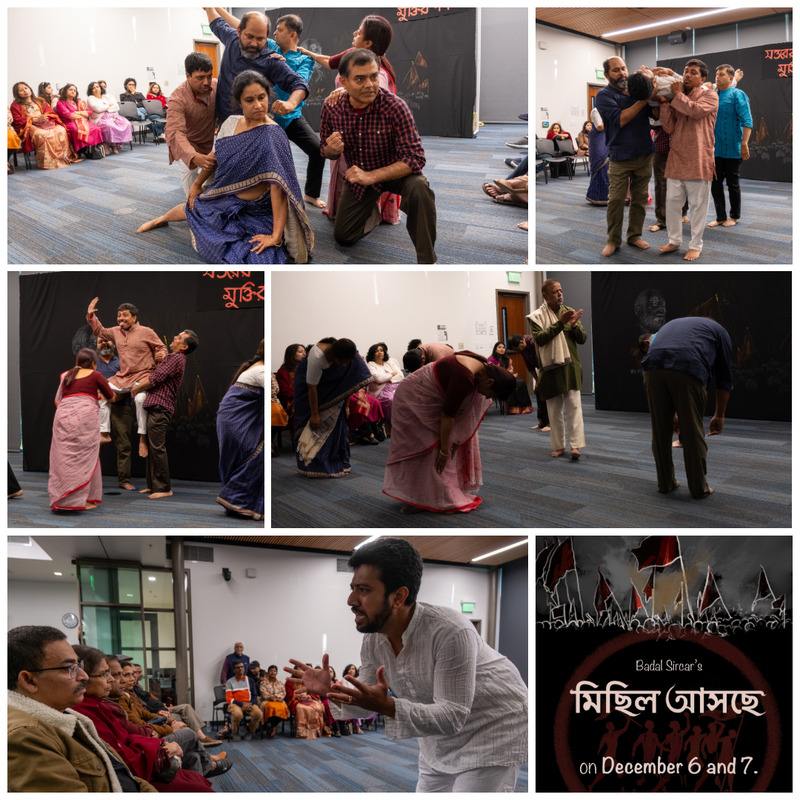
In December 2025, BAAT staged Badal Sircar’s Michhil (1974), a defining work of the Third Theatre movement. Set in 1970s Kolkata during the height of political unrest associated with the Naxalite movement, the play examines how everyday civic life persists amid ideological violence, state repression, and social upheaval. In keeping with Sircar’s performance philosophy, the production was staged without proscenium framing, elaborate sets, or technical spectacle. The audience surrounded the actors on three sides of the playing space, creating an intimate environment that emphasized collective experience and reflected the anti-institutional aesthetics central to Third Theatre practice.
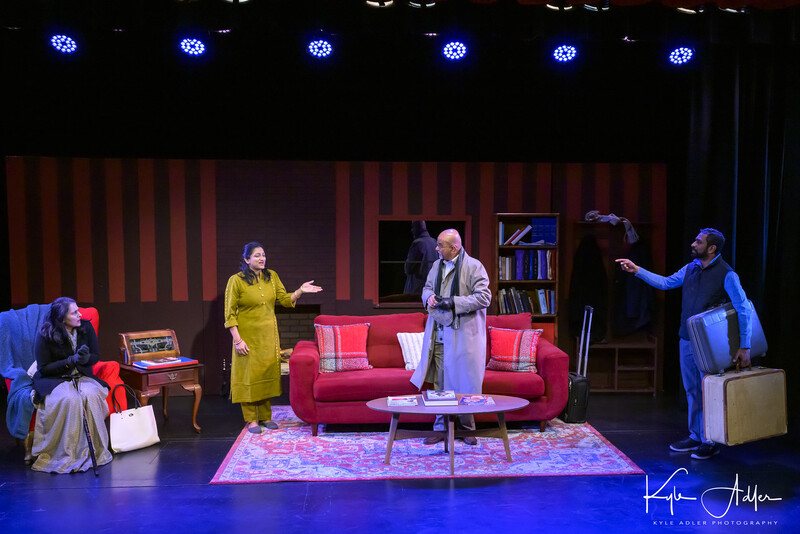
The Mousetrap is Agatha Christie’s classic murder mystery, in which a group of strangers becomes snowbound in a remote guesthouse as news of a murder unfolds. When a police officer arrives, the guests realize that the killer may be among them, turning suspicion inward.
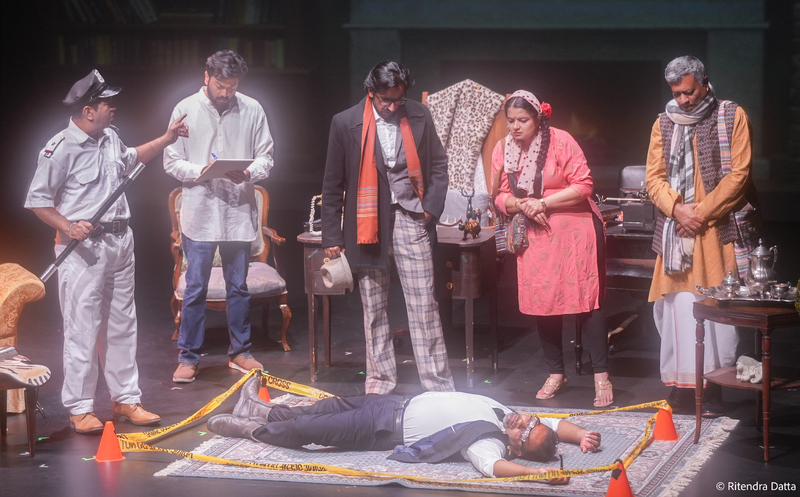
Munshir Palace is a gripping murder mystery set in 1970s Kolkata, India, where secrets whisper through palace walls and every character has something to hide.
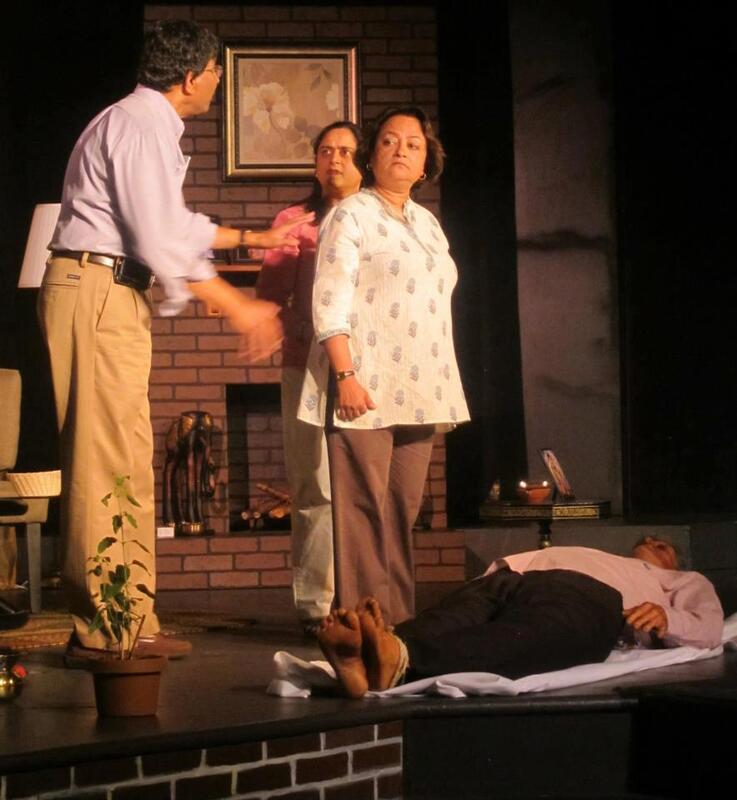
Ranjita Chakravarty appears in Naatak’s Death in San Francisco, an English play written by Sujit Saraf. This was a quirky comedy about what it means for an Indian to die in America with the proper “rites and ceremonies”
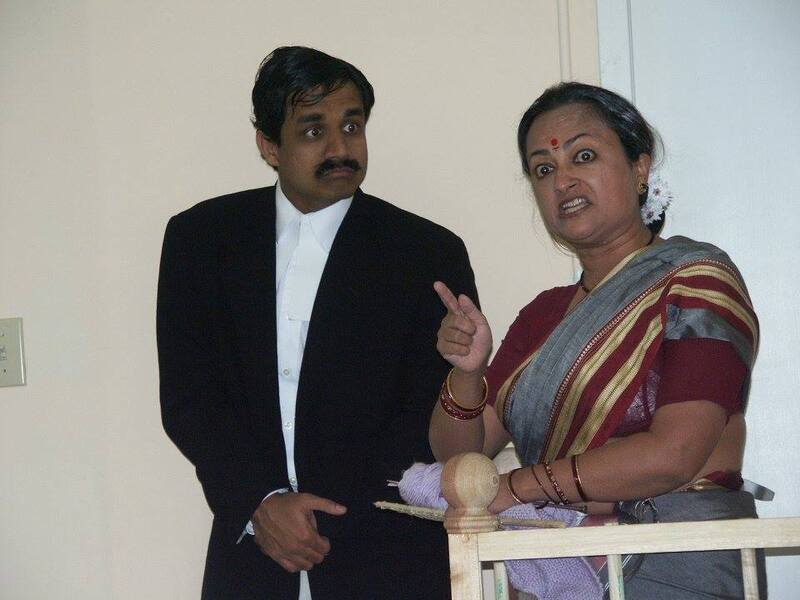
Ranjita Chakravarty plays Mrs. Kashikar in Naatak’s 13th production and its first presentation under the “Naatak in a Room” program. The Hindi play was performed November 16–17 and November 22–24, 2002 at the American India Foundation in Milpitas. The staging seated the audience on three sides, with performers moving among them.
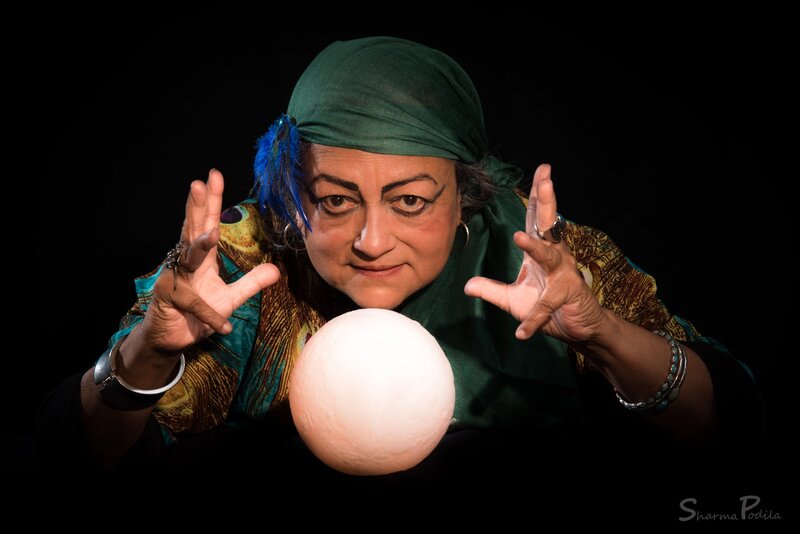
Ranjita Chakravarty plays the psychic in Naatak’s 64th production reimagines Akutagawa’s “In a Grove” in a contemporary Mumbai setting, staged in Hinglish with English supertitles. A psychological “whodunit,” the play unfolds through layered testimonies of a single violent incident, each account reshaping truth through memory, ego, and perception. Incorporating stylized fight choreography, live music, and cinematic flashbacks inspired by Akira Kurosawa’s landmark Japanese film adaptation, the production probes the instability of narrative authority.
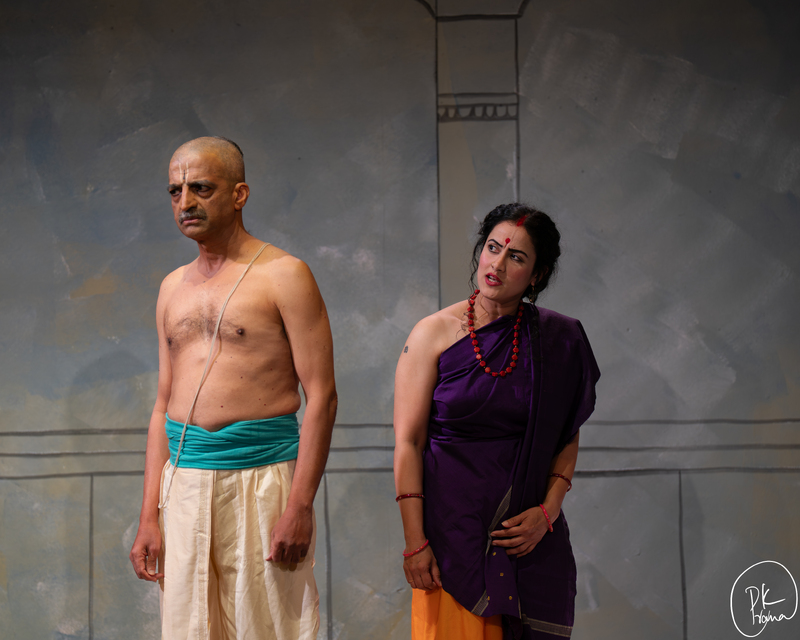
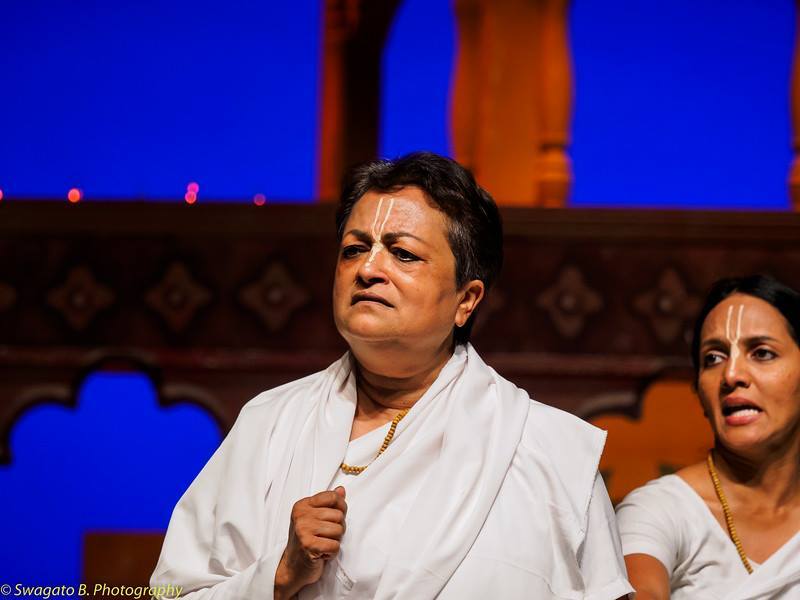
Ranjita Chakravarty portrays Protima Dasi, a widow living in the temple town of Vrindavan. Dressed in austere white, she embodies both spiritual devotion and the social marginalization faced by widows in the holy city. Vrindavan, a Hindi musical produced by Naatak in the Bay Area, explores faith, dignity, and community among women who have been displaced by tradition yet forge resilience through collective ritual and song. The production integrates devotional music, theatrical spectacle, and social commentary to interrogate the tension between sacred space and lived reality.
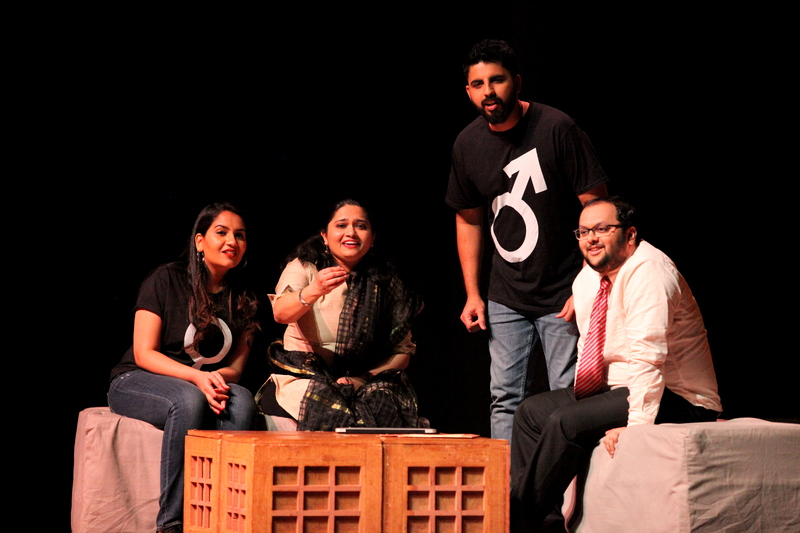
Never Mind blended romantic comedy with theatrical experimentation. The play centers on a corporate executive and a visual art director who meet for business but develop a mutual attraction they struggle to express. Externalizing their inner hesitation, two alter egos appear on stage, attempting to guide, provoke, and complicate the unfolding relationship. As the narrative progresses, the alter egos develop a dynamic of their own, ultimately forming a connection even as the “real” couple falters in miscommunication. The structure playfully dramatizes internal conflict, ego, and emotional risk in contemporary professional life. Notably, the production incorporated live music performed onstage, with a visible band positioned behind the actors featuring guitar, keyboard, percussion, and vocalists. This integration of live musical accompaniment expanded CalAA’s staging vocabulary and reflected its continued experimentation with form while maintaining accessible, character-driven storytelling.
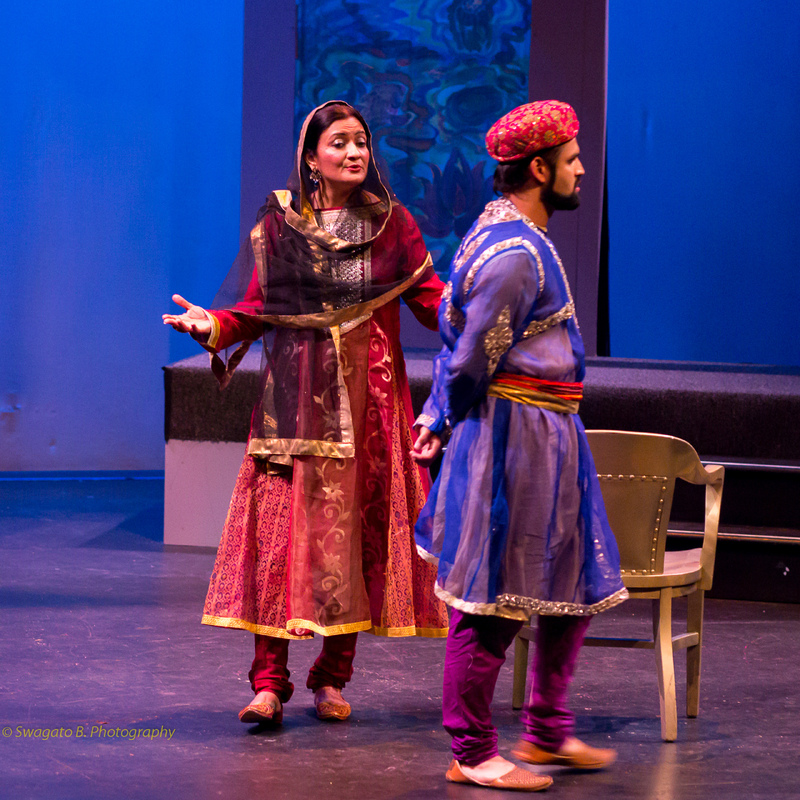
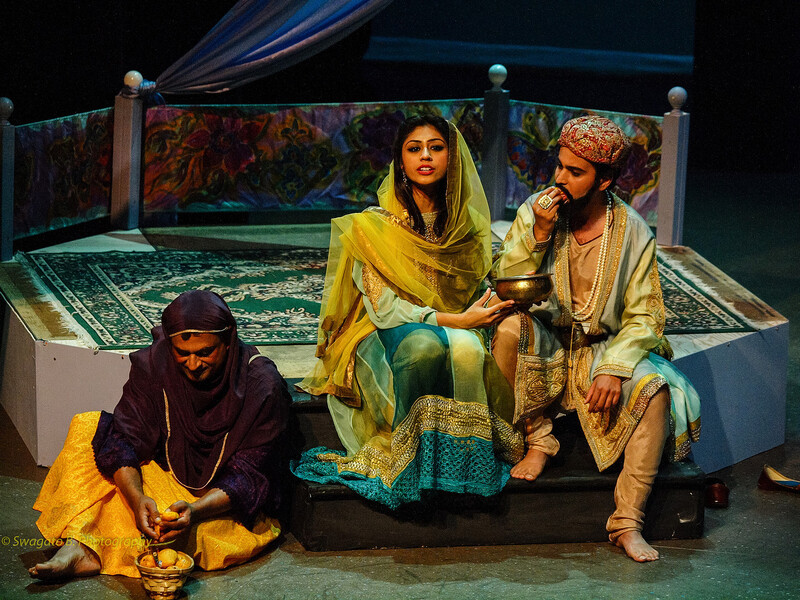
Incubated and world-premiered in the Bay Area by EnActe Arts, this play traces the rise of Noor Jahan as the 20th wife of Emperor Jahangir and her subsequent rise to power as the only Mughal Empress of India. Brother Asaf Khan tells his older sister, the Empress Noor Jahan, that she is to be exiled after the death of Emperor Jahangir.
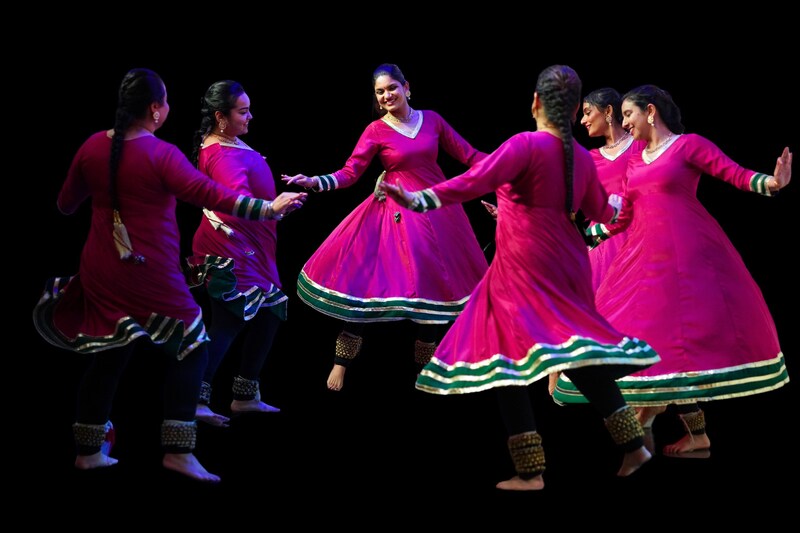
The Noorani Dance Company (NDC), founded by Farah Yasmeen Shaikh, is breaking barriers in the world of Kathak. With a deep commitment to enlightening minds and hearts through the arts, NDC engages in traditional and innovative repertoire and performances - exploring topics and themes of historical and social global relevance, and thrives in collaborative partnerships across other genres of performing arts.
Presented in August 2025, Panchakanya, written by Anindya Chakraborty and Sayoni Roy and directed by Chakraborty, reimagines five women from the Ramayana and Mahabharata—Mandodari, Ahalya, Tara, Kunti, and Draupadi. Blending music, choreography, and varied performance styles, the production invites audiences to reconsider inherited narratives about gender and power.
Drawing on the theme of good old neighborly suppport, this play shows an elderly man who is rescued from abject loneliness and poverty. Althoguh the play is set in Bengal, the value of neighborly relations speaks to everyone in the audience.