Can the fractured identity among the diaspora become whole when they fully embrace and celebrate their roots with their feet planted in their diasporic lives?
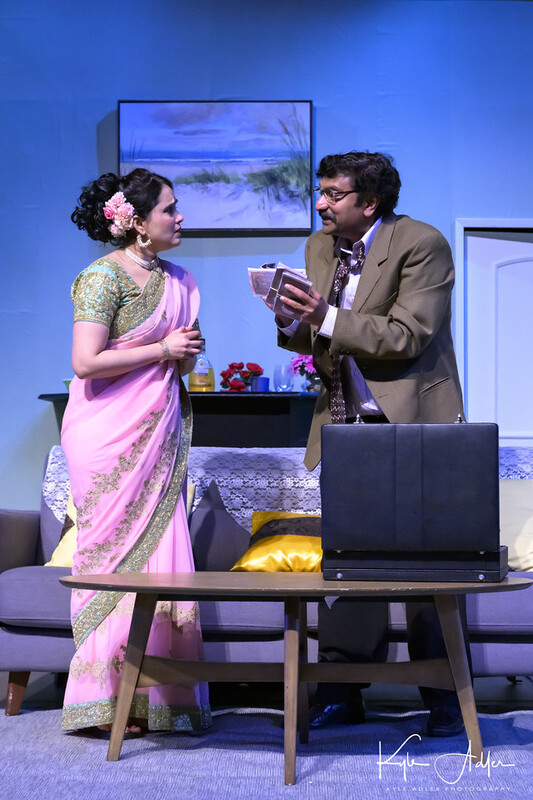
Funny Money is a fast-paced farce centered on mistaken identity and escalating chaos. The story follows a man who accidentally picks up the wrong briefcase and discovers it is filled with money, setting off a chain of comic misunderstandings, deception, and increasingly desperate attempts to keep control of the situation. Known for its rapid dialogue and tightly constructed comedic timing, the play relies on physical humor and escalating tension to drive its narrative. Naatak’s production situates the action within a domestic interior, where everyday spaces become sites of confusion and farce. This image captures a moment of comic tension, with characters focused on the contents of a briefcase, highlighting the object at the center of the play’s escalating misunderstandings and the interplay between secrecy, suspicion, and humor.
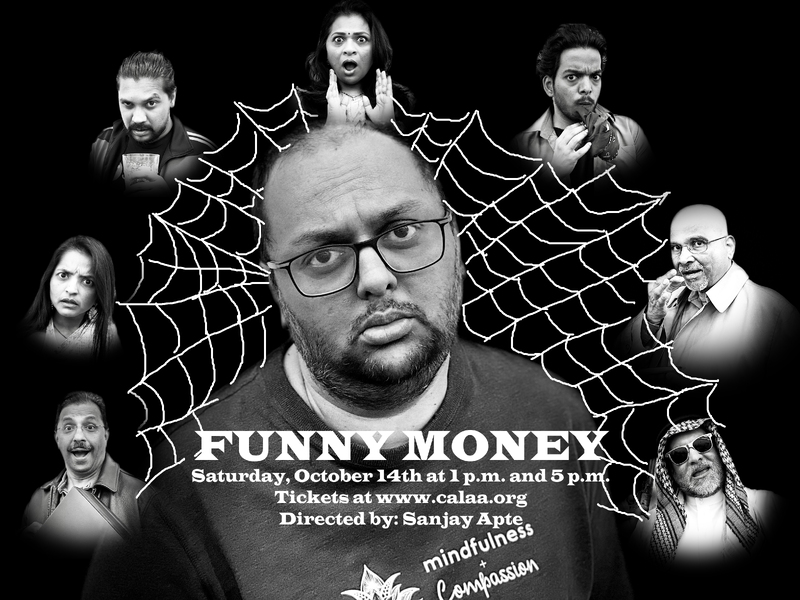
Funny Money reinterpreted Ray Cooney’s fast-paced British farce for Marathi-speaking audiences. The play follows an ordinary man who accidentally exchanges briefcases and discovers a large sum of illicit cash. What begins as a windfall quickly spirals into deception, mistaken identity, and escalating comic chaos. Adapted into Marathi by Mukund Marathe, the production retained Cooney’s rapid-fire structure while infusing local linguistic humor and diasporic context. The posters emphasize exaggeration and caricature, visually reflecting the farcical tone and mounting absurdity central to the narrative.
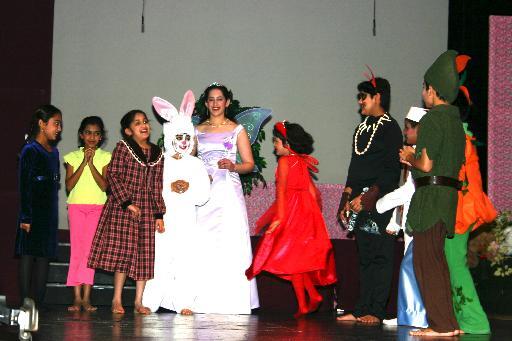
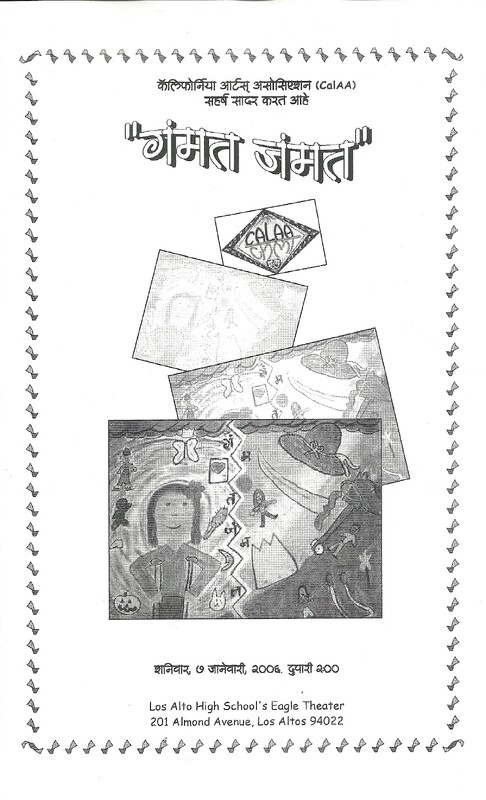
Gammat Jammat marked an expansion into children’s theater within the Marathi-language stage tradition in Silicon Valley. The play centers on a young girl who has polio and struggles with mobility. In a dreamlike sequence, a host of imaginative characters appear before her, offering encouragement, companionship, and courage. Through fantasy and theatrical playfulness, the narrative explores resilience, self-belief, and the emotional world of a child navigating physical limitation. By the conclusion of the drama, the girl gains confidence and agency, symbolized through her ability to walk without reliance on crutches. This production reflects CalAA’s commitment not only to canonical adult drama but also to intergenerational cultural transmission. By staging children’s theater in Marathi, the organization fostered language continuity, community participation, and youth engagement within the South Asian diaspora.
This 2006 poster for Gammat Jammat reflects the playful, imaginative spirit of CalAA’s children’s theater production. The hand-drawn aesthetic and layered imagery evoke a child’s dreamscape, visually reinforcing the story’s structure in which fantasy figures appear to encourage and inspire a young girl navigating physical disability. Presented in Marathi, the production marked an important expansion of CalAA’s programming into youth-centered theater. By staging children’s plays in a regional Indian language, CalAA fostered intergenerational language continuity while creating performance opportunities for young members of the Bay Area’s South Asian community.
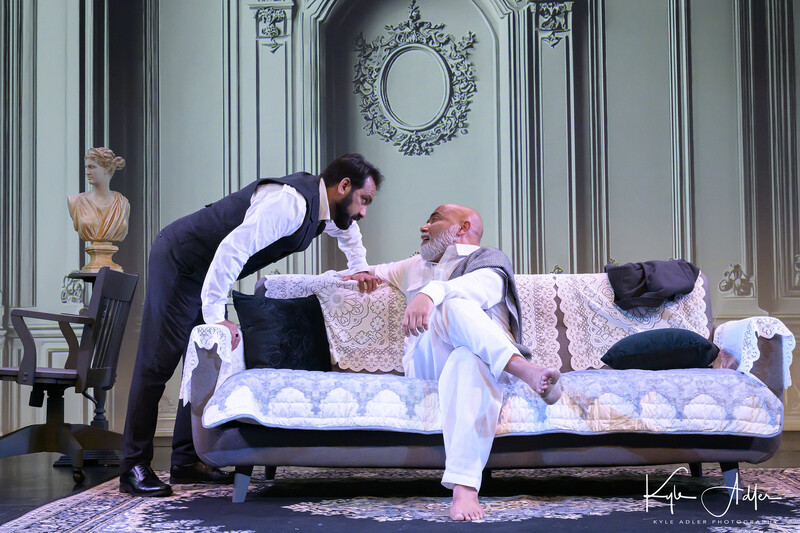
Gaslight is a psychological thriller centered on a husband who manipulates his wife into doubting her own perceptions, giving rise to the term “gaslighting.” First staged in 1938, the play explores power, control, and the fragility of trust within intimate relationships, unfolding within a domestic interior where reality itself becomes unstable.
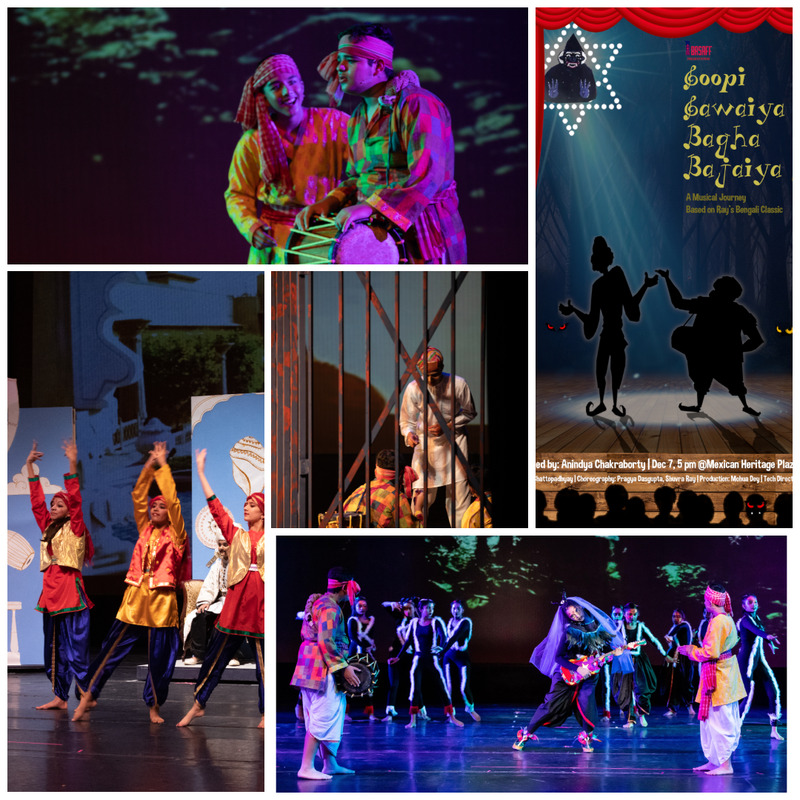
Adapted for stage and directed by Anindya Chakraborty, BAAT’s December 2019 production reimagined Goopy Gyne Bagha Byne, Satyajit Ray’s 1969 film adaptation of Upendrakishore Ray Chowdhury’s classic Bengali tale. Featuring Hindi folk-inspired music, an English-language script for Bay Area youth performers, and choreography, the production brought the kingdoms of Shundi and Halla to life for a multigenerational audience.
Hayavadan is Naatak’s staging of Girish Karnad’s play Hayavadana, a landmark work that explores identity, completeness, and desire through a story of intertwined lives. Centered on a love triangle between Padmini, Devadatta, and Kapila, the narrative takes a surreal turn when the men’s heads are exchanged, raising questions about the relationship between body, mind, and self. Drawing from Indian myth and folklore as well as modernist influences, the play blends philosophical inquiry with theatrical experimentation.
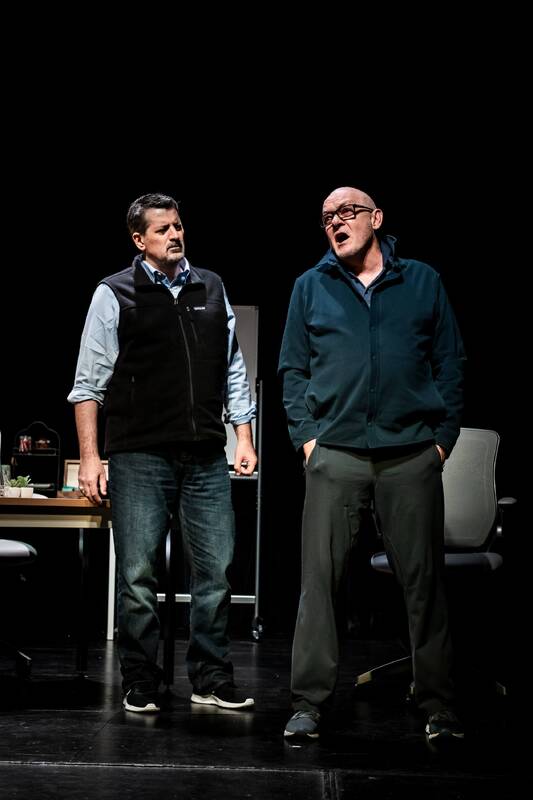
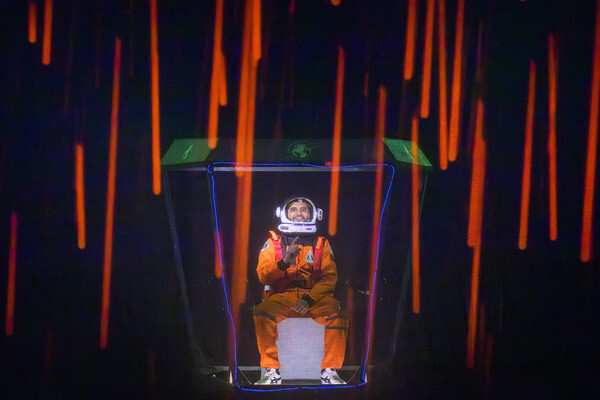
Hole is a Naatak original that imagines a Silicon Valley startup undertaking an ambitious engineering project: a tunnel through the Earth connecting Cupertino to Delhi in under an hour. Blending science fiction with social satire, the play examines technological ambition, risk-taking culture, and the consequences of innovation driven by speed over reflection. Drawing on the ethos of contemporary startup culture, the production situates futuristic speculation within familiar Bay Area contexts, linking global connectivity with local identity.
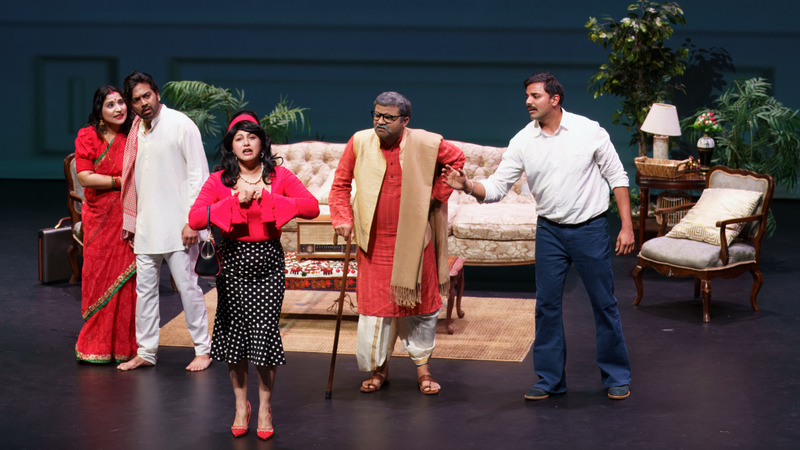
Set in 1970s India, this laugh-out-loud comedy takes place in a small, tight-knit community where rumors and reputations matter more than reality. When Sheela finds herself under pressure to present the image of a “perfect husband,” she devises an unconventional plan—only for things to spiral into a whirlwind of hilarious misunderstandings.
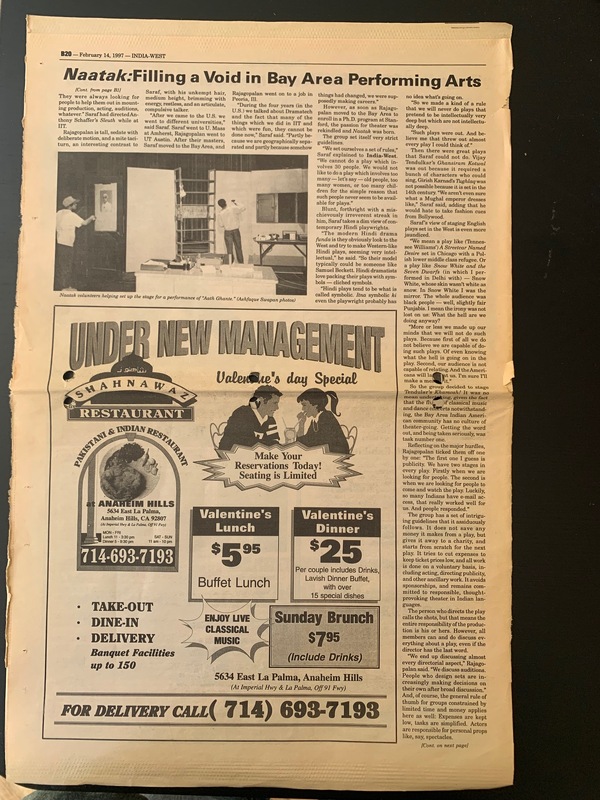
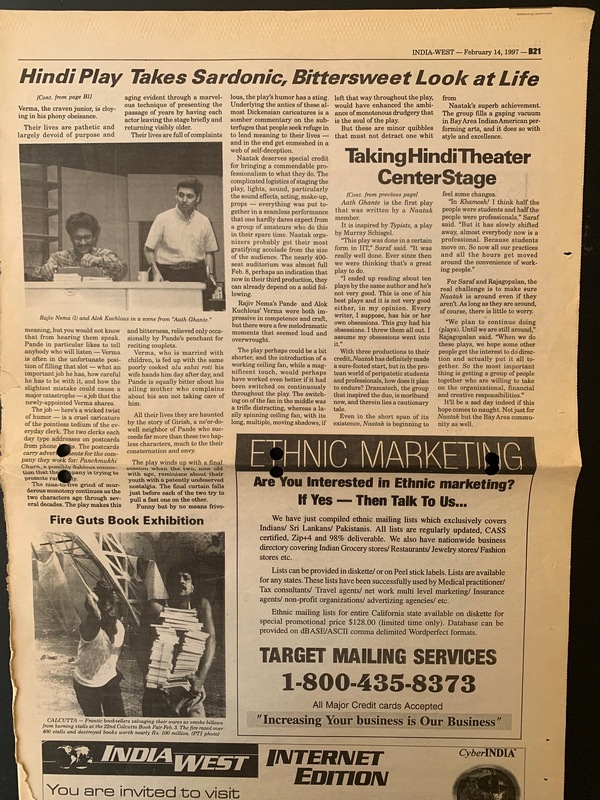
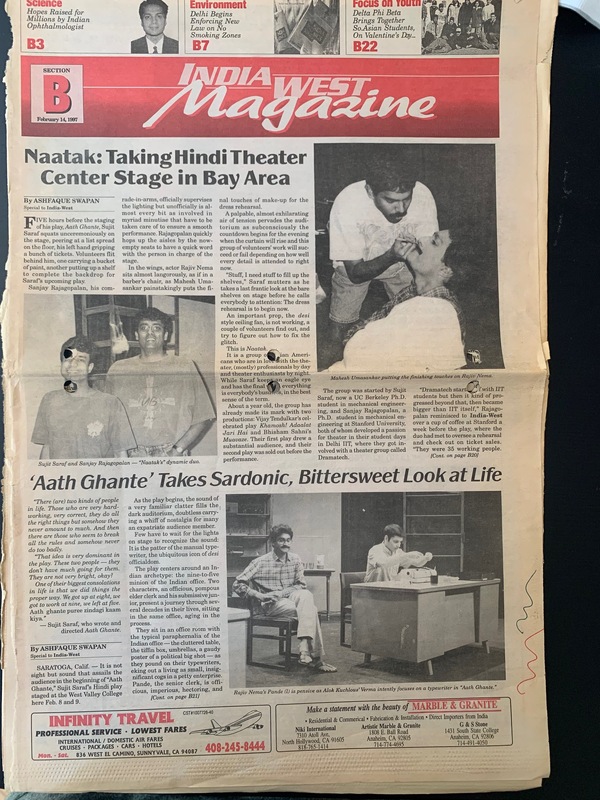
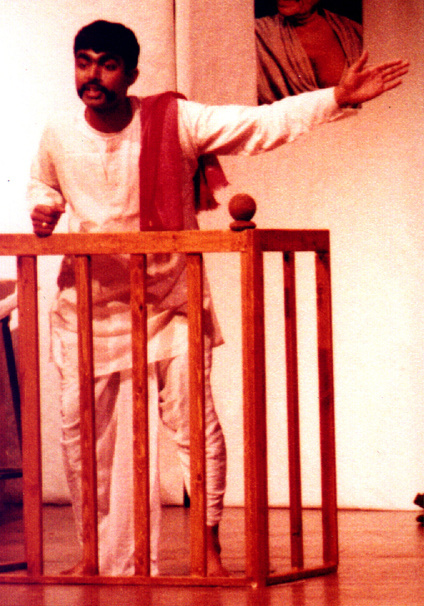
The first news coverage of Naatak's production, 'Khaamosh! Adalat Jaari Hain (Silence! The Court is in Session)' on February 14, 1997, in the magazine, India West. Vijay Tendulkar is the playwright.
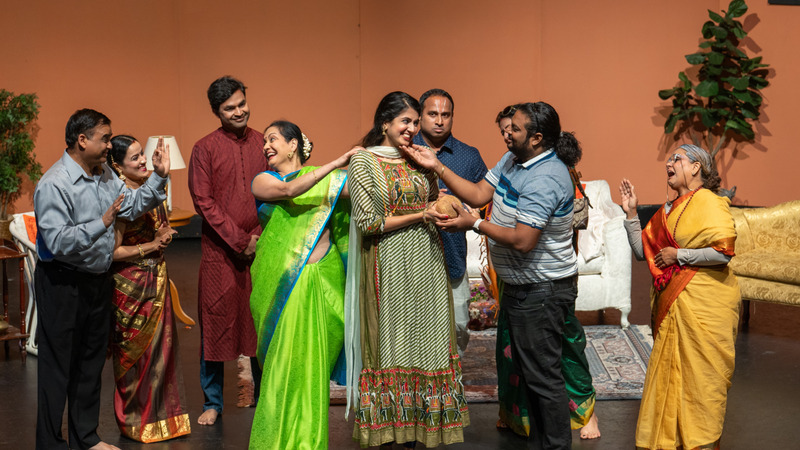
Indian Matchmaking is a hilarious and heartwarming English-language comedy that follows the journey of a young, independent woman as she navigates the world of arranged marriages.
Part-biographical and inspired by true events, the play blends lived experiences with creative storytelling. While certain elements have been adapted for dramatic effect, all characters and names are fictional.
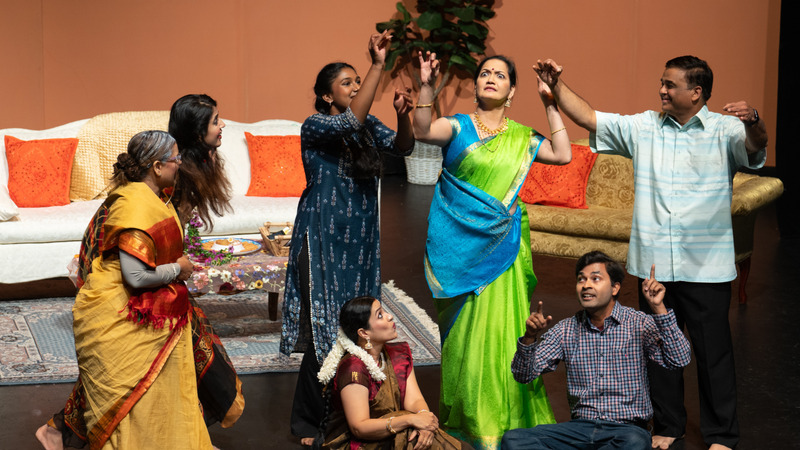
Indian Matchmaking is a hilarious and heartwarming English-language comedy that follows the journey of a young, independent woman as she navigates the world of arranged marriages.
Part-biographical and inspired by true events, the play blends lived experiences with creative storytelling. While certain elements have been adapted for dramatic effect, all characters and names are fictional.
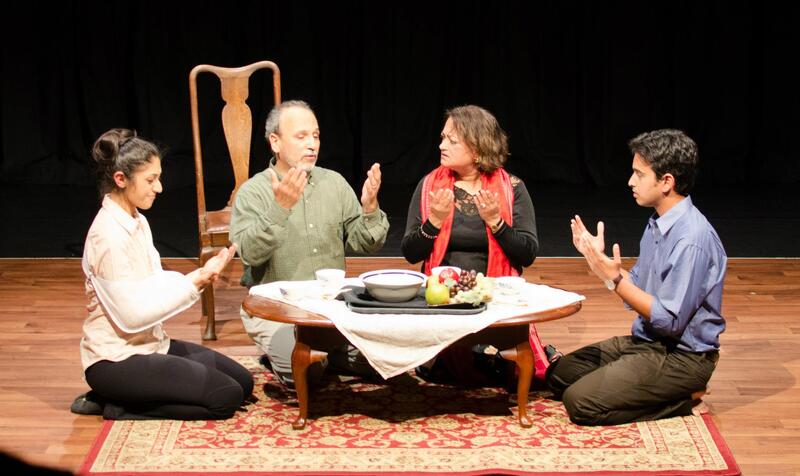
Ranjita Chakravarty appears here in 10 Acrobats in an Amazing Leap of Faith as Mona. Gathered around a low dining table, the characters navigate questions of faith, science, and generational change within a Muslim American household. The intimate domestic staging underscores the play’s exploration of belief systems in transition, particularly in Silicon Valley, where technological modernity and inherited tradition often coexist in tension.
In Jaswandi, Sai Paranjpye crafts a layered examination of marriage, control, and emotional isolation. The play centers on a woman trapped in a deeply restrictive domestic environment dominated by her husband. Within this world, male figures orbit her life in distorted ways, underscoring both her confinement and the imbalance of power that defines her marriage. As the narrative unfolds, the protagonist seeks companionship and recognition beyond the rigid structure imposed upon her. When those attempts are suppressed, her actions become a form of resistance, challenging the authority that governs her life. Rather than presenting a simple moral tale, Jaswandi probes the psychological consequences of patriarchal control and the complexities of agency within constrained spaces.
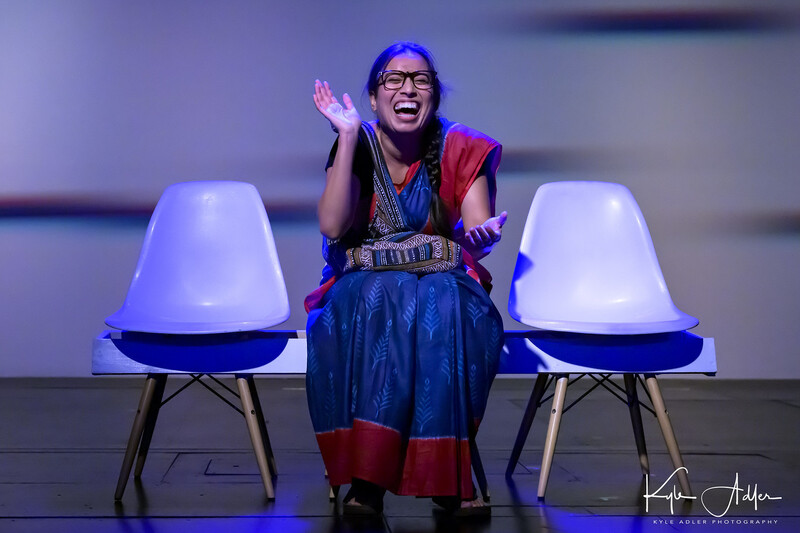
K.K. follows a central character navigating the bustling landscape of Connaught Place in New Delhi, encountering a wide range of figures from everyday urban life, including vendors, shoppers, and passersby. Structured as a theatrical romp inspired by popular Hindi cinema, the play blends humor, movement, and rapid character shifts, with a single performer embodying multiple roles within an imagined crowd. The production emphasizes performance as transformation, using minimal staging and physical expression to create a dynamic, populated world on stage.
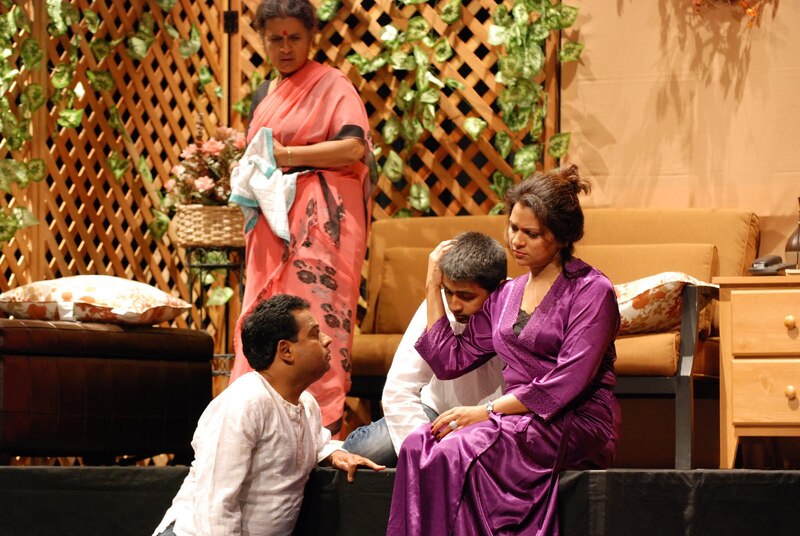
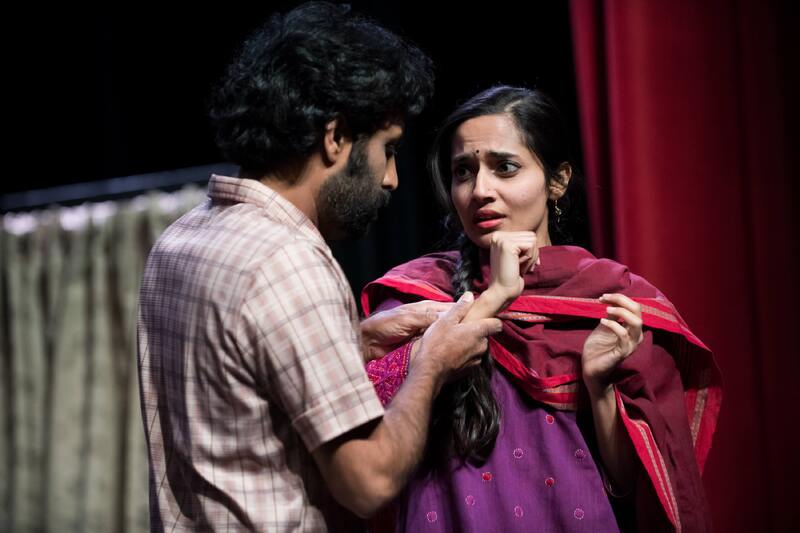
In Vijay Tendulkar’s Kamala, a journalist in Delhi learns that women are being auctioned as bonded laborers in rural markets. Determined to expose the story, he purchases a woman named Kamala as proof for a press conference. What begins as investigative zeal gradually reveals deeper layers of exploitation within his own household. In this scene, Kamala, the woman he has bought, sits beside the journalist’s wife. Through their encounter, the wife begins to recognize her own confinement within a patriarchal marriage. Tendulkar’s play shifts the focus from public scandal to private domination, exposing how systems of control operate both in the marketplace and within the domestic sphere. CalAA’s 2005 staging was presented in two performances on the same day, one in Marathi and one in Hindi, reflecting the organization’s commitment to linguistic accessibility while preserving the integrity of regional dramatic literature.
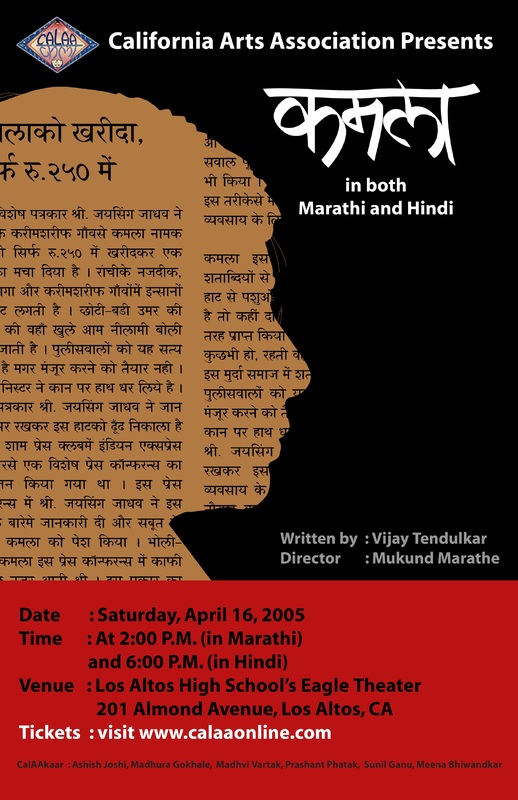
This 2005 poster for Kamala announces CalAA’s bilingual presentations of Vijay Tendulkar’s searing social drama, performed in both Marathi and Hindi on the same day. The design juxtaposes bold typography with a silhouetted female profile layered over newspaper text, visually referencing the play’s focus on journalism, public exposure, and the commodification of women. At the center of the narrative is a journalist who purchases a tribal woman to demonstrate the reality of human trafficking, only to reveal the moral contradictions within his own marriage. By presenting the play bilingually, CalAA expanded its audience reach while preserving the linguistic roots of Tendulkar’s original text, further solidifying its place in the Bay Area’s South Asian theatrical landscape.
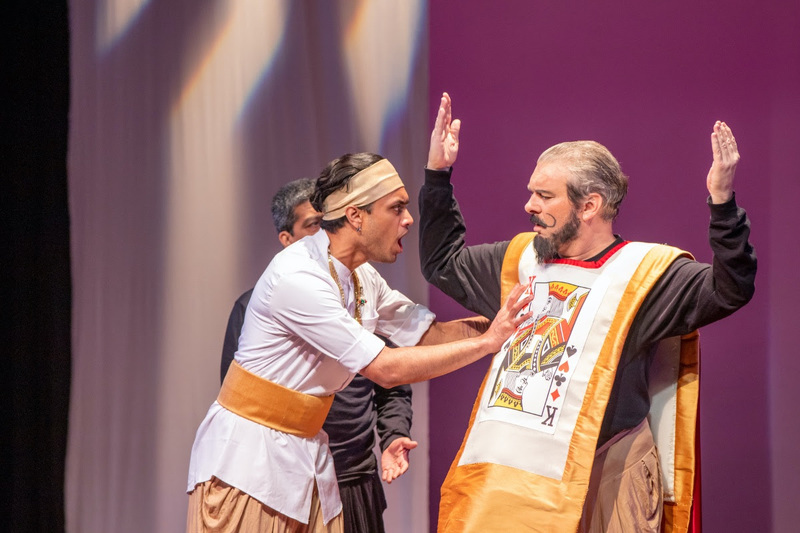
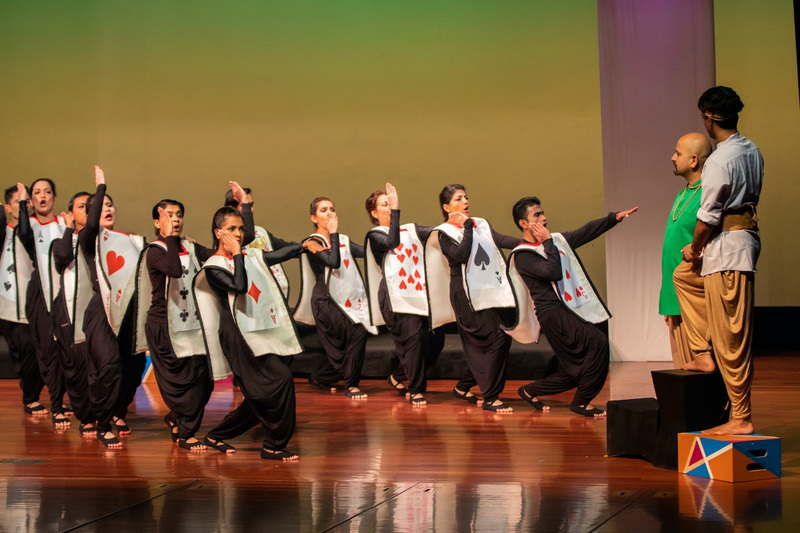
Written by Rabindranath Tagore, explores the dehumanizing effects of fascism and how rebellions begin. The Wanderer encourages the army of cards to find their third dimension.
Written by Rabindranath Tagore, explores the dehumanizing effects of fascism and how rebellions begin. The Wanderer encourages the army of cards to find their third dimension.