Desi Theatre is a Silicon Valley–based community theater group founded in 2023 that focuses on Hindi-language comedy for diasporic audiences. Its productions include adaptations of South Asian plays and films as well as original works, often presented with English supertitles to engage multilingual audiences. Serving both South Asian and broader Bay Area communities, Desi Theatre contributes to the region’s expanding landscape of accessible, community-driven performance.
Promotional poster for Caught in the Net, a Hinglish adaptation of Ray Cooney’s farcical comedy. The play follows a London taxi driver who secretly maintains two separate families, until a web of misunderstandings and mistaken identities begins to unravel his carefully constructed double life. Known for its rapid pacing and escalating comic tension, the production reflects Desi Theatre’s focus on Hindi-language comedy adapted for diasporic audiences. By incorporating bilingual dialogue and cultural references, the staging situates a classic British farce within the linguistic and social realities of South Asian life in Silicon Valley.
Promotional poster for Dhai Akshar Prem Ke, a Hindi-language comedy adapted from a well-known Marathi play by director Chaitanya Godsay. Presented in January 2026, the production centers on a middle-class family navigating love, generational expectations, and emotional transition. The narrative follows a daughter who abruptly announces her intention to marry a businessman she has fallen in love with, prompting tension and negotiation within the household. In parallel, the son’s unsuccessful romantic pursuits introduce a contrasting trajectory, reinforcing the play’s exploration of differing emotional outcomes within the same family. As the family comes to accept the daughter’s decision, the father’s sense of loss underscores the shifting dynamics of parent-child relationships. Blending humor with moments of emotional reflection, the production exemplifies Desi Theatre’s approach to Hindi-language comedy that engages with everyday family life. The use of English supertitles further situates the performance within Silicon Valley’s multilingual and cross-cultural audience environment.
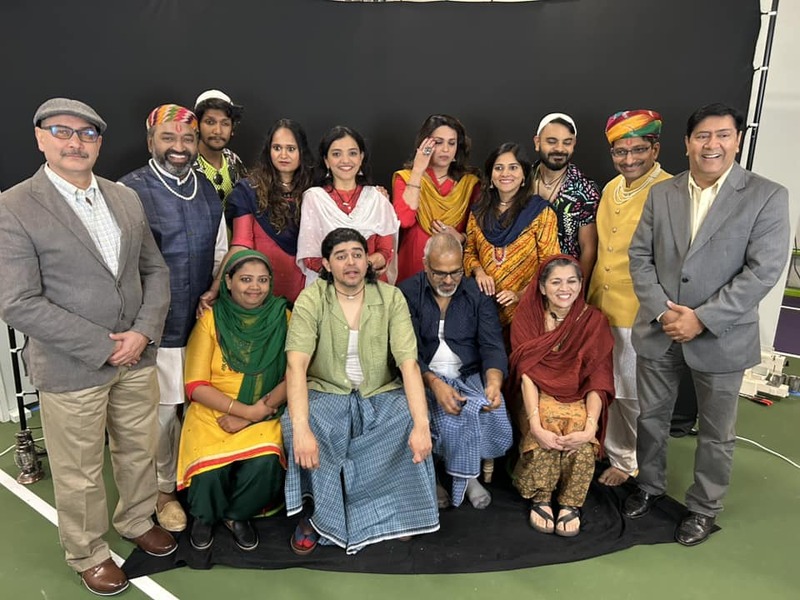
Cast of Ek Machine Kabadi Ki, a Hindi-language comedy centered on a scrap dealer (kabadi) whose discovery of a mysterious machine disrupts everyday life. The device alters the form of objects placed inside it, a seemingly harmless function that takes on unexpected consequences when it is revealed to affect human beings as well. The narrative turns when the protagonist unknowingly activates the machine while his wife is inside, causing her to reappear significantly younger. This transformation generates confusion and escalating comic tension as the family attempts to navigate the altered reality. Through its absurd premise, the play engages themes of identity, aging, and the instability of control within domestic space.Written by S. N. Nautiyal and staged at the Historic Hoover Theatre, the production reflects Desi Theatre’s focus on Hindi-language comedy that combines imaginative scenarios with familiar social settings, supported by English supertitles for broader audience accessibility.
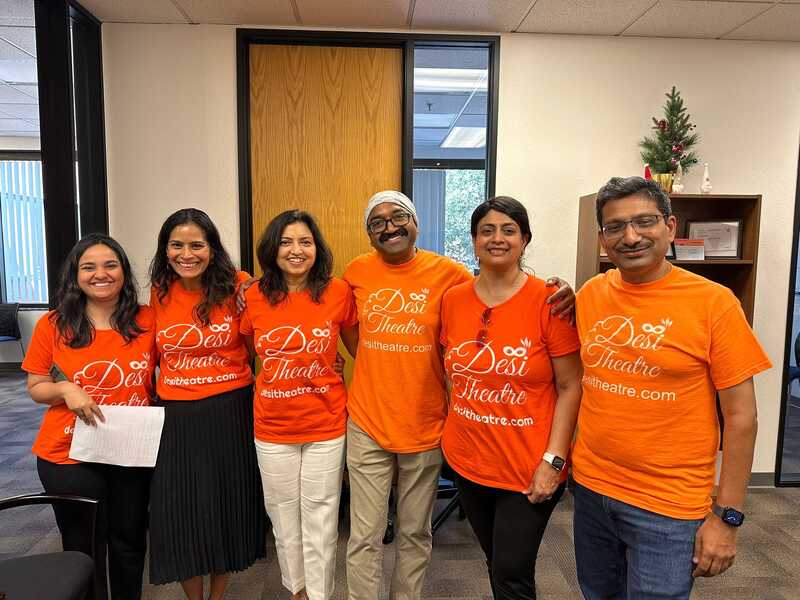
Members of Desi Theatre’s core team pose together, reflecting the company's collaborative foundation since its establishment in 2023. Pictured here(starting third from left) are Poonam Singh, Ajitesh Gupta, Aditi Honawar, and Puneet Goyal, among the active founding members who continue to shape the organization’s artistic and community direction.
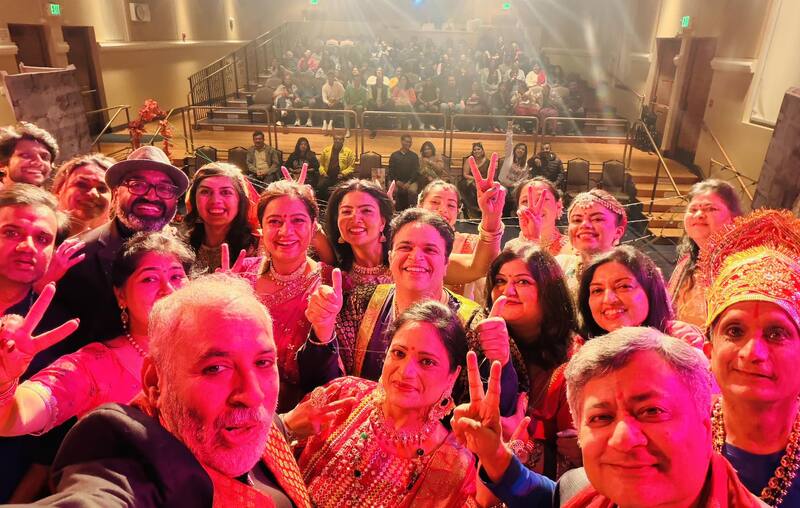
Cast members of Gadhe Ki Baraat, a Hindi-language comedy featuring a large ensemble and incorporating dance and theatrical spectacle. Presented in November 2025, the production reflects Desi Theatre’s expansion into larger-scale staging with multiple performers and integrated performance elements.The narrative follows a potter who lives with his wife and earns a living transporting goods on his donkeys. After praying to be taken as a divine disciple and requesting entry into heaven, he offends celestial order and is transformed into a donkey. He can only regain human form by fulfilling an improbable condition: marrying a princess.Blending humor with elements of folklore and fantasy, the production exemplifies Desi Theatre’s approach to accessible, community-centered storytelling. The scale of the cast and staging highlights the group’s emphasis on collective participation and audience engagement within Silicon Valley’s South Asian theater landscape.
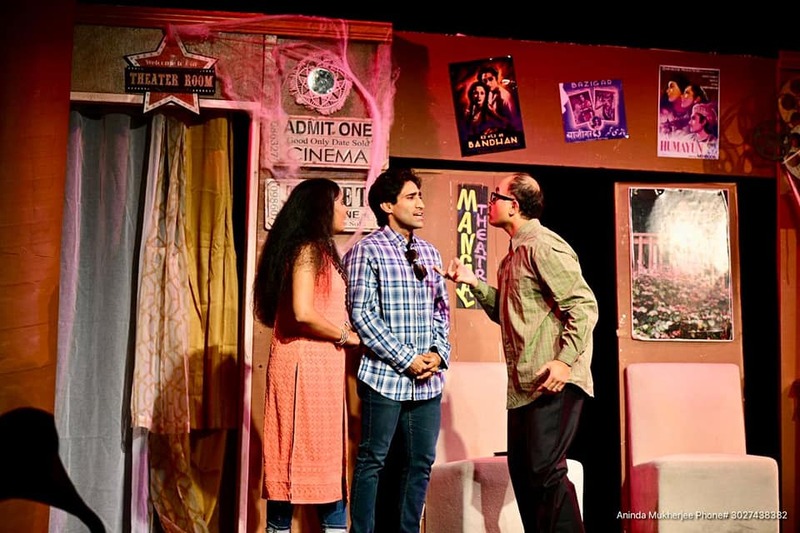
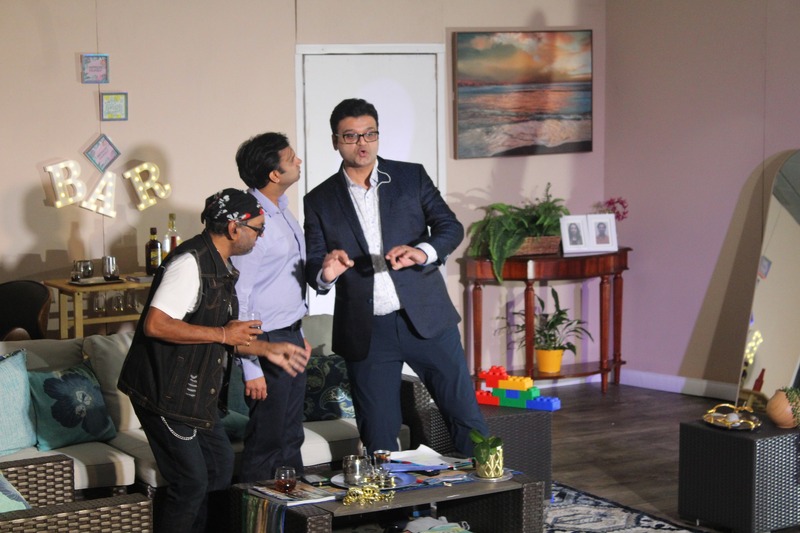
Scene from Jollywood, Desi Theatre’s third production, adapted for the stage from the Bengali film Bhooter Bhabishyat. The play centers on a film director and crew who arrive at an old house to shoot a movie, only to discover that the space is inhabited by ghosts. As tensions escalate, the supernatural inhabitants confront and threaten the filmmakers, creating a narrative that blends comedy with elements of horror and satire.The staging translates a cinematic narrative into live performance, incorporating theatrical set design to evoke both the film set and the haunted environment. Through humor and genre blending, the production reflects Desi Theatre’s interest in adapting popular South Asian media into accessible, community-oriented theater within Silicon Valley.
Scene from Kayapalat, Desi Theatre’s debut production, presented in November 2023. The play centers on two friends, a scientist and an artist, whose lives intersect through an experimental invention. The scientist creates a device in the form of a wearable hat, the effects of which are initially unknown. When tested, the machine unexpectedly causes the two individuals to exchange personalities, disrupting their identities and relationships. The narrative further complicates when a thief steals the device, introducing additional layers of confusion and comedic tension.
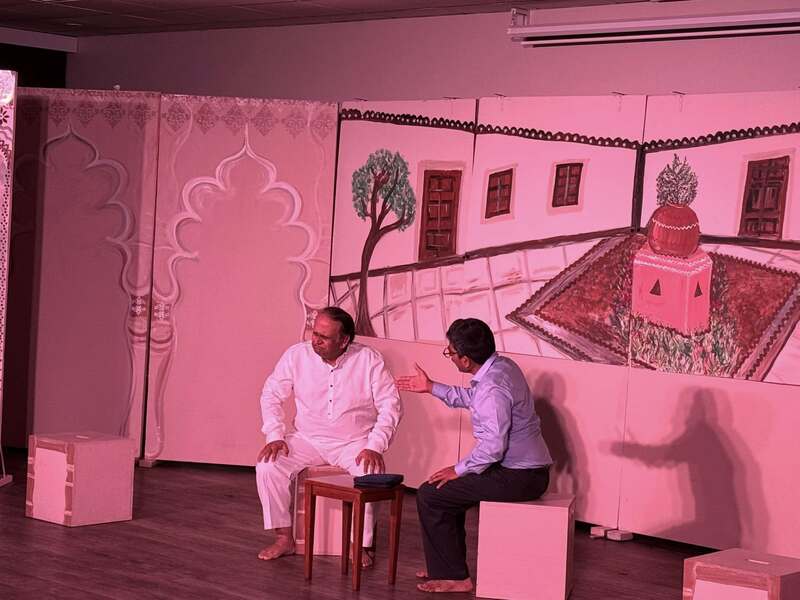
Scene from Taj Mahal Ka Udghatan, Desi Theatre’s second production, presented in early 2024. The play reimagines the construction of the Taj Mahal within a mid-20th-century administrative setting.The narrative centers on a tendering process to build the monument, in which politicians, businessmen, and other stakeholders become involved in decision-making. As discussions and negotiations continue, the project remains at the proposal and documentation stage, not yet realized in physical form.
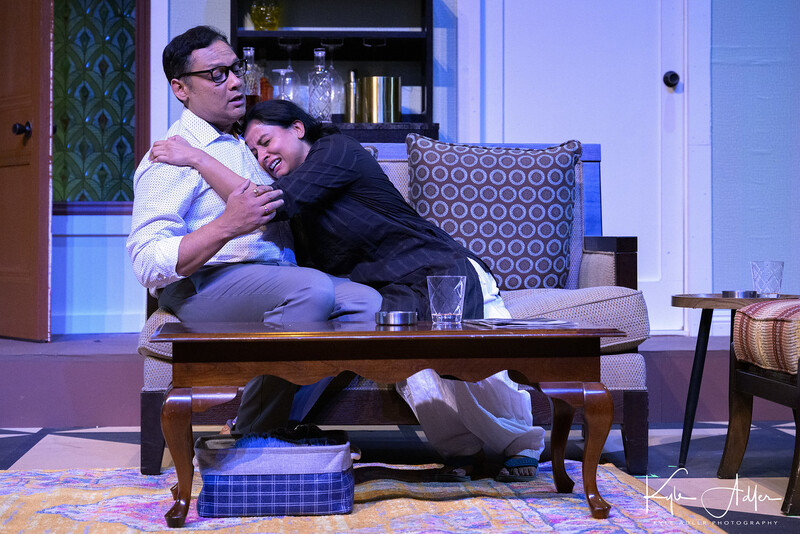
Dial M for Murder is a classic suspense thriller centered on a meticulously planned plot to murder a wife for financial gain. As the plan begins to unravel, the narrative shifts into a tense investigation of deception, manipulation, and shifting power within intimate relationships. Known for its tightly constructed plot and psychological intensity, the play builds suspense through dialogue, timing, and confined domestic space.
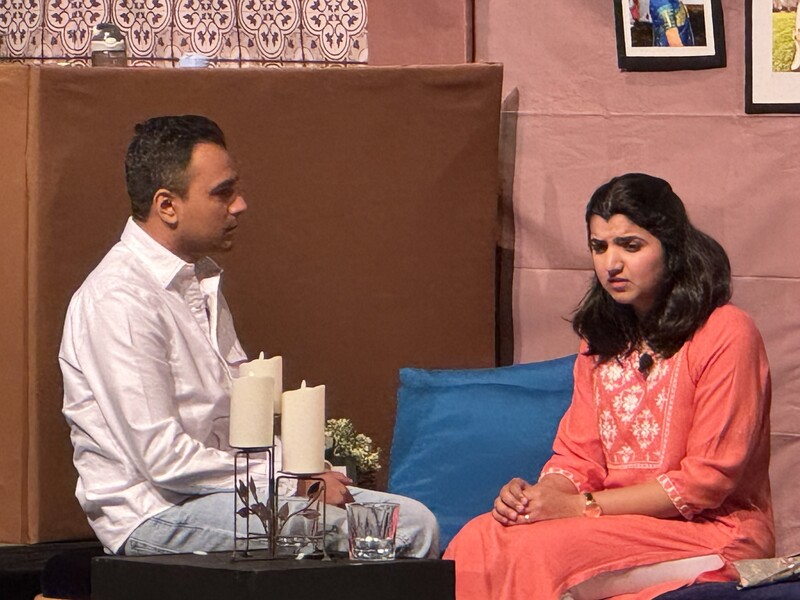
Don’t Worry, Be Happy explores contemporary marriage through the lens of emotional misalignment, economic uncertainty, and unspoken vulnerability. The play centers on a young couple navigating professional instability and the pressures of parenthood. As the wife confronts gynecological health challenges that complicate their ability to have children, deeper fractures emerge in communication and empathy. Feeling unseen and misunderstood, she ultimately chooses independence over quiet resignation. The couple separates, and she redefines her life through travel, trekking, and social engagement, affirming personal fulfillment beyond conventional expectations.
Resonating strongly with younger audiences, the production reflects a generational shift in how Marathi theater addresses marriage, autonomy, and women’s agency.
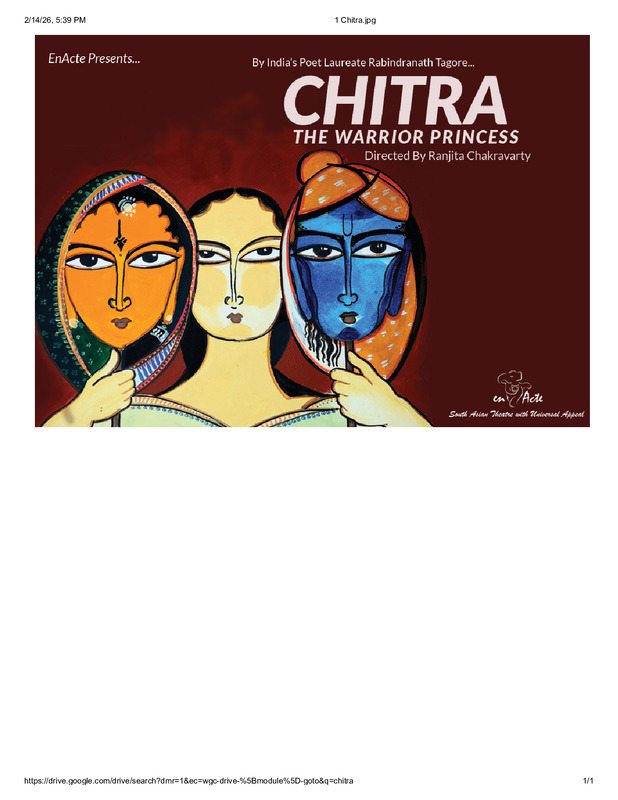
Promotional poster for EnActe Arts’ production of Chitra: The Warrior Princess, Rabindranath Tagore’s lyrical retelling of the Mahabharata story of Chitrangada. The play reimagines the warrior princess who questions conventional femininity, desire, and selfhood. Under the direction of Ranjita Chakravarty, the production foregrounded themes of gender fluidity, agency, and inner transformation, situating Tagore’s early twentieth-century feminist vision within contemporary diasporic discourse. The visual motif of multiple faces reflects the central tension between appearance and authenticity that defines Chitra’s journey.
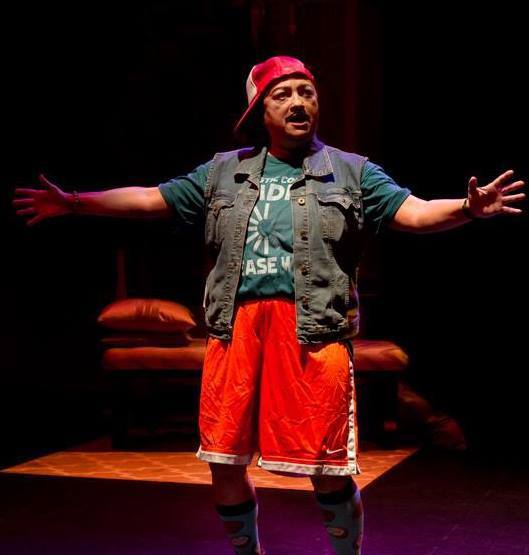
Ranjita Chakravarty plays Tooranpoi the Malyalee Clown in EnActe Arts’ Bay Area production of Merchant on Venice, Shishir Kurup’s contemporary reimagining of Shakespeare’s The Merchant of Venice. Set in Venice Beach, California, the adaptation reframes the original through a multicultural, diasporic lens, blending Shakespearean verse with South Asian and American cultural references.
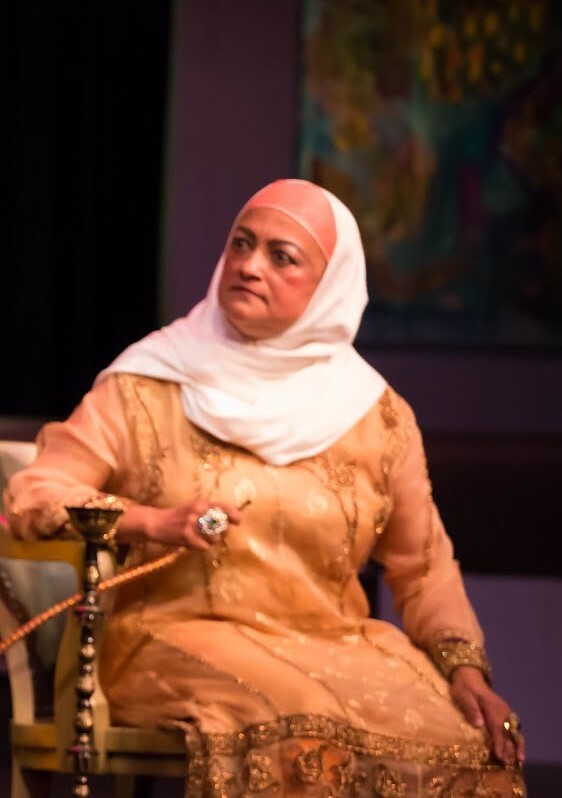
Noor dramatizes the political struggles of the Mughal court during the reign of Emperor Jahangir. The play centers on Mehrunissa Begum, later known as Noor Jehan, and the power negotiations among emperors, princes, Rajahs, and court factions. Ranjita Chakravarty portrays Ruqqaiya Begum, a senior royal figure and mentor within the imperial household.
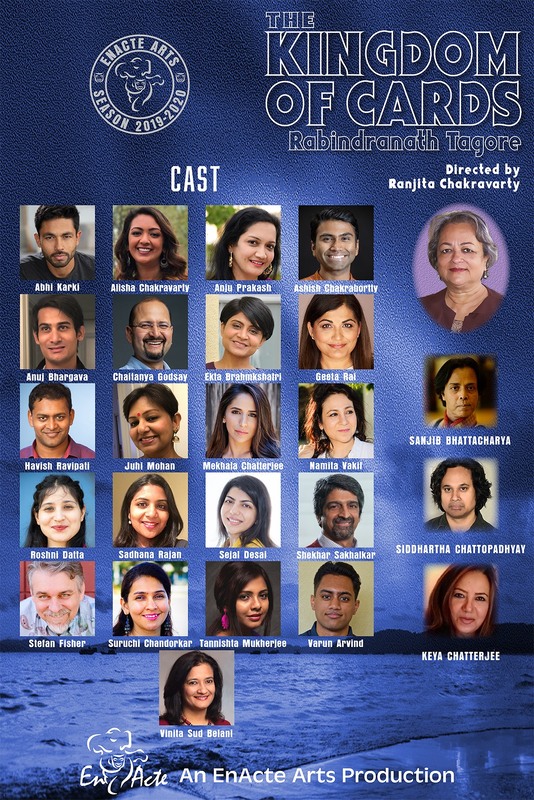
Promotional poster for EnActe Arts’ production of Rabindranath Tagore’s The Kingdom of Cards (Tasher Desh). Directed by Ranjita Chakravarty, the production reimagined Tagore’s satirical allegory of conformity and liberation for contemporary Bay Area audiences. Originally written in 1933, the play critiques rigid social hierarchies through a fantastical kingdom governed by rules and ritual. This staging reflects Silicon Valley’s ongoing engagement with Tagore’s modernist theatrical legacy and the reinterpretation of canonical South Asian texts within diasporic performance practice.
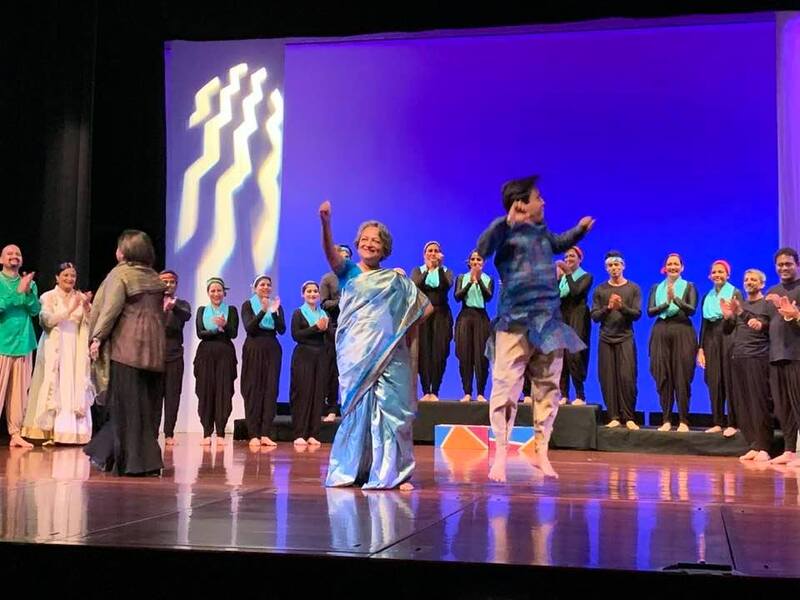
Director Ranjita Chakravarty joins the cast onstage during the curtain call of EnActe Arts’ production of Rabindranath Tagore’s The Kingdom of Cards (Tasher Desh). Originally written in 1933, Tagore’s allegorical satire critiques rigid social systems through a fantastical kingdom governed by rules and ritual. Under Chakravarty’s direction, the production blended movement, ensemble choreography by Sanjib Bhattacharya, and contemporary staging to reintroduce Tagore’s modernist theatrical vision to Bay Area audiences
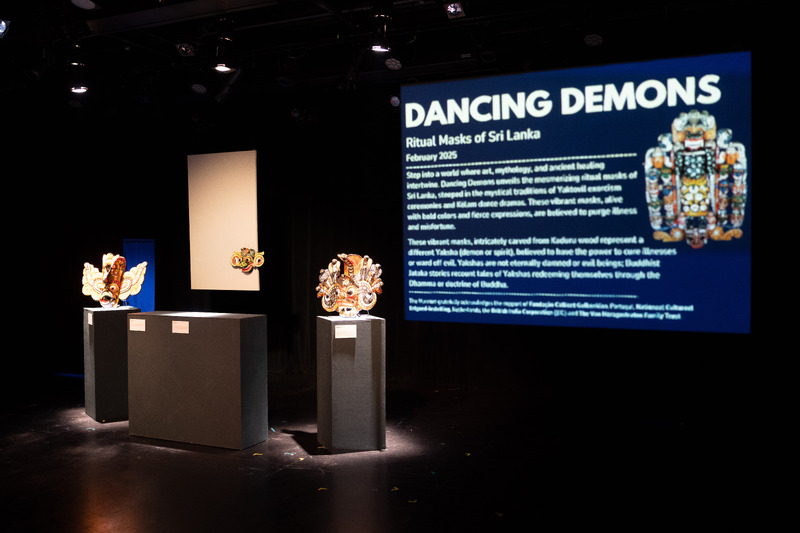
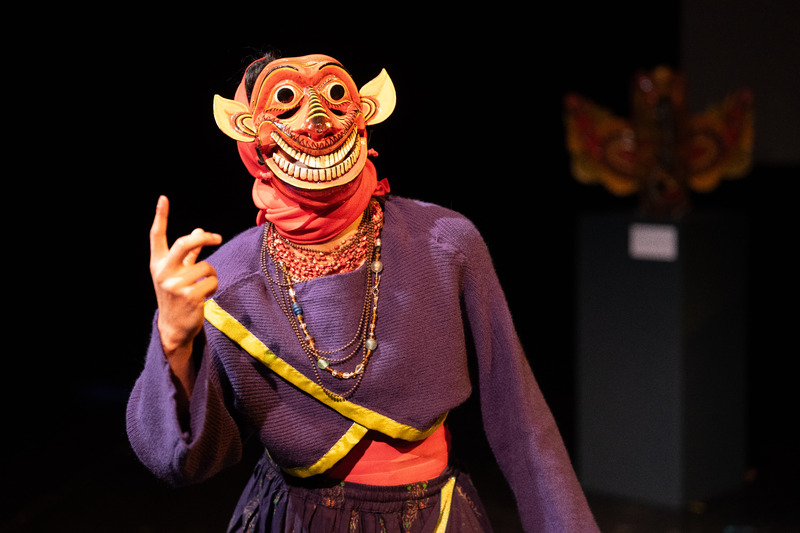
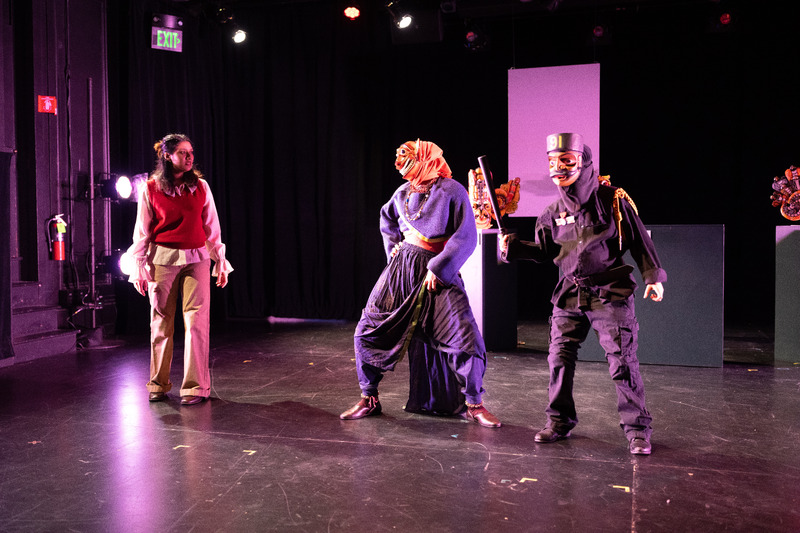
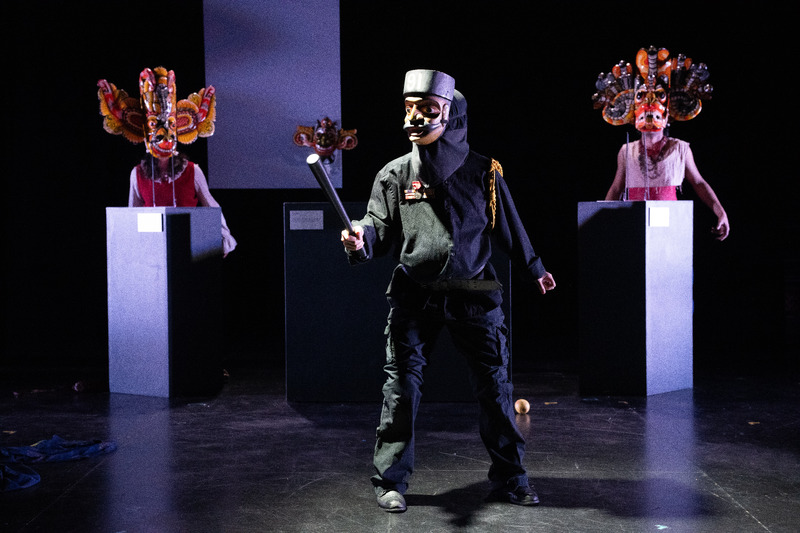
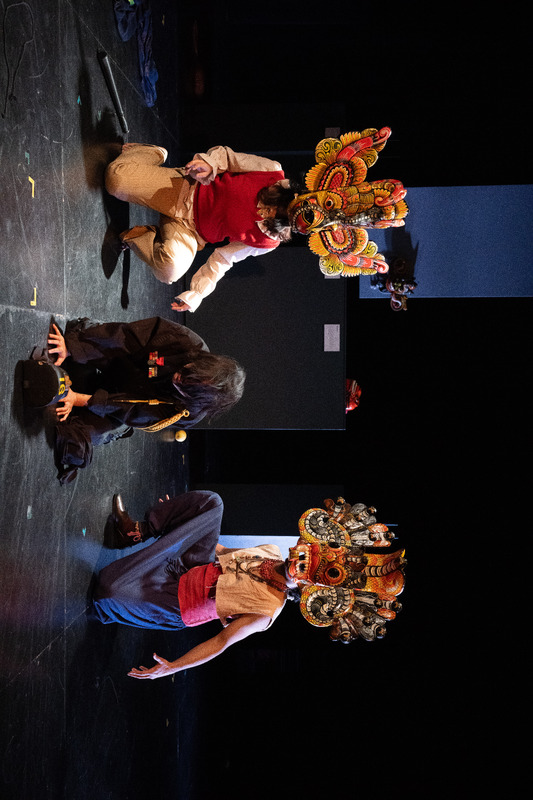
Set in a museum and incorporating elements of Sri Lankan folklore, colonial history, and personal identity, the play examines the themes of decolonization, repatriation, and cultural restoration.
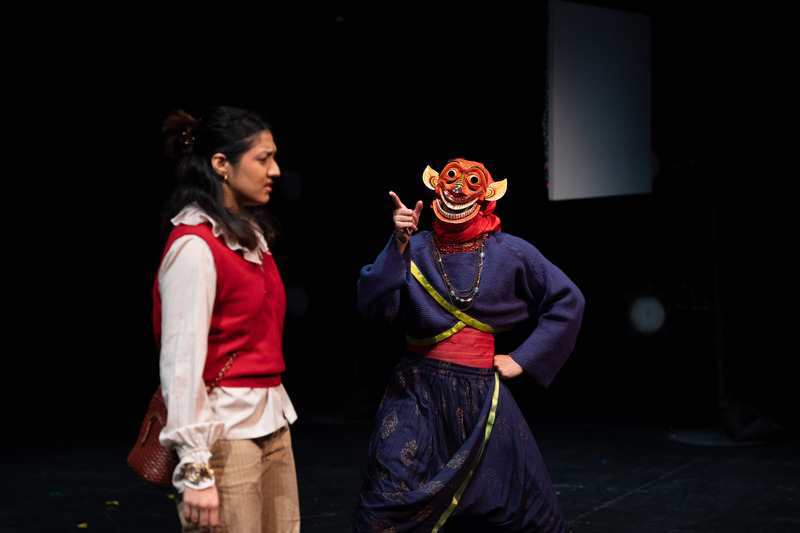
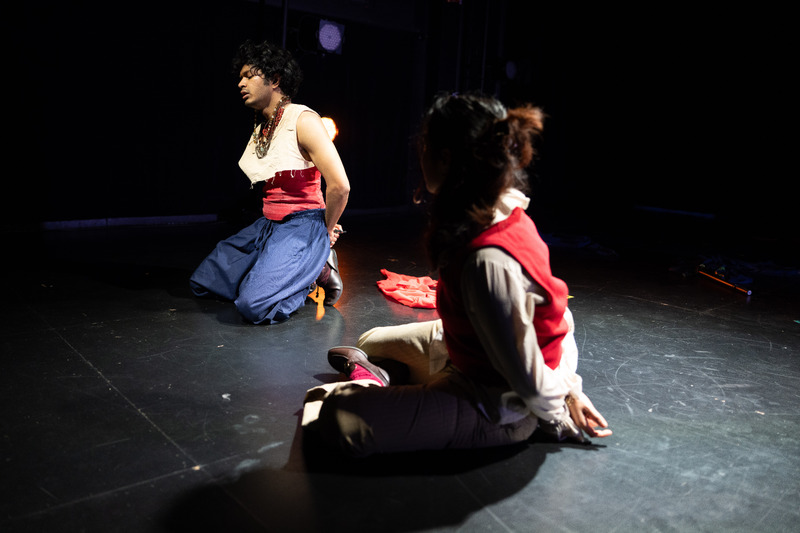
Amaya, a Sri Lankan-American visits a museum where artefacts from Sri Lanka are on exhibition. She encounters Riri Yaka, Jr, a Sri Lankan mythical demon, among the museum artifacts.
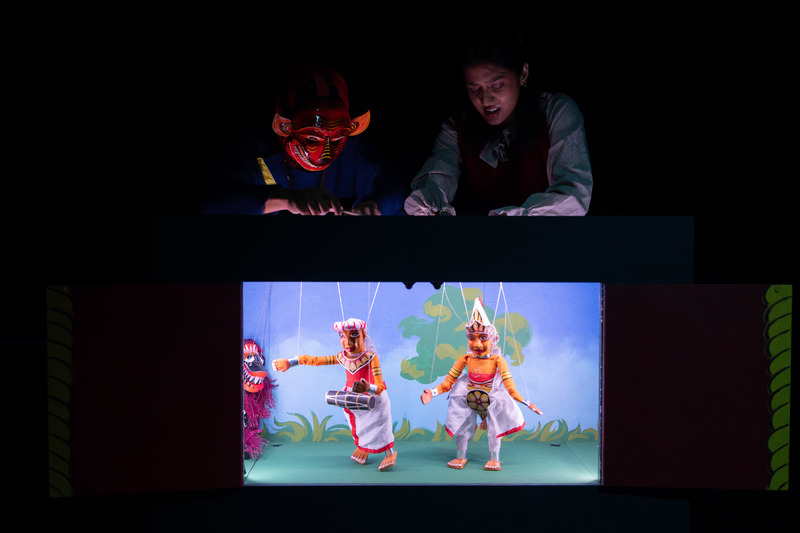
Rukada puppetry is used as a tool to critique contemporary Sri Lankan politics; a traditional form highlights the intersection between folklore and political realities.
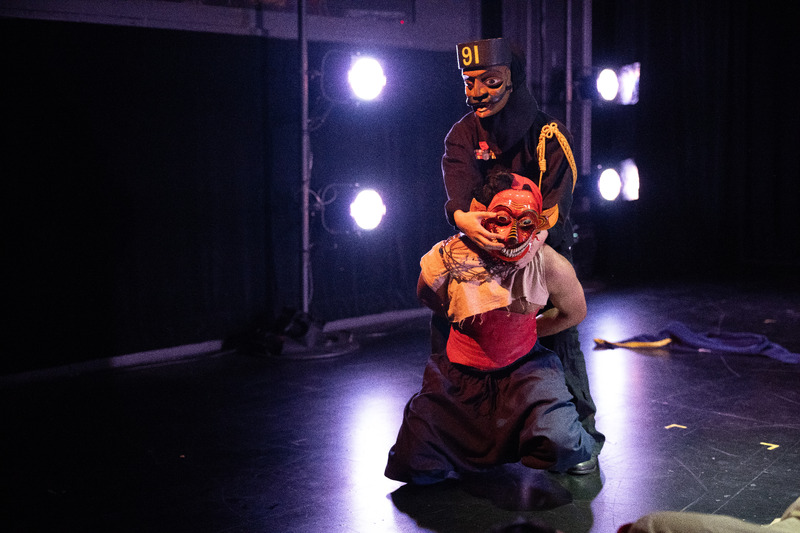
Stolen Sri Lankan cultural artefacts, such as traditional masks, in Western musuem spaces critique colonization. The integration of Kolam and Rukada masks and the embodiment of the mythical and supernatural figure of Riri Yaka, inform the moment when the fragmented identity of the diasporic Amaya recognizes the agency of cultural reclamation.
A museum space can feel like a sepulchre for performative arts and traditions; here, the brief agency of the Sri Lankans is squashed when they are relegated to becoming motionless museum artefacts.