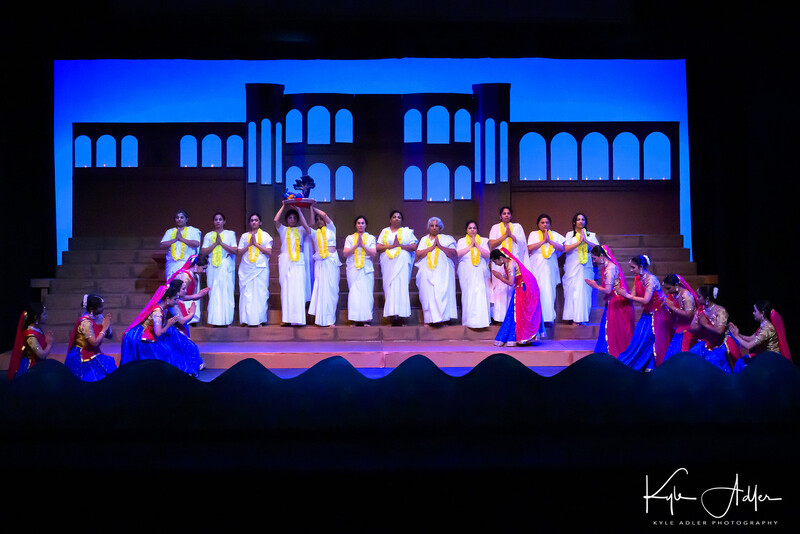
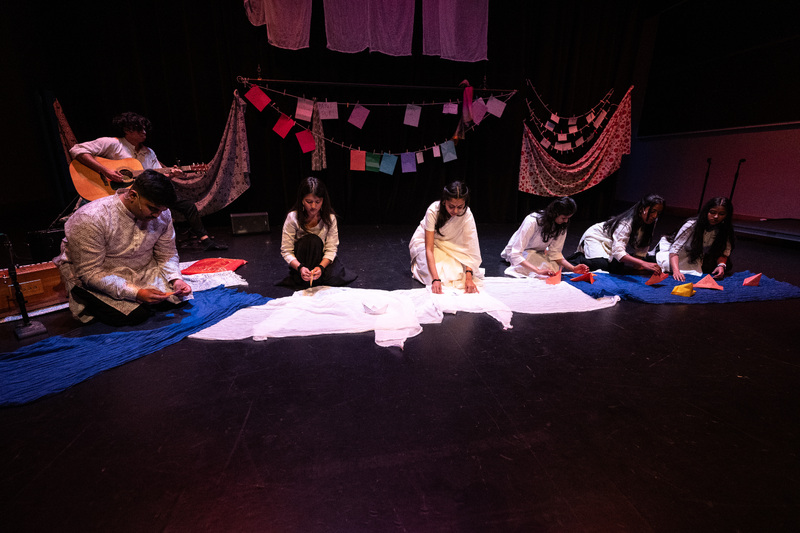
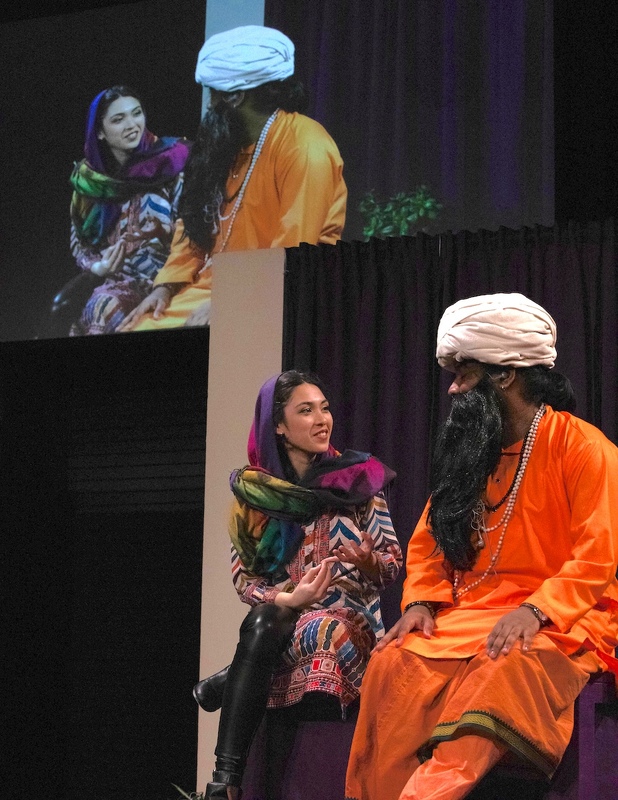
Vrindavan is a Naatak original musical inspired by contemporary debates surrounding widows living in the temple town of Vrindavan, India. The play follows a group of widows whose tightly structured lives are disrupted by the arrival of a public figure, sparking confrontation, humor, and unexpected forms of solidarity.Blending classical references with popular culture, the production juxtaposes devotional traditions associated with Radha and Krishna alongside Bollywood music and theatrical spectacle. Through this interplay, Vrindavan examines gender, marginalization, and agency, while situating these issues within both Indian social contexts and the diasporic imagination of Silicon Valley audiences.This image captures an ensemble moment of ritual and performance, with widows in white contrasted against vividly dressed dancers, visually reinforcing the play’s tension between austerity and expression.
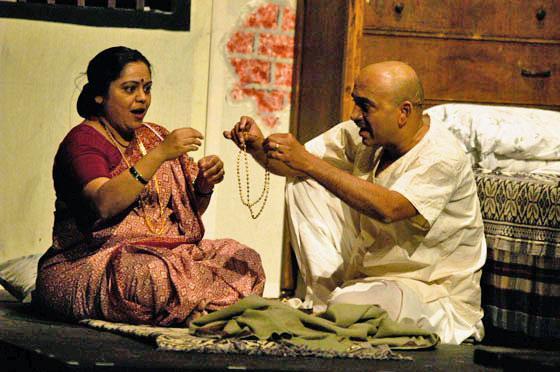
In Wada Chirebandi, translated as “The Stone Mansion” in English, renowned Marathi playwright Mahesh Elkunchwar examines the slow unraveling of a traditional rural family in Maharashtra following the death of its patriarch. As relatives gather for the funeral in the ancestral stone mansion, long-suppressed tensions surface, revealing generational fractures, economic decline, and the erosion of inherited authority. The play is widely regarded as a landmark of modern Marathi theater and was later adapted into Hindi under the title Virasat.
CalAA’s staging of this work reflects its commitment to presenting canonical Marathi drama that interrogates social transformation and cultural continuity. By producing and archiving works by major playwrights such as Elkunchwar, CalAA positions itself not only as a presenting organization but also as a custodian of regional theatrical heritage within the South Asian diaspora. The production underscores the organization’s pride in documenting and preserving influential voices from India’s modern dramatic tradition.
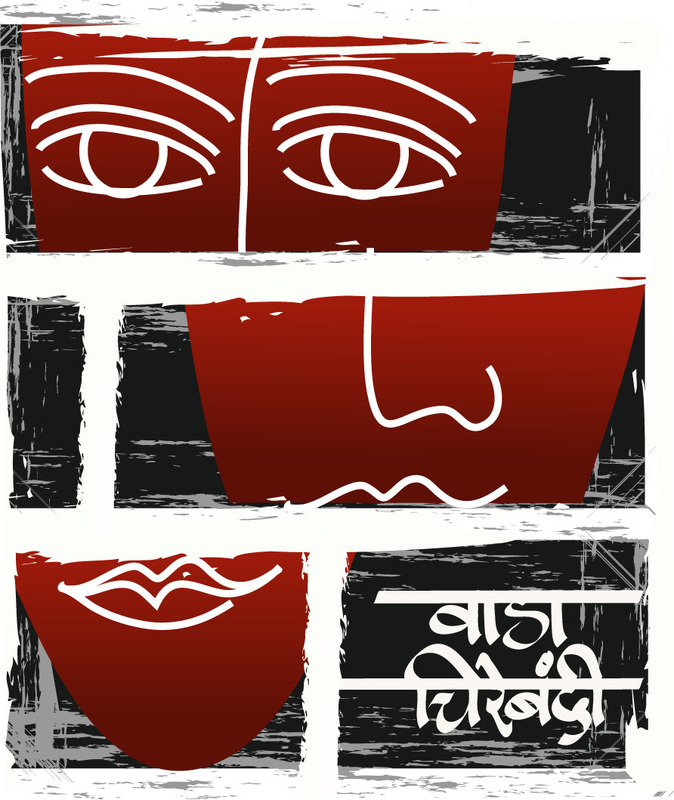
This 2004 poster for Wada Chirebandi uses bold red, black, and white abstraction to evoke psychological fracture and generational rupture. Fragmented facial features divided by stark horizontal bands visually echo the tensions at the heart of Mahesh Elkunchwar’s landmark Marathi drama. The play centers on the decline of a traditional rural Maharashtrian family following the death of its patriarch, as relatives gather in the ancestral stone mansion and confront shifting authority, economic change, and eroding values. Widely regarded as a cornerstone of modern Marathi theater, the work examines the disintegration of feudal structures in post-independence India. By staging and archiving Elkunchwar’s work, CalAA demonstrated its commitment to preserving major voices of India’s modern dramatic canon while cultivating Marathi-language theater within Silicon Valley’s diasporic cultural landscape.
The final scene of a devised performance project, What's Your Story? Telling Stories of the Desi Diaspora, with the students of SJSU. The piece documents the South Asian diasporic experience, challenging stereotypes, and mapping the evolution of the American landscape through community storytelling.
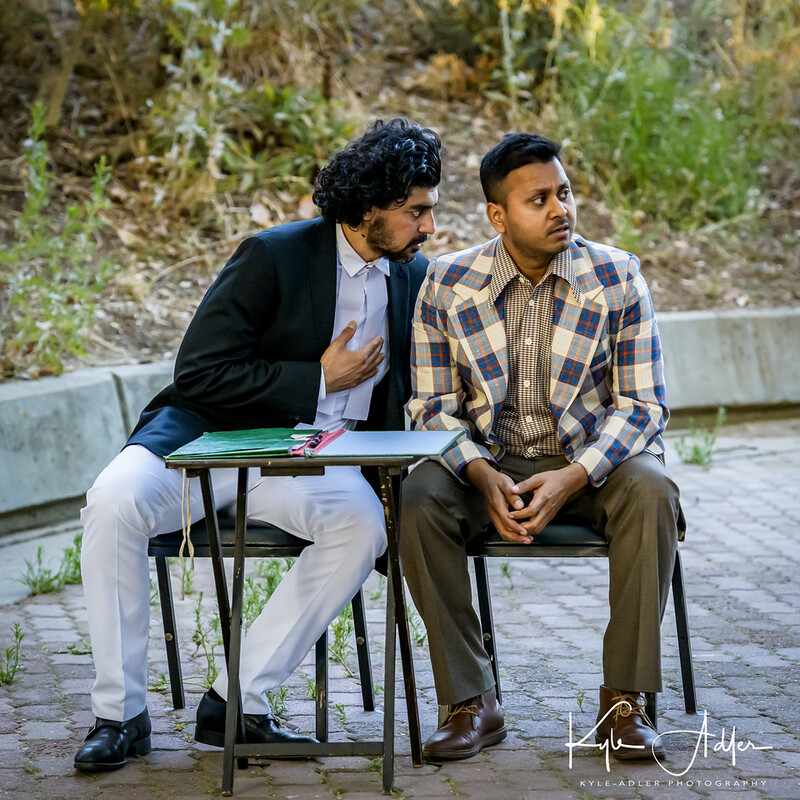
Performed outdoors during the COVID-19 pandemic, Witness for the Prosecution is Naatak’s staging of Agatha Christie’s courtroom drama, presented in an open-air amphitheater to accommodate public health conditions. The play follows Leonard Vole, a man accused of murder, whose fate hinges on the testimony of his wife, Romaine, whose unexpected revelations complicate the case. Staged in Silicon Valley, the play reflects the company’s ability to adapt both form and venue, sustaining live theater through covid constraints while maintaining a focus on narrative tension, performance, and audience intimacy.
A scene from Yoga Play, a satirical comedy set in the corporate world of a yoga‑apparel company. The play uses humor and absurdity to explore consumer culture’s commodification of wellness, the search for authenticity, and identity in a globalized, profit‑driven society.
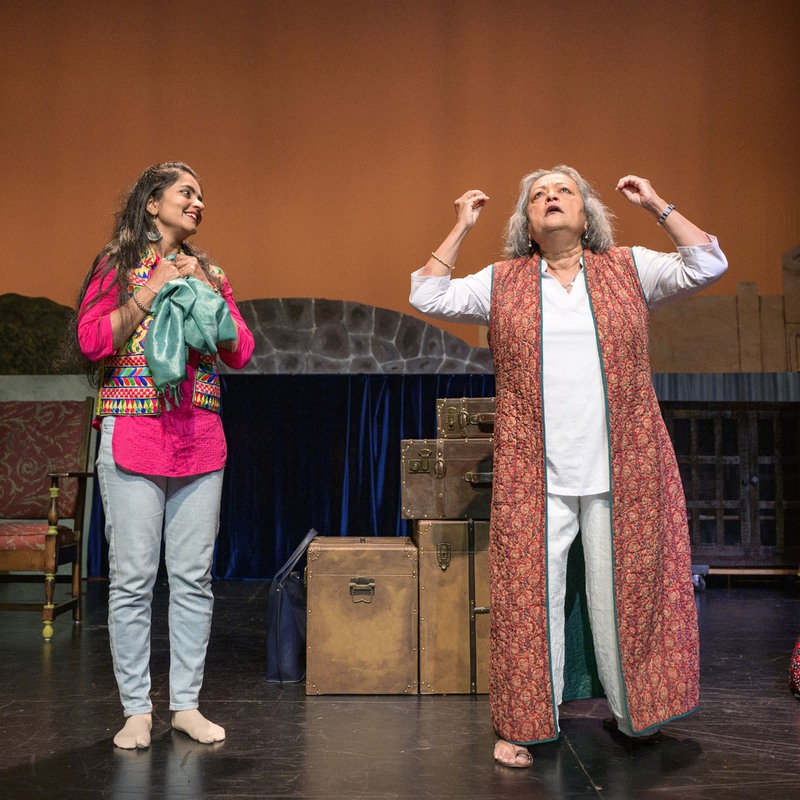
A scene from Yoni ki Baat, which is inspired by Eve Ensler's Vagina Monologues, and conceptualized in 2003 by South Asian Sisters, a women's collective. It reflects the gender experience of the South Asian Diaspora.