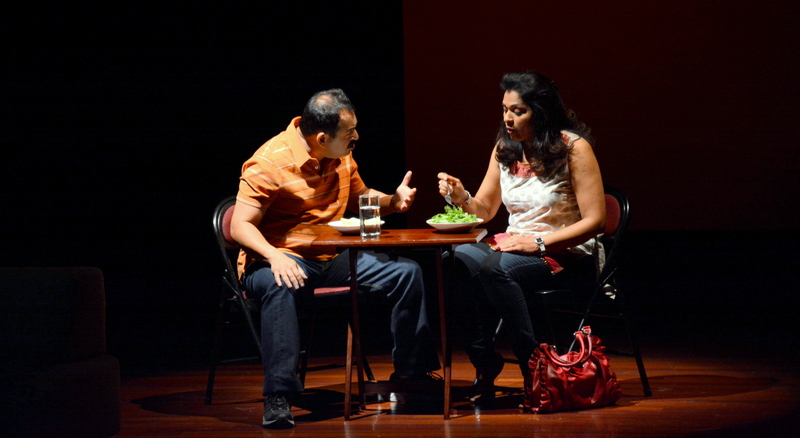
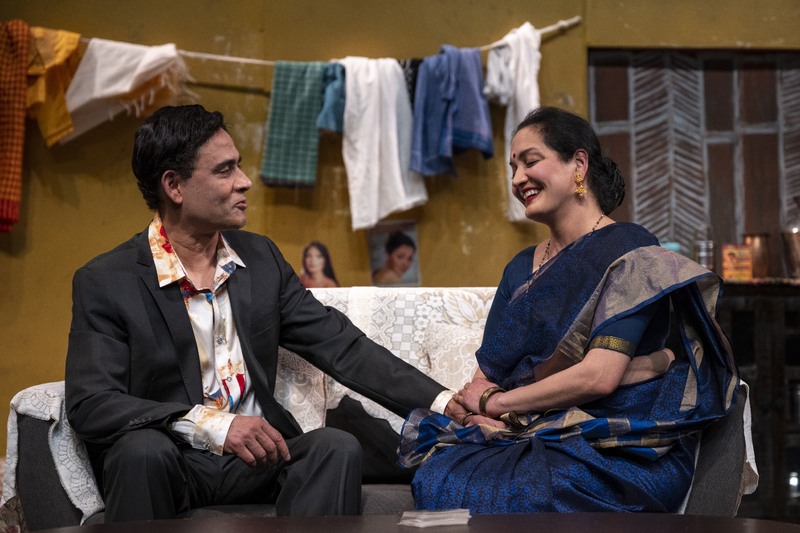
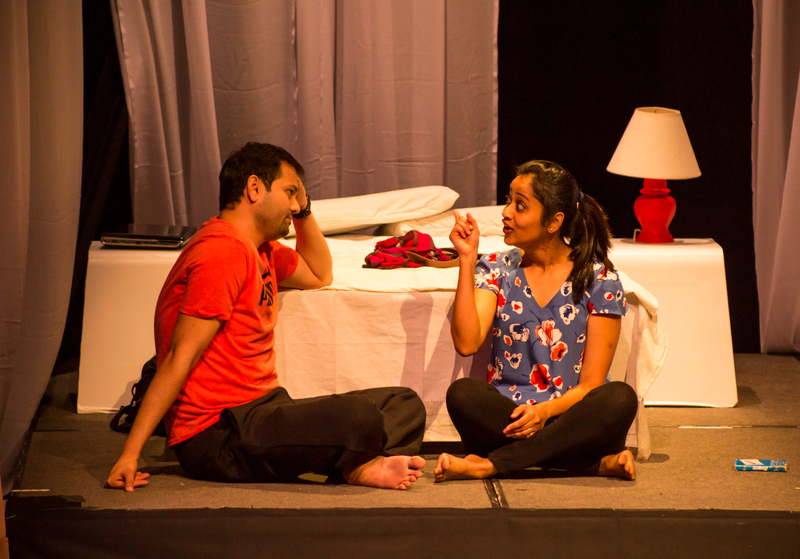
12 Varsha 9 Mahine 6 Diwas reimagined the romantic-comedy structure of When Harry Met Sally within a Marathi cultural framework. Adapted and directed by local playwright Vikram Watave, the play traces the evolving relationship between two individuals whose lives intersect repeatedly over time. Their conversations, disagreements, and shifting emotional boundaries explore whether intimacy between a man and a woman can remain purely platonic. By relocating a familiar Western narrative into Marathi language and diasporic sensibility, CalAA demonstrated how adaptation becomes a form of cultural translation. The production situates global popular storytelling within regional linguistic performance, reflecting the hybridity of South Asian life in Silicon Valley.
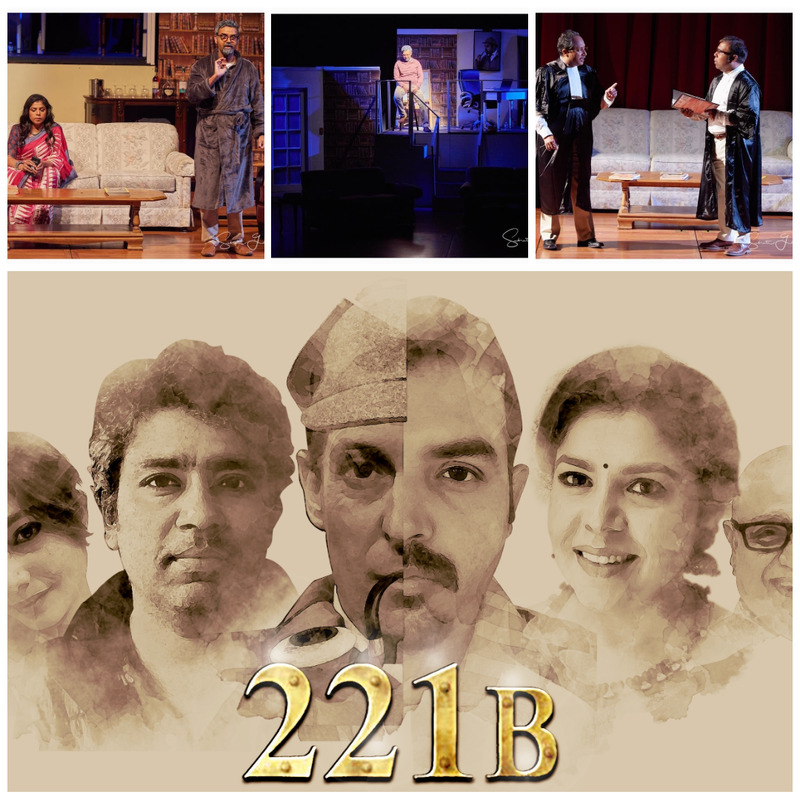
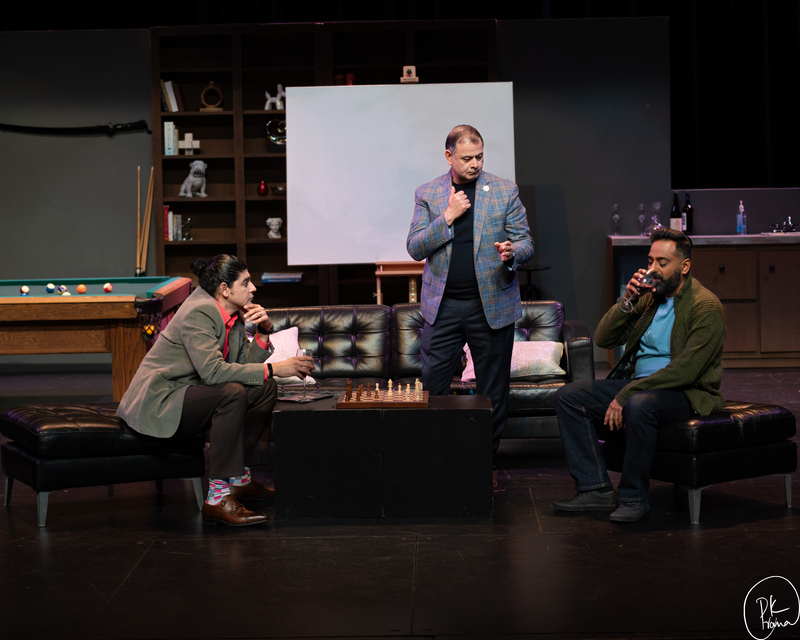
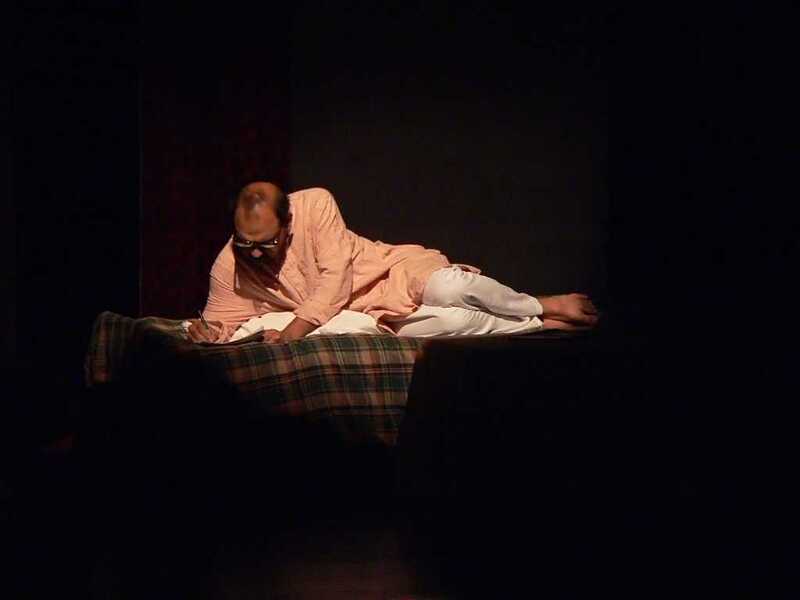
Presented in April 2022, 221B is a contemporary Bengali suspense thriller written by Arindam Mukherjee and adapted from his 2010 play originally staged in Kolkata. The drama centers on a renowned economist and avid admirer of Sherlock Holmes, whose carefully ordered world begins to unravel within the confines of his home. BAAT’s production introduced Bay Area audiences to a modern Bengali theatrical work that draws on the conventions of psychological mystery and detective fiction.
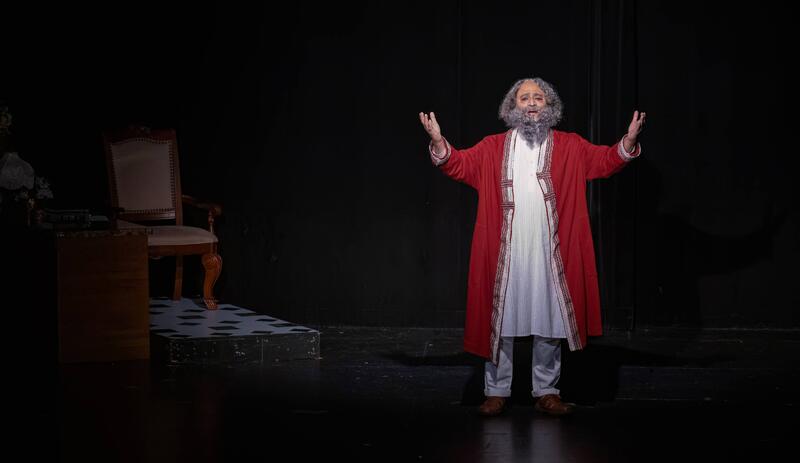
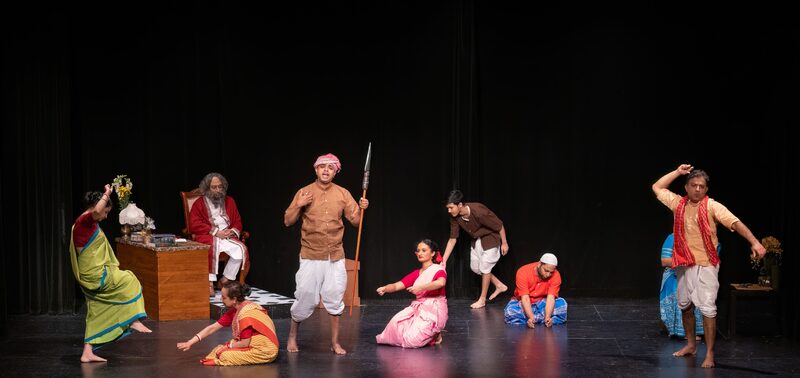
Instead of enacting Tagore's plays, ENAD adapted Ranjon Ghoshal's one-act play into a multi-cast play, and brought to the audience a glimpse of how Tagore's philosophy of universal brotherhood emerged. Drawing from Bengal's simple rural life and folk traditions and his own faith in embracing humanity irrespective of differences, Tagore stood firmly against narrow definitions of nationalism. ENAD's productioon is as relevant today as it was when Tagore espoused his philosophy of universalism. The play was in English and included Tagore's songs in Bengali.
Rural Bengal, with its long history of spiritualism, sang melodies that celebrated nature and its gifts. Tagore drew on such traditions, composed lyrics, and recognized the oneness of all living beings, big and small.
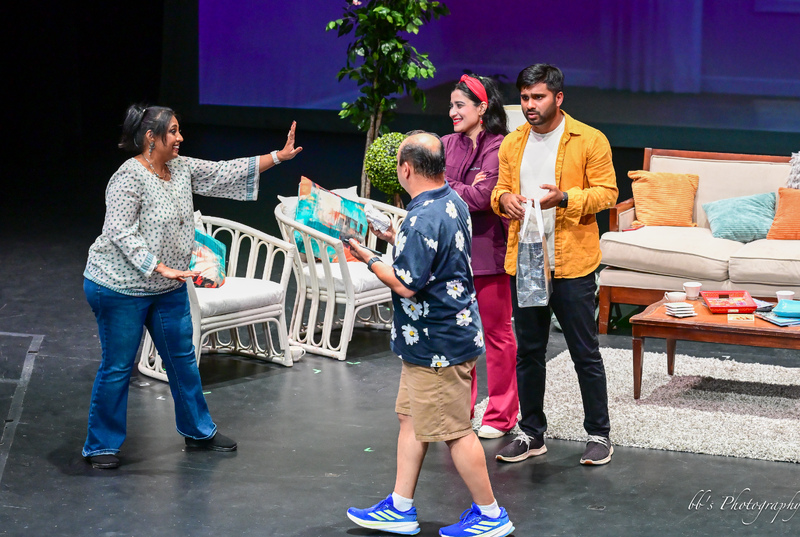
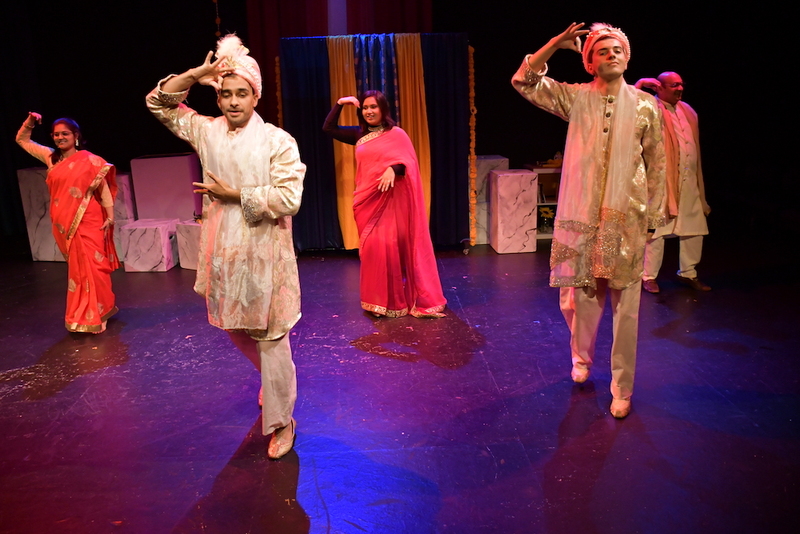
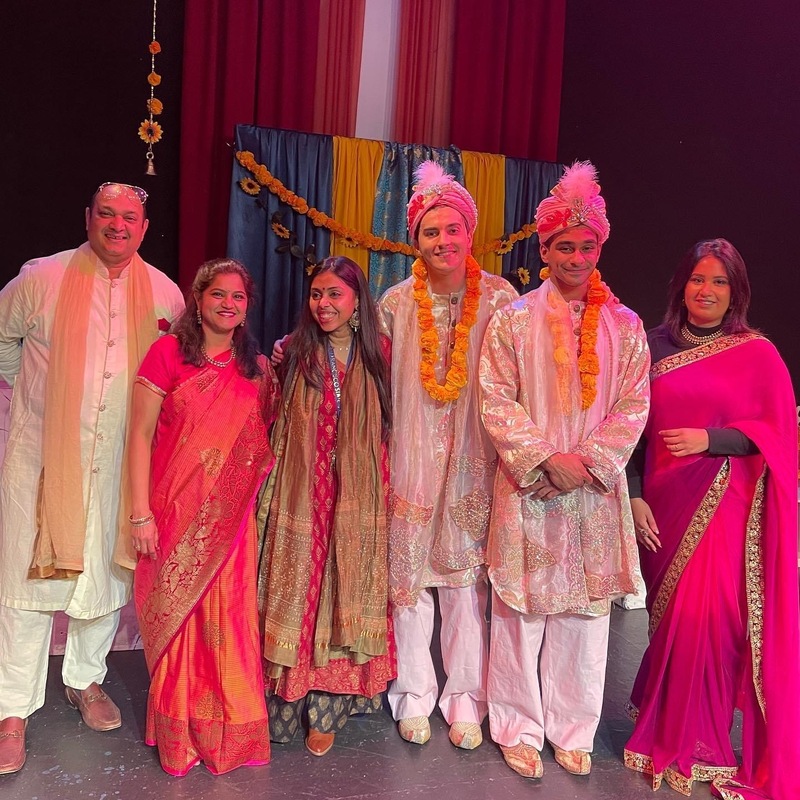
This image depicts the wedding dance of Keshav and Naveen in the play, which is a is a romantic comedy about a traditional Indian family in the Bay Area navigating love, identity, and cultural expectations when their son brings home an unexpected partner.
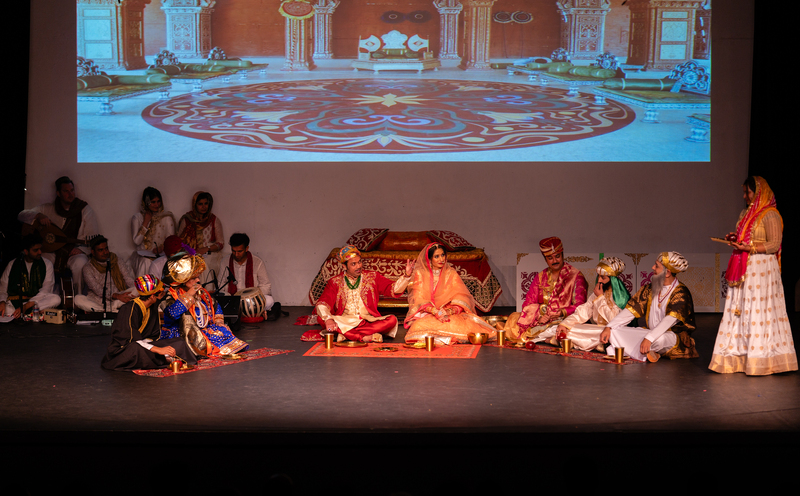
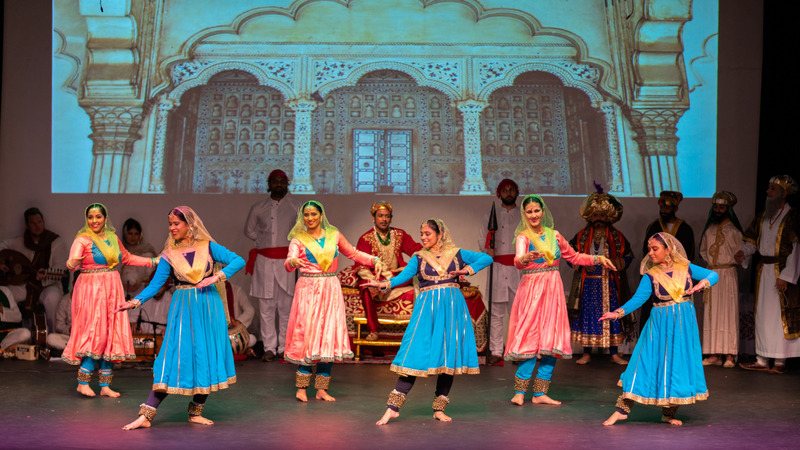
The folk tales of Akbar Birbal have tickled and taught us for centuries. The spectacle of the Akbar Birbal play is in the humor and drama of court banter, romance of Akbar & Jodha, and is interspersed with live music & dance sequences that add to the charm of Akbar’s court.
Emperor Akbar handpicked the brightest minds of his vast empire to create the illustrious Nau Ratan (nine gems) of his Mughal court. Foremost among them, and some say Akbar’s closest friend, was Raja Birbal - a man of wit, courage and sagacity.
Akbar Birbal brings together over 75 of SF Bay Area’s best
actors, dancers & musicians for the first time in East Bay.
Aniket (one who has no home) stages the expectations and disillusionment of a young couple who returns to India from the United States only to find they are not 'at home' in the land they grew up in, either.
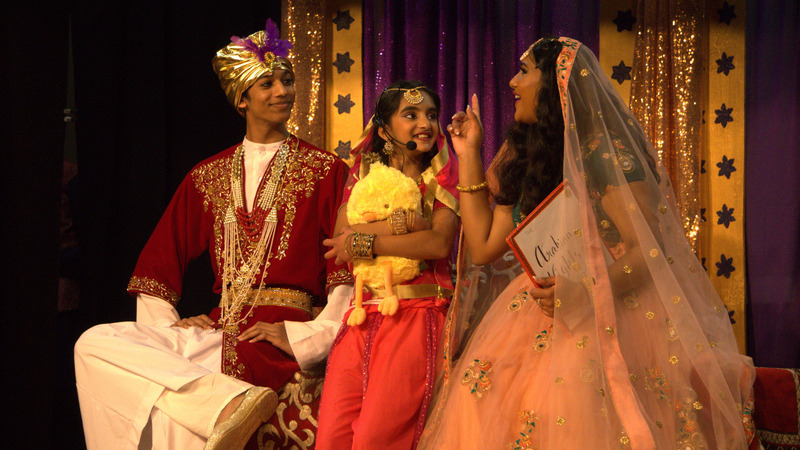
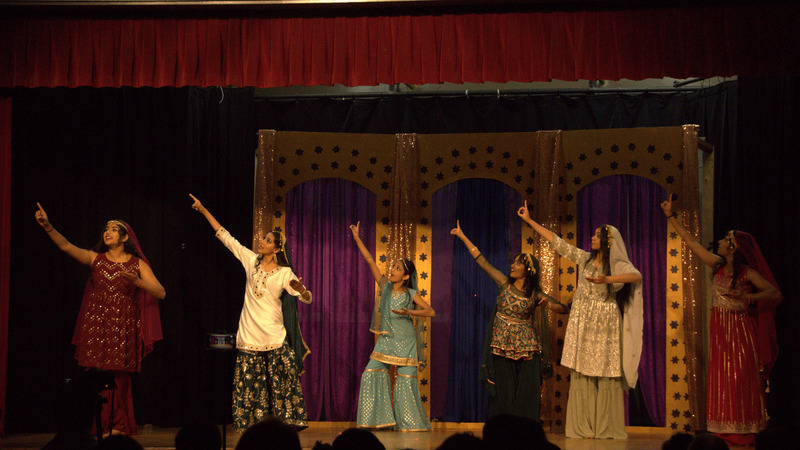
Katha Munch adapts The Arabian Nights, a collection of Middle Eastern and South Asian folk tales woven together through the framing story of Queen Shahrazad.
Katha Munch adapts The Arabian Nights, a collection of Middle Eastern and South Asian folk tales woven together through the framing story of Queen Shahrazad.
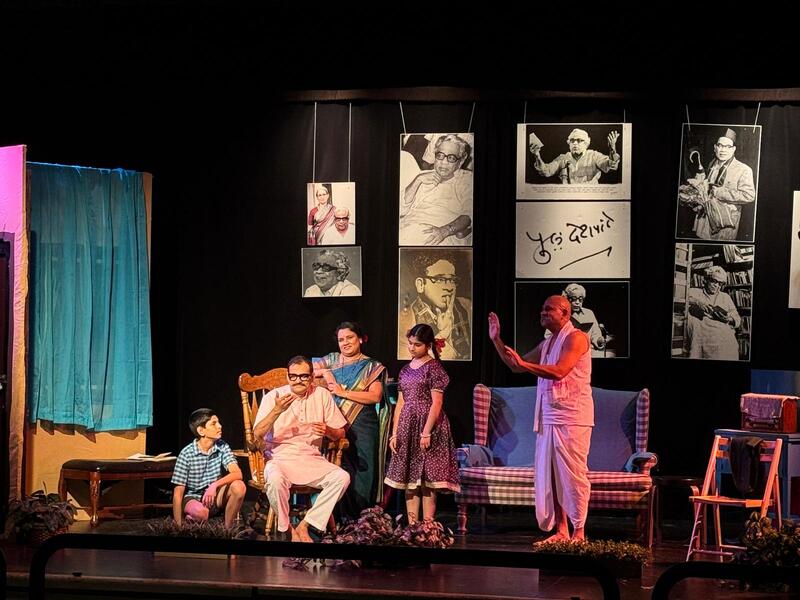
Asaa Mee Asaamee revisited one of Pu. La. Deshpande’s most beloved social comedies. The play follows a lower middle-class man deeply rooted in tradition as he navigates personal ambition, economic aspiration, and shifting social hierarchies. As his professional environment transitions from colonial British influence to Marwari business leadership, the protagonist confronts questions of identity, class mobility, and cultural continuity. Balancing satire with empathy, the work captures the anxieties and aspirations of upward mobility within a changing social order. Ratnakar Matkari’s adaptation preserves Deshpande’s humor while sharpening the narrative for contemporary performance.
Bay Area Amateur Thespians (BAAT) is a nonprofit theater organization dedicated to producing high-quality South Asian drama in the Bay Area. Founded in 2018, BAAT is a collaborative platform for performers, directors, designers, and technicians committed to multilingual, culturally rooted storytelling. The company stages works in Bengali, Hindi, and English, ranging from contemporary thrillers and comedies to adaptations of significant South Asian literary texts. BAAT frequently incorporates English supertitles to broaden accessibility and engage intergenerational and cross-cultural audiences.Positioned within Silicon Valley’s vibrant South Asian diaspora, BAAT bridges classical and modern narratives, cultivating community through disciplined ensemble work and fully realized theatrical production.
Written in 1965 by Badal Sircar, the play focuses on the internal turmoil of a conscientous, thinking man as he watches helplessly the status of a war-torn world. Staged in 2005, ENAD staged this play as the ongoing global conflicts made Sircar's play very relevant.
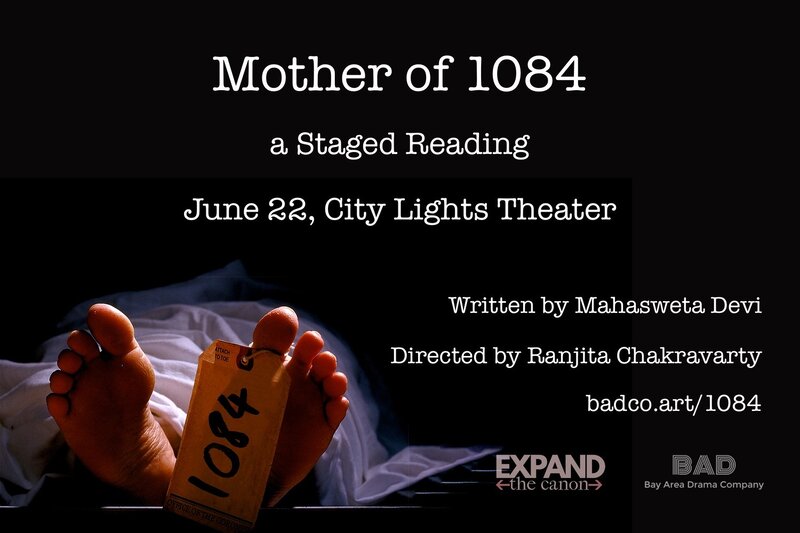
Poster for the company’s production of Mahasweta Devi’s Mother of 1084, directed by Ranjita Chakravarty. The play traces a mother’s search for truth after her son is killed in political violence, transforming private grief into a broader indictment of state power and social silence.
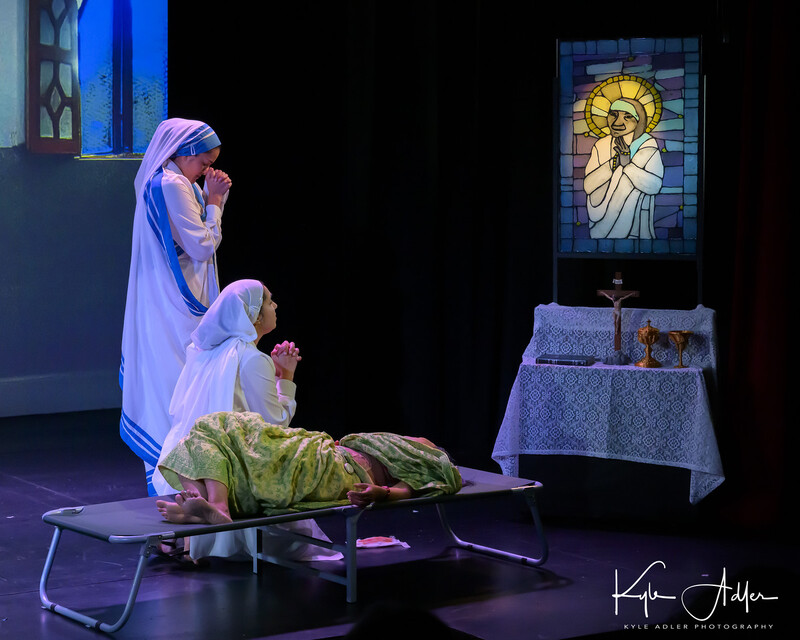
Blessed is a Naatak original inspired by the widely reported miracle attributed to Mother Teresa, in which a woman named Monica Besra was believed to have been cured of a tumor. The play examines the intersection of faith, institutional authority, and skepticism, exploring the processes and politics behind sainthood within the Catholic Church
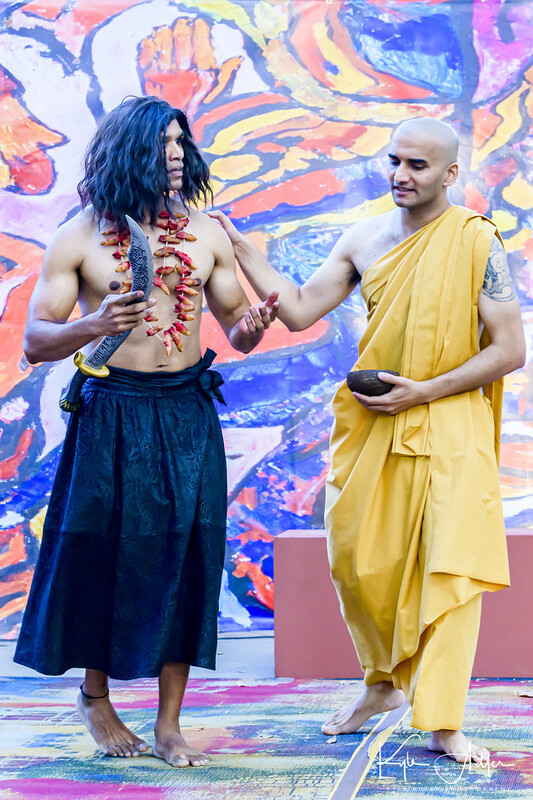
Buddha is a Naatak original musical that traces the life of Siddhartha Gautama, from his departure from royal life to his attainment of enlightenment and his journey as a teacher. Set in the sixth century BCE and written in verse, the play combines narrative, music, and choreography to explore themes of renunciation, compassion, and transformation. Staged outdoors, the production uses ensemble performance and visual design to create a fluid, immersive theatrical experience. This image captures an interaction between two contrasting figures, one representing worldly life and the other spiritual transformation, visually emphasizing the play’s central tension between material desire and the path toward enlightenment.
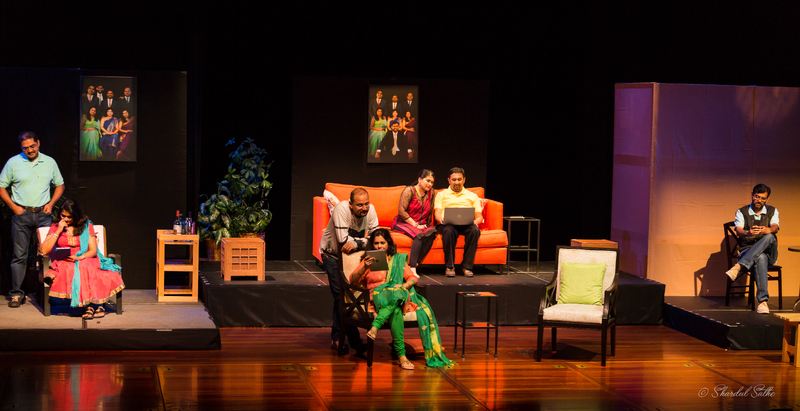
Alibaba Ani Chalishitale Chor presents a contemporary Marathi social comedy structured around suspicion, gossip, and social pretense. Set during a private party hosted by a doctor in his forties, the evening takes an unexpected turn when the lights suddenly go out and guests hear the unmistakable sound of a kiss and a slap. When the lights come back, speculation spreads rapidly, exposing fragile egos and hidden tensions among the attendees. As accusations and rumors escalate, the host ultimately confesses that he staged the sounds himself, revealing the ease with which perception overtakes truth. The play examines middle-class morality, performative respectability, and the dynamics of rumor within tightly knit social circles.
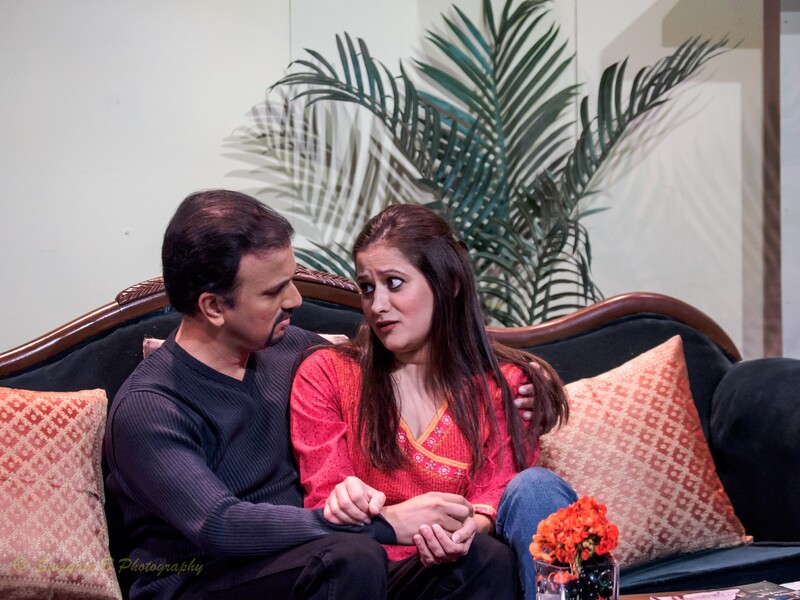
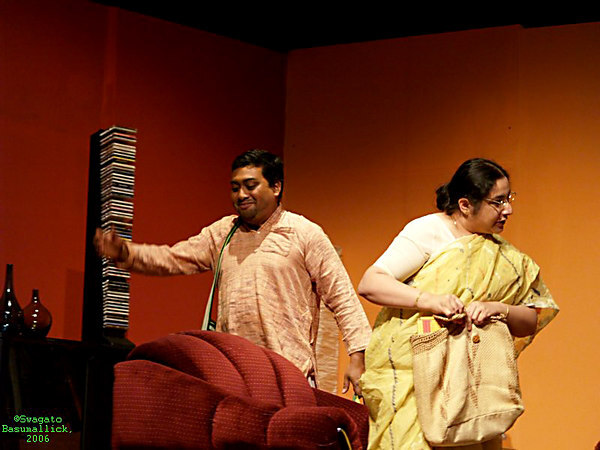
Nava Gadi Nava Rajya marked a strategic shift in the organization’s programming philosophy. As reflected in director Mukund Marathe’s recollection, earlier productions had largely appealed to a smaller, dedicated segment of Marathi theater enthusiasts. With this play, CalAA sought to broaden its audience by presenting work that remained thoughtful yet accessible to a wider community. The drama centers on a newly married couple navigating insecurity and misunderstanding when the wife’s close college friend visits. The husband, unsettled by the openness and familiarity between the two, begins to question their relationship. The play explores jealousy, trust, and communication within contemporary marriage, ultimately emphasizing dialogue and emotional growth over suspicion. By blending humor with relatable domestic tension, Nava Gadi Nava Rajya represents CalAA’s move toward crossover programming designed to engage both traditional theater audiences and a broader diasporic public.