Life’s deep midsummer—up the hills I went,
Alone, and yet companioned by a thought
That glad endurance to my spirit lent,
And all my mind to happy musings wrought.
The morning hours had vanished up the blue,
There was no shelter from the noontide heat
Height over height my ragged pathway grew,
But still I hurried on with tireless feet.
I felt no faintness at the noontide glow,
No shrinking that the hills were steep to climb;
The world, all beauty, lay outspread below,
To heavenly music all my thoughts kept time.
For aye a voice kept singing at my heart,
“The Master calleth—he has work for me,
In his great harvest I shall bear a part,
And golden sheaves bring home triumphantly.”
A sudden darkness fell athwart the sky,
And all the beauty faded from the day,
I felt the gladness in my spirit die,
As one to meet me came along the way.
A veiled presence, at whose noiseless tread
My heart stood pulseless with a sudden fear,
And all the promise of the future fled—
The Master’s work, the golden harvest near.
“I do not need to ask thee who thou art,”
I said with bitterness. “Yet ‘tis but noon;
‘Among the reapers I had borne a part,
‘And done good service hads’t thou left me room.
Dids’t thou not now that I had work to do,
‘That even as we met, with hurting feet
‘I climbed the hill, had sped the valley through,
‘To compass that for which He deemed me meet?
‘I had been ready when the evening came,
‘Some sheaves had proved I had not toiled for naught,
‘With kindly welcome had pronounced thy name,
‘And gladly took the rest thy presence brought.
‘But now, in sooth, thou comest all too soon,
‘And tak’st my work unfinished from my hands;
‘Then bid’st me sleep when day is at the noon,
‘My golden harvest all ungathered stands.’
But as with bitter tears I turned away,
A gentle voice said, “Is it then but so
‘Thou lov’st the Master? Is it thine to say
‘Here will I work, at such an hour will go?
‘Can’st thou not trust Him? Lo, these many years
‘His love hath led thee, giving still the best;
‘With good unlooked for answering thy tears,
‘From sharpest trials bringing sweetest rest.
‘And is it well, that like a forward child,
‘Thou claimest as thine own the things he meant
‘To lure thee upward—which thy steps beguiled
‘To nobler aims, a worthier intent?
‘Tis not thy work the Master needs, but thee,
‘The loving spirit, the believing heart,
‘The child obedient, trustful, glad to be
‘Where’er He will; to stay or to depart.
‘Think’st thou there is no work to do but this,
‘No other harvest, whitening in the sun
‘That any change can rob thee of the bliss
‘Of sure completion of the task begun
I turned in haste, rebuked, no more at strife
With him my foolish heart had quailed to meet
And lo, God’s angel, not of Death, but Life,
Before me stood and drew me to his feet.


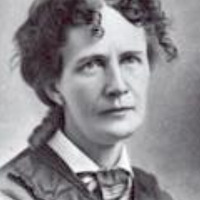 Celia M. Tibbits Burleigh
 Called