I.
"Tell me, maiden," said the year in going,
“What the message I shall hear from thee,
To the angels who with love past-knowing
Feel the life-lamp of thy infancy?
When I meet them they will murmur low,
“Oh year! what tidings from the loved below?”
“Tell them, tell them beside the sea
I wait a passage to the land of morn;
That Hope has whispered, o’er the waves to me,
A ghostly vessel by the winds is borne
To waft me proudly to that sunny land
Where all the castles of my dreaming stand.
“Day after day I watch the ships go by;
And strain my eyes across the purpling deep,
Where dimly pictures ‘gainst the summer sky
The hills of morning in their beauty sleep.
But look! even now across the shining see
The ship of promise bearing down for me.”
II.
“Silent mourner, on the wreck-strewn shore,
When the angels of thy infancy
Ask if homeward turn thy steps once more,
What, I pray thee, shall my answer be?
‘Tell us! tell us,’ they will say, ‘Oh year!
Draws the loved one unto us more near?’”
“Leave me! leave me! all is lost, is lost!
My goodly ship is crumbled in the deep,
My trusted helmsman in the breakers tossed;
All’s wrecked! all’s wasted even the power to weep.
The mocking waves toss scornfully ashore
The ruined treasures that are mine no more.
“Leave me alone to pore upon the waves
Whitened with upturned faces of the dead;
Earth for such corpses has, alas! no graves;
No holy priest has requiescat! said.
There’s nothing left me but the bitter sea,
God and his angels have forgotten me.
III.
“Earnest worker, in the fire-light dreaming,
What the message I shall bear from thee
To the angels whose soft eyes are beaming
From the portal where they watch for me?
‘Is she coming? They will say, ‘Oh year!
Draw her footsteps to the home-land near?’”
“This the message—that I sit no more
With eyes bent idly on the hills of morn,
That in the tempest on the wreck-strewn shore,
A holier purpose to my soul was born,
‘Give leave to labor’_was the prayer I said,
Leaving the dead past to inter its dead.
“And it was granted—by my hearth tonight,—
Tell the beloved ones,—I sit alone
But not unhappy; for the morning light
Will show my pathway with its uses strown.
Happy in labor—say to them, Oh, year!
I wait the Sabbath which, I trust draws near.”


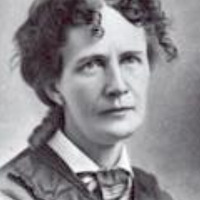 Celia M. Tibbits Burleigh
 Coggeshall Poetry Collection Title Page
 Labor