Around the sick-bed of their gray-haired friend
Stand brother slaves in silence, while each face
Reveals the anguish that the spirit feels,
As homeward to their distant country, turns
Their old companion. Suddenly he spoke:
“Slowly my strength is ebbing—and the band,
That long hath held the soul to cumbrous clay,
Loosens—while springs exultingly away
The fetterless spirit to our Fatherland;
To live anew ‘midst blessedness unspoken,
Its sorrows vanished and its fetters broken.
“Brothers—farewell! Oh, never more for me
Be your cheeks stained with weeping—for is not
Mine, after years of pain, a joyful lot,
From the oppressor’s hate, scorn, avarice free?
My soul even longs to know this body thrush
In Earth’s dark womb—dust to its kindred dust.
“Let not the white man, with his words of guile,
Deceive your hearts—but, faithful unto death,
Hold fast, through all, your father’s better faith—
For gladly in their malice, would they wile
Even this away—those batteners on our blood—
And rob you of your last remaining good.
“Smooth words they speak of God’s impartial love,
That, haply, they may lure you to the CROSS—
Believe them not—their promises are dross—
By the red scourge that tears our backs they prove
Their hearts are stone, their eyes now not compassion,
But on our anguish gleam with exultation.
“Who loves the arrow that hath drank his gore?
Implacable, eternal, be your hate
Of the hard tyrants who, with pride elate,
Have trod you down. But this with me is o’er—
Enough that our worn bodies drag the chain—
Free, free till death our spirits shall remain.”
And with the last word on his quivering lips,
Heavily sunks his gray head on his breast—
Life’s latest sands are shaken from the glass,
And naked stands the soul before its God.

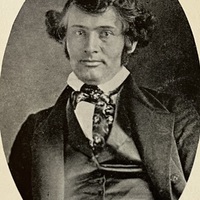 William Henry Burleigh