Quenched is another star, which burned
With steady light and lustre pure;
Though others from their orbits turned,
Its course on Freedom’s path was sure:
Though round it roared the storms of time
And vapors gathered thick and black,
Still onward, in its strength sublime,
It swerved not from its radiant track.
A heart that glowed with warmth divine,
Pleading for human rights, is still—
In faith, in courage how like thine,
Brave HERMANN!—unsubdued by ill!
With lyre and sword amid the fight,
None struck a surer blow than he,
That from the holy seed there might
Come the rich fruits of Liberty!
A harp—‘twas Freedom’s own—whose strings
Trembled with music rich and rare,
Luke tones some wandering seraph flings
Abroad upon the twilight air,
Lies shattered now—its master-bar
Is gathered with Death’s countless throng—
Alas!—that henceforth can be heard
Only the echo of his song.
Science! A chosen priest of thine
Is snatched away, whose liberal hand
Flung richest offerings on thy shrine,
And oped, to his adopted land,
The priceless treasures of his own—
With gifts and graces to adorn
The ranks where he conspicuous shone,
Of choicest spirits, German-born.
Whilst warred the elements around—
Flood, Frost, and Fire—he heard a call;
The fleshly fetter was unbound,
And the freed soul, o’erleaping all,
Soared to the mansions of the blest,
Where pain and sorrow cannot be.
He whom two worlds with love caressed,
Is covered by the soundless sea!

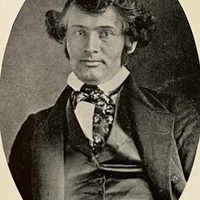 William Henry Burleigh
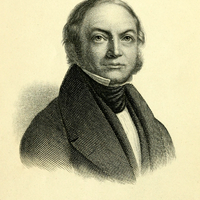
 Charles Follen