When at first, Creation woke
Startled from chaotic night;
By Jehovah’s mandate spoke
Into being, life, and light,
In a flinty rock I lay,
Mid the caverns of the earth,
Hidden from the light of day,
Where the crested snake hath birth.
Darkness veiled my primal rock,
Until years had rolled along;
When a fierce, convulsive shock,
Shook the centre, deep and strong,
Then the solid earth was rent,
And in wild confusion hurled,
And the bursting firmament
Poured a deluge o’er the world.
Forth, the buried ocean gushed,
Swelling higher and more high,
And the leaping waters rushed
Down the chambers of the sky,
Till a shoreless sea was spread
O’er the ruins of a world,
Burying every mountain’s head,
By no hidden breakers curled.
When the waves had rolled away,
And the earth once more grew bright,
On a lonely plain I lay,
By the conflict brought to light.
Ages upon ages passed,
Sun, and moon, and stars rolled o’er me,
By me flew the whistling blast,
And the wild deer fled before me.
When full many a sun I’d viewed,
Lo! across the lonely plain
Came the red man, poor and rude;
Forced by tempests o’er the main.
Day by day he passed me by,
As he hurried to the chase
Till at length his kindling eye
Rested on my flinty face.
[?????] then was broke,
And the red man homeward bore me,
And with many a well-aimed strike
To the form I bear he wore me.
Then upon an arrow true,
With his thongs he bound me well,
And, as swift for him I flew,
How the stricken wild deer fell!
Often from his throne on high
Stooped the crested eagle’s pride,
As I cut the yielding sky,
Piercing through his feathery side.
And the bison, as he trod
O’er the western Prairie,
Spurning still the crimson sod,
Yielded up his life to me.
Thus, before the forest king,
On my errand, true and fleet,
Laid I every living thing,
Cold, or gasping at his feet.
Till at length the white man came,
Wronged the Indian, til his rage
Kindled to a quenchless flame,
Sparing neither youth nor age—
Then I drank the infant’s blood,
Piercing through its tender heart—
Gliding through the leafy wood,
Bade the stern man’s life depart.
Lighted by the burning cot,
To the father’s heart I flew,
Many a wild and fearful spot,
Red with blood, my prowess knw.
As the messenger of wo,
From the Indian to the white,
Whizzing from the fatal bow,
I have sped my rapid flight.
And before my unseen path,
Rose the cry of anguish up,
For the white man, of our wrath
Deeply drank the bitter cup.
Thus I smote the gentle wife,
Slew the sire and little one,
And the horrid scalping-knife
Wrought what I had left undone.
Till o’er ocean, strong and stronger,
Came the desolating white,
And the forest-tribes no longer
Could withstand their gathered might.
Then before the Yengeese’ thunder
And the poisoned bowl he gave,
Fell their serried strength asunder,
And from ruin naught could save.
Blood flowed down the crimsoned rills,
From a thousand mountain cones,
And the red man’s native hills
Whitened with his bleaching bones.
I, within the nerveless hand
Of a fallen hero lay;
Till above the conquered land,
Months and years had rolled away.
When along the hillock’s brow,
Fattened with the Indian’s blood,
Drove the white his slavish plough,
Where the lofty forest stood.
With the mouldering skeletons
I was turned beneath the sod,
And the white man’s menial sons
Carelessly above us trod.
Year by year their hated plough
Hath disturbed their ashes’ rest,
And his maize doth even now
Flourish on the Indian’s breast.
This hath been my changing lot
Since Creation first began;
Never shall I be forgot,
While the earth contains a man:
For I’ll wake in hearts of men,
Thoughts of all the Indians’ wrongs
And they shall remember then,
To whom recompense belongs.

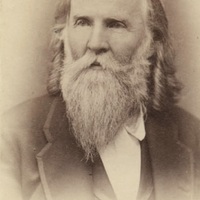 George Shepard Burleigh