She was a Seeress in the golden days
When Youth, a dreamer, saw the whole round world
An orb of beauty in a mellowing haze,
Its very crags, for purpling mists that curled
Around their awful brows, as soft as they,
And seeming ready to melt and soar away
With the dissolving vapors round them furled.
And she, whose eye was deeper than the skies,
And full of all ineffable mysteries,
Seemed the veiled Queen of this ethereal realm;
Her form, the soul’s translucent drapery,—
Moving unconscious of the storms that whelm
Our ruder senses in dismay,—seemed free
Of that bright realm we name futurity;
Her eyes could see the invisible, her ear
Could hear the inaudible; she could catch the waft
Of asphodel odors from an angel’s wing,
That out of heaven, unseen of us, swept near,—
Could feel the impalpable; when star-deeps laughed
With silent light she knew the songs they sing
From everlasting; for her ever sense
[SECOND MANUSCRIPT PAGE ILLEGIBLE – finishes this first stanza, has a second complete stanza, then starts a third stanza]
Whose dome shuts over us, swarming and alive
With an infinity of suns for bees!
The shapes ye saw would be ethereal sprites
Of all things beautiful, the swift delights
That here are fleeting in their visible forms
But are immortal in the air that warms
The yearned-for into being.
The weird flights
Of the informing souls of roses, pinks,
And all the lilies, from the pet that shrinks,
Under her broad, green leaves, to that proud Queen
In the white splendor of her blooming, seen
When June distills the honeyed dew she drinks;—
Ad of those jewels of the fairy dell
The dainty spurry and scarlet pimpernel,—
Deep in her dreamy eyes they float as well
When winter scowls as when the summer air
Lures them to fold themselves in petals fair.
Yet other shapes and visions still more rare
Ye might discern, slow-pinioned, wafter by
In the gray mystery of that filmed eye,—
Souls of the dead that breathe impalpable air
On the glad hills of Immortality;
Souls of the living who from realms on high,
In Aldebaran or sublime Altair
Flash their clear image on the electric beam
That light shoots vibrant, to their dim extreme,
From their vast home beyond our lowly sky;
And many a form of beauty yet to be
When man and woman are wholly pure and free
And the new earth Is heaven’s unerring prophecy!
Time—that transmutes the fair, dream-lighted things
Of earth to earthly, strips the iris wings
Of fancy from the plodding thought, and turns
The bright dream-gold of youth to common clay,—
Dims not the vision whose shadowy beauty burns
In the deep eyes my happy Seeress opes
On the rumultuous conflicts of today.
Nor from their glimmering orbs can blot one ray
That gilds the future with unfading hopes;
For through the cloud-rents opf the stormy Now
She sees the eternal dome serene above
Our troubled earth, as ‘twere the unruffled brow
Of the great Father bending, calm with love;
And the sublime future, to be born
Of these keen throes, illumines with its morn
The deep, dim vistas of her fathomless eye;
The good she sees can laugh our ills to scorn,
Worlds may dissolve, but this can never die!
And now that she hath passed to other lands,
Perhaps to that all-luminous realm on high,
She is herself a vision, and as I lie
With open spirit and with closed eye
Pillowing my dreamful head on folded hands,
Clear in her slumbrous realm I see her yet
Her senses happy-swooned, and lips still wet
With poppy-dew, her fingers drowsily
Dallying with all sweet flowers from sunny dells
While Angels, leaning from their opal sky,
Crown her pale brows with nodding asphodels
Plucked on the hills of Immortality!

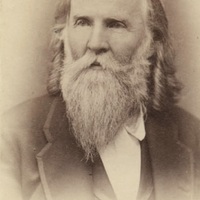 George Shepard Burleigh
 The Seeress