There is a calmness in the hour of night,
Fitted to meditation: when the sun
Folds his red wing and summons back his light,
And all is quiet. From their labors done,
Mortals are resting —beautiful and bright,
The stars their hosts are marshalling, one by one
And all is hushed of Nature's varied speech,
Save the low murmuring rill and night-bird's dismal screech.
Now, when retired from mortal scenes and care,
The wanderer lone may hold communion high
With voiceless beings of the earth or air;
And from each star dim-glittering in the sky,
Obedient to the power that placed it there,
May learn a lesson of humility,
That as its light is seen at day's decline,
So in the moral night his lamp, though small, should shine.
Day hath its beauties, and its scenes of joy;—
The husbandman awake at early hour,
Pleased, at his task his moments will employ;
There is a beauty in the opening flower,
Just blushing red, which man should not destroy;
And fair the violet, peeping from its bower;
But scenes more pleasing, and a deeper charm,
Greet the enraptured sense in evening's slumbery calm.
The village church-spire peering o'er the trees,
Casts its long shadow on the vested ground,—
The green grass bends before the gentle breeze,
As lightly pressed by elfin's airy bound;
And far along o'er all the grassy leas,
Curls the light fog in many foldings round,
And o'er its wavy breast, dark bank and tree,
Lift up their heads of green, like islands in the sea.
The lover seeks the cottage of his maid,
With beating heart and spirit free and light,
And pours the soft complaining serenade
On the mild stillness of the listening night;
The low notes, swelling o'er'the star-lit glade,
Blend with the breeze, and murmur with its flight
And all seems pausing with attention mute,
As the wild beasts when awed by Orpheus' matchless lute.
Calmly the moon upon the earth doth gaze,—
The fairest light that gilds the firmament,—
And freely scatters the unscorching rays
Broad o'er the world, the sun to her hath lent
To her, old ocean adoration pays,
Heaving his waves 'mid rocky barriers pent,
And owns the influence of her gentle smiles,
With sounding tides that leap round all his thousand isles.
The stars hang out their ever-burning lamps,
To guide the spirits of the sleeping forth,
Which now no clog or earth-formed fetter cramps,
As far imagination roams o'er earth;
And there they burn unquenched by midnight damps,
Bright and consumeless still as at their birth,—
Shouting unheard the choral song that broke,
When at the voice of God to life and light they woke.
And the fair milky-way, a cloud built road,
Paved with enduring light, spans earth and heaven,
A path where angels, from their blest abode,
May come to us on fiery wings at even.
Or beams of glory from the throne of God,
Which o'er the glowing arch flung out have given
A semblance faint of that unbounded, vast,
Eternal flood of light that round his throne is cast.
And O! the splendors of that glowing hall,
When, as if shaken by a giant's hand,
Swift as descending hail thy meteors fall
Hissing and burning to the shrinking land;
Heaven seems itself but one broad flaming pall,
Nature's illumination vast and grand,—
The fiery shower to earth is falling fast,
As if the stars themselves down from their throne were cast.
So grand thy scenes, so rich thy glories are,
Mild, dewy Night! and as thy forms I see,
The wrapt soul longs and pants to fly afar,
Mid unseen worlds, on pinions light and free;
To search new splendors out from star to star,
And, through the range of vast infinity,
To soar where angel's feet have never trod,
And revel there among the wondrous works of God.
O, can there be, in all the broad expanse
Of earth, one soul so grovelling and so low,
That sees no beauty in the pale moon's glance,
Or evening skies lit with sidereal glow?
Or, still more blind, a worshipper of chance,
Striking out God and nature at a blow?
If such there be, I envy not his state,
Though hosts of vassals bow and on his pleasure wait.

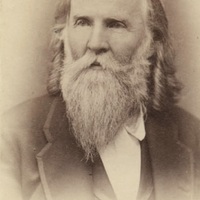 George Shepard Burleigh
 Night
Night