MORNING (803) – family poetry slam
I. [Karl Neal??]
Thee O, my God! I praise anew
For this morning pure and fair
I bless thee for the gentle dew
And for the balmy air
The song of many a happy bird
Is pulled from glistening spray
And yonder goes quiet herd
Full glad to greet the day
The streams in gentle murmurs flow
And sunlight tips the hill
The heavens above and earth below
Say Gog is father still.
The light is dancing in trees[?]
The rosy[?] air breathes love
The glad sounds lowing breezes
Proclaim our God is above
II. [George Shepard Burleigh]
The Morning dons her robes anew
Uprising radiant and fair.
Her locks are jewelled with the dew
That flashes in the rosy air.
The songs of many a joyous bird
Half-hid below the verdant spray
Through all the woody vale are heard
Exulting in the new-born day
The rills with gladder twinkle flo
Dance gladder down the grassy hill
Singing melodious and low
Their songs with music never still
A ripple runs along the trees
That hum like whisperings of love
Now life has filled the scented breeze
With freshness from the bowers above.
III. [Lottie Beebee]
O thou! to whom all things are new
And all things old, divinely fair,
As grand art thou, in dropping dew
As in the glory of the air.
To thee the song of tiniest bird
That may not ben the slenderest spray,
The bleatings of the waking herd
Are Memnon-music, day by day.
The ocean in majestic flow,
The sunlight gilding yonder hill,
Each chants its anthem loud or low,
Each tells that thou art never still,
That in the leafage of the trees,
The garlands of thy boundless love
And in the murmuring of the breeze
Thou art on earth, as there above.
IV. [William Burleigh]
Sweet morning ope thine eye anew!
Look on the waking Earth so fair,
That loves to drink thy crystal few
And joys to breathe thy spicy air;
Thine eye, it gladdens every bird
That sits and sings upon the spray
We who its songs of gladness heard
Have blest and bless thee every day.
Under thine eye the brooklets flow
More musically down the hill
‘Till in the valley green and low
Their sunny waves are gathered still.
Come, Morn, of thee the dreamy trees
Are murmuring their words of love
And praise, To every sleepy breeze
That sallies in the air above.
V. [Charles Calistus Burleigh]
The Lord hath made the day anew
And set it off with trimmings fair
Powdered the green-wigged hills with dew
And touched with rouge the faded air.
Harmonious concert wakes of bird
And tree-toad on the bending spray
While crickets in the grass are heard
Boring the tender ear of day
Dawn from his jug the rivers flow
And irrigate the thirsty hill;
By times the cows do drink & low
By times eat soberly and still
He combs with winds the tangled trees,
As swains their hair, when making love
Then brush-like slicks[?] them with a breeze
Well graced (greased – CCB edit) with unction from above.
VI. [Ruth Burgess Burleigh]
‘Twould please me to do something new
Upon this day, so bright and fair
Could I but trip it o’er the dew
In the fresh morning air!
And could I listen to the birds
That warble in the dewy spray
Or go and homeward drive the herds
For milking time this day!
Sit on the bank and watch the flow
Or the bright river, from the hill,
And listen to its murmurs low
While all the world is still.
Could I but climb those glorious trees
Ah, that I’d dearly love!
Living on a branch, and take the breeze
All comes of streams above [speculative transcription on this line]
VII. {Gertrude Kimber Burleigh]
The earth around seems fresh and new;
The sky above is breight and fair,
The leaves, adorned with sparkling dew,
Are dancing in the balmy air.
A gay-winged, sweetly-warbling bird
Is caroling on every spray,
And loud, from every grove, is heard
A welcome to the rising day.
The glittering stream, in joyous flow,
Pour down the side of yonder hill;
The cattle in the pastures low,
The sheep, in groups, stand close & still
Beneath the tall and waving trees,
Where bards and sages often love
To pause and feel the gentle breezes
And lift their silent thoughts above.

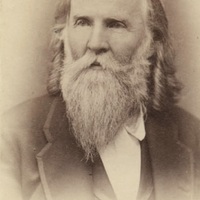 George Shepard Burleigh
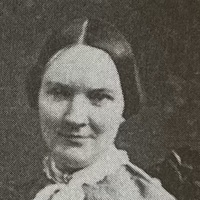 Ruth Burgess Burleigh
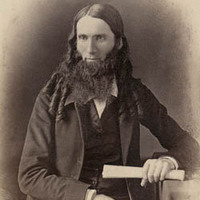 Charles Calistus Burleigh
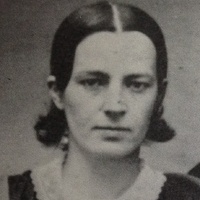 Gertrude H. Kimber Burleigh
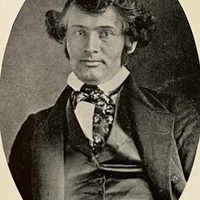 William Henry Burleigh
 Christmas