I.
Full oft at eve, when sunset hung
Its golden banner in the sky,
And from his throne the day-god flung
His farewell glance, the boughs among,
That o’er a babbling streamlet hung,
As leapt the joyous waters by—
A maiden came to drink delight
From nature at its purer fountain,
Where danced that streamlet, coursing bright
Adown the sloping mountain.
II.
It was in sooth a fitting spot
For earth’s glad ones and pure to seek,
When trials all and cares, forgot,
They came with Nature’s self to speak.
The birds would gather there, to hymn
Such songs, through all the summer day,
As might have lured the Cherubim
To steal awhile away
From their undying tones above,
—The perfect harmony of love—
To hear how earth-born melody
With heaven’s own music oft may vie.
III.
Flowers stooped beside the stream, to lave
Their bright folds in the dancing wave,
And blushed to see, in colors fair,
Their own soft beauty mirrored there;
And gladdened in their glance, the rill
Went hurrying down the tall old hill,
Flying the kisses of the breeze,
As sportful virgin from her lover,
Now springing round the giant trees,
And now the low rocks over;
Laughing and bounding on its way
As if some joyous spirit stirred
Its harp-strings o’er the waves, and they
The thrilling music heard.
IV.
There knelt young Lora, at the shrine
Of Nature, holding strange communion
With the invisible things, that twins
Around the heart with touch divine,
When the dim shadows of the even,
Like spectres gliding over heaven,
Blend softly with the bright sunshine—
Commingling in a chastened union;
And to her heart there came a joy
Earth’s weaker trials could not destroy,
That in the soul’s serener deep
Its influence sweetly shed,
AS the still streams, unseen that creep,
Their blessings o’er the valley spread.
V.
Oh, gentle was the maiden’s spirit,
And pure and warm her generous heart,
As theirs—the ransom’d—who inherit
Joys never to depart;
And she was beautiful, so fair
We scarce may see another.
Her cheek—the rose and lily there
Had met and kissed each other.
Around he brow of purest snow,
Her golden curls hung, breeze-carest,
Like clouds, that dipt in sunshine glow
Upon the bosom of the West.
The flashing of her kindled eye,
Like lightning thrilled along the heart,
And love, pure earnest love and high,
Seemed of her very life a part.
VI.
Time, gliding on its buoyant wing,
Floated in sunshine, and the gladness,
The language of a God can bring
In stream, and bird, and flower, and limb—
That speak the living voice of Him,
Left in her soul no home for sadness;
But on her spirit meek and lowly,
Rested a joy, as pure and holy
As one might almost deem were known
To the Beatified alone.
On, not in vain her heart of love
Was beating to its gentler note,
Soft as the spirit lyres above,
Tuned by the fairy bands, that float
In moonlight, o’er the slumbering grove;
For fondly did her bosom bear
A gentle flame, forever burning,
To him who brought his offering there
A willing light returning.
VII.
And he was one whose heart outpoured
Its wealth of passion upon her,
And deeply, madly, he adored
The spirit templed in that form,
That, with the soul’s own sunshine warm,
Prompted the enthusiast worshipper
To kneel before that shrine, as kneels
The Persian to the golden wheels,
Oh his own fire-god, throned, and drawn
On the red chariot of the morn!
As two bright streams that wandering on,
Unnoted through the silent plain,
Blend their pure waters into one,
And glittering to the glancing sun,
Glide to their home, the unbounded main—
Even so their very souls were blent,
With all their burning love, entwining
Its ties around them, as they went
In fortune’s sunlight, softly shining
Heaven heard the story of their love,
And wrote their mutual vows above;
Earth saw their spirits’ deep communion, And gave the ritual seal of union.
Joy to the loved one and the lover
Proffered her gems undimmed by tears,
Hope waved her golden tresses over
The brightness of their coming years;
And dark’ning on the dazzled eye,
They saw no cloud in all their sky.
VIII.
Oh, that our dreams of happiness
Should ever fade—that with the morn
Of trial, which to all must dawn,
Should in the glowing air be borne
A voice, to break the weariless
And holy slumber, resting on
The spirit, ere it wakes to know
The sorrows of this world of wo;
That the bright visions, which will dance
Before the eye, when there is given
To the pure soul one passing glance
Into the perfect joys of heaven,
Should vanish from their glorious track,
And the unfolded veil roll back,
Whose parting skirts one view had lent,
Beyond the o’erarching firmament.
Alas! that morn, when earth is rolled
In floods of amethyst and gold,
Should be the harbinger of storm,
And darkness that shall fiercely pour
When pales the noonday sun, before
The uplifting of the Thunderer’s form.
The fairest flower is plucked too soon
To wither in the fiery noon
Of stern affliction, and the gem
By evening on the diadem
Of earth implanted, melts away
Full fast before the glance of day.
And Oh, the beautiful of earth—
The gifted and the warm of heart,
Not all the matchless spirit’s worth,
Will tempt the Spoiler to forbear,
And bid the arm of ruin spare,
When lightning-winged is speeding forth
The foe’s envenomed dart.
IX.
The soul of Lora long had known
The brightness of its gilded morning,
When deeming heaven’s own sunlight shone
Her radiant path adorning:
But in the fulness of her joy
The seeds of wo were planted,
That springing upward, should destroy
The gladness heaven had granted.
When at the light of Hymen’s shrine
She gave her hand and heart away,
Foul Fashion poured the maddening wine
To bless the joyous nuptial day;
And there was nought to tell that we
And ruin in its tide would glow;
For then was all with sunshine crowned,
And Pleasure ruled their flying hours—
And Love, in mystic dance, led round
Winged cherubs in their rosy bowers.
X.
But darkness gathered, fold on fold,
Like vapors from the marshy fen,
Ere the black thunder-car is rolled
Above the rocking mountain-hold
And terror shaken glen.
And slowly melted, ray by ray
The joy of Lora’s life away.
Her loved one, in the Spoiler’s train,
Lured by the fiend, went thoughtless on—
The first bright bowl had fired his brain,
Quaffed at the sacred altar-stone.
Ah! brief may be the tale of wo,
Where all its fearful end may know;
Once lured into the fiend’s control
He rushed with heedless steps along,
While coiled around his stricken soul,
The fetters, stronger and more strong,
In brutal pleasures, day by day
He sped him in his downward way,
Of virtue and of heaven unblessed,
Yet loved and honored and caressed.
The queenly hand of glory bound
The woven laurel wreath, around
His manly brown, and learning came,
Unbarred to him the gates of Fame,
And bade him enter—but alas!
He bowed before a mightier spell.
The fiend that sparkled in the glass,
And bowing there, inglorious, fell.
XI.
His heart was changed, his wreaths decayed,
His earlier love had ceased to burn,
And long in wain had Lora prayed
The wretched wanderer to return:
In vain, for deep and deeper still,
He sunk amid the floods of ill.
But though his heart was chilled to stone,
Her earnest love was all his own.
Upon his soul’s repulsive gloom
Its quiet radiance was shed;
As burns the taper in the tomb,
Lighting alone the unheeding dead.
Her pure affection could not die,
Though scorn might break its joyous thrill,
Once struck, to all Eternity
Its chords must quiver still.
How sweetly fr that wretched one
She poured its unavailing tone;
Though he, who once had bowed before her
A young, impassioned, proud, adorer,
Had quenched, within the maddening wine,
The fire that should have burned for her,
Till in her heart its secret shrine
Was left without its worshipper;
For long her spirit might endure
The scorn of one, who once could love her,
Yet keep its earlier passion, pure
As the bright sky, that bent above her.
XII.
Oh, God! will not the hearts that bear
Their holy love unchanged below
Till the cold dawning of Despair,
In all the scenes of human wo—
Hearts that have kept their olden flame,
Undimmed when brighter hours have perished,
Through the long years of guilt and shame,
That darken round the fallen fame
Of those who once the fire had cherished—
Will they not find a purer rest
Prepared, in holler bowers, for them?
And wear amid the faithful blest,
A brighter diadem!
For where shall dawn one hope beside,
When every joy of life is past,
To cheer the wretched drunkard’s bride
The true and generous to the last?
XIII.
A weary wanderer, doomed to roam
In beggary, from his childhood’s home,
The ruined wretch who long had bowed
The soul of Lora down in wo,
Forsook his garments, for the shroud,
Earth, for the drunkard’s home below—
And hands unhallowed, rudely gave
His wasted body to the grave;
The passer-by with heedless heel,
Trod down the turf above his head,
For O, there was but one to feel,
Or weep for the dishonored dead;
And she was desolate and lone,
A stranger in a land unknown.
XIV.
The joyous wild-birds sand no hymn
To cheer her in her weary way,
The brightness of her glance was dim,
Her radiant beauty lost for aye.
And now the earth had nought to love,
Her bleeding heart no longer beat;
She gave her soul to God above,
Her ashes to their cold retreat.
The strangers spread her couch, afar
From where their own proud sleepers were;
And lonely in the silent tomb,
With careless hand, they laid her—
One day the flower of loveliest bloom,
Ere pale the breath of sorrow made her.
The grass is green upon her grave,
The wandering moon looks coldly on
Through the lithe willow-boughs that wave,
And sweep the nameless stone.
No brother’s tear hath we the sod
In sorrow for the silent sleeper;
And waves the long green grass untrod
By foot-fall of the pilgrim weeper.

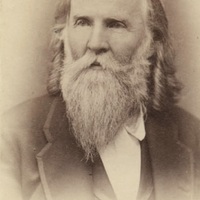 George Shepard Burleigh
 Little Botanist, The