Ah! surely, I know well, I, dreaming, grieving,
That all this unknown, clasping me, is living
That naught is not; that shadow is a soul;
The ashes come to prove the burning coal,
To make heaven clearlier seen—the eternal portー
That death's success is very life, in short,
Ahl surely would I in that passage dark
A sage should pilot my coffin — gloomy bark
Pontiff, apostle, dreamer, grand and dread,
Magi, with brow determinate in the red
Dawnlight and dazzle of unfathomed skies,
That to the grave, where the loud nothing dies
A senator of true and real, and he
A magnate of the tomb, heaven's priest, should go with me.
Yes, I demand this holy prayer of men,
Before the black and formidable fen;
Yes, I find good that for me, far from noise
Should speak, uplifted to the night, a voice
For in this hour the veil is downward rent,
Rises the star in this night's firmament.
So would I! And no better thing could be
Than such a prayer after such grief, to me
Having a hard, funereal life-race run.
But oh, Thou! answer! speak! Is this thine
Evil who knows, and just to know it, does
Deserts clear duty for a dogma's gloze,
Who preaches miracle and phenomena jeers
Crouched wickedly o'er human doubts and tears,
Half baseness and half fury, brands the poor
Thief-convict and adores the emperor;
Who says to man, "Woe is your reason's price!"
Into three persons puts the abyss, dawns, lies,
And dreams a little universe, ill and dark,
Made of our globe alone, and will not mark
How shines in all Thy suns Thy evidence;
Who, if he could, would quench that eye, the intense
Star that Thou fill'st, and make night round the sky;
Who tariffs alter, anthem, homily,
Who, proud of front and sold behind, will use
His prayers for rich men, and the poor refuse,
If the poor cannot pay him dearest rates;
Is't he, life-grieved, whom flesh exasperates,
Who once to women denied soul-who, grim,
Prefers to hymen—the pure marriage-hymn
And cradle-nests—this frightful suicide
Celibacy; who would that all the wide
Heavens at his will should fall, and cease to be;
Who before Joshua flouts Galilee,
Sets up a black pile in Thy starry shade
To eclipse the dawn upon the mountain's head;
There Torquemada, here Lambordemont;
Who, in the Indias, Spain, France, Mexico,
Prostrate humanity at the four veins bled;
Who, seeing war, Te Deum o'er it sings,
Severe to sufferers, complaisant to kings;
Who'd repay Judas, re-nail Christ to the tree;
Below him is wrong, as under waves the such
A sort of terrible man where one might shipwrecked be.
Is it that I, pale, wavering passenger,
Who want the true beam, not the false light, there,
Should have this man attendant o'er my grave?
Shall he be welcome at the tomb's dim nave?
Is it to him the great unknown gives ear?
Is his the voice borne out beyond our sphere?
Has he the right to greet the mystery here?
Is he thy priest? Knows he thy name below?
In heaven I see God make the signa, "No!"

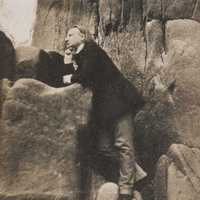 Victor Hugo
 Translations by George S. Burleigh
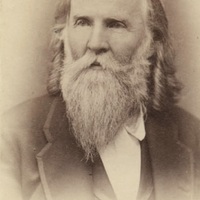 George Shepard Burleigh